Loading...
Abebe Aregai vs John Lambert
Abebe Aregai leads by 1.5 pts · 2 figures compared
…
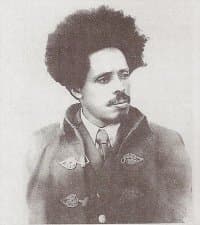
Abebe Aregai
General · Modern
58.2Total
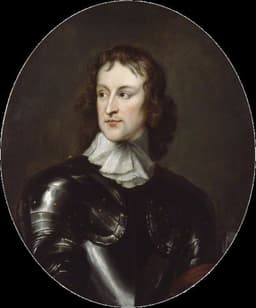
John Lambert
General · Modern
56.7Total
Basic Information
Born
1903
1619
Died
1960
1684
Era
Modern
Modern
Nationality
Ethiopia
England
Occupation
General
General
Civilization
Other
Western
Score Comparison
Military (10%)
70.0
70.0
Political (20%)
53.8
45.0
Influence (20%)
62.0
59.0
Legacy (20%)
50.0
50.0
Leadership (15%)
62.0
68.0
Strategy (15%)
58.0
55.0
TOTAL
58.2
56.7
Abebe Aregai — Complete Timeline
1936 AD
Led Arbegnoch Resistance against Italian OccupationWar
After the Italian conquest, Abebe Aregai organized and led the Arbegnoch (Patriots) guerrilla resistance in Shewa. His forces harassed Italian supply lines and conducted hit-and-run attacks for five years.
ResistanceGuerrilla WarfareItalian Occupation
Impact: regionalconstructive
1957 AD
Appointed Prime Minister of EthiopiaPolitical Action◆ Major
Emperor Haile Selassie appointed Abebe Aregai as Prime Minister of Ethiopia. He served until his death in 1960, overseeing post-war reconstruction and modernization efforts.
Prime MinisterGovernmentReconstruction
Impact: nationalconstructive
1960 AD
Killed during 1960 Coup AttemptPolitical Action◆ Major
Abebe Aregai was assassinated during an attempted coup d'
CoupAssassinationEthiopia
Impact: nationaltragic
John Lambert — Complete Timeline
1648 AD
Battle of PrestonWar◆ Major
John Lambert commanded parliamentary forces at the Battle of Preston, defeating a Scottish royalist army. The victory helped secure the parliamentary cause in the Second English Civil War.
BattleEnglish Civil WarParliament
Impact: national
1653 AD
Drafted the Instrument of GovernmentPolitical Action◆ Major
John Lambert was the principal author of the Instrument of Government, the written constitution that established the Protectorate under Oliver Cromwell. The document created a Lord Protector and a Council of State, but was never fully implemented.
ConstitutionProtectorateCromwell
Impact: nationalconstructive
1662 AD
Exiled to GuernseyPolitical Action◆ Major
After the Restoration, John Lambert was tried for treason and exiled to the island of Guernsey. He spent the remainder of his life in captivity, never regaining political influence.
ExileRestorationPunishment
Impact: nationaltragic
Expert Analysis
Abebe Aregai vs John Lambert
# The General Who Wrote a Constitution and the General Who Saved a Throne
On a bitter December morning in 1662, John Lambert, once the most powerful man in England after Oliver Cromwell, stepped onto a ship bound for Guernsey. He had drafted the first written constitution in English history, commanded armies that shattered royalist hopes, and helped shape a republic that dared to imagine a world without kings. Nine years later, he would die in obscurity, a footnote to the revolution he helped create. Three hundred years away and a world apart, another general faced a different fate. In December 1960, Abebe Aregai, Prime Minister of Ethiopia, walked into a palace room to negotiate with mutinous soldiers. He emerged minutes later, killed by a hail of bullets, dying for the emperor he had served for a quarter century. One general built a new political order that collapsed; the other defended an ancient monarchy that endured. What drove these two men down such different paths?
Origins
John Lambert was born in 1619 into the Yorkshire gentry, a class that had grown restive under Charles I's heavy-handed rule. He studied law at the Inns of Court, absorbing the language of rights and precedents that would later shape his constitutional thinking. The English Civil War broke out when he was twenty-three, and Lambert, like many ambitious younger sons, saw in Parliament's cause not just a religious and political crusade but a chance for advancement. He was a Puritan, but not a fanatic—calculating, pragmatic, and drawn to order.
Abebe Aregai was born in 1903 in the highlands of Shewa, the heartland of Ethiopian imperial power. His father was a minor noble in the court of Menelik II, and young Abebe grew up in a world where loyalty to the emperor was the highest virtue. He entered the imperial bodyguard as a young man, learning the arts of war in a society where generals were often provincial lords first and soldiers second. Ethiopia had never been colonized, but by the 1930s the threat from Mussolini's Italy loomed like a coming storm. For Abebe, the nation was not an idea to be debated—it was the emperor, the land, and the Orthodox faith.
Rise to Power
Lambert rose through the New Model Army, the most disciplined fighting force Europe had seen. At the Battle of Preston in 1648, he commanded the parliamentary cavalry that crushed a Scottish royalist army, demonstrating a tactical brilliance that Oliver Cromwell himself praised. But Lambert's genius was not merely military. When Cromwell became Lord Protector in 1653, it was Lambert who drafted the Instrument of Government, a written constitution that divided power between a single executive, a council, and an elected parliament. For a brief moment, England had a republican framework that might have worked.
Abebe Aregai's rise came not on a battlefield of set-piece armies but in the hills and caves of occupied Ethiopia. After the Italian conquest in 1936, while the emperor fled into exile, Abebe refused to surrender. He organized the Arbegnoch—the Patriots—turning Shewa into a nightmare for Italian garrisons. He was not a great strategist; his military score of 59.0 reflects a man who fought with courage rather than brilliance. But his leadership score of 84.5 tells another story: he kept men together through years of hardship, hunger, and betrayal. When Haile Selassie returned in 1941, Abebe was the face of the resistance, a living symbol that Ethiopia had never truly been conquered.
Leadership & Governance
Lambert's leadership was that of the architect. He believed that power, once seized, must be structured. The Instrument of Government was his masterwork—a document that tried to balance the army's authority with civilian rule, religious toleration with public order. But he was better at designing systems than managing men. When Cromwell grew tired of parliaments, Lambert supported him; when Cromwell died and chaos followed, Lambert could not hold the factions together. His political score of 70.0 reflects a man who could write laws but could not command loyalty.
Abebe Aregai governed as a servant of the throne. Appointed Prime Minister in 1957, he oversaw a period of cautious modernization—roads, schools, a new constitution that left the emperor's power untouched. He was not a reformer; he was a stabilizer. His political score of 79.4 reflects a man who understood that in Ethiopia, legitimacy flowed from the Solomonic dynasty, not from documents. Where Lambert tried to replace monarchy with a written compact, Abebe spent his career defending the oldest monarchy in Africa.
Triumph & Tragedy
Lambert's greatest moment was the Instrument of Government in 1653—a constitution that, had it survived, might have changed English history. His tragedy came with the Restoration in 1660. Captured, tried for treason, exiled to Guernsey, he spent his final decades in a fog of obscurity, watching the monarchy he had fought to destroy return stronger than ever.
Abebe Aregai's triumph was the resistance itself—five years of guerrilla war that kept Ethiopian nationalism alive. His tragedy was his death: killed in 1960 during a coup attempt by the very imperial bodyguard he had once commanded. He died trying to negotiate with men who saw him as the old order's last defender. He was 57 years old.
Character & Destiny
Lambert was a man of systems, not symbols. He believed that good government was a matter of proper design, that a constitution could tame the passions of men. He underestimated how much people loved the familiar—king, church, custom. His fate was to be remembered as a footnote, a brilliant mind who could not anchor his ideas in the soil of English sentiment.
Abebe Aregai was a man of loyalty, not ideas. He never questioned the emperor's right to rule, never imagined a republic for Ethiopia. His fate was to die for a throne that would itself fall fourteen years later, swept away by a Marxist coup. He was a hero of resistance, but his resistance preserved a system that could not survive the modern world.
Legacy
Lambert's legacy is invisible but real. The idea of a written constitution, of limits on executive power, of a republic governed by law—these seeds he planted would bloom in America a century later. His name is obscure, but his thinking echoes in every constitutional convention.
Abebe Aregai is remembered in Ethiopia as a patriot, the man who kept the flame alive when all seemed lost. Streets bear his name, schoolchildren learn his story. But the empire he died for is gone, and the resistance he led is now a memory of a different Ethiopia—one that no longer exists.
Conclusion
Two generals, two worlds. One wrote a constitution that failed, one defended a throne that fell. Lambert wanted to build something new; Abebe wanted to preserve something old. Both failed, in the end. But failure in history is never simple. Lambert's ideas outlived him; Abebe's courage still inspires. Perhaps the lesson is that the men who shape history are not always the ones who succeed—sometimes they are the ones who try, and in trying, show us what is possible and what is precious.
Rankings
🥇
Abebe AregaiLeader
Mil: 70.0Pol: 53.8Inf: 62.0
58.2
🥈
John Lambert
Mil: 70.0Pol: 45.0Inf: 59.0
56.7
+1.5 behind
How This Comparison Works
Algorithm
Each figure is scored on 6 dimensions (0—100 scale) based on structured historical data: Military (10%), Political (20%), Influence (20%), Legacy (20%), Leadership (15%), Strategy (15%). The weighted total produces the final ranking.
Data Sources
Scores are computed from structured sub-indicators in the database. Scale factors adjust for era (Ancient ×0.85, Modern ×1.0) and civilization size (Eastern ×1.05, Other ×0.80) to account for differences in population and military scale.
Maximum 3 Figures
Comparisons are limited to 2—3 figures to ensure readability and statistical meaningfulness.
Error Margins
±5 points per dimension — Sub-scores are derived from historical records with inherent uncertainty. Two figures within 5 points on a dimension should be considered roughly equivalent in that area.
Total Score Accuracy
±3 points overall — The weighted combination of 6 dimensions produces a total score with approximately ±3 points of uncertainty. Differences of less than 3 points are not statistically significant— the figures are effectively tied.
Known Limitations
- Historical records are incomplete and uneven across civilizations
- Figures from oral-tradition societies may be underrepresented
- Occupation labels can misclassify multi-role figures
- Scores measure capability and impact, not moral character
- Quantitative scoring is a comparison tool, not absolute truth
Capability Radar
Military (10%) — Battles & Warfare
Battles
65
65
Win Rate
60
60
Expansion
40
40
Political (20%) — Governance & Reform
Reform
45
55
Diplomacy
60
50
Economy
40
45
Influence (20%) — Cultural & Global Reach
Cultural
45
35
Global
35
30
Legacy (20%) — Historical Impact
Historical
55
50
Longevity
40
40
Leadership (15%) — Power & Stability
Tenure
55
60
Stability
50
40
Strategy (15%) — Tactics & Innovation
Strategy
75
65
Tactics
70
70
Reform
50
55
Similar Comparisons
Comments & Discussion
No comments yet. Be the first to share your thoughts!