Loading...
Abebe Aregai vs J. B. M. Hertzog
Abebe Aregai leads by 2.1 pts · 2 figures compared
…
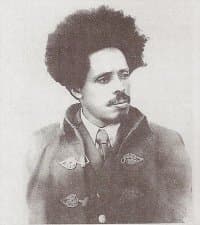
Abebe Aregai
General · Modern
58.2Total
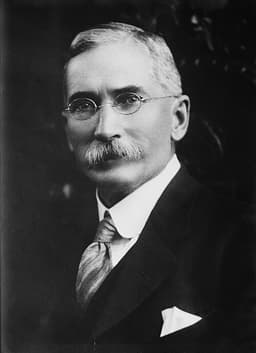
J. B. M. Hertzog
General · Modern
56.1Total
Basic Information
Born
1903
1866
Died
1960
1942
Era
Modern
Modern
Nationality
Ethiopia
South Africa
Occupation
General
General
Civilization
Other
Other
Score Comparison
Military (10%)
70.0
25.0
Political (20%)
53.8
60.0
Influence (20%)
62.0
56.7
Legacy (20%)
50.0
50.0
Leadership (15%)
62.0
79.8
Strategy (15%)
58.0
60.0
TOTAL
58.2
56.1
Abebe Aregai — Complete Timeline
1936 AD
Led Arbegnoch Resistance against Italian OccupationWar
After the Italian conquest, Abebe Aregai organized and led the Arbegnoch (Patriots) guerrilla resistance in Shewa. His forces harassed Italian supply lines and conducted hit-and-run attacks for five years.
ResistanceGuerrilla WarfareItalian Occupation
Impact: regionalconstructive
1957 AD
Appointed Prime Minister of EthiopiaPolitical Action◆ Major
Emperor Haile Selassie appointed Abebe Aregai as Prime Minister of Ethiopia. He served until his death in 1960, overseeing post-war reconstruction and modernization efforts.
Prime MinisterGovernmentReconstruction
Impact: nationalconstructive
1960 AD
Killed during 1960 Coup AttemptPolitical Action◆ Major
Abebe Aregai was assassinated during an attempted coup d'
CoupAssassinationEthiopia
Impact: nationaltragic
J. B. M. Hertzog — Complete Timeline
1899 AD
Boer War GeneralWar◆ Major
Hertzog served as a Boer general in the Second Boer War, commanding forces in the Orange Free State. He participated in several battles and became a prominent Afrikaner military leader.
Second Boer WarGeneralMilitary
Impact: regional
1914 AD
Founded the National PartyPolitical Action
Hertzog broke away from the South African Party and founded the National Party, which championed Afrikaner nationalism and opposed British imperial influence. The party would later implement apartheid.
National PartyAfrikaner NationalismFounding
Impact: nationalconstructive
1924 AD
Prime Minister of South AfricaPolitical Action◆ Major
Hertzog became Prime Minister after his National Party won the general election in coalition with the Labour Party. His government implemented policies to protect white workers and promote Afrikaner interests, including the 'civilized labour' policy.
Prime MinisterAfrikaner RightsLabour Policy
Impact: national
1934 AD
Merged with Smuts to Form United PartyPolitical Action◆ Major
Hertzog merged his National Party with Jan Smuts' South African Party to form the United Party. The coalition aimed to address the economic crisis of the Great Depression and promote national unity, but it alienated hardline Afrikaner nationalists.
United PartyCoalitionNational Unity
Impact: nationalconstructive
1936 AD
Passed the Representation of Natives ActReform◆ Major
Hertzog's government passed the Representation of Natives Act, which removed Black voters from the common voters' roll in the Cape Province and allowed them to elect white representatives instead. This further entrenched racial segregation.
SegregationDisenfranchisementLegislation
Impact: nationaldestructive
1939 AD
Resigned Over Neutrality in WWIIPolitical Action◆ Major
Hertzog advocated for South African neutrality in World War II, but his cabinet voted to enter the war on the Allied side. He resigned as Prime Minister and was succeeded by Jan Smuts, splitting the United Party.
World War IINeutralityResignation
Impact: national
Expert Analysis
J. B. M. Hertzog vs Abebe Aregai
# The General and the Prime Minister: Two Paths Through Empire's Shadow
In July 1936, as Benito Mussolini’s legions tightened their grip on Addis Ababa, a wiry Ethiopian commander named Abebe Aregai slipped into the highlands of Shewa with a handful of followers. Half a world away, in Bloemfontein, a Boer general named J. B. M. Hertzog had just watched his own people’s defeat transform into political triumph. Both men had fought European empires. One would spend years in the bush, living on wild honey and hope. The other would spend years in parliament, drafting laws that reshaped a nation. Why did their struggles take such different forms, and what drove their divergent outcomes?
Origins
Abebe Aregai was born in 1903 into the feudal hierarchy of Ethiopia, a kingdom that had never been colonized. His world was one of provincial loyalties, Orthodox Christianity, and the ancient authority of the Emperor. He grew up speaking Amharic, learning horse and rifle, absorbing a warrior tradition that stretched back to the Axumite kingdom. For him, the enemy was always external—first the Italians who had been humiliated at Adwa in 1896, then the Italians who returned with poison gas and modern artillery.
James Barry Munnik Hertzog, born in 1866 near Wellington in the Cape Colony, came of age in a different world entirely—one where the enemy was often internal. He was a Boer, descended from Dutch settlers who had trekked into the interior to escape British rule. His father was a farmer, his mother a devout Calvinist. The Second Boer War (1899–1902) would scar him permanently: he saw his people’s farms burned, their women herded into concentration camps, their language suppressed. For Hertzog, the struggle was not against a foreign invader but against English-speaking domination within a single country.
Rise to Power
Abebe Aregai entered history through the barrel of a rifle. In 1936, when Emperor Haile Selassie fled into exile and the Italian army occupied Addis Ababa, Aregai refused to surrender. He gathered the *Arbegnoch*—the Patriots—and began a guerrilla campaign in the mountains of Shewa. His methods were brutal and effective: ambushes on supply columns, the cutting of telegraph lines, the assassination of Italian officers. He was not an aristocrat by birth, but he became one by deed. The Italians offered a bounty for his head; he offered them only bullets.
Hertzog’s rise was slower, more calculating. He studied law in Amsterdam, returned to practice in the Orange Free State, and became a judge before the Boer War turned him into a general. After the war, he entered politics, and in 1914 he broke away from the South African Party to found the National Party. His platform was simple: Afrikaner nationalism, the protection of Afrikaans language and culture, and the removal of British influence. He did not take up arms; he took up speeches. By 1924, he was Prime Minister.
Leadership & Governance
Aregai governed through charisma and courage. In the mountains, he held no formal office—his authority came from his willingness to fight and die. He shared the hardships of his men, slept on the ground, and personally led raids. When the war ended and Haile Selassie returned in 1941, Aregai emerged as a national hero. He was appointed to high military posts, and in 1957, the Emperor made him Prime Minister. But his governance style remained that of a guerrilla commander: direct, loyal, and focused on unity. He oversaw reconstruction and modernization, but he never questioned the Emperor’s absolute authority.
Hertzog governed through legislation. As Prime Minister from 1924 to 1939, he passed laws that entrenched Afrikaner power: tariffs to protect local industry, the recognition of Afrikaans as an official language, and—most fatefully—the Representation of Natives Act of 1936, which removed Black South Africans from the common voters’ roll. Where Aregai led men, Hertzog managed a party. Where Aregai’s politics were personal, Hertzog’s were ideological. He believed in racial separation as a matter of principle, not just convenience.
Triumph & Tragedy
Aregai’s greatest moment came in the darkness of occupation. For five years, he kept the flame of Ethiopian resistance alive. His men fought without uniforms, without pay, without hope of rescue—and they won. When the Emperor returned, Aregai was the first to kneel. His tragedy came in 1960, when a group of Imperial Bodyguard officers attempted a coup. Aregai, then 57 years old, walked into the palace to negotiate. He was shot dead, a victim not of foreign enemies but of his own countrymen’s ambitions.
Hertzog’s triumph was the 1924 election, when Afrikaner nationalism finally found its political voice. He united the Boer people, gave them dignity and power. His tragedy was the 1939 decision over World War II. Hertzog wanted neutrality; his cabinet voted for war. He resigned, broken, and watched as his life’s work—the United Party, formed in 1934 with Jan Smuts—splintered. He died in 1942, a bitter man, convinced that English imperialism had defeated him at last.
Character & Destiny
Abebe Aregai was a man of action, not words. He trusted his instincts, his men, and his Emperor. His personality was forged in the crucible of guerrilla war: patient, cunning, and utterly fearless. He never sought power for its own sake; he accepted it because duty demanded it. His destiny was to be a symbol—first of resistance, then of loyalty.
Hertzog was a man of principle, stubborn to the point of ruin. He believed that Afrikaner identity was worth any political cost. He was a brilliant organizer, a skilled debater, but he lacked the flexibility to adapt. His destiny was to lay the foundations of apartheid, a system he saw as justice but which history would judge as cruelty.
Legacy
Today, Abebe Aregai is remembered in Ethiopia as a hero of the resistance. His name adorns streets and squares, his face appears on postage stamps. He is the archetype of the patriot who fought for freedom and died for peace. But his legacy is also a caution: he served a feudal system that would collapse in revolution a decade after his death.
J. B. M. Hertzog is remembered more ambivalently. Among Afrikaners, he is a founding father. Among Black South Africans, he is the architect of disenfranchisement. His statue in Bloemfontein stands, but it no longer commands reverence. His legacy is the National Party that would harden into apartheid, and the opposition that would finally defeat it.
Conclusion
Two generals, two prime ministers, two visions of loyalty. Abebe Aregai fought an empire from the outside and won, only to be killed by his own people. J. B. M. Hertzog fought an empire from the inside and won, only to create a system that would consume his nation. Their lives remind us that the shape of resistance is determined by the shape of power. When the enemy wears a foreign uniform, the path is clear. When the enemy speaks your language and sits in your parliament, the battle never truly ends.
Rankings
🥇
Abebe AregaiLeader
Mil: 70.0Pol: 53.8Inf: 62.0
58.2
🥈
J. B. M. Hertzog
Mil: 25.0Pol: 60.0Inf: 56.7
56.1
+2.1 behind
How This Comparison Works
Algorithm
Each figure is scored on 6 dimensions (0—100 scale) based on structured historical data: Military (10%), Political (20%), Influence (20%), Legacy (20%), Leadership (15%), Strategy (15%). The weighted total produces the final ranking.
Data Sources
Scores are computed from structured sub-indicators in the database. Scale factors adjust for era (Ancient ×0.85, Modern ×1.0) and civilization size (Eastern ×1.05, Other ×0.80) to account for differences in population and military scale.
Maximum 3 Figures
Comparisons are limited to 2—3 figures to ensure readability and statistical meaningfulness.
Error Margins
±5 points per dimension — Sub-scores are derived from historical records with inherent uncertainty. Two figures within 5 points on a dimension should be considered roughly equivalent in that area.
Total Score Accuracy
±3 points overall — The weighted combination of 6 dimensions produces a total score with approximately ±3 points of uncertainty. Differences of less than 3 points are not statistically significant— the figures are effectively tied.
Known Limitations
- Historical records are incomplete and uneven across civilizations
- Figures from oral-tradition societies may be underrepresented
- Occupation labels can misclassify multi-role figures
- Scores measure capability and impact, not moral character
- Quantitative scoring is a comparison tool, not absolute truth
Capability Radar
Military (10%) — Battles & Warfare
Battles
65
45
Win Rate
60
40
Expansion
40
20
Political (20%) — Governance & Reform
Reform
45
60
Diplomacy
60
55
Economy
40
50
Influence (20%) — Cultural & Global Reach
Cultural
45
50
Global
35
45
Legacy (20%) — Historical Impact
Historical
55
55
Longevity
40
40
Leadership (15%) — Power & Stability
Tenure
55
65
Stability
50
45
Strategy (15%) — Tactics & Innovation
Strategy
75
50
Tactics
70
45
Reform
50
30
Similar Comparisons
Comments & Discussion
Rifleman vs. Robe6/16/2026
Putting a Boer general and an Ethiopian resistance leader side by side is apples and oranges. Hertzog fought a settler-colonial war and then became a lawyer-politician. Aregai fought a full-scale imperial invasion and stayed a guerrilla till the end. The comparison ignores that Hertzog’s "freedom" was about white dominance in South Africa, not independence from foreign rule. Aregai died leading his men in battle. One wrote segregation laws; the other bled for a country that still remembers his n
历史逃兵6/16/2026
赫佐格根本不算抗殖英雄。他打过英国人,但后来推《土著土地法》的时候,压迫的是非洲人。阿贝贝·阿雷盖跟意大利人打游击,连敌后政府都建立起来了。一个从农场走到议会,另一个从战场走向死亡。把他们并列,是模糊了两种完全不同的反殖民意义。我不买账。
The Rough Rider's Shadow6/16/2026
Forget the "success vs failure" frame. What strikes me is the different roles of personal mobility. Hertzog had a legal platform and a press backing him after the Boer War. Aregai had only the mountains and a rifle. When the British won in South Africa, they let white rebels vote. When the Italians took Ethiopia, they gassed villages and bombed hospitals. The structural cards were so radically different that comparing their choices feels less like history and more like conjecture dressed up as a
书斋将军与山野战士6/16/2026
赫佐格后来当上总理,推白人至上的政策,而阿贝贝·阿雷盖一直战斗到1947年,还被皇帝封为公爵。两个人起点不一样:一个是从殖民地法律系统里爬上来的,另一个是从游击队里打出来的。说他们都是“抗殖英雄”,那阿贝贝的牺牲就被稀释了。我觉得这种对比,太偏重西方传记叙事,忽略了埃塞俄比亚本土的记忆方式。