Loading...
Abebe Aregai vs Huang Xing
Abebe Aregai leads by 0.7 pts · 2 figures compared
…
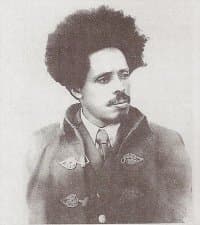
Abebe Aregai
General · Modern
58.2Total
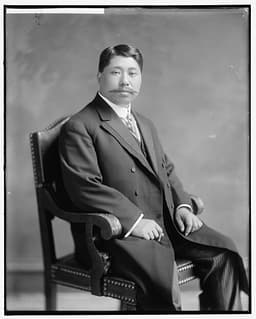
Huang Xing
General · Modern
57.5Total
Basic Information
Born
1903
1874
Died
1960
1916
Era
Modern
Modern
Nationality
Ethiopia
China
Occupation
General
General
Civilization
Other
Eastern
Score Comparison
Military (10%)
70.0
46.7
Political (20%)
53.8
53.8
Influence (20%)
62.0
62.0
Legacy (20%)
50.0
56.0
Leadership (15%)
62.0
62.0
Strategy (15%)
58.0
60.0
TOTAL
58.2
57.5
Abebe Aregai — Complete Timeline
1936 AD
Led Arbegnoch Resistance against Italian OccupationWar
After the Italian conquest, Abebe Aregai organized and led the Arbegnoch (Patriots) guerrilla resistance in Shewa. His forces harassed Italian supply lines and conducted hit-and-run attacks for five years.
ResistanceGuerrilla WarfareItalian Occupation
Impact: regionalconstructive
1957 AD
Appointed Prime Minister of EthiopiaPolitical Action◆ Major
Emperor Haile Selassie appointed Abebe Aregai as Prime Minister of Ethiopia. He served until his death in 1960, overseeing post-war reconstruction and modernization efforts.
Prime MinisterGovernmentReconstruction
Impact: nationalconstructive
1960 AD
Killed during 1960 Coup AttemptPolitical Action◆ Major
Abebe Aregai was assassinated during an attempted coup d'
CoupAssassinationEthiopia
Impact: nationaltragic
Huang Xing — Complete Timeline
1905 AD
Co-founded the TongmenghuiPolitical Action◆ Major
Huang Xing co-founded the Tongmenghui (Revolutionary Alliance) in Tokyo with Sun Yat-sen. He became its military leader, organizing armed uprisings against the Qing dynasty.
TongmenghuiRevolutionMilitary
Impact: nationalconstructive
1911 AD
Led the Wuchang UprisingWar
Huang Xing led the Wuchang Uprising, which sparked the Xinhai Revolution. He commanded revolutionary forces against Qing troops, securing initial victories that led to the dynasty's collapse.
Xinhai RevolutionUprisingMilitary
Impact: nationalconstructive
1912 AD
Served as Minister of War in the RepublicPolitical Action◆ Major
Huang Xing served as Minister of War in the provisional government of the Republic of China. He worked to organize a national army and defend the republic against counter-revolutionary forces.
GovernmentMilitaryRepublic
Impact: nationalconstructive
1913 AD
Led the Second Revolution Against Yuan ShikaiWar◆ Major
Huang Xing led the Second Revolution, an armed uprising against President Yuan Shikai's authoritarian rule. The rebellion failed due to lack of coordination and military inferiority, forcing Huang into exile.
Second RevolutionYuan ShikaiExile
Impact: nationaltragic
1916 AD
Died in Exile in ShanghaiPolitical Action
Huang Xing died in Shanghai after returning from exile in Japan and the United States. His death marked the loss of a key military leader of the Chinese revolution, though his legacy endured.
DeathExileRevolution
Impact: nationaltragic
Expert Analysis
Huang Xing vs Abebe Aregai
### The General and the Patriot: Two Paths to Modernity
In the summer of 1960, a limousine carrying Ethiopia’s Prime Minister, Abebe Aregai, was ambushed in the streets of Addis Ababa. He was dragged from the vehicle and shot dead by mutinous soldiers of the Imperial Bodyguard. Half a century earlier and half a world away, another general, Huang Xing, lay dying in a Shanghai hospital, exhausted by exile and the failure of his last revolution. One was killed by a coup; the other died of a broken heart, watching his republic crumble. Both were soldiers who tried to build nations. Why did one die defending an emperor, and the other fighting for a republic? The answer lies not just in their choices, but in the worlds they were born to remake.
### Origins
Abebe Aregai was born in 1903, deep in the highlands of Shewa, a region steeped in the martial traditions of the Ethiopian Empire. His world was feudal, hierarchical, and fiercely independent. He grew up in a society where loyalty to the Emperor was sacred, and where the sword and the horse were the ultimate measures of a man. The only foreign power that mattered was Italy, which had been humiliated at the Battle of Adwa in 1896. For young Abebe, the empire was eternal, and its defense was a calling.
Huang Xing, born in 1874, came from a very different China. The Qing Dynasty was in its death throes, humiliated by foreign powers in the Opium Wars and the Boxer Rebellion. He was educated in classical texts, but the world around him was collapsing. Where Abebe saw a stable empire to defend, Huang Xing saw a rotting structure that had to be torn down. The difference was fundamental: one man was a guardian of tradition, the other a revolutionary against it.
### Rise to Power
Abebe Aregai entered history through the smoke of war. When Mussolini’s modern army invaded Ethiopia in 1935, the Emperor Haile Selassie fled into exile. Abebe did not flee. Instead, he gathered the scattered remnants of the imperial army and retreated to the mountains of Shewa. There, he organized the *Arbegnoch*—the Patriots—a guerrilla resistance that waged a relentless war of ambush and sabotage against the Italian occupiers. For five years, he was the face of Ethiopian defiance, a master of mountain warfare who refused to surrender. His power came not from a title, but from the loyalty of men who fought in the rain and cold.
Huang Xing’s rise was different. He was an intellectual in uniform. In 1905, he co-founded the Tongmenghui (Revolutionary Alliance) in Tokyo with Sun Yat-sen. While Sun was the visionary, Huang was the organizer and the military arm. He raised funds, recruited students, and plotted uprisings from abroad. His moment came in 1911, when he rushed to lead the Wuchang Uprising, the spark that ignited the Xinhai Revolution. He commanded revolutionary forces against the Qing, but his army was a patchwork of students, secret society members, and defecting soldiers. Unlike Abebe, who led men born to fight, Huang had to create an army from scratch, out of a society that had no modern military tradition.
### Leadership & Governance
As a ruler, Abebe Aregai was a man of the old school. After the war, he became a loyal servant of Emperor Haile Selassie, rising to become Prime Minister in 1957. He governed as a traditional Ethiopian nobleman: he was a mediator, a patron, and a disciplinarian. His military genius lay in guerrilla warfare, not in state-building. He oversaw the modernization of the army and the bureaucracy, but he never questioned the absolute authority of the throne. His leadership was about order, stability, and the preservation of a hierarchy that had existed for centuries.
Huang Xing, by contrast, was a builder of a new world. As the first Minister of War of the Republic of China in 1912, he tried to forge a national army out of regional warlords and revolutionary militias. It was an impossible task. He believed in constitutional government, but he was not a pure democrat—he was a soldier who saw strength as the foundation of liberty. When President Yuan Shikai began to dismantle the republic, Huang led the Second Revolution in 1913, a desperate armed uprising that failed. His political wisdom was real, but it was overwhelmed by the chaos of a nation that had no shared identity.
### Triumph & Tragedy
Abebe Aregai’s greatest triumph was his resistance. He held the flame of Ethiopian independence alive when all seemed lost. His tragedy was that he died defending the very system that the coup plotters wanted to overthrow. He was killed not by a foreign enemy, but by his own countrymen, who saw him as a symbol of an outdated order. In his final moments, he tried to negotiate with the rebels, a testament to his belief that dialogue could solve everything. It could not.
Huang Xing’s triumph was the Wuchang Uprising, which toppled a dynasty that had ruled for 268 years. His tragedy was that he could not hold together what he had helped to break apart. He died in exile in 1916, at the age of 41, a broken man who had seen his republic become a dictatorship, then a battlefield for warlords. His last words were reportedly, "I have done my duty, and I have failed."
### Character & Destiny
Abebe Aregai was a man of iron loyalty and deep pragmatism. He was not a visionary; he was a steward. He believed that the empire, with its ancient roots, was the only vessel that could carry Ethiopia into the modern world. That belief made him a hero of resistance, but it also made him a target when the world changed. His destiny was to be the last great servant of a dying order.
Huang Xing was a man of passion and principle, but also of frustration. He was a revolutionary who was not a radical, a soldier who preferred negotiation to battle. He believed in a republic, but he could not make it work. His destiny was to be the founder of a nation that he could not save, a martyr to an idea that was ahead of its time.
### Legacy
Today, Abebe Aregai is remembered in Ethiopia as a national hero, a symbol of the resistance against colonialism. His face is on currency, and his name is on streets and schools. But his legacy is complicated: he is celebrated for fighting the Italians, but his loyalty to the Emperor makes him a controversial figure in a country that later overthrew the monarchy. He is a patriot, but not a democrat.
Huang Xing is honored in China and Taiwan as a founding father of the republic. His legacy is the idea that China could be modern and democratic. But his failure to build a stable state is also a warning. He is remembered as a tragic hero, a man of great talent who was crushed by forces too large for any one person to control.
### Conclusion
Standing at the end of their stories, we see two soldiers who asked the same question: how do we save our country? Abebe Aregai answered by defending the old order; Huang Xing answered by trying to build a new one. One died in a coup; the other died in exile. Both were right, and both were wrong. Their lives remind us that history does not reward the pure or the loyal; it rewards the moment. And the moment, for both of them, was cruel.
Rankings
🥇
Abebe AregaiLeader
Mil: 70.0Pol: 53.8Inf: 62.0
58.2
🥈
Huang Xing
Mil: 46.7Pol: 53.8Inf: 62.0
57.5
+0.7 behind
How This Comparison Works
Algorithm
Each figure is scored on 6 dimensions (0—100 scale) based on structured historical data: Military (10%), Political (20%), Influence (20%), Legacy (20%), Leadership (15%), Strategy (15%). The weighted total produces the final ranking.
Data Sources
Scores are computed from structured sub-indicators in the database. Scale factors adjust for era (Ancient ×0.85, Modern ×1.0) and civilization size (Eastern ×1.05, Other ×0.80) to account for differences in population and military scale.
Maximum 3 Figures
Comparisons are limited to 2—3 figures to ensure readability and statistical meaningfulness.
Error Margins
±5 points per dimension — Sub-scores are derived from historical records with inherent uncertainty. Two figures within 5 points on a dimension should be considered roughly equivalent in that area.
Total Score Accuracy
±3 points overall — The weighted combination of 6 dimensions produces a total score with approximately ±3 points of uncertainty. Differences of less than 3 points are not statistically significant— the figures are effectively tied.
Known Limitations
- Historical records are incomplete and uneven across civilizations
- Figures from oral-tradition societies may be underrepresented
- Occupation labels can misclassify multi-role figures
- Scores measure capability and impact, not moral character
- Quantitative scoring is a comparison tool, not absolute truth
Capability Radar
Military (10%) — Battles & Warfare
Battles
65
35
Win Rate
60
30
Expansion
40
20
Political (20%) — Governance & Reform
Reform
45
60
Diplomacy
60
55
Economy
40
30
Influence (20%) — Cultural & Global Reach
Cultural
45
40
Global
35
40
Legacy (20%) — Historical Impact
Historical
55
55
Longevity
40
45
Leadership (15%) — Power & Stability
Tenure
55
40
Stability
50
25
Strategy (15%) — Tactics & Innovation
Strategy
75
45
Tactics
70
40
Reform
50
50
Similar Comparisons
Comments & Discussion
铁血书生6/16/2026
黄兴把学生军当近代化祭品,却忘了枪杆子要握在百姓手里。他学日本搞军事改革,可武昌起义后连粮饷都凑不齐。反观阿贝贝用游击战拖垮意大利机械化部队,战术机动性甩开黄兴几条街。前者死于理想幻灭,后者倒在政治暗杀—两个将军都没搞懂战争本质是后勤,非浪漫主义。数据摆在眼前:黄兴指挥的战役伤亡比常超1:3,非军事专家早该明白这种消耗战必输。