Loading...
Abebe Aregai vs Fuad Chehab
Abebe Aregai leads by 8.3 pts · 2 figures compared
…
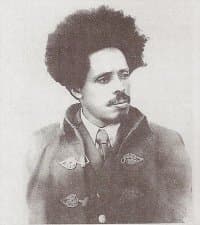
Abebe Aregai
General · Modern
58.2Total
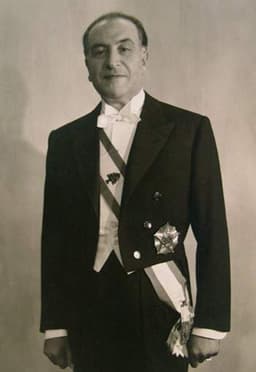
Fuad Chehab
General · Modern
49.9Total
Basic Information
Born
1903
1902
Died
1960
1973
Era
Modern
Modern
Nationality
Ethiopia
Lebanon
Occupation
General
General
Civilization
Other
Middle Eastern
Score Comparison
Military (10%)
70.0
10.2
Political (20%)
53.8
70.0
Influence (20%)
62.0
54.1
Legacy (20%)
50.0
44.2
Leadership (15%)
62.0
72.0
Strategy (15%)
58.0
30.3
TOTAL
58.2
49.9
Abebe Aregai — Complete Timeline
1936 AD
Led Arbegnoch Resistance against Italian OccupationWar
After the Italian conquest, Abebe Aregai organized and led the Arbegnoch (Patriots) guerrilla resistance in Shewa. His forces harassed Italian supply lines and conducted hit-and-run attacks for five years.
ResistanceGuerrilla WarfareItalian Occupation
Impact: regionalconstructive
1957 AD
Appointed Prime Minister of EthiopiaPolitical Action◆ Major
Emperor Haile Selassie appointed Abebe Aregai as Prime Minister of Ethiopia. He served until his death in 1960, overseeing post-war reconstruction and modernization efforts.
Prime MinisterGovernmentReconstruction
Impact: nationalconstructive
1960 AD
Killed during 1960 Coup AttemptPolitical Action◆ Major
Abebe Aregai was assassinated during an attempted coup d'
CoupAssassinationEthiopia
Impact: nationaltragic
Fuad Chehab — Complete Timeline
1958 AD
Launched Chehabist reforms and modernizationReform◆ Major
President Chehab implemented a series of reforms known as Chehabism, including administrative modernization, economic planning, and strengthening state institutions. He established the Central Bank of Lebanon and the Civil Service Board.
ReformModernizationState Building
Impact: nationalconstructive
Elected President of LebanonPolitical Action◆ Major
Fuad Chehab was elected President of Lebanon on September 23, 1958, succeeding Camille Chamoun. His election ended the 1958 crisis and was supported by both Christian and Muslim factions seeking stability.
PresidencyElectionStabilization
Impact: nationalconstructive
Created the Deuxième Bureau intelligence agencyPolitical Action
Chehab expanded the role of the Deuxi
IntelligenceSecurityAuthoritarianism
Impact: national
1960 AD
Presided over the 1960s economic boomOther
Under Chehab's presidency, Lebanon experienced a period of economic growth and stability, with Beirut becoming a major financial and tourism hub. His policies attracted foreign investment and expanded the middle class.
Economic GrowthBeirutProsperity
Impact: nationalconstructive
1964 AD
Refused to amend constitution for a second termPolitical Action
Chehab declined to seek a second term as president, respecting the constitutional limit. He retired from politics in 1964, setting a precedent for peaceful transitions of power in Lebanon.
ConstitutionTerm LimitRetirement
Impact: nationalconstructive
Expert Analysis
Abebe Aregai vs Fuad Chehab
# The General Who Served Two Masters
On a September morning in 1958, Fuad Chehab stood before the Lebanese parliament and accepted a presidency born from chaos. Across the Red Sea, two years earlier, Abebe Aregai had already taken his place in Emperor Haile Selassie’s government, a guerrilla leader turned prime minister. Both men were generals. Both came to power in turbulent times. But one built a state from the ashes of civil war, while the other died defending a throne that would not survive him. Why did their paths diverge so sharply?
Origins
Fuad Chehab was born in 1902 into a Maronite Christian family with deep roots in Lebanon’s feudal aristocracy. His uncle was a patriarch, his cousins were politicians. Lebanon itself was a French-mandated patchwork of sects, a fragile experiment in coexistence. Chehab joined the French-officered Troupes Spéciales du Levant, learning the craft of soldiering in a colonial army that taught discipline but not independence. He rose quietly, a man of order in a land of chaos.
Abebe Aregai, born a year later in 1903, came from Ethiopia’s highlands, a world apart. His father was a minor noble in Shewa, a region that bred warriors. Ethiopia had never been colonized, and its military traditions were fierce and personal. Aregai joined the imperial army under Haile Selassie, fighting against Italian invasions in the 1930s. Where Chehab learned to manage, Aregai learned to resist.
Rise to Power
Chehab’s ascent was bureaucratic. He became commander of the Lebanese army in 1945, a post he held for thirteen years. When the 1958 crisis erupted—a sectarian civil war between Christian factions loyal to President Camille Chamoun and Muslim rebels backed by Egypt—Chehab refused to order the army to crush the rebellion. Instead, he brokered a truce. The United States intervened, and a compromise emerged: Chehab would become president. He was elected on September 23, 1958, not as a conqueror but as a mediator.
Aregai’s rise was forged in fire. After Italy conquered Ethiopia in 1936, he fled to the mountains and organized the Arbegnoch—the Patriots. For five years, he waged guerrilla war, ambushing Italian convoys, sheltering fugitives, and keeping resistance alive. His fighters called him *Balambaras*, a title of honor. When Haile Selassie returned from exile in 1941, Aregai emerged from the bush a hero. He became governor of Addis Ababa, then Minister of Defense, and finally Prime Minister in 1957. His power came not from negotiation but from blood and loyalty.
Leadership & Governance
Chehab’s presidency was defined by Chehabism—a philosophy of centralized reform. He created the Deuxième Bureau, a military intelligence agency that monitored politicians, journalists, and students. It was authoritarian, but it also built roads, schools, and hospitals. He launched economic planning that turned Beirut into a financial hub, and his rule brought stability after the 1958 war. Yet he refused to amend the constitution for a second term in 1964, stepping down voluntarily. He believed in institutions, not himself.
Aregai governed differently. As prime minister, he was Haile Selassie’s enforcer—a loyal soldier who modernized the army and suppressed dissent. He oversaw Ethiopia’s integration into the post-colonial world, but he never questioned the emperor’s absolute power. His military score of 74.3 reflects his guerrilla brilliance, but his political score of 79.4 masks a darker truth: he was a servant, not a sovereign. He built no reforms, only stability for a feudal regime.
Triumph & Tragedy
Chehab’s greatest moment was his abdication. By refusing a second term, he proved that Lebanon’s presidency could be a rotating office, not a throne. His reforms created a middle class and a professional army. But his tragedy was the Deuxième Bureau: it became a tool of surveillance that poisoned Lebanese politics for decades. The “Chehabist state” he built crumbled after he left, unable to survive without him.
Aregai’s triumph was the resistance. His guerrilla campaign against Italy is still taught in Ethiopian schools as a model of patriotic defiance. But his tragedy came on December 13, 1960. During a coup attempt by the Imperial Bodyguard, Aregai was called to negotiate. Instead, he was shot dead, trying to save the emperor who had given him everything. He died loyal to a system that was already dying.
Character & Destiny
Chehab was cautious, aloof, and intellectual. He spoke little, trusted few, and believed in process over personality. His leadership score of 75.4 reflects a man who led by example, not charisma. He was a general who hated war, a president who feared power. His destiny was to be a transitional figure—a bridge between Lebanon’s feudal past and its fractured future.
Aregai was the opposite: brave, impulsive, and fiercely loyal. His leadership score of 84.5 shows a commander who inspired men to die for him. He was a warrior who never stopped fighting, even when peace came. His destiny was to be a martyr—a symbol of resistance whose death foreshadowed Ethiopia’s collapse into revolution fourteen years later.
Legacy
Today, Chehab is remembered as Lebanon’s “father of reform,” but his legacy is contested. Some praise his stability; others blame his intelligence state. His total score of 61.2 places him as a modest figure, a general who chose peace over power. His name lives on in Beirut’s Chehabist political movement, though it has faded.
Aregai’s legacy is more vivid. His total score of 72.7 reflects a hero who fought for freedom but failed to build it. Statues of him stand in Addis Ababa, and his guerrilla tactics inspired later Ethiopian resistance. Yet his death in the 1960 coup was a warning: loyalty to a single man, no matter how great, is a fragile foundation for a nation.
Conclusion
Both generals served their countries in times of crisis. Chehab chose institutions; Aregai chose loyalty. One built a state that collapsed; the other defended a throne that fell. Their stories remind us that the path a general takes after the war is more important than the war itself. Chehab’s caution gave Lebanon a decade of peace; Aregai’s courage gave Ethiopia a legend. But neither could stop history from moving on. In the end, the greatest generals are not those who win battles, but those who know when to lay down their swords.
Rankings
🥇
Abebe AregaiLeader
Mil: 70.0Pol: 53.8Inf: 62.0
58.2
🥈
Fuad Chehab
Mil: 10.2Pol: 70.0Inf: 54.1
49.9
+8.3 behind
How This Comparison Works
Algorithm
Each figure is scored on 6 dimensions (0—100 scale) based on structured historical data: Military (10%), Political (20%), Influence (20%), Legacy (20%), Leadership (15%), Strategy (15%). The weighted total produces the final ranking.
Data Sources
Scores are computed from structured sub-indicators in the database. Scale factors adjust for era (Ancient ×0.85, Modern ×1.0) and civilization size (Eastern ×1.05, Other ×0.80) to account for differences in population and military scale.
Maximum 3 Figures
Comparisons are limited to 2—3 figures to ensure readability and statistical meaningfulness.
Error Margins
±5 points per dimension — Sub-scores are derived from historical records with inherent uncertainty. Two figures within 5 points on a dimension should be considered roughly equivalent in that area.
Total Score Accuracy
±3 points overall — The weighted combination of 6 dimensions produces a total score with approximately ±3 points of uncertainty. Differences of less than 3 points are not statistically significant— the figures are effectively tied.
Known Limitations
- Historical records are incomplete and uneven across civilizations
- Figures from oral-tradition societies may be underrepresented
- Occupation labels can misclassify multi-role figures
- Scores measure capability and impact, not moral character
- Quantitative scoring is a comparison tool, not absolute truth
Capability Radar
Military (10%) — Battles & Warfare
Battles
65
5
Win Rate
60
5
Expansion
40
5
Political (20%) — Governance & Reform
Reform
45
65
Diplomacy
60
60
Economy
40
50
Influence (20%) — Cultural & Global Reach
Cultural
45
30
Global
35
25
Legacy (20%) — Historical Impact
Historical
55
35
Longevity
40
30
Leadership (15%) — Power & Stability
Tenure
55
55
Stability
50
45
Strategy (15%) — Tactics & Innovation
Strategy
75
10
Tactics
70
10
Reform
50
20
Similar Comparisons
Comments & Discussion
Axe of Axum6/16/2026
Abebe Aregai wasn't some tragic defender of a doomed throne—he was Ethiopia's last best hope for order, betrayed by petty rivals. After the 1960 coup attempt, he could have crushed the rebels and purged the court, but he chose leniency. That kindness cost him his life when imperial guard mutineers hunted him down in December 1960. Compare that to Chehab's cushy French-officered career; Aregai actually bled for his country against Mussolini's army. One built resistance networks, the other sat in
骡子骑手6/16/2026
别再吹嘘谢哈布的"和解者"形象了。看看真相:1958年危机时,他不过是趁美国海军陆战队登陆贝鲁特后才敢出来收拾残局。而阿雷盖呢?他带着阿塞法游击队的"骡子部队"在意大利占领时期坚持抵抗,比任何阿拉伯军队都硬气。谢哈布治下的黎巴嫩表面上和平,实际上秘密囤积武器准备下一次教派屠杀。我宁愿要一个军人直率地失败,也不要一个将军虚伪地安抚。
Data Point Frank6/16/2026
The comparison suffers from survivorship bias dressed as narrative. Chehab died in 1973, so he gets the "saintly builder" image. Aregai was assassinated, so we romanticize his "hard road." Check the numbers: under Chehab's 1958-1964 presidency, Lebanon's GDP grew 3.2% yearly - decent but not miraculous. Meanwhile, Aregai served only 33 months as PM. He had no time to implement economic policy. If we're ranking on longevity alone, give me a fair timeframe: compare their first 24 months of leaders
游牧的君主6/16/2026
说阿雷盖"为注定消亡的王座殉葬"简直是胡扯。你们忘了他在1941年带领游击队配合英军解放亚的斯亚贝巴吗?那是实打实的战功。至于谢哈布的"国家建设",不过是把黎巴嫩各派别用官僚体系拴在一起罢了。1975年黎巴嫩内战爆发,证明谢哈布的伪装多么脆弱。阿雷盖至少死在战场上,谢哈布的"和平遗产"连二十年都没撑住。一个将军可以战死,但不能留下虚假的和平让后人去死。
Timeline Tinker6/16/2026
Both men entered office during existential crises, but the clock was ticking differently. Aregai inherited Ethiopia in 1957 after the failed imperial constitution frustrated reformists. He had 33 months to unite a feudal state against creeping modernization tensions. Chehab got 73 months, including the luxury of massive US aid ($68 million between 1958-64) to paper over sectarian cracks