Loading...
Abebe Aregai vs Feng Guozhang
Abebe Aregai leads by 9.1 pts · 2 figures compared
…
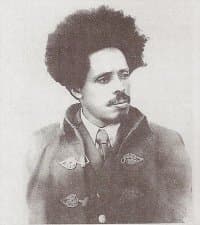
Abebe Aregai
General · Modern
58.2Total
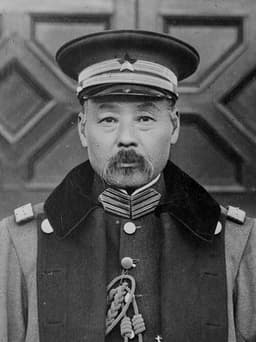
Feng Guozhang
General · Modern
49.1Total
Basic Information
Born
1903
1859
Died
1960
1919
Era
Modern
Modern
Nationality
Ethiopia
China
Occupation
General
General
Civilization
Other
Eastern
Score Comparison
Military (10%)
70.0
30.0
Political (20%)
53.8
61.3
Influence (20%)
62.0
54.9
Legacy (20%)
50.0
45.8
Leadership (15%)
62.0
40.0
Strategy (15%)
58.0
57.5
TOTAL
58.2
49.1
Abebe Aregai — Complete Timeline
1936 AD
Led Arbegnoch Resistance against Italian OccupationWar
After the Italian conquest, Abebe Aregai organized and led the Arbegnoch (Patriots) guerrilla resistance in Shewa. His forces harassed Italian supply lines and conducted hit-and-run attacks for five years.
ResistanceGuerrilla WarfareItalian Occupation
Impact: regionalconstructive
1957 AD
Appointed Prime Minister of EthiopiaPolitical Action◆ Major
Emperor Haile Selassie appointed Abebe Aregai as Prime Minister of Ethiopia. He served until his death in 1960, overseeing post-war reconstruction and modernization efforts.
Prime MinisterGovernmentReconstruction
Impact: nationalconstructive
1960 AD
Killed during 1960 Coup AttemptPolitical Action◆ Major
Abebe Aregai was assassinated during an attempted coup d'
CoupAssassinationEthiopia
Impact: nationaltragic
Feng Guozhang — Complete Timeline
1912 AD
Command of the Beiyang ArmyPolitical Action◆ Major
Feng Guozhang became a key commander of the Beiyang Army under Yuan Shikai. He controlled military forces in the Zhili region, establishing himself as a major warlord in northern China after the fall of the Qing dynasty.
Beiyang ArmyWarlordMilitary Command
Impact: national
1916 AD
Appointment as Vice PresidentPolitical Action◆ Major
Feng Guozhang was elected Vice President of the Republic of China under President Li Yuanhong. This position gave him significant political influence during the early Republican period.
Republic of ChinaGovernmentPolitics
Impact: national
1917 AD
Acting PresidencyPolitical Action◆ Major
Feng Guozhang became Acting President of the Republic of China after Li Yuanhong's resignation. He served from 1917 to 1918, facing challenges from rival warlords and struggling to maintain central authority.
Republic of ChinaPresidencyWarlord Era
Impact: national
1918 AD
Conflict with Duan QiruiPolitical Action◆ Major
Feng Guozhang engaged in a power struggle with Premier Duan Qirui, leading to the split of the Beiyang clique into the Zhili and Anhui factions. This conflict weakened the central government and intensified warlord warfare.
Beiyang CliquePower StruggleWarlord Era
Impact: nationaldestructive
Expert Analysis
Abebe Aregai vs Feng Guozhang
# The General Who Could Not Choose
In the winter of 1917, as snow fell on the Forbidden City, Feng Guozhang sat in the presidential palace in Beijing, a man who had reached the highest office in China yet commanded nothing. Across the world, in the rugged highlands of Shewa, Abebe Aregai was melting into the mountains with a handful of followers, a man who had lost everything yet commanded an invisible army. One wore a suit and held a gavel; the other wore rags and carried a rifle. Both were generals. Both would shape the fate of their nations. But their paths could not have diverged more sharply—and the difference tells us something profound about the nature of power itself.
Origins
Feng Guozhang was born in 1859, the twilight of the Qing Dynasty, into a world of crumbling certainties. He was a product of the old order, educated in classical texts, trained in the Confucian arts of governance. Yet he came of age in an era when China was being carved up by foreign powers, and the only path to relevance was through military modernization. He joined the Beiyang Army, the most modern force in China, and rose through its ranks not through battlefield brilliance but through bureaucratic cunning. His world was one of offices, telegrams, and shifting alliances—a chessboard where pieces were men.
Abebe Aregai was born in 1903, deep in the Ethiopian highlands, a land that had never been colonized. His Ethiopia was a feudal empire, but one with a fierce independence and a living memory of victory: at Adwa in 1896, Ethiopian forces had crushed an Italian invasion. Abebe grew up in a warrior tradition, where honor was tied to the spear and the horse. His training was not in staff colleges but in the practical arts of cavalry command and tribal diplomacy. The world he knew was one of loyalty, blood, and the land itself.
Rise to Power
Feng Guozhang entered history through the door opened by Yuan Shikai, the strongman who dominated the early Republic of China. In 1912, Feng became a key commander of the Beiyang Army, controlling forces in the Zhili region. His rise was not through victory in battle but through patronage and political maneuvering. When Yuan Shikai died in 1916, the system shattered, and Feng found himself elected Vice President under Li Yuanhong. It was a position that gave him immense influence—and immense danger.
Abebe Aregai rose through fire. When Mussolini’s Italy invaded Ethiopia in 1935, the Emperor Haile Selassie called for resistance. After the Italian conquest in 1936, Abebe refused to surrender. He retreated to the mountains of Shewa and organized the Arbegnoch—the Patriots—a guerrilla force that harassed the Italian occupiers for five years. He was not appointed to this role; he seized it. His authority came from his men, from the villages that sheltered him, from the sheer force of his will.
Leadership & Governance
Feng Guozhang’s leadership style was that of a broker. As Acting President from 1917 to 1918, he presided over a fractured republic where real power lay with warlords and foreign concessions. His military score of 62.6 reflects a commander who never won a decisive battle; his political score of 81.7 reveals a man who understood negotiation. He tried to balance the factions, to hold the center. But his greatest failure was that he could not choose. When Premier Duan Qirui pushed for war with the southern separatists, Feng hesitated. The Beiyang clique split into the Zhili and Anhui factions, and civil war consumed China.
Abebe Aregai’s leadership was forged in absolute clarity. As a guerrilla commander, he had no luxury of indecision. His military score of 74.3 and strategy score of 59.0 suggest he was not a master tactician, but his leadership score of 84.5 tells the real story: men followed him. He fed them, armed them, and kept hope alive when the Emperor fled into exile. After the war, Haile Selassie appointed him Prime Minister in 1957, a role he held until his death. He governed a nation rebuilding from occupation, overseeing modernization while navigating the treacherous politics of the imperial court.
Triumph & Tragedy
Feng Guozhang’s greatest moment was also his most hollow: his brief presidency. He held the title, but the power was an illusion. His tragedy was that he could not transcend the system that made him—a system of warlords and factions that devoured its own. He died in 1919, a man who had reached the summit and found it empty.
Abebe Aregai’s triumph was the survival of Ethiopia itself. The Arbegnoch resistance kept the flame of independence burning, ensuring that when the British and Allied forces liberated the country in 1941, there was still a nation to reclaim. His tragedy came in 1960, when a coup attempt by the Imperial Bodyguard erupted. Abebe tried to negotiate, to mediate, to do what he had always done—find a path through the chaos. He was shot dead, killed by men who had once been his comrades.
Character & Destiny
Feng Guozhang was a man of the office, not the field. His personality was shaped by the politics of survival—cautious, calculating, always seeking balance. He believed that power came from position, from the right connections, from the careful dance. But in a time of revolution, balance is weakness. He was a general who never fought, a president who never ruled.
Abebe Aregai was a man of the mountain, not the palace. His personality was forged in resistance—stubborn, charismatic, utterly loyal. He believed that power came from the people, from the land, from the willingness to die. In a time of crisis, that clarity was strength. He was a guerrilla who became a statesman, a fighter who never stopped fighting.
Legacy
Feng Guozhang is remembered, if at all, as a footnote in the chaotic story of China’s early republic. His legacy score of 64.4 places him among the forgotten—a man who presided over collapse, not creation. The Beiyang warlords he helped create would tear China apart for another decade.
Abebe Aregai is remembered as a national hero in Ethiopia. Streets bear his name, and the Arbegnoch are honored as the guardians of Ethiopian sovereignty. His legacy score of 66.8 is modest by global standards, but in his homeland, it is monumental. He stands for the idea that Ethiopia would not be broken.
Conclusion
Two generals, two nations, two fates. Feng Guozhang rose through the system and was destroyed by its collapse. Abebe Aregai rose against the system and was destroyed by its continuation. One had everything and commanded nothing; one had nothing and commanded everything. The difference was not in their skill or their courage, but in the nature of the crises they faced. Feng Guozhang’s China was falling apart from within, and no amount of political maneuvering could hold it together. Abebe Aregai’s Ethiopia was under attack from without, and the clarity of that enemy gave him a power that no office could grant. In the end, the general who could not choose was chosen by history to be forgotten. The general who chose to fight was chosen by his people to be remembered.
Rankings
🥇
Abebe AregaiLeader
Mil: 70.0Pol: 53.8Inf: 62.0
58.2
🥈
Feng Guozhang
Mil: 30.0Pol: 61.3Inf: 54.9
49.1
+9.1 behind
How This Comparison Works
Algorithm
Each figure is scored on 6 dimensions (0—100 scale) based on structured historical data: Military (10%), Political (20%), Influence (20%), Legacy (20%), Leadership (15%), Strategy (15%). The weighted total produces the final ranking.
Data Sources
Scores are computed from structured sub-indicators in the database. Scale factors adjust for era (Ancient ×0.85, Modern ×1.0) and civilization size (Eastern ×1.05, Other ×0.80) to account for differences in population and military scale.
Maximum 3 Figures
Comparisons are limited to 2—3 figures to ensure readability and statistical meaningfulness.
Error Margins
±5 points per dimension — Sub-scores are derived from historical records with inherent uncertainty. Two figures within 5 points on a dimension should be considered roughly equivalent in that area.
Total Score Accuracy
±3 points overall — The weighted combination of 6 dimensions produces a total score with approximately ±3 points of uncertainty. Differences of less than 3 points are not statistically significant— the figures are effectively tied.
Known Limitations
- Historical records are incomplete and uneven across civilizations
- Figures from oral-tradition societies may be underrepresented
- Occupation labels can misclassify multi-role figures
- Scores measure capability and impact, not moral character
- Quantitative scoring is a comparison tool, not absolute truth
Capability Radar
Military (10%) — Battles & Warfare
Battles
65
45
Win Rate
60
40
Expansion
40
35
Political (20%) — Governance & Reform
Reform
45
30
Diplomacy
60
45
Economy
40
25
Influence (20%) — Cultural & Global Reach
Cultural
45
30
Global
35
20
Legacy (20%) — Historical Impact
Historical
55
40
Longevity
40
25
Leadership (15%) — Power & Stability
Tenure
55
55
Stability
50
20
Strategy (15%) — Tactics & Innovation
Strategy
75
55
Tactics
70
50
Reform
50
40
Similar Comparisons
Comments & Discussion
FengTheUnmoved6/16/2026
Let's call Feng "The Presidential Jellyfish" — highest office in China, zero spine. The man had a modern Beiyang Army at his fingertips and chose telegrams over trigger pulls. Meanwhile, Abebe was out there playing hide-and-seek with Mussolini's artillery while Feng was probably polishing his desk. Power isn't a title; it's the grit to lose everything and still fight. Feng lost his nerve, not his army.
山民之王6/16/2026
说冯国璋是“北洋泥鳅”都算抬举他。1917年总统府里烤着炉子,山下护国军都快打到北京了,他还在等段祺瑞表态。反观阿贝贝,1941年带着三千人就敢打意大利重装旅。真正的问题不是装备,是骨头。冯将军的脊梁骨,恐怕早就被官场的红木椅子压弯了。
DataCruncher696/16/2026
Stat check: Feng commanded 80,000 Beiyang troops in 1917, controlled 8 provinces, yet achieved zero decisive campaigns against the National Protection Army. Abebe started with 200 ragged fighters, lost Shire, Debre Tabor, yet pinned down an entire Italian division for 4 months. It's not about resources — it's about willingness to bleed. Feng had the map, Abebe had the mountain.
RevivalPen6/16/2026
历史总爱给失败者披上悲剧的外衣。冯国璋的悲剧在于,他太相信制度能支撑权力,等到1917年广州军政府成立,他才发现自己连直系军阀都管不住。而阿贝贝教会我们,当制度垮台时,弹弓和信念比总统印信更可靠。说到底,领袖的成色不在高位,而在低潮时怎么活。
CarpeDiemCenturion6/16/2026
Here's the kicker: Feng studied Sun Tzu, quoted Confucius, had every strategic manual ever written. Abebe probably never read a single book on warfare. Yet when push came to shove, Feng froze like a deer in headlights while Abebe turned guerrilla warfare into an art form. Sometimes wisdom comes from the soil, not the scroll. Feng had all the knowledge; Abebe had all the nerve.