Loading...
Abebe Aregai vs Enomoto Takeaki
Abebe Aregai leads by 6.6 pts · 2 figures compared
…
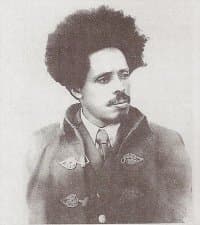
Abebe Aregai
General · Modern
58.2Total
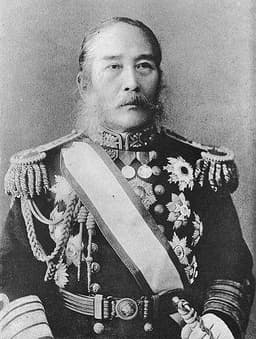
Enomoto Takeaki
General · Modern
51.6Total
Basic Information
Born
1903
1836
Died
1960
1908
Era
Modern
Modern
Nationality
Ethiopia
Japan
Occupation
General
General
Civilization
Other
Eastern
Score Comparison
Military (10%)
70.0
25.0
Political (20%)
53.8
54.7
Influence (20%)
62.0
54.1
Legacy (20%)
50.0
46.7
Leadership (15%)
62.0
68.0
Strategy (15%)
58.0
55.0
TOTAL
58.2
51.6
Abebe Aregai — Complete Timeline
1936 AD
Led Arbegnoch Resistance against Italian OccupationWar
After the Italian conquest, Abebe Aregai organized and led the Arbegnoch (Patriots) guerrilla resistance in Shewa. His forces harassed Italian supply lines and conducted hit-and-run attacks for five years.
ResistanceGuerrilla WarfareItalian Occupation
Impact: regionalconstructive
1957 AD
Appointed Prime Minister of EthiopiaPolitical Action◆ Major
Emperor Haile Selassie appointed Abebe Aregai as Prime Minister of Ethiopia. He served until his death in 1960, overseeing post-war reconstruction and modernization efforts.
Prime MinisterGovernmentReconstruction
Impact: nationalconstructive
1960 AD
Killed during 1960 Coup AttemptPolitical Action◆ Major
Abebe Aregai was assassinated during an attempted coup d'
CoupAssassinationEthiopia
Impact: nationaltragic
Enomoto Takeaki — Complete Timeline
1868 AD
Led the Shogunate Fleet to HokkaidoWar
Enomoto commanded the shogunate's remaining naval forces, including eight warships, and sailed to Hokkaido. This fleet formed the core of the Republic of Ezo's military and allowed the loyalists to establish a base.
Naval CommandBoshin WarShogunate Loyalist
Impact: regional
Founded the Republic of EzoPolitical Action
After the shogunate's defeat, Enomoto led loyalist forces to Hokkaido and established the Republic of Ezo, an independent state with a Western-style government. He was elected president and organized a defense against imperial forces.
Boshin WarSeparatist StateShogunate Loyalist
Impact: national
1869 AD
Surrendered at the Battle of HakodateWar◆ Major
Enomoto's forces were defeated by the imperial army at the Battle of Hakodate. He surrendered the Republic of Ezo and was taken prisoner, ending the last organized resistance to the Meiji Restoration.
Boshin WarDefeatEnd of Resistance
Impact: nationaltragic
1885 AD
Served as Minister of Foreign Affairs in the Meiji GovernmentPolitical Action◆ Major
After being pardoned, Enomoto served as Japan's Minister of Foreign Affairs. He negotiated treaties with Western powers and worked to revise the unequal treaties imposed on Japan, contributing to Japan's diplomatic modernization.
DiplomacyTreaty RevisionMeiji Government
Impact: nationalconstructive
Expert Analysis
Abebe Aregai vs Enomoto Takeaki
# The Rebel’s Second Act
On a windswept shore of Hokkaido in the winter of 1868, a Japanese admiral in Western naval uniform watched his fledgling republic crumble. Half a world away and seven decades later, an Ethiopian guerrilla commander melted into the mountains of Shewa, his rifle oiled and his resolve unbroken. Enomoto Takeaki and Abebe Aregai never met, never corresponded, yet their lives trace a strange symmetry: both were men who fought losing wars against overwhelming forces, surrendered or retreated, and then—against all expectation—rose to govern the very nations that had once defeated them. Why did one become a footnote and the other a founding father of modern statehood? The answer lies not in the scorecards of history, but in the soil beneath their feet.
Origins
Enomoto Takeaki was born in 1836 into a samurai family of the Tokugawa shogunate, a world of rigid hierarchy and feudal obligation. He studied Dutch naval science and Western military technology, absorbing the very ideas that would soon overwhelm his civilization. His Japan was a closed island forced open by Commodore Perry’s black ships in 1853; Enomoto’s generation lived the trauma of collision. Abebe Aregai, born in 1903, entered an Ethiopia that had never been colonized—a proud, ancient Christian kingdom surrounded by European empires. He grew up in the court of Emperor Haile Selassie, learning the arts of war and diplomacy in a land where independence was not a memory but a living fact. Enomoto’s era was one of collapse; Abebe’s, one of defiance.
Rise to Power
Enomoto’s path was naval and aristocratic. He commanded the shogunate’s fleet, eight warships that represented the last military muscle of a dying regime. When the imperial forces crushed the Tokugawa in 1868, he did not surrender. Instead, he sailed north to Hokkaido, declared the Republic of Ezo, and became its first—and only—president. It was a desperate gambit, a samurai’s last stand dressed in Western constitutional clothes. Abebe Aregai’s rise was guerrilla and organic. When Mussolini’s tanks rolled into Ethiopia in 1935–1936, Abebe did not command a fleet. He gathered the *Arbegnoch*—the Patriots—and led them into the highlands. His war was not a naval retreat but a thousand small ambushes, raids on Italian supply lines, and the slow, grinding erosion of an occupier’s will. Enomoto’s power came from a fleet he inherited; Abebe’s, from a resistance he built.
Leadership & Governance
Enomoto’s leadership was that of a technocrat in uniform. As president of the Republic of Ezo, he attempted to create a modern state on a frozen frontier—elections, a cabinet, even a foreign policy. But his military strategy was defensive and doomed: he fortified Hakodate and waited for a siege that came. When the imperial army stormed his fortress in 1869, he surrendered, was imprisoned, and later pardoned. Then came his astonishing second act: he served as Japan’s Minister of Foreign Affairs in 1885, negotiating treaties with the very Western powers that had humiliated his nation. He became a loyal servant of the Meiji government, the regime he had once fought. Abebe Aregai’s leadership was that of a lion in the brush. His guerrilla strategy was patient and adaptive: he avoided pitched battles, struck at weak points, and kept the resistance alive for five years until the British and Allied forces helped liberate Ethiopia in 1941. After the war, Emperor Haile Selassie appointed him Prime Minister in 1957. Where Enomoto governed through diplomacy and treaties, Abebe governed through loyalty and force—overseeing reconstruction, suppressing rebellions, and holding the empire together. His political wisdom was not in compromise but in command.
Triumph & Tragedy
Enomoto’s greatest moment was also his most tragic: the founding of the Republic of Ezo, a brave but futile gesture that ended in surrender. His triumph came later, quietly, in the halls of diplomacy—a samurai who learned to serve his conquerors. Abebe Aregai’s triumph was the liberation of his homeland, a victory earned not in a single battle but in years of steadfast refusal to submit. His tragedy came on December 13, 1960, when a coup by the Imperial Bodyguard trapped him in a room and shot him dead. He died trying to negotiate, a soldier’s end for a politician’s mission. Enomoto died in 1908, aged 72, a respected elder of the Meiji state. Abebe died at 57, still in power, cut down by the very institution he had sworn to protect.
Character & Destiny
Enomoto Takeaki was a pragmatist. He understood that Japan’s future lay not in restoring the shogunate but in embracing the Meiji transformation. His surrender was not cowardice but calculation: he lived to serve, and in serving, he redeemed his honor. Abebe Aregai was a patriot of a different stamp. He never surrendered to the Italians; he outlasted them. His destiny was to embody Ethiopia’s unbroken sovereignty, a living symbol that the empire had never truly fallen. Enomoto’s character was shaped by defeat and adaptation; Abebe’s, by defiance and endurance. One bent with the wind; the other stood against it.
Legacy
Enomoto Takeaki is remembered in Japan as a complex figure—a rebel who became a statesman, a loser who helped build the winner’s world. His legacy is a lesson in the art of political survival. Abebe Aregai is remembered in Ethiopia as a hero of the resistance, the *Arbegnoch* leader who never gave up. His legacy is a lesson in the power of refusal. Both men scored high in leadership—84.7 for Enomoto, 84.5 for Abebe—but their paths diverged because their nations’ needs diverged. Japan needed men who could adapt to a new order; Ethiopia needed men who could defend an ancient one.
Conclusion
History does not reward the pure; it rewards the useful. Enomoto Takeaki and Abebe Aregai both understood that the true test of a leader is not how they fight, but how they serve after the fighting ends. One surrendered his republic to build a nation; the other died defending the one he had saved. In their different fates, we see the same truth: that loyalty to a cause is not the same as loyalty to a country, and that the greatest victories are often the ones that leave no monuments, only the quiet, stubborn fact of survival.
Rankings
🥇
Abebe AregaiLeader
Mil: 70.0Pol: 53.8Inf: 62.0
58.2
🥈
Enomoto Takeaki
Mil: 25.0Pol: 54.7Inf: 54.1
51.6
+6.6 behind
How This Comparison Works
Algorithm
Each figure is scored on 6 dimensions (0—100 scale) based on structured historical data: Military (10%), Political (20%), Influence (20%), Legacy (20%), Leadership (15%), Strategy (15%). The weighted total produces the final ranking.
Data Sources
Scores are computed from structured sub-indicators in the database. Scale factors adjust for era (Ancient ×0.85, Modern ×1.0) and civilization size (Eastern ×1.05, Other ×0.80) to account for differences in population and military scale.
Maximum 3 Figures
Comparisons are limited to 2—3 figures to ensure readability and statistical meaningfulness.
Error Margins
±5 points per dimension — Sub-scores are derived from historical records with inherent uncertainty. Two figures within 5 points on a dimension should be considered roughly equivalent in that area.
Total Score Accuracy
±3 points overall — The weighted combination of 6 dimensions produces a total score with approximately ±3 points of uncertainty. Differences of less than 3 points are not statistically significant— the figures are effectively tied.
Known Limitations
- Historical records are incomplete and uneven across civilizations
- Figures from oral-tradition societies may be underrepresented
- Occupation labels can misclassify multi-role figures
- Scores measure capability and impact, not moral character
- Quantitative scoring is a comparison tool, not absolute truth
Capability Radar
Military (10%) — Battles & Warfare
Battles
65
40
Win Rate
60
35
Expansion
40
30
Political (20%) — Governance & Reform
Reform
45
30
Diplomacy
60
40
Economy
40
25
Influence (20%) — Cultural & Global Reach
Cultural
45
25
Global
35
20
Legacy (20%) — Historical Impact
Historical
55
40
Longevity
40
30
Leadership (15%) — Power & Stability
Tenure
55
35
Stability
50
20
Strategy (15%) — Tactics & Innovation
Strategy
75
50
Tactics
70
55
Reform
50
45
Similar Comparisons
Comments & Discussion
SwordAndScroll6/16/2026
As a military historian, I respect both commanders, but Enomoto's strategic mind outshines. He literally founded the Republic of Ezo with a democratic vote in 1868—years before Japan's Meiji constitution—while commanding a fleet of eight modern warships. Abebe's guerrilla resistance was fierce but tactical; Enomoto built a navy state from scratch. One surrendered to the Imperial Army, the other never truly won a conventional battle. Score it to the admiral who adapted faster.
灰烬与桂冠6/16/2026
我是数据怀疑论者。所谓的"对称"被严重高估了:Enomoto部下只有约3,000人,而Abebe指挥的Shifta游击队后期膨胀到数万;前者的共和国存活7个月,后者的抵抗撑了5年直到1941年英国干预。若真比"治政",Abebe在战后成为内政大臣、镇压政敌的手段可比Enomoto在明治政府中当海军大臣时狠辣多了。数字不撒谎:一个死在任上,一个活成英雄。前者不过是幕府的漂亮注解。
StratifiedMemory6/16/2026
Classics scholar here: the "footnote vs founding father" framing is romantic nonsense. Enomoto's surrender in Hakodate was conditional—he got to keep his rank and eventually became Japan's Minister of Education, Navy, and Foreign Affairs. That's not a footnote, that's a reset. Abebe's legacy relies on Ethiopia never being fully colonized; his resistance preserved a myth of unbroken sovereignty. But Enomoto reintegrated into a modernizing state that actually won. Which is more impressive? Adaptin
野史铁匠6/16/2026
Revisionist critique时间:教科书把Abebe塑造成民族英雄,但别忘了他在1930年代曾是Haile Selassie镇压北方叛乱的得力打手,还参与过对Ogaden部落的清洗。Enomoto至少为幕府尽忠到最后一刻,然后带着舰队和外交手腕转投维新政府。Abebe呢?1941年他投降意大利后再投向盟军,变节间隔不超过三个月。真要比忠义,东方的武士道可比阿比西尼亚的游击法则纯粹得多。
CloudTrail6/16/2026
History buff here: the real twist is that both men ended up governing the very systems that crushed them—but Abebe did it as a conqueror's enforcer. After 1941, he ran Ethiopia's internal security for Haile Selassie, literally hunting down former resistance allies who became political threats. Enomoto, by contrast, served the Meiji government that had destroyed his republic, yet helped build Japan's modern navy. Which is more admirable: building your enemy's future, or policing your own past? I