Loading...
Abebe Aregai vs Ehud Barak
Ehud Barak leads by 1.7 pts · 2 figures compared
…
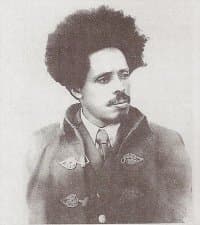
Abebe Aregai
General · Modern
58.2Total
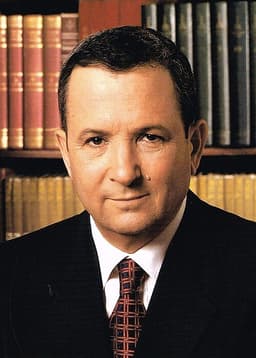
Ehud Barak
General · Modern
59.9Total
Basic Information
Born
1903
1942
Died
1960
—
Era
Modern
Modern
Nationality
Ethiopia
Israel
Occupation
General
General
Civilization
Other
Middle Eastern
Score Comparison
Military (10%)
70.0
63.3
Political (20%)
53.8
72.0
Influence (20%)
62.0
55.0
Legacy (20%)
50.0
52.0
Leadership (15%)
62.0
66.0
Strategy (15%)
58.0
61.2
TOTAL
58.2
59.9
Abebe Aregai — Complete Timeline
1936 AD
Led Arbegnoch Resistance against Italian OccupationWar
After the Italian conquest, Abebe Aregai organized and led the Arbegnoch (Patriots) guerrilla resistance in Shewa. His forces harassed Italian supply lines and conducted hit-and-run attacks for five years.
ResistanceGuerrilla WarfareItalian Occupation
Impact: regionalconstructive
1957 AD
Appointed Prime Minister of EthiopiaPolitical Action◆ Major
Emperor Haile Selassie appointed Abebe Aregai as Prime Minister of Ethiopia. He served until his death in 1960, overseeing post-war reconstruction and modernization efforts.
Prime MinisterGovernmentReconstruction
Impact: nationalconstructive
1960 AD
Killed during 1960 Coup AttemptPolitical Action◆ Major
Abebe Aregai was assassinated during an attempted coup d'
CoupAssassinationEthiopia
Impact: nationaltragic
Ehud Barak — Complete Timeline
1973 AD
Awarded Medal of Distinguished ServiceOther
Barak received the Medal of Distinguished Service, Israel's highest military decoration, for his actions during the Yom Kippur War. He led a commando raid deep into Egyptian territory, destroying radar installations. This was part of a broader operation to open a supply route.
Military DecorationYom Kippur War
Impact: nationalconstructive
1976 AD
Led Operation Thunderbolt (Entebbe Raid)War◆ Major
As Chief of Staff, Barak planned and oversaw the Entebbe raid, a rescue of hostages hijacked by Palestinian and German militants in Uganda. Israeli commandos rescued 102 hostages. The operation was a major military success and boosted Israeli morale and international standing.
EntebbeHostage RescueCounterterrorism
Impact: globalconstructive
1991 AD
Appointed Chief of Staff of the IDFPolitical Action◆ Major
Barak was appointed the 14th Chief of Staff of the Israel Defense Forces. He served until 1995, overseeing military operations during the First Intifada and the Oslo Accords period. His tenure included the 1993 Operation Accountability in Lebanon.
Military CommandIDF
Impact: national
1999 AD
Elected Prime Minister of IsraelPolitical Action◆ Major
Barak was elected Prime Minister of Israel, defeating incumbent Benjamin Netanyahu. He campaigned on a platform of peace negotiations and domestic reform. His government pursued the Camp David Summit with Palestinians and withdrew from southern Lebanon.
ElectionPeace Process
Impact: regionalconstructive
2000 AD
Camp David Summit with ArafatPolitical Action
Barak participated in the Camp David Summit with Palestinian leader Yasser Arafat and U.S. President Bill Clinton. The summit aimed to reach a final status agreement but failed. Barak offered territorial concessions that were rejected. The failure contributed to the Second Intifada.
Peace NegotiationsCamp DavidIsraeli-Palestinian Conflict
Impact: global
Withdrew from Southern LebanonPolitical Action◆ Major
Barak ordered the unilateral withdrawal of Israeli forces from the security zone in southern Lebanon, ending 18 years of occupation. The withdrawal was completed in May 2000. Hezbollah claimed victory, and the move was criticized by some as a retreat under fire.
WithdrawalLebanonHezbollah
Impact: regional
Expert Analysis
Abebe Aregai vs Ehud Barak
# The General and the Patriot
In the summer of 2000, Ehud Barak sat across from Yasser Arafat at Camp David, gambling his political future on a peace deal that would never come. Forty-four years earlier, Abebe Aregai was dragged from his car in Addis Ababa and shot dead by mutinous soldiers—a prime minister killed by the very institution meant to protect him. Both men rose from military glory to the highest civilian office. Both sought to shape their nations' destinies in moments of existential crisis. Yet one is remembered as a tragic figure of failed promise, the other as a martyr of unyielding resistance. What separated them was not merely circumstance, but the fundamental question of what it means to lead a people under siege.
Origins
Ehud Barak was born in 1942 on Kibbutz Mishmar HaSharon, a child of socialist Zionism. His parents were Holocaust survivors from Lithuania, and the young Barak grew up in a world where survival was the first commandment. The kibbutz instilled in him a pragmatic, almost mechanical approach to problem-solving—a mindset that would serve him well on the battlefield but poorly in the messy realm of politics.
Abebe Aregai came from an older, more hierarchical world. Born in 1903 in the Shewa region of Ethiopia, he was a product of the Solomonic dynasty's feudal system. His father was a *dejazmach*, a military commander, and young Abebe learned early that loyalty to the emperor was the highest virtue. His Ethiopia had never been colonized—a fact that made the Italian invasion of 1935 all the more shocking. For Aregai, the enemy was not an abstract ideology but a concrete invading army.
Rise to Power
Barak's ascent was meteoric and methodical. He joined the Israeli Defense Forces in 1959 and quickly distinguished himself as a soldier of almost superhuman competence. He led the elite Sayeret Matkal commando unit, personally infiltrating Beirut disguised as a woman in 1973 to assassinate PLO leaders. For his actions during the Yom Kippur War, he received the Medal of Distinguished Service, Israel's highest military decoration. By 1991, he was Chief of Staff, having planned the legendary Entebbe raid in 1976—a mission that became the gold standard of hostage rescue.
Aregai's rise was forged in fire of a different kind. After Emperor Haile Selassie fled the Italian invasion in 1936, Aregai refused to surrender. He retreated to the mountains of Shewa and organized the *Arbegnoch*—the Patriots—a guerrilla force that harassed Italian occupiers for five years. His fighters ambushed supply convoys, cut telegraph lines, and assassinated collaborators. When the British and Ethiopian forces recaptured Addis Ababa in 1941, Aregai emerged from the wilderness not as a defeated rebel but as a national hero. He was appointed governor of several provinces, then Minister of Defense, and finally Prime Minister in 1957.
Leadership & Governance
Barak governed as a technocrat. Elected Prime Minister in 1999 on a peace platform, he approached negotiations with the same precision he had applied to military operations. The Camp David summit of 2000 was his masterpiece and his undoing. He offered Arafat a Palestinian state in 95% of the West Bank, a capital in East Jerusalem, and a solution to the refugee problem. But he demanded an end to all claims—a finality that Arafat could not accept. Barak's withdrawal from southern Lebanon that same year was similarly decisive and similarly controversial: he pulled Israeli troops out unilaterally, ending 18 years of occupation but handing Hezbollah a propaganda victory.
Aregai governed as a loyalist. As Prime Minister, he oversaw Ethiopia's modernization under Haile Selassie's autocratic rule. He built roads, expanded education, and strengthened the army—but always within the framework of imperial authority. His military genius was in guerrilla warfare, not statecraft; his political wisdom lay in knowing that his power derived entirely from the emperor's trust. He never sought to be a reformer; he sought to be a stabilizer.
Triumph & Tragedy
Barak's greatest triumph was Entebbe—a raid so audacious that it seemed lifted from a Hollywood script. Israeli commandos flew 2,500 miles to Uganda, rescued 102 hostages, and killed all hijackers. The operation announced to the world that Israel would not negotiate with terrorists. His greatest tragedy was Camp David. The summit's failure led directly to the Second Intifada, which killed thousands and shattered the Israeli peace camp. Barak lost the 2001 election to Ariel Sharon in a landslide.
Aregai's triumph was the five-year guerrilla war that kept Ethiopian resistance alive when the emperor had fled. His fighters never liberated the country—that required British intervention—but they proved that occupation could not be normalized. His tragedy came on December 13, 1960, when the Imperial Bodyguard attempted a coup. Aregai rushed to the palace to negotiate, but was captured and executed by the very soldiers he had once commanded. He died trying to save a regime that was already crumbling.
Character & Destiny
Barak was a man of cold precision. He calculated odds, analyzed risks, and executed plans with ruthless efficiency. But politics is not a special forces operation; it requires warmth, patience, and the ability to accept ambiguity. His failure at Camp David was not a failure of intellect but of empathy—he could not understand why Arafat would reject a deal that seemed so rational.
Aregai was a man of fierce loyalty. He fought for an emperor, not an ideology. His personality was forged in the mountains of Shewa, where survival depended on trust and camaraderie. He could not imagine a world where the emperor was not the center of authority—and that faith cost him his life when the emperor's own guards turned against him.
Legacy
Barak is remembered as a brilliant soldier who failed as a politician. His military innovations—particularly in special operations—influenced counterterrorism worldwide. But his political legacy is mixed: the Lebanon withdrawal is seen as a mistake that empowered Hezbollah, and Camp David is studied as a cautionary tale about the limits of negotiation.
Aregai is remembered as a national hero in Ethiopia. His guerrilla resistance is taught in schools, and his death is mourned as a martyrdom. But his legacy is also complex: he served a feudal system that was already dying, and his loyalty to Haile Selassie meant he could not adapt to the changes sweeping post-colonial Africa.
Conclusion
Two generals, two prime ministers, two nations under pressure. Barak represents the modern liberal state—rational, calculating, but ultimately unable to reconcile its security needs with its democratic ideals. Aregai represents the older world of personal loyalty and national resistance—heroic in its defiance, but tragically bound to a system that could not survive. Their stories remind us that leadership is never just about competence or courage. It is about timing—and the cruel reality that even the best generals cannot always choose the wars they must fight.
Rankings
🥇
Ehud BarakLeader
Mil: 63.3Pol: 72.0Inf: 55.0
59.9
🥈
Abebe Aregai
Mil: 70.0Pol: 53.8Inf: 62.0
58.2
+1.7 behind
How This Comparison Works
Algorithm
Each figure is scored on 6 dimensions (0—100 scale) based on structured historical data: Military (10%), Political (20%), Influence (20%), Legacy (20%), Leadership (15%), Strategy (15%). The weighted total produces the final ranking.
Data Sources
Scores are computed from structured sub-indicators in the database. Scale factors adjust for era (Ancient ×0.85, Modern ×1.0) and civilization size (Eastern ×1.05, Other ×0.80) to account for differences in population and military scale.
Maximum 3 Figures
Comparisons are limited to 2—3 figures to ensure readability and statistical meaningfulness.
Error Margins
±5 points per dimension — Sub-scores are derived from historical records with inherent uncertainty. Two figures within 5 points on a dimension should be considered roughly equivalent in that area.
Total Score Accuracy
±3 points overall — The weighted combination of 6 dimensions produces a total score with approximately ±3 points of uncertainty. Differences of less than 3 points are not statistically significant— the figures are effectively tied.
Known Limitations
- Historical records are incomplete and uneven across civilizations
- Figures from oral-tradition societies may be underrepresented
- Occupation labels can misclassify multi-role figures
- Scores measure capability and impact, not moral character
- Quantitative scoring is a comparison tool, not absolute truth
Capability Radar
Military (10%) — Battles & Warfare
Battles
65
65
Win Rate
60
70
Expansion
40
55
Political (20%) — Governance & Reform
Reform
45
50
Diplomacy
60
60
Economy
40
45
Influence (20%) — Cultural & Global Reach
Cultural
45
50
Global
35
55
Legacy (20%) — Historical Impact
Historical
55
55
Longevity
40
45
Leadership (15%) — Power & Stability
Tenure
55
55
Stability
50
40
Strategy (15%) — Tactics & Innovation
Strategy
75
70
Tactics
70
75
Reform
50
60
Similar Comparisons
Comments & Discussion
TheScourgeOfKibbutz6/16/2026
Barak is the classic kibbutznik poster child—too smart by half, thinks he can negotiate terrorists into democrats. Camp David 2000 was a disaster because he offered Arafat everything but Jerusalem water rights, then blamed the other guy when it failed. Abebe Aregai at least died fighting for his nation's soul. Barak got out of politics and went into business. One's a martyr, the other's a resume.|TheStratagemPeddler|en|From a pure operational standpoint, Barak's Mossad work was brilliant—Buenos