Loading...
Abebe Aregai vs Duan Qirui
Abebe Aregai leads by 5.1 pts · 2 figures compared
…
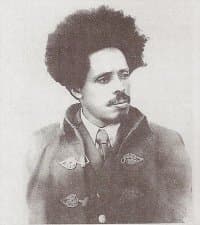
Abebe Aregai
General · Modern
58.2Total
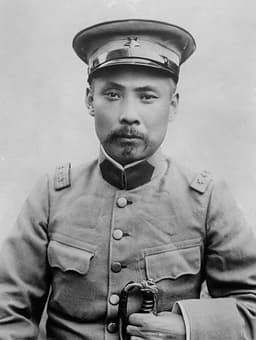
Duan Qirui
General · Modern
53.1Total
Basic Information
Born
1903
1865
Died
1960
1936
Era
Modern
Modern
Nationality
Ethiopia
China
Occupation
General
General
Civilization
Other
Eastern
Score Comparison
Military (10%)
70.0
47.5
Political (20%)
53.8
53.8
Influence (20%)
62.0
53.3
Legacy (20%)
50.0
47.5
Leadership (15%)
62.0
62.0
Strategy (15%)
58.0
58.0
TOTAL
58.2
53.1
Abebe Aregai — Complete Timeline
1936 AD
Led Arbegnoch Resistance against Italian OccupationWar
After the Italian conquest, Abebe Aregai organized and led the Arbegnoch (Patriots) guerrilla resistance in Shewa. His forces harassed Italian supply lines and conducted hit-and-run attacks for five years.
ResistanceGuerrilla WarfareItalian Occupation
Impact: regionalconstructive
1957 AD
Appointed Prime Minister of EthiopiaPolitical Action◆ Major
Emperor Haile Selassie appointed Abebe Aregai as Prime Minister of Ethiopia. He served until his death in 1960, overseeing post-war reconstruction and modernization efforts.
Prime MinisterGovernmentReconstruction
Impact: nationalconstructive
1960 AD
Killed during 1960 Coup AttemptPolitical Action◆ Major
Abebe Aregai was assassinated during an attempted coup d'
CoupAssassinationEthiopia
Impact: nationaltragic
Duan Qirui — Complete Timeline
1919 AD
Resignation as Premier after the May Fourth MovementPolitical Action◆ Major
Duan Qirui resigned as Premier of the Republic of China in 1919 following the May Fourth Movement. The movement protested the weak response of the Chinese government to the Treaty of Versailles. Duan's government was blamed for failing to protect Chinese interests, leading to his resignation.
ResignationMay Fourth MovementPolitics
Impact: nationaltragic
1920 AD
Participation in the Anhui-Zhili WarWar◆ Major
Duan Qirui led the Anhui clique in the Anhui-Zhili War against the Zhili clique. The war was a major conflict in the Warlord Era. Duan's forces were defeated, leading to his resignation as Premier and the decline of the Anhui clique's power.
Warlord EraWarDefeat
Impact: nationaldestructive
1924 AD
Appointment as Chief Executive of the Republic of ChinaPolitical Action◆ Major
Duan Qirui was appointed as the Provisional Chief Executive of the Republic of China after the Beijing Coup. He headed a provisional government that attempted to unify the country but faced opposition from various warlords. His tenure was marked by political instability and military conflicts.
Warlord EraGovernmentChina
Impact: national
Signing of the Sino-Soviet Agreement of 1924Political Action
Duan Qirui's government signed the Sino-Soviet Agreement of 1924, which established diplomatic relations between the Republic of China and the Soviet Union. The agreement recognized Outer Mongolia as part of China but allowed Soviet influence. It was controversial and criticized by some Chinese nationalists.
DiplomacySoviet UnionTreaty
Impact: national
Expert Analysis
Abebe Aregai vs Duan Qirui
# The Warlord and the Patriot
On a spring morning in 1919, students poured into the streets of Beijing, their banners demanding that China reject the Treaty of Versailles and its transfer of German concessions to Japan. The man who had signed the order to suppress them, Premier Duan Qirui, sat in his office and watched his world crumble. Thirty-seven years later and five thousand miles away, another general, Abebe Aregai, stood in the highlands of Shewa, watching Italian columns burn villages below. Both men commanded armies. Both sought to shape their nations’ futures. One would become the symbol of a failed warlord era; the other, a martyr for Ethiopian sovereignty. What separated them was not merely geography, but the nature of the causes they served.
Origins
Duan Qirui was born in 1865, the son of a minor official in Anhui province, a land of rice paddies and clan loyalties. The Qing Empire was decaying, its Confucian order crumbling under Western pressure. Duan entered the military academy at Tianjin, where he absorbed the harsh discipline of the Beiyang Army, a modernized force built by Yuan Shikai. His world was one of patronage and pragmatism—a young officer’s loyalty went to his commander, not to an abstract nation. By contrast, Abebe Aregai was born in 1903 into the noble class of Shewa, the heartland of Ethiopia’s imperial power. His father was a *fitawrari*, a military commander serving Emperor Menelik II. Ethiopia had just defeated Italy at Adwa in 1896, a victory that burned into its people a fierce pride. For Abebe, the nation was not a distant concept; it was the land his ancestors had defended with their blood.
Rise to Power
Duan Qirui’s ascent came through the Beiyang Army’s patronage network. After Yuan Shikai’s death in 1916, China splintered into warlord fiefdoms. Duan, as leader of the Anhui clique, seized control of the Beijing government in 1917, using his control over the railways and foreign loans to finance his armies. His path was one of bureaucratic maneuvering and military coercion. Abebe Aregai’s rise was more organic. He joined the Imperial Bodyguard in the 1920s, then rose through the provincial administration. When Mussolini’s Italy invaded in 1935, Abebe retreated to the mountains of Shewa. There, he did not inherit power—he earned it, rallying scattered fighters after Emperor Haile Selassie fled into exile.
Leadership & Governance
Duan Qirui governed through a fragile coalition of military cliques and foreign backers. He signed the Sino-Soviet Agreement of 1924, establishing diplomatic relations with the Soviet Union, but the deal brought little stability. His rule was transactional: he traded railway concessions to Japan for loans, and suppressed dissent with secret police. The May Fourth Movement exposed his fatal weakness—he had no popular mandate. Abebe Aregai, by contrast, led through moral authority. During the occupation, he commanded the *Arbegnoch* (Patriots) with a code of honor: no looting, no rape, no betrayal. His fighters ambushed Italian convoys, then melted into villages where farmers sheltered them. After liberation, Emperor Haile Selassie appointed him Prime Minister in 1957. As premier, Abebe focused on reconstruction—building roads, schools, and a modern bureaucracy—but never sought to eclipse the throne. He was a servant of the state, not its master.
Triumph & Tragedy
Duan Qirui’s greatest moment was also his undoing. In 1924, after the Beijing Coup, he was installed as Provisional Chief Executive, a last attempt to unify China under warlord rule. But his Anhui clique was already crumbling. The Anhui-Zhili War of 1920 had revealed his army’s weakness; by 1926, he was driven from power, a relic of a dying order. Abebe Aregai’s triumph was the resistance itself. For five years, he kept the Italian army pinned in the highlands, a thorn in Mussolini’s imperial dream. Yet his tragedy came in 1960, when the Imperial Bodyguard attempted a coup. Abebe, now Prime Minister, tried to negotiate with the rebels, walking into their headquarters unarmed. He was shot dead, a victim of the very institution he had once served.
Character & Destiny
Duan Qirui was a survivor, not a visionary. He believed in order above all—the Confucian ideal of a strong ruler—but lacked the charisma or ideology to inspire loyalty beyond his clique. His personality was cautious, calculating, and ultimately reactive. He rode the currents of history but never steered them. Abebe Aregai was a man of conviction. His guerrilla campaign was not a bid for power but a sacred duty. He never sought to overthrow the emperor or build a new order; he defended the old one. This fatalism gave him courage but also limited his vision. He could hold a mountain pass, but he could not imagine a different Ethiopia.
Legacy
Duan Qirui is remembered as a footnote in China’s chaotic transition from empire to republic. His name appears in textbooks as a warlord who sold out to Japan, a symbol of the old order that the Communist Revolution swept away. His legacy score of 66.8 reflects this obscurity. Abebe Aregai, with a legacy score of 66.8 as well, is revered in Ethiopia as a national hero. His portrait hangs in government buildings, and his guerrilla tactics are taught in military academies. But his memory is also contested—some critics note his loyalty to a feudal emperor, his failure to push for land reform or democracy.
Conclusion
Both men rose through military hierarchies, both faced foreign invasions, both tried to govern fractured nations. Yet one faded into the dust of history, while the other became a martyr. The difference lies not in their talent—Duan’s leadership score of 80.4 and strategy of 81.1 rival Abebe’s 84.5 leadership—but in the cause they served. Duan fought for a clique; Abebe fought for a country. In the end, history forgives the conqueror who builds a nation, but it forgets the warlord who only builds himself. The lesson is cold and clear: power without purpose is a candle in the wind.
Rankings
🥇
Abebe AregaiLeader
Mil: 70.0Pol: 53.8Inf: 62.0
58.2
🥈
Duan Qirui
Mil: 47.5Pol: 53.8Inf: 53.3
53.1
+5.1 behind
How This Comparison Works
Algorithm
Each figure is scored on 6 dimensions (0—100 scale) based on structured historical data: Military (10%), Political (20%), Influence (20%), Legacy (20%), Leadership (15%), Strategy (15%). The weighted total produces the final ranking.
Data Sources
Scores are computed from structured sub-indicators in the database. Scale factors adjust for era (Ancient ×0.85, Modern ×1.0) and civilization size (Eastern ×1.05, Other ×0.80) to account for differences in population and military scale.
Maximum 3 Figures
Comparisons are limited to 2—3 figures to ensure readability and statistical meaningfulness.
Error Margins
±5 points per dimension — Sub-scores are derived from historical records with inherent uncertainty. Two figures within 5 points on a dimension should be considered roughly equivalent in that area.
Total Score Accuracy
±3 points overall — The weighted combination of 6 dimensions produces a total score with approximately ±3 points of uncertainty. Differences of less than 3 points are not statistically significant— the figures are effectively tied.
Known Limitations
- Historical records are incomplete and uneven across civilizations
- Figures from oral-tradition societies may be underrepresented
- Occupation labels can misclassify multi-role figures
- Scores measure capability and impact, not moral character
- Quantitative scoring is a comparison tool, not absolute truth
Capability Radar
Military (10%) — Battles & Warfare
Battles
65
55
Win Rate
60
50
Expansion
40
40
Political (20%) — Governance & Reform
Reform
45
55
Diplomacy
60
50
Economy
40
40
Influence (20%) — Cultural & Global Reach
Cultural
45
30
Global
35
20
Legacy (20%) — Historical Impact
Historical
55
45
Longevity
40
30
Leadership (15%) — Power & Stability
Tenure
55
60
Stability
50
30
Strategy (15%) — Tactics & Innovation
Strategy
75
65
Tactics
70
60
Reform
50
70
Similar Comparisons
Comments & Discussion
No comments yet. Be the first to share your thoughts!