Loading...
Abebe Aregai vs Deodoro da Fonseca
Abebe Aregai leads by 9.4 pts · 2 figures compared
…
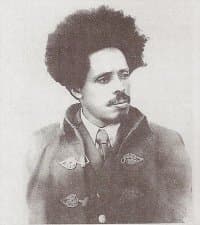
Abebe Aregai
General · Modern
58.2Total
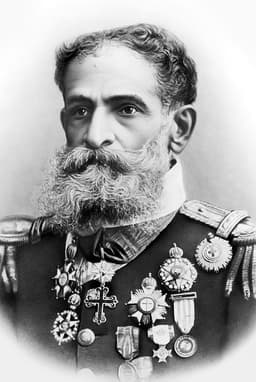
Deodoro da Fonseca
General · Modern
48.8Total
Basic Information
Born
1903
1827
Died
1960
1892
Era
Modern
Modern
Nationality
Ethiopia
Brazil
Occupation
General
General
Civilization
Other
Western
Score Comparison
Military (10%)
70.0
50.0
Political (20%)
53.8
45.1
Influence (20%)
62.0
54.1
Legacy (20%)
50.0
44.2
Leadership (15%)
62.0
57.6
Strategy (15%)
58.0
38.6
TOTAL
58.2
48.8
Abebe Aregai — Complete Timeline
1936 AD
Led Arbegnoch Resistance against Italian OccupationWar
After the Italian conquest, Abebe Aregai organized and led the Arbegnoch (Patriots) guerrilla resistance in Shewa. His forces harassed Italian supply lines and conducted hit-and-run attacks for five years.
ResistanceGuerrilla WarfareItalian Occupation
Impact: regionalconstructive
1957 AD
Appointed Prime Minister of EthiopiaPolitical Action◆ Major
Emperor Haile Selassie appointed Abebe Aregai as Prime Minister of Ethiopia. He served until his death in 1960, overseeing post-war reconstruction and modernization efforts.
Prime MinisterGovernmentReconstruction
Impact: nationalconstructive
1960 AD
Killed during 1960 Coup AttemptPolitical Action◆ Major
Abebe Aregai was assassinated during an attempted coup d'
CoupAssassinationEthiopia
Impact: nationaltragic
Deodoro da Fonseca — Complete Timeline
1889 AD
Proclamation of the Brazilian RepublicPolitical Action
Deodoro da Fonseca led a military coup that overthrew Emperor Pedro II on November 15, 1889. He proclaimed the Republic of the United States of Brazil, ending 67 years of imperial rule.
CoupRepublic
Impact: globalprogressive
1891 AD
Election as First President of BrazilPolitical Action◆ Major
Deodoro da Fonseca was elected the first President of Brazil by the Constituent Congress on February 25, 1891. He took office under the new republican constitution, but his rule was brief and authoritarian.
ElectionPresidency
Impact: national
Dissolution of the National CongressPolitical Action◆ Major
Facing political opposition, Deodoro da Fonseca dissolved the National Congress on November 3, 1891, and declared a state of siege. This authoritarian act triggered a naval revolt and his eventual resignation.
AuthoritarianismPolitical Crisis
Impact: nationaldestructive
Resignation from the PresidencyPolitical Action◆ Major
Deodoro da Fonseca resigned the presidency on November 23, 1891, after a naval rebellion threatened his government. He handed power to Vice President Floriano Peixoto, ending his 9-month rule.
ResignationPolitical Crisis
Impact: nationaltragic
Expert Analysis
Abebe Aregai vs Deodoro da Fonseca
# The General as Statesman: Two Paths from Battlefield to Power
On a November morning in 1891, a weary Brazilian general boarded a ship in Rio de Janeiro harbor, leaving behind a presidency he had held for less than nine months. Half a world away and sixty years later, another general died in a hail of bullets in Addis Ababa, killed while trying to negotiate with the very men who had once served under him. Deodoro da Fonseca and Abebe Aregai never met, never corresponded, never knew of each other's existence. Yet both were military men thrust into the treacherous terrain of political power, and both discovered that the skills that win wars are not always the skills that govern nations.
Origins
Abebe Aregai was born in 1903 into the complex feudal hierarchy of Emperor Menelik II's Ethiopia, a nation that had famously defeated Italian colonialism at Adowa in 1896. He grew up in a world where loyalty to the emperor was sacred, where land and title flowed from royal favor, and where military service was the path to honor. The Ethiopia of his youth was ancient, Christian, fiercely independent—and utterly unprepared for the modern warfare that would soon arrive.
Deodoro da Fonseca, born in 1827 in Alagoas, Brazil, came of age in a very different empire. Brazil under Pedro II was a constitutional monarchy, a vast slaveholding nation struggling with modernization, positivist philosophy, and the tension between regional oligarchies and central authority. Fonseca was a career soldier who had fought in the Paraguayan War, the bloodiest conflict in South American history. He emerged from that war a hero, but also a man convinced that Brazil's military deserved a greater role in shaping the nation's destiny.
Rise to Power
Fonseca's path to power was swift and decisive. On November 15, 1889, he led a bloodless military coup that deposed Emperor Pedro II and proclaimed the Republic of the United States of Brazil. The old emperor, aged and weary, boarded a ship for Europe without a fight. Fonseca, now head of the provisional government, stood at the pinnacle of power almost overnight. The monarchy had collapsed not under popular revolt but from within, pushed over by the very military that had once defended it.
Abebe Aregai's rise was forged in fire and occupation. When Mussolini's Italy invaded Ethiopia in 1935, the Ethiopian army was crushed by modern tanks, aircraft, and poison gas. The emperor fled into exile. But Abebe Aregai refused to surrender. From the mountains of Shewa, he organized the Arbegnoch—the Patriots—a guerrilla resistance that harassed Italian forces for five brutal years. He became a symbol of defiance, a man who fought not for political power but for national survival. When Emperor Haile Selassie returned in 1941, Abebe Aregai emerged from the mountains as a living legend, his leadership score of 84.5 reflecting the unshakeable loyalty he commanded.
Leadership & Governance
Here the two generals diverged sharply. Fonseca, with a military score of only 35.9 and a strategy score of 40.2, was never a great battlefield commander. His strength was political—he had the instincts of a caudillo, a strongman who could rally factions and seize opportunity. As Brazil's first president, he tried to govern as he had commanded: by decree. When the Constituent Congress resisted his authority, he dissolved it on November 3, 1891, declaring a state of siege. It was the act of a general who believed opposition was insubordination.
Abebe Aregai, by contrast, had a political score of 79.4 and a leadership score of 84.5. When Emperor Haile Selassie appointed him Prime Minister in 1957, he brought to governance the same patient, consensus-building approach that had held the guerrilla resistance together. He understood that in Ethiopia's complex ethnic and regional landscape, power required negotiation, not brute force. His military experience had taught him when to fight and when to wait.
Triumph & Tragedy
Fonseca's triumph was the proclamation of the republic itself—a moment that transformed Brazilian history. His tragedy was his inability to govern the nation he had created. Facing a naval rebellion that threatened to escalate into civil war, he resigned on November 23, 1891, after only weeks as elected president. He died the following year, a figure of the past, his revolution already moving beyond him.
Abebe Aregai's triumph was survival itself. He had defied Mussolini's legions and lived to see his emperor restored. But his tragedy came on December 13, 1960, when a faction of the Imperial Bodyguard attempted a coup. The old guerrilla fighter, now sixty years old, went personally to negotiate with the rebels—perhaps believing he could talk to them as he had once talked to his own men in the mountains. They shot him dead. The emperor survived the coup, but Abebe Aregai did not.
Character & Destiny
Fonseca was a man of action, impatient with the slow machinery of democracy. He believed that Brazil needed a strong hand, and he was willing to provide it. But his authoritarian instincts, forged in the rigid hierarchy of the military, could not adapt to the messy compromises of republican politics. He dissolved congress because he saw it as an obstacle, not as a legitimate partner. That choice destroyed him.
Abebe Aregai was a man of endurance. The guerrilla leader who had hidden in caves and lived on scraps understood that power required patience. He had waited five years for the Italians to leave; he could wait for political opponents to be persuaded. But in the end, his willingness to negotiate—the very quality that had made him an effective leader—became his undoing. He trusted that the rebels would listen, and they did not.
Legacy
Fonseca is remembered as a founder, but a flawed one. His statue stands in Rio de Janeiro, but his presidency is a cautionary tale about the dangers of military men who mistake the nation for a barracks. His legacy score of 60.6 reflects a figure honored but not loved, respected but not studied deeply.
Abebe Aregai is remembered as a patriot and a martyr. His resistance against Italian occupation is taught in Ethiopian schools as a lesson in courage. His death during the coup attempt sealed his reputation as a man who served his emperor to the very end. His legacy score of 66.8, slightly higher than Fonseca's, reflects a figure whose moral clarity remains undimmed.
Conclusion
What separates these two generals, in the end, is not skill or ambition but context. Fonseca seized power in a nation that had never known republican government, with no democratic traditions to guide him. Abebe Aregai served power in a nation that had known empire for millennia, with traditions of loyalty that bound him to his emperor. One tried to create a new order and failed; the other tried to preserve an old one and died.
Both believed that military men could govern nations. Both were proven wrong—Fonseca by his own incompetence, Abebe Aregai by the bullet of a rebel. Their stories remind us that the path from the battlefield to the palace is always treacherous, and that the qualities that make a great general—decisiveness, authority, the willingness to command—are not always the qualities that make a great statesman. Sometimes, the same hands that save a nation cannot hold it steady.
Rankings
🥇
Abebe AregaiLeader
Mil: 70.0Pol: 53.8Inf: 62.0
58.2
🥈
Deodoro da Fonseca
Mil: 50.0Pol: 45.1Inf: 54.1
48.8
+9.4 behind
How This Comparison Works
Algorithm
Each figure is scored on 6 dimensions (0—100 scale) based on structured historical data: Military (10%), Political (20%), Influence (20%), Legacy (20%), Leadership (15%), Strategy (15%). The weighted total produces the final ranking.
Data Sources
Scores are computed from structured sub-indicators in the database. Scale factors adjust for era (Ancient ×0.85, Modern ×1.0) and civilization size (Eastern ×1.05, Other ×0.80) to account for differences in population and military scale.
Maximum 3 Figures
Comparisons are limited to 2—3 figures to ensure readability and statistical meaningfulness.
Error Margins
±5 points per dimension — Sub-scores are derived from historical records with inherent uncertainty. Two figures within 5 points on a dimension should be considered roughly equivalent in that area.
Total Score Accuracy
±3 points overall — The weighted combination of 6 dimensions produces a total score with approximately ±3 points of uncertainty. Differences of less than 3 points are not statistically significant— the figures are effectively tied.
Known Limitations
- Historical records are incomplete and uneven across civilizations
- Figures from oral-tradition societies may be underrepresented
- Occupation labels can misclassify multi-role figures
- Scores measure capability and impact, not moral character
- Quantitative scoring is a comparison tool, not absolute truth
Capability Radar
Military (10%) — Battles & Warfare
Battles
65
20
Win Rate
60
25
Expansion
40
10
Political (20%) — Governance & Reform
Reform
45
40
Diplomacy
60
25
Economy
40
15
Influence (20%) — Cultural & Global Reach
Cultural
45
20
Global
35
15
Legacy (20%) — Historical Impact
Historical
55
35
Longevity
40
20
Leadership (15%) — Power & Stability
Tenure
55
30
Stability
50
10
Strategy (15%) — Tactics & Innovation
Strategy
75
25
Tactics
70
20
Reform
50
15
Similar Comparisons
Comments & Discussion
数据怀疑论者6/16/2026
"这个比较看似高深,其实漏洞百出。德奥多罗执政九个月,阿贝贝才当了一年零几天,时间上几乎没差——却要硬扯一个"放弃权力"一个"执迷不悟"?再说两国的经济基础完全不在一个层级:1890年巴西GDP是埃塞俄比亚的二十倍不止,德奥多罗的对手是国会和海军,阿贝贝面对的是旧帝国叛军。控制变量都不讲,怎么对比?"
Reenactor_Rebel6/16/2026
"Here's what gets lost in these grand narratives: Fonseca was a monarchist who accidentally started a republic, whereas Aregai was an imperial loyalist who died for a monarchy he believed in. Deodoro's coup was a hesitant, fumbling handover — he literally resigned to avoid civil war. Abebe? He was machine-gunned still trying to negotiate with his own ex-subordinates. Two completely different codes of honor: one pragmatic, one suicidal. I know which I'd march behind."
战史拆解家6/16/2026
"说穿了,这两个人根本不在同一军事维度。德奥多罗打的是南美小规模内战和巴拉圭战争的残余,他带的巴西军队装备德国步枪、有铁路后勤,更像19世纪欧洲军官俱乐部成员。而阿贝加从对抗意大利法西斯侵略起家,走的是游击与反游击的野蛮路线,他的战术是"马鞍上的战争"。一个穿着礼服投降,一个披着弹孔倒地——哪个更配叫将军,你们自己品。"
Historian8826/16/2026
"Deodoro was basically a Brazilian Cincinnatus who quit before the load crushed him — smart man! Abebe, by contrast, tried to parley with his own betrayers and got turned into a cautionary tale about misplaced trust. One naval mutiny in Guanabara Bay ended Deodoro's tether; Abebe faced an actual coup in the streets. Fonseca gave up power; Aregai died holding on. The lesson? Better to bail early like Deodoro than to bleed out for loyalty’s sake."
Historian8056/16/2026
"It's tempting to see a mirror here, but I see Aeneas vs. Turnus with different fates. Fonseca, like Aeneas, eventually set down the sword to 'found' a new order — even if he failed to hold it. Aregai was Turnus, refusing to bend, perishing in a fight he couldn't win. The tragic irony? Both thought military glory guaranteed political success. Yet in battle you can always surrender; in politics, surrender is often the battle itself. Fonseca sailed away; Aregai was shot. That's the true difference