Loading...
Abebe Aregai vs Denis Sassou-Nguesso
Abebe Aregai leads by 8.8 pts · 2 figures compared
…
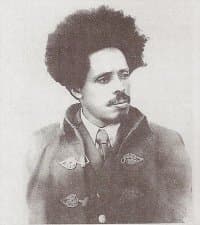
Abebe Aregai
General · Modern
58.2Total
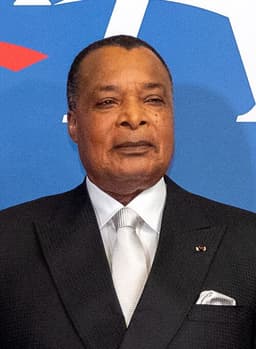
Denis Sassou-Nguesso
General · Modern
49.4Total
Basic Information
Born
1903
1943
Died
1960
—
Era
Modern
Modern
Nationality
Ethiopia
Congo Republic
Occupation
General
General
Civilization
Other
Other
Score Comparison
Military (10%)
70.0
10.2
Political (20%)
53.8
68.0
Influence (20%)
62.0
51.8
Legacy (20%)
50.0
46.7
Leadership (15%)
62.0
62.0
Strategy (15%)
58.0
42.3
TOTAL
58.2
49.4
Abebe Aregai — Complete Timeline
1936 AD
Led Arbegnoch Resistance against Italian OccupationWar
After the Italian conquest, Abebe Aregai organized and led the Arbegnoch (Patriots) guerrilla resistance in Shewa. His forces harassed Italian supply lines and conducted hit-and-run attacks for five years.
ResistanceGuerrilla WarfareItalian Occupation
Impact: regionalconstructive
1957 AD
Appointed Prime Minister of EthiopiaPolitical Action◆ Major
Emperor Haile Selassie appointed Abebe Aregai as Prime Minister of Ethiopia. He served until his death in 1960, overseeing post-war reconstruction and modernization efforts.
Prime MinisterGovernmentReconstruction
Impact: nationalconstructive
1960 AD
Killed during 1960 Coup AttemptPolitical Action◆ Major
Abebe Aregai was assassinated during an attempted coup d'
CoupAssassinationEthiopia
Impact: nationaltragic
Denis Sassou-Nguesso — Complete Timeline
1979 AD
Seized Power in CoupPolitical Action
Denis Sassou-Nguesso, a military officer, became President of the People's Republic of the Congo after a coup that ousted President Joachim Yhombi-Opango. He led the Congolese Party of Labour (PCT).
Coup d'étatCongoMilitary Rule
Impact: national
1990 AD
Transition to Multi-Party PoliticsReform◆ Major
Under pressure, Sassou-Nguesso's government introduced multi-party politics, ending the one-party Marxist-Leninist system. A national conference was held in 1991, leading to a transition to civilian rule.
Political ReformDemocracyCongo
Impact: national
1992 AD
Lost Presidential ElectionPolitical Action◆ Major
Sassou-Nguesso lost the 1992 presidential election to Pascal Lissouba. This was the first multi-party election in the country since independence, and Sassou-Nguesso peacefully handed over power.
ElectionDemocracyCongo
Impact: national
1997 AD
Returned to Power via Civil WarWar
Sassou-Nguesso's militia, backed by Angolan troops, captured Brazzaville, overthrowing President Pascal Lissouba. This ended a four-month civil war and returned Sassou-Nguesso to the presidency.
Civil WarCongoPower Struggle
Impact: nationaldestructive
2002 AD
Won Controversial Re-electionsPolitical Action◆ Major
Sassou-Nguesso won the 2002 presidential election with over 89% of the vote. The election was boycotted by major opposition candidates and criticized as neither free nor fair.
ElectionCongoControversy
Impact: national
2015 AD
Constitutional Referendum to Extend TermPolitical Action◆ Major
Sassou-Nguesso's government held a constitutional referendum that removed the age limit and two-term limit for the presidency. The change allowed him to run for re-election in 2016 and potentially remain in power.
Constitutional ReformCongoPower Consolidation
Impact: national
Expert Analysis
Abebe Aregai vs Denis Sassou-Nguesso
# The General and the Patriot: Two African Leaders, Two Paths
In December 1960, as a hail of bullets cut down Prime Minister Abebe Aregai in the streets of Addis Ababa, Ethiopia lost a man who had embodied the nation’s defiance against foreign conquest. Thirty-seven years later, in October 1997, another general—Denis Sassou-Nguesso—rolled into Brazzaville at the head of Angolan-backed militia, reclaiming a presidency he had lost five years earlier. One died fighting for a constitutional order; the other bent the constitution to keep himself in power. Both were African generals. Their lives, separated by decades and divergent moral arcs, raise a question that lingers: Why do some military leaders become architects of nations, while others become their jailers?
Origins
Abebe Aregai was born in 1903, in the highlands of Shewa, Ethiopia—a land that had never been colonized. He grew up in a world where warrior tradition was sacred, where the memory of Emperor Menelik’s victory at Adwa in 1896 still burned bright. Ethiopia’s independence was not an abstraction; it was a fact etched into the soil. For a young man of ambition, military service was the highest calling.
Denis Sassou-Nguesso entered the world in 1943, in the village of Edou, deep in the forests of what was then French Congo. He was a subject of the French Empire, born into a colonial system that had already carved up Africa. His father was a local chief, but the real power resided in Paris. Sassou-Nguesso grew up fluent in French, not in the languages of his ancestors. He joined the French army, then the paratroopers—an institution that taught him discipline, but also the cold logic of power: that force, not legitimacy, was the ultimate currency.
The difference in their origins was not merely geographic. It was existential. Abebe inherited a nation’s pride; Sassou-Nguesso inherited a colony’s wounds.
Rise to Power
Abebe Aregai’s ascent was forged in fire. When Mussolini’s Italy invaded Ethiopia in 1935, the Ethiopian army was crushed by modern weaponry and poison gas. The Emperor fled into exile. But Abebe refused to surrender. He retreated into the mountains of Shewa and organized the *Arbegnoch*—the Patriots. For five years, he led a guerrilla war that tied down tens of thousands of Italian troops. His tactics were simple: hit supply lines, ambush patrols, melt back into the hills. He was not fighting for a political ideology; he was fighting for the soil itself.
When the British and Ethiopian forces liberated the country in 1941, Abebe emerged as a national hero. His authority came not from a coup, but from blood and sacrifice. Emperor Haile Selassie, returning from exile, knew better than to ignore such a man. Abebe was appointed to key military and then political posts, culminating in his appointment as Prime Minister in 1957.
Denis Sassou-Nguesso’s rise was swifter and less noble. He joined the Congolese army after independence in 1960, rose through the ranks, and in 1979—at age 36—seized power in a coup. There was no invasion to repel, no foreign tyrant to overthrow. The enemy was the previous ruler, and the method was a handful of officers and a radio announcement. He became president of the People’s Republic of the Congo, a one-party Marxist-Leninist state. The ideology was borrowed from Moscow; the ambition was his own.
Leadership & Governance
Abebe Aregai governed as a loyalist and a modernizer. As Prime Minister under Haile Selassie, he focused on administrative reform, infrastructure, and integrating the empire’s diverse regions. He was not a dictator; he served at the Emperor’s pleasure. His military background gave him a reputation for order, but his guerrilla past gave him something rarer: a bond with ordinary Ethiopians. He was seen as a man of the people, not a palace creature. His leadership score of 84.5 reflects a commander who could inspire loyalty without terror.
Sassou-Nguesso governed differently. His early years were marked by state control of the economy, alignment with the Soviet bloc, and suppression of dissent. But when the Cold War ended and popular pressure mounted, he adapted. In 1990, he introduced multi-party politics—not out of conviction, but necessity. Two years later, he lost the election to Pascal Lissouba. He accepted defeat, but only temporarily. In 1997, with Angolan tanks and mercenaries, he retook Brazzaville by force. Then came the consolidation: a 2002 election with 89% of the vote, boycotted by the opposition; a 2015 constitutional referendum that erased term limits; and a presidency that has now stretched across four decades.
Where Abebe used power to build institutions, Sassou-Nguesso used institutions to entrench power.
Triumph & Tragedy
Abebe Aregai’s greatest triumph was the resistance itself. He proved that an African army, without air support or heavy weapons, could humiliate a European fascist power. His tragedy came in December 1960, when the Imperial Bodyguard attempted a coup. Abebe, loyal to the Emperor and the constitution, went to negotiate. He was shot dead in the street. The man who had survived five years of guerrilla war was killed by fellow Ethiopians.
Sassou-Nguesso’s triumph was his return in 1997—a stunning reversal of fortune, engineered by oil wealth and regional alliances. His tragedy is less dramatic but more enduring: a country rich in oil, yet mired in poverty; a president who has won every election, yet never truly earned one.
Character & Destiny
Abebe Aregai’s character was defined by honor. He could have made a deal with the Italians; he could have fled. Instead, he chose the hard path. His political score of 79.4 reflects a man who understood that legitimacy cannot be seized—it must be earned.
Sassou-Nguesso’s character is defined by survival. He has outlasted Marxism, the Cold War, and every rival. His political score of 61.2 is lower, but his influence score of 68.2 shows a man who has mastered the art of staying relevant. He is not a builder; he is a survivor.
Legacy
Abebe Aregai is remembered in Ethiopia as a national hero. Streets bear his name. Schoolchildren learn of the *Arbegnoch*. His legacy score of 66.8 is modest by global standards, but it is pure: a man who gave everything for his country, and asked nothing in return.
Denis Sassou-Nguesso’s legacy is more complicated. He has ruled for over forty years. His country is stable, but unfree. He has brought infrastructure, but also corruption. Future historians may judge him as a pragmatist who kept his country together, or as a despot who kept it down. His legacy score of 61.2 suggests ambivalence.
Conclusion
Both men were generals. Both led African nations through turbulent times. But one fought for an idea larger than himself, while the other fought for himself. The difference is not in their uniforms, but in their hearts. Abebe Aregai died in the street, a martyr to order. Denis Sassou-Nguesso lives in a palace, a master of disorder. In the end, history does not ask how long you ruled. It asks what you ruled for.
Rankings
🥇
Abebe AregaiLeader
Mil: 70.0Pol: 53.8Inf: 62.0
58.2
🥈
Denis Sassou-Nguesso
Mil: 10.2Pol: 68.0Inf: 51.8
49.4
+8.8 behind
How This Comparison Works
Algorithm
Each figure is scored on 6 dimensions (0—100 scale) based on structured historical data: Military (10%), Political (20%), Influence (20%), Legacy (20%), Leadership (15%), Strategy (15%). The weighted total produces the final ranking.
Data Sources
Scores are computed from structured sub-indicators in the database. Scale factors adjust for era (Ancient ×0.85, Modern ×1.0) and civilization size (Eastern ×1.05, Other ×0.80) to account for differences in population and military scale.
Maximum 3 Figures
Comparisons are limited to 2—3 figures to ensure readability and statistical meaningfulness.
Error Margins
±5 points per dimension — Sub-scores are derived from historical records with inherent uncertainty. Two figures within 5 points on a dimension should be considered roughly equivalent in that area.
Total Score Accuracy
±3 points overall — The weighted combination of 6 dimensions produces a total score with approximately ±3 points of uncertainty. Differences of less than 3 points are not statistically significant— the figures are effectively tied.
Known Limitations
- Historical records are incomplete and uneven across civilizations
- Figures from oral-tradition societies may be underrepresented
- Occupation labels can misclassify multi-role figures
- Scores measure capability and impact, not moral character
- Quantitative scoring is a comparison tool, not absolute truth
Capability Radar
Military (10%) — Battles & Warfare
Battles
65
5
Win Rate
60
5
Expansion
40
5
Political (20%) — Governance & Reform
Reform
45
30
Diplomacy
60
50
Economy
40
30
Influence (20%) — Cultural & Global Reach
Cultural
45
20
Global
35
20
Legacy (20%) — Historical Impact
Historical
55
30
Longevity
40
40
Leadership (15%) — Power & Stability
Tenure
55
70
Stability
50
20
Strategy (15%) — Tactics & Innovation
Strategy
75
5
Tactics
70
5
Reform
50
10
Similar Comparisons
Comments & Discussion
PatriotPistol6/16/2026
Abebe Aregai didn't just die for the constitution—he was literally the last line of defense against a coup d'état in progress. When General Mengistu Neway's rebels stormed the palace, Aregai could have negotiated or fled. Instead, he chose to hold the line as a civilian prime minister, not a military strongman. That's the difference between a general who serves the state and one who makes the state serve him. Give me a hundred Aregai's over one Sassou-Nguesso.
丛林游击手6/16/2026
萨苏-恩格索1997年重返布拉柴维尔靠的不是民心,而是安哥拉坦克和钻石财阀的支票簿。相比之下,阿贝贝·阿雷盖在1960年12月那场政变中为捍卫宪法政体而战死沙场,他本可以挟军队自保,却选择赤手空拳面对政变者的子弹。所谓领导者的道德分野,就在这里:一个宁死不辱宪法,一个把宪法当餐巾纸。你们自己选。
SkepticSpectacles6/16/2026
Let's be real: we romanticize Aregai because he died a martyr's death, but his actual political legacy is thin. He served as prime minister for about three months before getting assassinated. Meanwhile, Sassou-Nguesso has presided over Congo-Brazzaville for nearly four decades and kept the country from fracturing into civil war after 1997. Stability isn't flashy, but it beats chaos. The "good general" myth overlooks how many lives might have been saved by Sassou's authoritarian grip.
古籍藏锋6/16/2026
从东非历史视角看,阿贝盖的悲剧不在于他失败,而在于他把埃塞俄比亚的“抵抗传统”神圣化了。阿杜瓦战役的光环蒙蔽了后来者,让他们以为凭热血就能对抗现代政治暴力。1940年代他在游击队对抗意大利占领军时确实英勇,但1960年的政变显示,旧式武士精神敌不过1960年非洲独立浪潮中那套新型政变机器。萨苏-恩格索至少读懂了时代——要当王,先得让外国坦克站你这边。
ColonelCynicism6/16/2026
Both men are products of the same brutal game: African military politics where the gun determines who rules. Aregai just lost his hand first. Sassou-Nguesso played the long game—switching from Marxism to oil-backed autocracy, then letting Angola put him back in power in '97. If Aregai had survived, he'd likely have ended up just another general-president, not a saint. The only difference is the bullet timing. Let's drop the moral theater and call it what it is: survival of the most ruthless.