Loading...
Abebe Aregai vs Colin Powell
Colin Powell leads by 0.3 pts · 2 figures compared
…
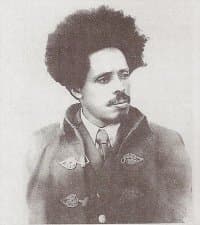
Abebe Aregai
General · Modern
58.2Total

Colin Powell
General · Modern
58.5Total
Basic Information
Born
1903
1937
Died
1960
—
Era
Modern
Modern
Nationality
Ethiopia
United States
Occupation
General
General
Civilization
Other
Western
Score Comparison
Military (10%)
70.0
25.0
Political (20%)
53.8
68.0
Influence (20%)
62.0
68.0
Legacy (20%)
50.0
52.0
Leadership (15%)
62.0
72.0
Strategy (15%)
58.0
50.0
TOTAL
58.2
58.5
Abebe Aregai — Complete Timeline
1936 AD
Led Arbegnoch Resistance against Italian OccupationWar
After the Italian conquest, Abebe Aregai organized and led the Arbegnoch (Patriots) guerrilla resistance in Shewa. His forces harassed Italian supply lines and conducted hit-and-run attacks for five years.
ResistanceGuerrilla WarfareItalian Occupation
Impact: regionalconstructive
1957 AD
Appointed Prime Minister of EthiopiaPolitical Action◆ Major
Emperor Haile Selassie appointed Abebe Aregai as Prime Minister of Ethiopia. He served until his death in 1960, overseeing post-war reconstruction and modernization efforts.
Prime MinisterGovernmentReconstruction
Impact: nationalconstructive
1960 AD
Killed during 1960 Coup AttemptPolitical Action◆ Major
Abebe Aregai was assassinated during an attempted coup d'
CoupAssassinationEthiopia
Impact: nationaltragic
Colin Powell — Complete Timeline
1987 AD
Appointed National Security AdvisorPolitical Action◆ Major
Powell was appointed National Security Advisor by President Ronald Reagan in November 1987, serving until January 1989. He coordinated foreign policy and national security matters, including arms control negotiations with the Soviet Union and the Iran-Iraq War, becoming the first African American in this role.
National SecurityReagan AdministrationForeign Policy
Impact: global
1989 AD
Became Chairman of the Joint Chiefs of StaffOther◆ Major
On October 1, 1989, Powell became the 12th Chairman of the Joint Chiefs of Staff, the first African American to hold the position. He oversaw U.S. military operations during the invasion of Panama (1989) and the Gulf War (1990-1991), becoming a highly visible public figure.
Military LeadershipGulf WarFirst African American
Impact: global
1990 AD
Developed the Powell DoctrineOther◆ Major
During the Gulf War planning, Powell articulated the Powell Doctrine, which stated that U.S. military force should only be used as a last resort, with overwhelming force, clear objectives, and an exit strategy. This doctrine influenced U.S. military interventions for the next decade.
Military DoctrineGulf WarStrategic Thinking
Impact: global
2001 AD
Appointed Secretary of StatePolitical Action◆ Major
On January 20, 2001, Powell was confirmed as the 65th U.S. Secretary of State under President George W. Bush, becoming the first African American to hold the office. He advocated for diplomacy and multilateralism, but his influence waned after the September 11 attacks.
DiplomacyBush AdministrationFirst African American
Impact: global
2003 AD
Presented Iraq WMD Case to the UN Security CouncilOther◆ Major
On February 5, 2003, Powell addressed the UN Security Council, presenting evidence that Iraq possessed weapons of mass destruction. The intelligence later proved to be inaccurate, damaging Powell's reputation and becoming a major controversy that he later called a 'blot' on his record.
Iraq WarUN SpeechControversy
Impact: globaldestructive
2004 AD
Resigned as Secretary of StateOther◆ Major
Powell resigned as Secretary of State on November 15, 2004, after President Bush's re-election. His departure was widely seen as a result of policy disagreements with Vice President Cheney and Secretary of Defense Rumsfeld, particularly over the conduct of the Iraq War.
ResignationIraq WarBush Administration
Impact: national
Expert Analysis
Abebe Aregai vs Colin Powell
# The General and the Patriot
In the winter of 1991, Colin Powell stood before the world as the face of American military might, a man whose calm demeanor and crisp uniform seemed to embody the very idea of power. Half a century earlier, in the highlands of Ethiopia, Abebe Aregai had melted into the mountains, a guerrilla leader whose name would become synonymous with resistance. One rose to the pinnacle of a global superpower; the other fought to defend a ancient kingdom from foreign conquest. They never met, never even knew of each other, yet their lives trace a profound question: what does it mean to lead when your nation is the hammer, and what does it mean when your nation is the anvil?
Origins
Colin Powell was born in 1937 in Harlem, New York, the son of Jamaican immigrants. His world was one of striving and opportunity, a city where the American dream was both a promise and a challenge. He grew up in a tenement, attended public schools, and discovered the army through ROTC at City College. For Powell, the military was not a calling of necessity but a ladder, a meritocracy where a black man could rise if he was smart, diligent, and loyal.
Abebe Aregai was born in 1903 in the rugged province of Shewa, Ethiopia, a land that had never been colonized. His early life was steeped in the traditions of the Ethiopian Empire, a feudal society where loyalty to the emperor and skill in war defined a man’s worth. He was a soldier from his youth, serving under the legendary Ras Tafari—later Emperor Haile Selassie—and learning the arts of cavalry and command in a land where the horse and the rifle were the tools of power.
The difference in their origins is not merely geographic. Powell came of age in a nation that dominated the world; Abebe Aregai came of age in a nation that was fighting to remain free. One was born into the engine of history; the other was born into its crosshairs.
Rise to Power
Powell’s ascent was methodical and American. He served two tours in Vietnam, where he learned the brutal lessons of jungle warfare and the limits of American power. He survived a helicopter crash, earned a Bronze Star, and later a Purple Heart. But his true genius was institutional: he served in the Pentagon, impressed mentors, and climbed the ranks of the military bureaucracy. By 1989, he became the first African American Chairman of the Joint Chiefs of Staff, the youngest man ever to hold the post. His path was one of integration and institutional trust.
Abebe Aregai’s rise was forged in fire. In 1936, when Mussolini’s Italian army invaded Ethiopia, the emperor fled into exile, and the nation fell. But Abebe Aregai did not surrender. He gathered the remnants of the imperial army and the local peasantry, forming the Arbegnoch—the Patriots—a guerrilla force that waged a relentless war from the mountains of Shewa. For five years, he harassed Italian supply lines, ambushed columns, and held territory that the occupiers could never fully control. His rise was not through promotion but through resistance; his authority came not from a commission but from the loyalty of men who chose to fight.
Leadership & Governance
As Chairman of the Joint Chiefs, Powell was a master of bureaucratic politics and strategic restraint. He articulated the “Powell Doctrine,” which held that the United States should only commit military force with overwhelming strength, clear objectives, and an exit strategy. He oversaw the invasion of Panama in 1989 and the Gulf War in 1991, where his careful planning led to a swift and decisive victory. He was a politician in uniform, a man who understood that military power was a tool of diplomacy, not an end in itself. His leadership score of 79.5 reflects a man who was effective, respected, and cautious—but who never commanded troops in a major battle.
Abebe Aregai was a commander of a different kind. His military score of 74.3 reflects his success in guerrilla warfare, but his strategic score of 59.0 suggests a man who fought with courage more than cunning. After the war, he served as Prime Minister from 1957 until his death in 1960, overseeing reconstruction and modernization. But his governance was constrained by the absolute power of Emperor Haile Selassie. He was a loyal servant, not an independent leader. His political score of 79.4 is high, but it reflects his role as a bridge between the old feudal order and the new nation.
Triumph & Tragedy
Powell’s greatest triumph was the Gulf War, where his doctrine was vindicated. American forces drove Saddam Hussein’s army from Kuwait in a hundred hours, with minimal casualties. But his tragedy came later, in 2003, when he stood before the United Nations and presented flawed intelligence about Iraqi weapons of mass destruction. That speech, delivered as Secretary of State, became the defining stain on his legacy. He later called it a “blot” on his record, a moment when his institutional loyalty overrode his judgment.
Abebe Aregai’s triumph was the liberation of Ethiopia. When Emperor Haile Selassie returned in 1941, it was Abebe Aregai who had kept the flame of resistance alive. But his tragedy was sudden and brutal. In December 1960, while he was trying to negotiate with coup plotters from the Imperial Bodyguard, he was assassinated. He died trying to save the very government he had served, a victim of the instability that would eventually consume the empire.
Character & Destiny
Colin Powell was a man of discipline and caution. He believed in institutions, in process, in the chain of command. He was a soldier who became a statesman, but he never lost the soldier’s instinct to obey. That obedience served him in his rise, but it betrayed him in his final act of public service.
Abebe Aregai was a man of defiance and loyalty. He fought when others fled, and he governed when others schemed. He was a patriot in the truest sense, a man who loved his country more than his own life. But his loyalty to the emperor made him a target, and his death marked the end of an era.
Legacy
Powell’s legacy is complex. He is remembered as a pioneer, a symbol of racial progress, and a man of integrity. But the shadow of the Iraq War hangs over him. He died in 2021, a figure of respect but also of regret.
Abebe Aregai is remembered in Ethiopia as a hero of the resistance, a man who stood against fascism when the world looked away. His name is taught in schools, his statue stands in Addis Ababa. But his political legacy was cut short, and the empire he served collapsed a decade after his death.
Conclusion
Two generals, two paths. One rose through the institutions of a superpower; the other rose through the ashes of a conquered nation. One commanded the world’s most powerful army; the other commanded a band of farmers with rifles. One was betrayed by his own caution; the other was betrayed by his own loyalty. In the end, they remind us that leadership is not a set of scores but a story—a story written by circumstances, choices, and the unyielding force of history.
Rankings
🥇
Colin PowellLeader
Mil: 25.0Pol: 68.0Inf: 68.0
58.5
🥈
Abebe Aregai
Mil: 70.0Pol: 53.8Inf: 62.0
58.2
+0.3 behind
How This Comparison Works
Algorithm
Each figure is scored on 6 dimensions (0—100 scale) based on structured historical data: Military (10%), Political (20%), Influence (20%), Legacy (20%), Leadership (15%), Strategy (15%). The weighted total produces the final ranking.
Data Sources
Scores are computed from structured sub-indicators in the database. Scale factors adjust for era (Ancient ×0.85, Modern ×1.0) and civilization size (Eastern ×1.05, Other ×0.80) to account for differences in population and military scale.
Maximum 3 Figures
Comparisons are limited to 2—3 figures to ensure readability and statistical meaningfulness.
Error Margins
±5 points per dimension — Sub-scores are derived from historical records with inherent uncertainty. Two figures within 5 points on a dimension should be considered roughly equivalent in that area.
Total Score Accuracy
±3 points overall — The weighted combination of 6 dimensions produces a total score with approximately ±3 points of uncertainty. Differences of less than 3 points are not statistically significant— the figures are effectively tied.
Known Limitations
- Historical records are incomplete and uneven across civilizations
- Figures from oral-tradition societies may be underrepresented
- Occupation labels can misclassify multi-role figures
- Scores measure capability and impact, not moral character
- Quantitative scoring is a comparison tool, not absolute truth
Capability Radar
Military (10%) — Battles & Warfare
Battles
65
35
Win Rate
60
40
Expansion
40
20
Political (20%) — Governance & Reform
Reform
45
40
Diplomacy
60
70
Economy
40
30
Influence (20%) — Cultural & Global Reach
Cultural
45
55
Global
35
65
Legacy (20%) — Historical Impact
Historical
55
60
Longevity
40
45
Leadership (15%) — Power & Stability
Tenure
55
65
Stability
50
55
Strategy (15%) — Tactics & Innovation
Strategy
75
55
Tactics
70
45
Reform
50
60
Similar Comparisons
Comments & Discussion
The Iron Anvil6/16/2026
Military historian here. This comparison is fundamentally flawed because it equates a conventional superpower general with a guerrilla fighter who never lost a real set-piece battle. Abebe Aregai’s Harar campaign in 1936 saw him tie down 70,000 Italian troops with just 10,000 men using terrain denial tactics that would make Mao blush. Powell’s famous “Powell Doctrine” sounds great on paper, but it was only tested against third-rate militaries like Iraq’s in 1991. One fought a genocidal industria
帝国之盾6/16/2026
数据党的冷眼:分析里说两人阶级流动性不同,但忽略了根本差异——阿贝贝·阿瑞盖的部队补给靠驴驮和村落供奉,士兵月饷不到一个里拉;鲍威尔的沙漠风暴行动,单次航母打击群日均耗资就超过埃塞俄比亚全年军费。一个用竹矛和英国老枪抵抗毒气弹,一个用卫星制导炸弹清理战壕。比“领导力”前,先比比资源量级差——这就好比拿扁担打坦克。
The Testament of Shewa6/16/2026
Classics scholar’s take: This pairing reveals a Eurocentric bias in what we call “great generalship.” Abebe Aregai preserved Ethiopia’s 3,000-year unbroken sovereignty by refusing battle on Italian terms, maintaining a government-in-exile that never surrendered. Powell’s crowning achievement was a 100-hour ground war where the enemy was already starving and isolated by sanctions. Let’s not confuse tactical execution with strategic survival. One saved a kingdom; the other salvaged a reputation fo
巷战老兵6/16/2026
历史发烧友的直觉:别被职业军人的光环骗了。科林·鲍威尔在越战两次赴任,两支部队最后都没能改写战局;阿贝贝·阿瑞盖从1936年坚持到1941年,把意大利占领军拖入五年游击泥潭,连墨索里尼都承认“埃塞俄比亚的抵抗从未真正停止”。一个靠卫星和参谋部打仗,一个靠百姓和山地打仗。别比谁更精英——比谁更让侵略者睡不着觉。
The Anvil’s Edge6/16/2026
Revisionist critique: This comparison sanitizes Powell by associating him with a genuine anti-colonial hero. Powell oversaw the invasion of Panama (3,000+ civilian deaths in El Chorrillo) and argued forcefully for the Gulf War, which left 100,000+ Iraqi dead. Abebe Aregai defended his homeland from a fascist invader using the only tools available. One deserves monuments; the other deserves scrutiny. Let’s not dress up imperial management as “leadership” next to actual resistance.