Loading...
Abebe Aregai vs Cesare Borgia
Cesare Borgia leads by 2.0 pts · 2 figures compared
…
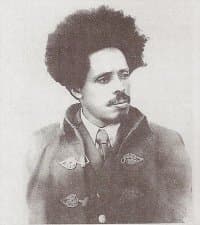
Abebe Aregai
General · Modern
58.2Total
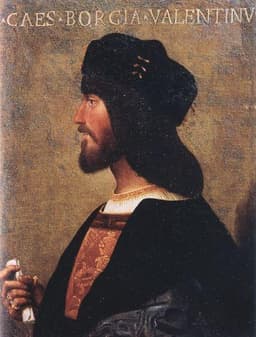
Cesare Borgia
General · Medieval
60.2Total
Basic Information
Born
1903
1475
Died
1960
1507
Era
Modern
Medieval
Nationality
Ethiopia
Italy
Occupation
General
General
Civilization
Other
Western
Score Comparison
Military (10%)
70.0
67.5
Political (20%)
53.8
68.0
Influence (20%)
62.0
68.0
Legacy (20%)
50.0
40.0
Leadership (15%)
62.0
64.0
Strategy (15%)
58.0
66.3
TOTAL
58.2
60.2
Abebe Aregai — Complete Timeline
1936 AD
Led Arbegnoch Resistance against Italian OccupationWar
After the Italian conquest, Abebe Aregai organized and led the Arbegnoch (Patriots) guerrilla resistance in Shewa. His forces harassed Italian supply lines and conducted hit-and-run attacks for five years.
ResistanceGuerrilla WarfareItalian Occupation
Impact: regionalconstructive
1957 AD
Appointed Prime Minister of EthiopiaPolitical Action◆ Major
Emperor Haile Selassie appointed Abebe Aregai as Prime Minister of Ethiopia. He served until his death in 1960, overseeing post-war reconstruction and modernization efforts.
Prime MinisterGovernmentReconstruction
Impact: nationalconstructive
1960 AD
Killed during 1960 Coup AttemptPolitical Action◆ Major
Abebe Aregai was assassinated during an attempted coup d'
CoupAssassinationEthiopia
Impact: nationaltragic
Cesare Borgia — Complete Timeline
1493 AD
Appointment as CardinalPolitical Action◆ Major
Cesare Borgia was appointed cardinal by his father, Pope Alexander VI. This position gave him significant power within the Church and access to papal resources. He used his cardinalate to advance his family's political interests in Italy.
CardinalNepotismPapacy
Impact: regional
1498 AD
Resignation from the CardinalatePolitical Action◆ Major
Cesare Borgia resigned as cardinal to pursue a military and political career. He became the first person to voluntarily leave the College of Cardinals. This move allowed him to focus on conquering territories in the Romagna region of Italy.
ResignationMilitaryRomagna
Impact: regional
1499 AD
Conquest of the RomagnaWar◆ Major
Cesare Borgia, with French support, launched a campaign to conquer the cities of the Romagna. He captured Imola, Forl
ConquestRomagnaMachiavelli
Impact: regional
1503 AD
Fall from PowerPolitical Action
After the death of Pope Alexander VI, Cesare Borgia lost his political support. He was captured by his enemies and imprisoned in Spain. His territories in Italy quickly collapsed. This sudden fall demonstrated the fragility of his power base.
FallImprisonmentCollapse
Impact: regionaltragic
1507 AD
Death in BattleWar
Cesare Borgia was killed in a skirmish near Viana, Navarre, while serving as a mercenary captain. His death ended any chance of restoring his former power. He died at age 31, having failed to regain his Italian territories.
DeathMercenaryNavarre
tragic
Expert Analysis
Abebe Aregai vs Cesare Borgia
# The Prince and the Patriot: Cesare Borgia and Abebe Aregai
On a dusty road in Navarre, in the spring of 1507, a lone mercenary captain fell from his horse, struck down in a skirmish so minor that history nearly forgot it. The man who died there was Cesare Borgia, once the most feared man in Italy, the son of a pope, the model for Machiavelli’s *The Prince*. Four centuries later, in the highlands of Ethiopia, another commander faced a different kind of end: Abebe Aregai, the guerrilla leader who humiliated Mussolini’s army, was gunned down in the palace of his emperor, a victim of the very modernity he had helped to build. One died forgotten, the other murdered by his own countrymen. Both were generals, both were rulers, but their paths reveal how deeply time and place carve the limits of ambition.
Origins
Cesare Borgia was born into the furnace of Renaissance Italy, a world where the Church was a political instrument and poison was a tool of state. His father, Rodrigo Borgia, became Pope Alexander VI in 1492, and Cesare was made a cardinal at eighteen—not for piety, but for power. The Borgias were Spanish outsiders in Rome, and their rise depended on ruthlessness. Cesare grew up watching his father buy, bribe, and bully his way to supremacy. There was no nation to serve, only a family. His world was a chessboard of city-states, mercenary armies, and shifting alliances.
Abebe Aregai emerged from an entirely different universe. Born in 1903 in the Shewa region of Ethiopia, he came of age under Emperor Menelik II, who had crushed an Italian invasion at Adwa in 1896. Ethiopia was a proud, ancient Christian kingdom, never colonized, surrounded by hostile forces. Abebe learned his craft in the imperial army, a force that combined feudal loyalty with modern rifles. Where Borgia inherited a dynasty, Abebe inherited a nation—a real one, with borders, a history, and a people who saw him as a defender, not a conqueror.
Rise to Power
Cesare Borgia’s rise was swift and bloody. In 1498, he did the unthinkable: he resigned his cardinalate, the first man ever to voluntarily leave the College of Cardinals. His father released him from holy vows, and Cesare became a secular prince. With French troops and papal gold, he launched a campaign in 1499 to conquer the Romagna, a patchwork of petty lordships in central Italy. He captured Imola, Forlì, and Urbino with a blend of terror and guile. He was not fighting for Italy—he was building a Borgia kingdom.
Abebe Aregai’s rise was forged in defeat. In 1936, Mussolini’s modern army crushed Ethiopia, and Emperor Haile Selassie fled into exile. While others surrendered or collaborated, Abebe took to the hills of Shewa. He organized the *Arbegnoch*—the Patriots—a guerrilla force that ambushed Italian convoys, cut supply lines, and made occupation a nightmare. He was not a prince by birth; he became a leader by courage and cunning. His soldiers called him *Ras*, a title of nobility earned in blood.
Leadership & Governance
Cesare Borgia ruled through fear and speed. Machiavelli admired his ability to strike without warning, to make examples of his enemies. When his captain, Ramiro de Lorqua, became too powerful, Cesare had him cut in two and left in the town square of Cesena—a message to all. He centralized administration, built a loyal army, and crushed the fractious nobles of the Romagna. But his system depended entirely on his father’s papacy. It was a house of cards.
Abebe Aregai led through patience and trust. As a guerrilla commander, he could not afford terror—he needed the loyalty of peasants and priests. He shared their hardships, ate their food, and fought alongside them. After the war, he became Prime Minister in 1957, serving under Haile Selassie. He was a modernizer, overseeing roads, schools, and a standing army. But he was also a traditionalist, loyal to the emperor and the old order. He governed not by genius but by consensus, a skill Borgia never needed.
Triumph & Tragedy
Cesare Borgia’s greatest moment came in 1502, when he outwitted his enemies at Senigallia, capturing and executing three conspirators in a single night. He seemed unstoppable. But in August 1503, his father died suddenly—poison, perhaps, or malaria. In weeks, Cesare’s empire collapsed. His allies deserted him, his enemies closed in, and he was captured and imprisoned. Freed, he fled to Navarre, where he died in a pointless skirmish at thirty-one. His tragedy was that he built nothing that could outlast him.
Abebe Aregai’s triumph was the liberation of Ethiopia. In 1941, with British help, he led his guerrillas into Addis Ababa, restoring the emperor to his throne. He was hailed as a national hero. But his tragedy came in December 1960, when the Imperial Bodyguard attempted a coup. Abebe, now Prime Minister, went to the palace to negotiate—or to resist. He was shot dead at fifty-seven, killed by the very soldiers he had once commanded. His tragedy was that he died defending a system that was already crumbling.
Character & Destiny
Cesare Borgia was a man of ice and fire. He was calculating, charming when needed, merciless when crossed. Machiavelli saw in him the ideal ruler: one who could be both lion and fox. But his flaw was overreach: he believed his father’s power was eternal. He never understood that legitimacy must come from something deeper than a pope’s blessing.
Abebe Aregai was a man of iron and oak. He was stoic, patient, and deeply loyal. He believed in Ethiopia, in its emperor, in its ancient church. But his flaw was loyalty itself: he could not imagine a future without Haile Selassie. He fought for a nation, but he never questioned whether that nation needed a new kind of leadership. In the end, the emperor he served would be overthrown by Marxists fourteen years later.
Legacy
Cesare Borgia’s legacy is a book. Machiavelli wrote *The Prince* in 1513, partly inspired by his exploits. Borgia became a symbol of amoral statecraft, a warning and a model for centuries. His name is synonymous with poison, intrigue, and Renaissance villainy. He left no dynasty, no lasting state—only a story.
Abebe Aregai’s legacy is a nation. He is remembered in Ethiopia as a patriot, a freedom fighter, a prime minister who died for his country. Statues bear his face, schools bear his name. He left no book, but he left a living memory of resistance. In 2024, when Ethiopians speak of the Italian occupation, they speak of Abebe Aregai.
Conclusion
Cesare Borgia and Abebe Aregai were both generals, both rulers, both men who shaped their eras. But Borgia fought for a family, Aregai for a country. Borgia’s power came from a pope, Aregai’s from a people. One died alone in a foreign field, the other in his nation’s capital. The difference is not in their courage or their cunning—it is in what they chose to serve. The Renaissance prince built a sandcastle; the Ethiopian patriot built a fortress of memory. And in the long judgment of history, it is not the sharpness of the sword that matters, but the depth of the roots.
Rankings
🥇
Cesare BorgiaLeader
Mil: 67.5Pol: 68.0Inf: 68.0
60.2
🥈
Abebe Aregai
Mil: 70.0Pol: 53.8Inf: 62.0
58.2
+2.0 behind
How This Comparison Works
Algorithm
Each figure is scored on 6 dimensions (0—100 scale) based on structured historical data: Military (10%), Political (20%), Influence (20%), Legacy (20%), Leadership (15%), Strategy (15%). The weighted total produces the final ranking.
Data Sources
Scores are computed from structured sub-indicators in the database. Scale factors adjust for era (Ancient ×0.85, Modern ×1.0) and civilization size (Eastern ×1.05, Other ×0.80) to account for differences in population and military scale.
Maximum 3 Figures
Comparisons are limited to 2—3 figures to ensure readability and statistical meaningfulness.
Error Margins
±5 points per dimension — Sub-scores are derived from historical records with inherent uncertainty. Two figures within 5 points on a dimension should be considered roughly equivalent in that area.
Total Score Accuracy
±3 points overall — The weighted combination of 6 dimensions produces a total score with approximately ±3 points of uncertainty. Differences of less than 3 points are not statistically significant— the figures are effectively tied.
Known Limitations
- Historical records are incomplete and uneven across civilizations
- Figures from oral-tradition societies may be underrepresented
- Occupation labels can misclassify multi-role figures
- Scores measure capability and impact, not moral character
- Quantitative scoring is a comparison tool, not absolute truth
Capability Radar
Military (10%) — Battles & Warfare
Battles
65
55
Win Rate
60
60
Expansion
40
55
Political (20%) — Governance & Reform
Reform
45
40
Diplomacy
60
55
Economy
40
35
Influence (20%) — Cultural & Global Reach
Cultural
45
55
Global
35
60
Legacy (20%) — Historical Impact
Historical
55
70
Longevity
40
65
Leadership (15%) — Power & Stability
Tenure
55
45
Stability
50
30
Strategy (15%) — Tactics & Innovation
Strategy
75
60
Tactics
70
65
Reform
50
50
Similar Comparisons
Comments & Discussion
Commander of Contrasts6/16/2026
As a military historian, this comparison is absurd. Cesare Borgia was a Renaissance warlord who mastered treachery and siegecraft—his 1499 campaign in Romagna was textbook Machiavellian. Abebe Aregai proved that decentralized guerrilla warfare could defeat a modern fascist army, leading 40,000 Arbegnoch fighters against Mussolini's forces from 1936-1941. Borgia ruled by poison and papal favors; Aregai ruled by patriotic grit and mountain ambushes. One legacy: a handbook for tyranny. The other: i
数字怀疑论者6/16/2026
这个对比数据上就有问题。博尔贾的领地面积撑死15000平方公里,靠雇佣兵维持;阿贝贝指挥的游击战覆盖整个埃塞俄比亚高原,超过100万平方公里。博尔贾的"统治"维持了不到10年,而阿贝贝1975年还被评为埃塞俄比亚民族英雄。更重要的是,博尔贾的军事行动每年花掉教廷预算的30%——全是民脂民膏;阿贝贝用缴获的意大利步枪武装农民,一个子儿不花。你们这些文艺复兴迷别盲目崇拜了。
Latin Lancer6/16/2026
A classics scholar groans: Borgia's real genius wasn't military—it was legal. He created the first centralized judicial system in the Papal States, the *Rota Romana*, to bypass feudal courts. That's Machiavelli's real lesson: power through law. Abebe Aregai, meanwhile, never codified his tactics; his famed "shock and withdraw" doctrine was purely oral tradition. One built institutions; the other built a myth. Put both in a Roman forum, and Borgia wins the debate—but Aregai wins the war.
历史杂学家6/16/2026
博尔贾死得像条狗,阿贝贝死得像头雄狮。1507年纳瓦雷的小冲突,博尔贾被无名小卒戳穿喉咙——当时他正被西班牙人追捕,孤身流亡。而阿贝贝1960年政变时,在皇宫里用左轮手枪回击叛军,直到子弹打光。他保护了皇帝海尔·塞拉西,自己倒在王座旁。一个为教皇之子,一个为祖国之子。博尔贾读马基雅维利,阿贝贝就是马基雅维利在非洲的活教材。死了四百年还被比较,博尔贾赚了。
Revisionist Rebel6/16/2026
Here's the uncomfortable truth: both were brutal authoritarians. Borgia's "pacification" of Romagna massacred civilians in Forlì; Aregai's guerrilla campaign executed collaborators without trial. The difference? One had a sexy European brand ("Machiavelli's Prince"),