Loading...
Abebe Aregai vs Bayinnaung
Bayinnaung leads by 10.4 pts · 2 figures compared
…
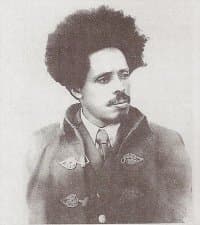
Abebe Aregai
General · Modern
58.2Total
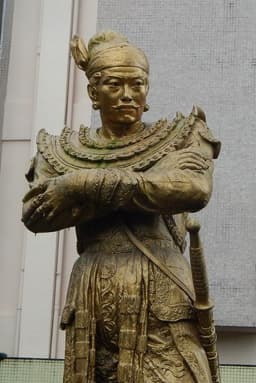
Bayinnaung
Emperor · Modern
68.6Total
Basic Information
Born
1903
1516
Died
1960
1581
Era
Modern
Modern
Nationality
Ethiopia
Myanmar
Occupation
General
Emperor
Civilization
Other
Eastern
Score Comparison
Military (10%)
70.0
77.1
Political (20%)
53.8
82.0
Influence (20%)
62.0
65.0
Legacy (20%)
50.0
55.0
Leadership (15%)
62.0
74.0
Strategy (15%)
58.0
75.0
TOTAL
58.2
68.6
Abebe Aregai — Complete Timeline
1936 AD
Led Arbegnoch Resistance against Italian OccupationWar
After the Italian conquest, Abebe Aregai organized and led the Arbegnoch (Patriots) guerrilla resistance in Shewa. His forces harassed Italian supply lines and conducted hit-and-run attacks for five years.
ResistanceGuerrilla WarfareItalian Occupation
Impact: regionalconstructive
1957 AD
Appointed Prime Minister of EthiopiaPolitical Action◆ Major
Emperor Haile Selassie appointed Abebe Aregai as Prime Minister of Ethiopia. He served until his death in 1960, overseeing post-war reconstruction and modernization efforts.
Prime MinisterGovernmentReconstruction
Impact: nationalconstructive
1960 AD
Killed during 1960 Coup AttemptPolitical Action◆ Major
Abebe Aregai was assassinated during an attempted coup d'
CoupAssassinationEthiopia
Impact: nationaltragic
Bayinnaung — Complete Timeline
1550 AD
Establishment of the Toungoo EmpirePolitical Action
King Bayinnaung ascended the throne and began a series of military campaigns that created the largest empire in Southeast Asian history. At its peak, the Toungoo empire covered modern Myanmar, Thailand, Laos, and parts of China and India.
Toungoo EmpireSoutheast AsiaImperial Expansion
Impact: regionalconstructive
1557 AD
Conquest of the Shan StatesWar◆ Major
King Bayinnaung conquered the Shan States, bringing them under Toungoo control. This expansion added significant territory and resources to the Burmese empire.
Shan StatesToungoo ExpansionBurmese Empire
Impact: regional
1569 AD
Capture of AyutthayaWar
King Bayinnaung's forces captured the Siamese capital of Ayutthaya after a long siege. He installed a vassal king and made Siam a tributary state of the Toungoo empire.
Burmese-Siamese WarAyutthayaToungoo Empire
Impact: regional
1570 AD
Administrative ReformsReform◆ Major
King Bayinnaung implemented administrative reforms to govern his vast empire, including the appointment of governors and the standardization of laws and taxes. These reforms helped maintain control over conquered territories.
GovernanceAdministrationToungoo Empire
Impact: regionalconstructive
1574 AD
Conquest of Lan XangWar◆ Major
King Bayinnaung conquered the Lao kingdom of Lan Xang (modern Laos), bringing it under Toungoo control. This further expanded the Burmese empire to its greatest territorial extent.
Lan XangToungoo ExpansionLaos
Impact: regional
Expert Analysis
Abebe Aregai vs Bayinnaung
# The Emperor and the Patriot: Two Paths to Power in Southeast Asia and the Horn of Africa
In the winter of 1569, the walls of Ayutthaya—the fabled Siamese capital of golden temples and intricate canals—finally crumbled after a siege that had lasted nearly a year. King Bayinnaung of Burma rode through the breached gates at the head of an army that had already swallowed the Shan States and would soon devour the Lao kingdom of Lan Xang. Three and a half centuries later and half a world away, in the rugged highlands of Shewa in Ethiopia, a young guerrilla commander named Abebe Aregai melted into the forest with a handful of rifles, beginning a resistance that would never capture a capital but would forever define his nation’s spirit. One man built the largest empire Southeast Asia had ever seen; the other built something more fragile but no less enduring—a legend of defiance. What drove these two men, born four centuries apart, to such different destinies?
Origins
Bayinnaung was born in 1516 in the Toungoo region of central Burma, a land fractured by petty kingdoms and constant warfare. His father was a minor official, and his mother of common stock—yet the boy caught the eye of King Tabinshwehti, who took him into the royal household. In that volatile world, where the Shan and Mon kingdoms pressed against the Burmese heartland, survival demanded ambition. Bayinnaung learned statecraft and war in the shadow of a king who would die young, leaving the throne to his adopted son.
Abebe Aregai entered the world in 1903, in the waning years of Emperor Menelik II’s reign, when Ethiopia had just humiliated Italy at Adowa and stood as the last independent African empire. Born into the noble Meru family, he was raised in the Orthodox Christian tradition and trained in the martial culture of the Ethiopian aristocracy. His world was one of ancient rituals and modern threats—a kingdom surrounded by European colonial powers, clinging to sovereignty through a combination of diplomacy and military readiness. Where Bayinnaung’s Burma was a cauldron of competing kingdoms, Abebe’s Ethiopia was a fortress under siege.
Rise to Power
Bayinnaung’s path was forged in blood and fire. When Tabinshwehti was assassinated in 1550, the kingdom teetered on collapse. Bayinnaung, then a trusted general, seized the throne and immediately launched campaigns to reunify Burma. His military score of 79.8 and strategy of 73.6 reflect a commander who relied on overwhelming force and meticulous planning. Within seven years, he had conquered the Shan States, incorporating their warrior chiefs into his administration. The conquest of Ayutthaya in 1569 was his masterpiece—a siege that showcased his patience and his ability to coordinate vast armies across difficult terrain.
Abebe’s rise followed a radically different script. In 1936, when Mussolini’s forces overwhelmed the Ethiopian army and Emperor Haile Selassie fled into exile, Abebe refused to surrender. He gathered the Arbegnoch—the Patriots—and retreated to the mountains of Shewa. With a leadership score of 84.5, he excelled not in pitched battles but in guerrilla warfare, ambushing Italian convoys and cutting supply lines. His strategy score of 59.0 is deceptively low; it reflects not a lack of cunning but a different kind of warfare—one of survival, not conquest. While Bayinnaung built an empire with cannons and cavalry, Abebe built a resistance with whispers and hidden caches.
Leadership & Governance
Bayinnaung’s political score of 85.1 reveals a ruler who understood that conquest was only half the battle. After capturing Ayutthaya, he installed a vassal king and imposed tribute, but he also allowed local customs to persist—a pragmatic approach that kept his sprawling empire intact. His 1570 administrative reforms appointed governors to oversee provinces, creating a system of centralized control that would outlast him. He was a builder of roads and monasteries, a patron of Buddhism who saw religion as a unifying force.
Abebe’s political score of 79.4 reflects a different governance: not of an empire, but of a movement. As Prime Minister from 1957, he served under Emperor Haile Selassie, managing a modernizing state while grappling with the tensions between tradition and progress. He was a conciliator, not a conqueror, navigating the treacherous politics of a court where loyalty was currency. His reforms were modest—infrastructure projects, educational expansion—but they came in a nation still scarred by occupation.
Triumph & Tragedy
Bayinnaung’s greatest triumph was the 1574 conquest of Lan Xang, which brought Laos under his sway and completed an empire stretching from Manipur to the Mekong Delta. At its height, his domain rivaled any in Asia—a testament to his military and political genius. Yet his tragedy was the empire’s fragility. After his death in 1581, the vast structure he had built began to fracture, undone by succession disputes and rebellions. He had created a colossus that could not survive without him.
Abebe’s triumph was the liberation of Ethiopia in 1941, when he emerged from the mountains to join Allied forces in driving out the Italians. He became a national hero, a symbol of unyielding resistance. But his tragedy came on December 13, 1960, when a coup by the Imperial Bodyguard erupted. Abebe, trying to negotiate a peaceful resolution, was shot dead in the palace—a patriot killed not by foreign enemies but by his own countrymen. His death marked the beginning of the end for the old order.
Character & Destiny
Bayinnaung was driven by an imperial vision: the unification of all Southeast Asia under a single Buddhist monarch. His personality was that of a builder—methodical, ruthless when necessary, but also capable of mercy. He saw himself as a cosmic ruler, a *cakkavatti* (universal emperor) destined to bring order to chaos. This belief in his own destiny propelled him to greatness but also blinded him to the limits of his power.
Abebe was driven by a different conviction: that Ethiopia must remain free. His character was forged in resistance—patient, cunning, and deeply patriotic. He was a man of the shadows, not the throne, and his destiny was to be a symbol rather than a sovereign. Where Bayinnaung sought to conquer the world, Abebe sought only to protect his homeland. One expanded; the other defended.
Legacy
Bayinnaung is remembered as a national hero in Myanmar, the architect of the Toungoo Empire and a figure of unification. His legacy score of 73.0 reflects a faded memory—his empire is gone, but his name endures in schoolbooks and monuments. He is a reminder of a time when Burma dominated the region.
Abebe Aregai’s legacy is more intimate but perhaps more potent. In Ethiopia, he is revered as a martyr and a father of the resistance. His influence score of 72.6 captures his role as a symbol of defiance against colonialism. Yet his legacy is also tinged with irony: the patriot who fought for freedom died at the hands of those who sought to change his nation by force.
Conclusion
One built an empire that crumbled; the other built a legend that endures. Bayinnaung and Abebe Aregai lived in different centuries, on different continents, with different tools and ambitions. Yet both faced the same fundamental question: how does a leader shape history when the odds are stacked against him? Bayinnaung’s answer was to conquer; Abebe’s was to resist. In the end, perhaps the measure of a leader is not the size of the empire he leaves behind, but the depth of the mark he leaves on the human spirit. By that measure, both men—the emperor and the patriot—stand tall.
Rankings
🥇
BayinnaungLeader
Mil: 77.1Pol: 82.0Inf: 65.0
68.6
🥈
Abebe Aregai
Mil: 70.0Pol: 53.8Inf: 62.0
58.2
+10.4 behind
How This Comparison Works
Algorithm
Each figure is scored on 6 dimensions (0—100 scale) based on structured historical data: Military (10%), Political (20%), Influence (20%), Legacy (20%), Leadership (15%), Strategy (15%). The weighted total produces the final ranking.
Data Sources
Scores are computed from structured sub-indicators in the database. Scale factors adjust for era (Ancient ×0.85, Modern ×1.0) and civilization size (Eastern ×1.05, Other ×0.80) to account for differences in population and military scale.
Maximum 3 Figures
Comparisons are limited to 2—3 figures to ensure readability and statistical meaningfulness.
Error Margins
±5 points per dimension — Sub-scores are derived from historical records with inherent uncertainty. Two figures within 5 points on a dimension should be considered roughly equivalent in that area.
Total Score Accuracy
±3 points overall — The weighted combination of 6 dimensions produces a total score with approximately ±3 points of uncertainty. Differences of less than 3 points are not statistically significant— the figures are effectively tied.
Known Limitations
- Historical records are incomplete and uneven across civilizations
- Figures from oral-tradition societies may be underrepresented
- Occupation labels can misclassify multi-role figures
- Scores measure capability and impact, not moral character
- Quantitative scoring is a comparison tool, not absolute truth
Capability Radar
Military (10%) — Battles & Warfare
Battles
65
85
Win Rate
60
90
Expansion
40
92
Political (20%) — Governance & Reform
Reform
45
70
Diplomacy
60
78
Economy
40
72
Influence (20%) — Cultural & Global Reach
Cultural
45
70
Global
35
55
Legacy (20%) — Historical Impact
Historical
55
75
Longevity
40
60
Leadership (15%) — Power & Stability
Tenure
55
85
Stability
50
65
Strategy (15%) — Tactics & Innovation
Strategy
75
88
Tactics
70
80
Reform
50
75
Similar Comparisons
Comments & Discussion
数据之眼6/16/2026
作为一个数据控,我得说这对比根本不公平。Bayinnaung巅峰时期控制了至少500万人口、横跨缅甸到老挝的领土,而Abebe Aregai领导游击战时手下最多几千人,从未实际统治一个城市。拿“帝国建造者”和“抵抗者”比,就像拿大象和山羊比体重——数据上完全没悬念。但话又说回来,Aregai的遗产在现代埃塞俄比亚更持久,Bayinnaung的帝国二十年就散架了。数字不会骗人,但评价标准会。
Lantern Scholar6/16/2026
Classics perspective: you're missing the moral arc. Bayinnaung's conquests mirror Alexander's—brilliant but built on blood. Aregai's resistance evokes Thermopylae's spirit: losing the battle but winning the narrative. The Burmese chronicles boast that Bayinnaung executed 80,000 Ayutthaya civilians; Aregai instead consolidated diverse Ethiopian factions against a common foe. Which legacy would you rather have your grandchildren learn? Victories fade; symbols of defiance outlast any empire.
时空旅人6/16/2026
历史爱好者来了:你们忽略了关键的时间差。Bayinnaung活在16世纪,那个时代帝国靠征服存续,他只是在玩当时的规则。而Abebe Aregai对抗的是20世纪30年代的意大利法西斯——一个用飞机和毒气的现代殖民帝国。拿马背王朝的标准去评判抗游击战士,就像用围棋规则评价象棋。不同时代有不同玩法,Aregai在意大利化时代保住了埃塞俄比亚的独立火种,这成就比Bayinnaung的扩张更稀缺。
Revisionist's Quill6/16/2026
Enough with the hero worship. Bayinnaung's "empire" was a fragile patchwork of vassal states that his successor lost in a decade. Aregai's "resistance" is oversold—he only gained prominence after the British defeated Italy in WWII, then he became a feudal strongman who oppressed ethnic Oromos. Both were flawed power-brokers of their eras, not saviors. We need to stop flattening historical figures into symbols and start analyzing the messy systems they operated within. Neither deserves sainthood.
Historian2036/16/2026
As a military historian, give me Bayinnaung any day. Conquering Ayutthaya wasn't just brute force—it was logistics: moving elephants and siege trains across monsoon-soaked terrain for a year. Abebe Aregai's guerrilla tactics are romanticized, but he never won a decisive battle. Bayinnaung understood that empire requires administration after conquest, not just hiding in hills. The man unified half of Southeast Asia under one bureaucratic system. That's real power, not symbolism.