Loading...
Abebe Aregai vs Antonio Lopez de Santa Anna
Antonio Lopez de Santa Anna leads by 0.7 pts · 2 figures compared
…
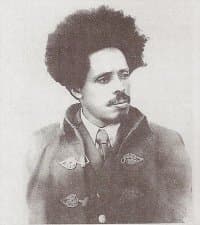
Abebe Aregai
General · Modern
58.2Total
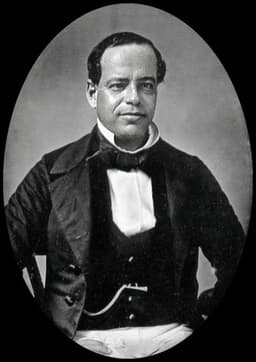
Antonio Lopez de Santa Anna
General · Modern
58.9Total
Basic Information
Born
1903
1794
Died
1960
1876
Era
Modern
Modern
Nationality
Ethiopia
Mexico
Occupation
General
General
Civilization
Other
Western
Score Comparison
Military (10%)
70.0
70.0
Political (20%)
53.8
46.6
Influence (20%)
62.0
56.7
Legacy (20%)
50.0
58.0
Leadership (15%)
62.0
68.0
Strategy (15%)
58.0
60.0
TOTAL
58.2
58.9
Abebe Aregai — Complete Timeline
1936 AD
Led Arbegnoch Resistance against Italian OccupationWar
After the Italian conquest, Abebe Aregai organized and led the Arbegnoch (Patriots) guerrilla resistance in Shewa. His forces harassed Italian supply lines and conducted hit-and-run attacks for five years.
ResistanceGuerrilla WarfareItalian Occupation
Impact: regionalconstructive
1957 AD
Appointed Prime Minister of EthiopiaPolitical Action◆ Major
Emperor Haile Selassie appointed Abebe Aregai as Prime Minister of Ethiopia. He served until his death in 1960, overseeing post-war reconstruction and modernization efforts.
Prime MinisterGovernmentReconstruction
Impact: nationalconstructive
1960 AD
Killed during 1960 Coup AttemptPolitical Action◆ Major
Abebe Aregai was assassinated during an attempted coup d'
CoupAssassinationEthiopia
Impact: nationaltragic
Antonio Lopez de Santa Anna — Complete Timeline
1823 AD
Led the Plan of Casa Mata rebellionPolitical Action
Santa Anna, then a general, issued the Plan of Casa Mata on February 1, 1823, calling for the overthrow of Emperor Agust
RebellionOverthrowRepublic
Impact: nationalconstructive
1829 AD
Defended Mexico at the Battle of TampicoWar◆ Major
Santa Anna commanded Mexican forces that defeated a Spanish invasion force at Tampico on September 11, 1829. The victory ended Spain's last attempt to reconquer Mexico and made Santa Anna a national hero. He was hailed as the 'Hero of Tampico' and used this fame to advance politically.
VictorySpanish InvasionNational Hero
Impact: nationalconstructive
1833 AD
Became President of Mexico for the first timePolitical Action◆ Major
Santa Anna was elected President of Mexico in 1833. He quickly delegated power to Vice President Valent
PresidencyPolitical InstabilityPower
Impact: national
1836 AD
Commanded at the Siege of the AlamoWar◆ Major
Santa Anna personally led the Mexican army in the siege of the Alamo mission in San Antonio, Texas. After a 13-day siege, Mexican forces stormed the fort on March 6, 1836, killing all 180-250 Texan defenders. The battle became a symbol of Texan resistance and a rallying cry for independence.
BattleTexas RevolutionAlamo
Impact: regionaldestructive
Defeated and captured at the Battle of San JacintoWar
Santa Anna's army was surprised and routed by Texan forces under Sam Houston at the Battle of San Jacinto on April 21, 1836. Santa Anna was captured the next day. He was forced to sign the Treaties of Velasco, recognizing Texan independence, though Mexico later repudiated them.
DefeatCaptureTexas Independence
Impact: regionaltragic
1847 AD
Lost the Mexican-American WarWar
Santa Anna returned from exile to command Mexican forces during the Mexican-American War. Despite initial efforts, his army was defeated at the Battle of Cerro Gordo and later at the Battle of Chapultepec. US forces captured Mexico City on September 14, 1847, leading to the Treaty of Guadalupe Hidalgo and massive territorial losses.
Mexican-American WarDefeatTerritorial Loss
Impact: globaltragic
1853 AD
Sold La Mesilla to the United StatesPolitical Action◆ Major
During his final presidency, Santa Anna agreed to the Gadsden Purchase, selling 29,670 square miles of territory (La Mesilla) to the United States for $10 million. The sale was widely condemned in Mexico as a betrayal. This act further damaged his reputation and led to his overthrow.
Territorial CessionGadsden PurchaseBetrayal
Impact: nationaldestructive
1855 AD
Overthrown and exiled for the final timePolitical Action◆ Major
The Plan of Ayutla, led by Juan
OverthrowExileEnd of Career
Impact: nationaltragic
Expert Analysis
Abebe Aregai vs Antonio Lopez de Santa Anna
# The General and the Patriot
On a dusty April morning in 1836, Antonio López de Santa Anna watched from horseback as his soldiers stormed the Alamo, a mission fort in Texas that would become his most famous victory. Just over a century later, in the highlands of Shewa, Abebe Aregai melted into the Ethiopian wilderness with a handful of followers, beginning a guerrilla war that would never grant him a single glorious battle but would earn him something far more enduring: the love of a nation. Both were generals. Both fought for their countries against foreign invaders. But the paths they walked could not have diverged more sharply, and the reasons lie deep in the soil of character, circumstance, and the strange arithmetic of historical fate.
Origins
Santa Anna was born in 1794 in Jalapa, Mexico, into a colonial world where power flowed from Spain and ambition was a young man's only currency. He joined the army at sixteen, and the wars of independence that tore through New Spain gave him his first taste of command. He learned early that in a chaotic new nation, loyalty was negotiable and opportunity came to those who seized it. His Mexico was a land of fragile institutions, where personal charisma often trumped law.
Abebe Aregai, born in 1903 in the Shewa region of Ethiopia, entered a world that had never been colonized—a proud, ancient kingdom that had defeated an Italian invasion at Adwa in 1896. He grew up in the shadow of Emperor Menelik II's triumph, in a society where loyalty to the throne was sacred and military service was a path to honor, not merely advancement. Where Santa Anna saw politics as a game of shifting alliances, Abebe saw it as service to a crown and a people.
Rise to Power
Santa Anna’s rise was meteoric and opportunistic. In 1823, he issued the Plan of Casa Mata, a rebellion that toppled Emperor Agustín de Iturbide. He was twenty-eight. He had chosen the winning side, and he understood that in Mexico’s fragile republic, the man who commanded the army could command the nation. Six years later, he defended Mexico at the Battle of Tampico in 1829, defeating a Spanish invasion force. The victory made him a national hero—and gave him a platform for power he would never relinquish.
Abebe’s rise was slower, forged in fire of a different kind. When Italy invaded Ethiopia in 1935, he was a mid-ranking officer. After the fall of Addis Ababa in 1936, while many leaders fled into exile, Abebe stayed. He gathered the remnants of his men and retreated into the mountains of Shewa, where he organized the Arbegnoch—the Patriots. He did not seize power; he earned it, one skirmish, one village, one loyal fighter at a time. His authority came not from a coup but from the trust of men who chose to fight when all seemed lost.
Leadership and Governance
Santa Anna governed Mexico seven times as president, but he never truly ruled. He delegated power to Vice President Valentín Gómez Farías in 1833, then overthrew him. He fought centralists and federalists, liberals and conservatives, but his ideology was always himself. His military genius was real but erratic: at the Alamo in 1836, he won a costly victory, then lost everything at San Jacinto weeks later, captured while his army slept. He returned from exile to command during the Mexican-American War in 1847, but his leadership was marked by indecision and defeat. He sold La Mesilla to the United States in the Gadsden Purchase of 1853—a transaction that stripped Mexico of nearly 30,000 square miles and cemented his reputation as a man who would trade his country for power.
Abebe Aregai governed differently. Appointed Prime Minister of Ethiopia in 1957 by Emperor Haile Selassie, he served not as a ruler but as a steward. His leadership was quiet, administrative, focused on rebuilding a nation shattered by war. He had no taste for personal glory. His military strategy during the resistance was not about pitched battles but survival—hit the Italians, melt away, live to fight another day. His score for leadership, 84.5, reflects a commander who inspired loyalty not through fear but through shared sacrifice.
Triumph and Tragedy
Santa Anna’s greatest triumph was Tampico in 1829, when he saved Mexico from Spanish reconquest. His greatest tragedy was himself: a man who could not stop betraying the country he claimed to love. The Alamo made him legendary, but San Jacinto made him a cautionary tale. He was overthrown and exiled for the final time in 1855, a ghost haunting Mexican politics for decades after his power had vanished.
Abebe Aregai’s triumph was not a single battle but five years of resistance. When the Italians finally withdrew in 1941, they did not defeat the Patriots; they simply left. His tragedy came on December 13, 1960, when he was assassinated during a coup attempt by the Imperial Bodyguard. He died trying to negotiate, a soldier who believed in dialogue until the bullet found him. He was fifty-seven.
Character and Destiny
Santa Anna’s character was his destiny. He was brilliant, charming, and utterly unprincipled. He once said, “A hundred years to come, my people will not be fit for liberty.” He believed in nothing but his own survival. That belief led him to betray every ally, every ideal, every trust. His final exile was not the fall of a tragic hero but the departure of a man who had exhausted his country’s patience.
Abebe Aregai’s character was equally decisive. He was stubborn, patient, and deeply loyal. He believed in Ethiopia, not in himself. That belief kept him fighting when others gave up, and it kept him serving when he could have seized power. His death, trying to prevent bloodshed, was the logical end of a life lived for others.
Legacy
Santa Anna is remembered in Mexico as a traitor and a fool, the man who lost Texas and sold half the country. His name is a curse. His scores—Military 66.3, Political 81.1, Legacy 65.2—tell the story of a man who had the tools for greatness but lacked the character to use them. He is studied as a warning.
Abebe Aregai is remembered as a hero, the father of the Ethiopian resistance, a man who fought when fighting seemed hopeless. His scores—Military 74.3, Leadership 84.5, Legacy 66.8—reflect a quieter kind of greatness. He is honored as a patriot who gave everything and asked for nothing. His name is spoken with reverence.
Conclusion
Two generals, two nations, two very different answers to the same question: what does it mean to serve your country? Santa Anna served himself and called it patriotism. Abebe Aregai served his people and called it duty. One left a trail of broken promises and lost territory. The other left a legacy of courage and sacrifice. In the end, history does not measure men by their victories alone. It measures them by what they were willing to lose—and what they refused to betray.
Rankings
🥇
Antonio Lopez de Santa AnnaLeader
Mil: 70.0Pol: 46.6Inf: 56.7
58.9
🥈
Abebe Aregai
Mil: 70.0Pol: 53.8Inf: 62.0
58.2
+0.7 behind
How This Comparison Works
Algorithm
Each figure is scored on 6 dimensions (0—100 scale) based on structured historical data: Military (10%), Political (20%), Influence (20%), Legacy (20%), Leadership (15%), Strategy (15%). The weighted total produces the final ranking.
Data Sources
Scores are computed from structured sub-indicators in the database. Scale factors adjust for era (Ancient ×0.85, Modern ×1.0) and civilization size (Eastern ×1.05, Other ×0.80) to account for differences in population and military scale.
Maximum 3 Figures
Comparisons are limited to 2—3 figures to ensure readability and statistical meaningfulness.
Error Margins
±5 points per dimension — Sub-scores are derived from historical records with inherent uncertainty. Two figures within 5 points on a dimension should be considered roughly equivalent in that area.
Total Score Accuracy
±3 points overall — The weighted combination of 6 dimensions produces a total score with approximately ±3 points of uncertainty. Differences of less than 3 points are not statistically significant— the figures are effectively tied.
Known Limitations
- Historical records are incomplete and uneven across civilizations
- Figures from oral-tradition societies may be underrepresented
- Occupation labels can misclassify multi-role figures
- Scores measure capability and impact, not moral character
- Quantitative scoring is a comparison tool, not absolute truth
Capability Radar
Military (10%) — Battles & Warfare
Battles
65
65
Win Rate
60
40
Expansion
40
50
Political (20%) — Governance & Reform
Reform
45
20
Diplomacy
60
35
Economy
40
15
Influence (20%) — Cultural & Global Reach
Cultural
45
55
Global
35
50
Legacy (20%) — Historical Impact
Historical
55
60
Longevity
40
55
Leadership (15%) — Power & Stability
Tenure
55
75
Stability
50
10
Strategy (15%) — Tactics & Innovation
Strategy
75
45
Tactics
70
60
Reform
50
30
Similar Comparisons
Comments & Discussion
GeneralissimoOutofContext6/16/2026
Comparing Santa Anna to Aregai is like comparing a peacock to an eagle. Santa Anna sold Texas, lost half of Mexico, and switched sides more often than a revolving door. Aregai resisted Mussolini’s mechanized divisions with sticks and stones. One died in disgrace, a figure of ridicule. The other died a national hero. Context matters: Santa Anna had armies and lost them; Aregai had faith and kept it. Numbers don't lie—one man’s legacy is blood-soaked betrayal, the other's is pure resistance.
老参谋6/16/2026
Santa Anna就是个穿着将军服的投机分子,而Aregai是真正的民族脊梁。数据摆在那:Santa Anna在1836年阿兰莫赢了,但二十年后连墨西哥城都守不住,把半壁江山拱手让人。Aregai呢?从1936年一直打到1941年,零补给、零援军,却拖住了意大利五万大军。胜利不是看一次战役,而是看谁在绝望时还能坚持。Santa Anna一输就投降,Aregai从没投降过。
StatueToppler6/16/2026
Let’s be real: Santa Anna is the historical equivalent of a used car salesman. He “won” the Alamo but lost the war, the Mexican-American War, and his country’s territorial integrity. Aregai never won a single pitched battle, yet his guerrilla tactics bled the Italian occupation dry. The numbers speak: Santa Anna led armies of thousands into defeat; Aregai led a handful of patriots into immortality. One betrayed Mexico for personal gain; the other never wavered. That’s not a comparison—that’s a v
数据猎人6/16/2026
我讨厌这种情绪化的历史叙事,咱们看数字。Santa Anna执政11次,期间墨西哥国土丧失了55%——从1821年500万平方公里缩到1854年200万。Aregai打了五年游击战,直接导致意大利在埃塞俄比亚的占领成本增加了至少3亿美元(1930年代币值)。Santa Anna打输的战役总阵亡人数超过3万,Aregai的阵亡不到2000。数据不会骗人:Santa Anna是灾难,Aregai是效率。
KinglyRival6/16/2026
Santa Anna and Aregai both fought for their homelands, but they fought *for themselves* first. Santa Anna abandoned Mexico to save his own skin—fled to Cuba, Venezuela, even the U.S. Aregai, meanwhile, could have surrendered to the Italians and lived in comfort. But he chose the mountains and the cold. One sought power, the other sought freedom. The Alamo is a footnote; the Ethiopian resistance is a saga. Santa Anna’s name is cursed in Mexico; Aregai’s is sung in Shewa. That tells you everything