Loading...
Abebe Aregai vs Andres de Santa Cruz
Andres de Santa Cruz leads by 2.3 pts · 2 figures compared
…
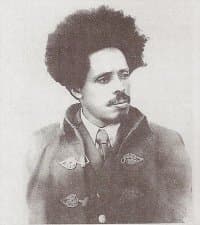
Abebe Aregai
General · Modern
58.2Total
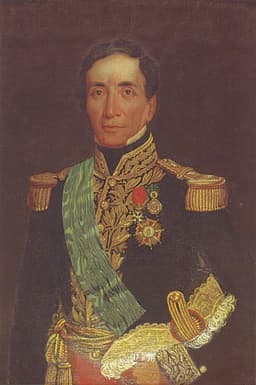
Andres de Santa Cruz
General · Modern
60.5Total
Basic Information
Born
1903
1792
Died
1960
1865
Era
Modern
Modern
Nationality
Ethiopia
Bolivia
Occupation
General
General
Civilization
Other
Western
Score Comparison
Military (10%)
70.0
67.5
Political (20%)
53.8
59.3
Influence (20%)
62.0
62.0
Legacy (20%)
50.0
50.0
Leadership (15%)
62.0
68.0
Strategy (15%)
58.0
66.3
TOTAL
58.2
60.5
Abebe Aregai — Complete Timeline
1936 AD
Led Arbegnoch Resistance against Italian OccupationWar
After the Italian conquest, Abebe Aregai organized and led the Arbegnoch (Patriots) guerrilla resistance in Shewa. His forces harassed Italian supply lines and conducted hit-and-run attacks for five years.
ResistanceGuerrilla WarfareItalian Occupation
Impact: regionalconstructive
1957 AD
Appointed Prime Minister of EthiopiaPolitical Action◆ Major
Emperor Haile Selassie appointed Abebe Aregai as Prime Minister of Ethiopia. He served until his death in 1960, overseeing post-war reconstruction and modernization efforts.
Prime MinisterGovernmentReconstruction
Impact: nationalconstructive
1960 AD
Killed during 1960 Coup AttemptPolitical Action◆ Major
Abebe Aregai was assassinated during an attempted coup d'
CoupAssassinationEthiopia
Impact: nationaltragic
Andres de Santa Cruz — Complete Timeline
1823 AD
Battle of ZepitaWar
Santa Cruz commanded Peruvian forces in a victory over Spanish royalists at Zepita during the Peruvian War of Independence. This battle enhanced his military reputation and contributed to the eventual liberation of Peru from Spanish rule.
Peruvian War of IndependenceBattleLiberation
Impact: regional
1826 AD
Presidency of PeruPolitical Action
Santa Cruz served as President of the Council of Government of Peru from 1826 to 1827, effectively ruling the country. His administration focused on centralizing power and organizing the state, but he was overthrown by a rebellion led by Agust
PresidencyPeruCentralization
Impact: national
1829 AD
Presidency of BoliviaPolitical Action◆ Major
Santa Cruz became President of Bolivia in 1829, serving until 1839. He implemented administrative reforms, stabilized the economy, and modernized the military, establishing Bolivia as a more coherent state after the chaos following independence.
PresidencyBoliviaReforms
Impact: nationalconstructive
1836 AD
War of the ConfederationWar◆ Major
Chile and Argentina declared war on the Peru-Bolivia Confederation, viewing it as a threat to the balance of power. Santa Cruz led the confederation's forces in a conflict that lasted until 1839, ultimately resulting in the confederation's defeat.
WarChileArgentinaConfederation
Impact: regional
Creation of the Peru-Bolivia ConfederationPolitical Action
Santa Cruz established the Peru-Bolivia Confederation, uniting Bolivia and Peru into a single state with himself as Supreme Protector. This confederation aimed to create a powerful Andean nation and challenged the regional influence of Chile and Argentina.
ConfederationUnificationAndean Power
Impact: regional
1839 AD
Battle of YungayWar
Santa Cruz's confederation forces were decisively defeated by the Chilean army at the Battle of Yungay. This defeat led to the dissolution of the Peru-Bolivia Confederation and forced Santa Cruz into exile, ending his political project.
BattleDefeatEnd of Confederation
Impact: regionaltragic
Exile and DeathPolitical Action
After the defeat at Yungay, Santa Cruz fled to Ecuador and later to France. He spent the rest of his life in exile, making unsuccessful attempts to return to power. He died in France in 1865, never regaining his former influence.
ExileDeathFailure
Impact: nationaltragic
Expert Analysis
Abebe Aregai vs Andres de Santa Cruz
### The Dreamer and the Defender: Andrés de Santa Cruz and Abebe Aregai
In the high, thin air of the Andes, a general named Andrés de Santa Cruz once dreamed of forging a single, colossal state from the ruins of Spain’s empire. Half a world away, in the rugged mountains of Ethiopia, another commander, Abebe Aregai, fought not to build a new nation, but to keep an ancient one from being erased. One man’s ambition ended in exile; the other’s resistance ended in a prime minister’s office. Their lives, separated by a century and an ocean, pose a haunting question: what makes a leader’s vision either a triumph or a tragedy?
### Origins
Andrés de Santa Cruz was born in 1792 in La Paz, Bolivia, a child of the colonial frontier. His father was a Spanish nobleman, his mother an indigenous Quechua princess. This mixed blood gave him a foot in two worlds, but it also left him rootless—loyal to an idea of unity rather than to any single land. The wars of independence that swept South America in the 1810s and 1820s forged his character. He fought alongside Simón Bolívar, absorbing the dream of a united continent, yet he saw how quickly that dream shattered into squabbling republics.
Abebe Aregai came from a different soil. Born in 1903 in the Shewa region of Ethiopia, he grew up in a kingdom that had never been colonized, a proud anomaly in a continent being carved up by Europeans. His early career was as a local governor and soldier under Emperor Haile Selassie, a ruler who was desperately modernizing a feudal state. Where Santa Cruz was shaped by the chaos of revolution, Aregai was shaped by the threat of invasion—the creeping shadow of Mussolini’s Italy.
### Rise to Power
Santa Cruz’s ascent was a masterclass in political maneuvering. In 1823, at the Battle of Zepita, he led Peruvian forces to a rare victory over Spanish royalists, earning military prestige. But his real genius was in negotiation. By 1826, he was effectively ruling Peru as President of the Council of Government, and by 1829, he had secured the presidency of Bolivia. He did not conquer these positions; he charmed, bargained, and outlasted his rivals.
Aregai’s rise was forged in fire. When Italy invaded Ethiopia in 1935, the emperor fled into exile. Most of the nobility surrendered. But Aregai refused. In 1936, he took to the hills of Shewa and organized the *Arbegnoch*—the Patriots. He was not a general of set-piece battles; he was a master of ambush, of cutting supply lines, of melting into the landscape. His power came not from a title, but from the loyalty of men who chose to fight when all seemed lost.
### Leadership & Governance
Santa Cruz’s greatest achievement was his vision of the Peru-Bolivia Confederation, proclaimed in 1836. He unified two nations under a single state, with himself as Supreme Protector. He was a reformer: he stabilized Bolivia’s currency, modernized the tax system, and promoted education. But his leadership was brittle. He believed in order imposed from above, not consent built from below. His confederation was a house of cards, held together by his personal authority alone.
Aregai’s leadership was the opposite: organic and resilient. As Prime Minister from 1957, he governed a nation that was stable but stagnant. He was not a visionary reformer like Santa Cruz; he was a loyal administrator, implementing Haile Selassie’s cautious modernization. His military score of 74.3 and political score of 79.4 reflect a man who was effective, but not transformative. His strength was in preserving what existed, not in building something new.
### Triumph & Tragedy
Santa Cruz’s triumph was the Confederation itself—a moment when the map of South America was redrawn by his will. But his tragedy came swiftly. Chile and Argentina, fearing a superpower on their borders, declared war in 1836. At the Battle of Yungay in 1839, his forces were crushed by the Chilean army. The Confederation dissolved overnight. Santa Cruz fled into exile, first to Ecuador, then to France, where he died in 1865, a forgotten man writing memoirs in a Parisian apartment.
Aregai’s triumph was survival. He kept the Ethiopian resistance alive for five years, until British forces helped drive out the Italians in 1941. He returned to Addis Ababa a hero. His tragedy was quieter, but more brutal. In 1960, during a coup attempt by the Imperial Bodyguard, he was assassinated while trying to negotiate—a soldier of the old order killed by the very modernity he had helped usher in.
### Character & Destiny
Santa Cruz was a dreamer who believed geography could be conquered by will. His personality was ambitious, calculating, and ultimately inflexible. When his Confederation crumbled, he had no fallback plan, no deep base of popular support. He had built a state on paper, not in hearts.
Aregai was a pragmatist who understood that survival was its own victory. His character was patient, stoic, and fiercely loyal. He did not seek to remake the world; he sought to defend his homeland. That humility made him a better guerrilla leader, but a less memorable historical figure.
### Legacy
Santa Cruz is remembered in Bolivia and Peru as a flawed prophet of unity. His total score of 67.8, with a leadership rating of 79.0, reflects a man who nearly succeeded—and whose failure still haunts Andean politics. His name appears on streets and statues, but his Confederation is a cautionary tale.
Aregai’s legacy is more modest but more solid. With a total score of 72.7 and a leadership rating of 84.5, he is honored as a father of Ethiopian resistance. His name is synonymous with the *Arbegnoch* spirit—the refusal to submit. In Addis Ababa, a square bears his name. He did not create an empire, but he saved a nation.
### Conclusion
In the end, Santa Cruz and Aregai represent two poles of leadership: the builder and the defender. One tried to unite a continent and lost everything. One tried to save a kingdom and gave his life. Neither was perfect; both were products of their time. But their stories remind us that history does not reward ambition or caution alone. It rewards the ability to read the moment—and to know, finally, whether to build or to hold.
Rankings
🥇
Andres de Santa CruzLeader
Mil: 67.5Pol: 59.3Inf: 62.0
60.5
🥈
Abebe Aregai
Mil: 70.0Pol: 53.8Inf: 62.0
58.2
+2.3 behind
How This Comparison Works
Algorithm
Each figure is scored on 6 dimensions (0—100 scale) based on structured historical data: Military (10%), Political (20%), Influence (20%), Legacy (20%), Leadership (15%), Strategy (15%). The weighted total produces the final ranking.
Data Sources
Scores are computed from structured sub-indicators in the database. Scale factors adjust for era (Ancient ×0.85, Modern ×1.0) and civilization size (Eastern ×1.05, Other ×0.80) to account for differences in population and military scale.
Maximum 3 Figures
Comparisons are limited to 2—3 figures to ensure readability and statistical meaningfulness.
Error Margins
±5 points per dimension — Sub-scores are derived from historical records with inherent uncertainty. Two figures within 5 points on a dimension should be considered roughly equivalent in that area.
Total Score Accuracy
±3 points overall — The weighted combination of 6 dimensions produces a total score with approximately ±3 points of uncertainty. Differences of less than 3 points are not statistically significant— the figures are effectively tied.
Known Limitations
- Historical records are incomplete and uneven across civilizations
- Figures from oral-tradition societies may be underrepresented
- Occupation labels can misclassify multi-role figures
- Scores measure capability and impact, not moral character
- Quantitative scoring is a comparison tool, not absolute truth
Capability Radar
Military (10%) — Battles & Warfare
Battles
65
60
Win Rate
60
55
Expansion
40
55
Political (20%) — Governance & Reform
Reform
45
65
Diplomacy
60
60
Economy
40
55
Influence (20%) — Cultural & Global Reach
Cultural
45
45
Global
35
35
Legacy (20%) — Historical Impact
Historical
55
50
Longevity
40
40
Leadership (15%) — Power & Stability
Tenure
55
60
Stability
50
40
Strategy (15%) — Tactics & Innovation
Strategy
75
65
Tactics
70
60
Reform
50
50
Similar Comparisons
Comments & Discussion
Globe-Trotter Tacticus6/16/2026
Sure, Santa Cruz was a visionary, but his ambition outran logistics. He tried to weld Peru and Bolivia into a confederation, but he forgot that 19th-century South America couldn't sustain a superstate without a navy or a common market. His defeat at Yungay in 1839 wasn't just a military loss—it was proof that geography and fractured local loyalties beat grand blueprints every time. Aregai, meanwhile, used terrain and guerrilla patience against Mussolini's modern army. That's not dreaming; that's
山地老狐狸6/16/2026
讲真,圣克鲁斯那套“大秘鲁联邦”就是个纸上谈兵的幻想。他真以为自己混了印加血统就能把所有安第斯人团结起来?1836年智利军队一打过来,秘鲁南部那些地方精英立刻倒戈。反观阿贝贝·阿勒盖,1936年意大利人用毒气和坦克,他靠山地游击战硬扛了五年。一个是政治作秀,一个是实打实的铁血抵抗——高下立判。