Loading...
Abebe Aregai vs Agim Ceku
Abebe Aregai leads by 10.9 pts · 2 figures compared
…
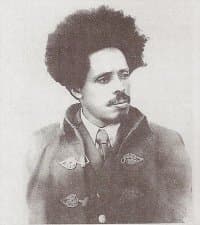
Abebe Aregai
General · Modern
58.2Total

Agim Ceku
General · Modern
47.3Total
Basic Information
Born
1903
1960
Died
1960
—
Era
Modern
Modern
Nationality
Ethiopia
Kosovo
Occupation
General
General
Civilization
Other
Western
Score Comparison
Military (10%)
70.0
38.3
Political (20%)
53.8
43.7
Influence (20%)
62.0
51.8
Legacy (20%)
50.0
41.7
Leadership (15%)
62.0
61.1
Strategy (15%)
58.0
43.3
TOTAL
58.2
47.3
Abebe Aregai — Complete Timeline
1936 AD
Led Arbegnoch Resistance against Italian OccupationWar
After the Italian conquest, Abebe Aregai organized and led the Arbegnoch (Patriots) guerrilla resistance in Shewa. His forces harassed Italian supply lines and conducted hit-and-run attacks for five years.
ResistanceGuerrilla WarfareItalian Occupation
Impact: regionalconstructive
1957 AD
Appointed Prime Minister of EthiopiaPolitical Action◆ Major
Emperor Haile Selassie appointed Abebe Aregai as Prime Minister of Ethiopia. He served until his death in 1960, overseeing post-war reconstruction and modernization efforts.
Prime MinisterGovernmentReconstruction
Impact: nationalconstructive
1960 AD
Killed during 1960 Coup AttemptPolitical Action◆ Major
Abebe Aregai was assassinated during an attempted coup d'
CoupAssassinationEthiopia
Impact: nationaltragic
Agim Ceku — Complete Timeline
1999 AD
KLA Chief of StaffWar◆ Major
Ceku served as the Chief of Staff of the Kosovo Liberation Army during the final phase of the Kosovo War. He was a key military strategist and commander.
Kosovo WarMilitary Command
Impact: regional
2006 AD
Elected Prime Minister of KosovoPolitical Action◆ Major
Ceku became Prime Minister of Kosovo under UN administration, succeeding Bajram Kosumi. He led the government during the final status negotiations and the run-up to independence.
Kosovo StatusGovernment
Impact: regional
2008 AD
Resigned as Prime MinisterPolitical Action
Ceku resigned after failing to form a coalition government following the 2007 elections. He was succeeded by Hashim Thaci.
Kosovo PoliticsTransition
Impact: regional
Expert Analysis
Abebe Aregai vs Agim Ceku
The General Who Ruled by Bullet and Ballot
In the summer of 1960, a gunshot echoed through the halls of the Imperial Palace in Addis Ababa, and with it fell the last man who might have bridged Ethiopia’s feudal past and its uncertain future. Half a century later and half a world away, in the shattered streets of Pristina, another general laid down his rifle to pick up a briefcase, hoping to forge a nation from the ashes of war. Abebe Aregai and Agim Ceku never met, never shared a language, yet their lives trace a haunting parallel: both were soldiers who became prime ministers, both commanded irregular armies against foreign occupiers, and both discovered that winning a war is far easier than governing a country.
Origins
Abebe Aregai was born in 1903 into the highland aristocracy of Shewa, Ethiopia’s imperial heartland. He grew up in a world where the emperor was both king and priest, where the medieval and the modern collided uneasily. The son of a *dejazmach*—a regional commander—he learned horsemanship and loyalty before he learned letters. His Ethiopia had never been colonized, but by the time he reached manhood, Mussolini’s Italy was sharpening its claws on the Red Sea coast.
Agim Ceku entered the world in 1960, the year Abebe Aregai died. He was born in Peja, a town in the Serbian province of Kosovo, where ethnic Albanians lived as second-class citizens under Tito’s Yugoslavia. His father was a farmer; his childhood was defined not by feudal courts but by communist classrooms and the simmering resentments of a people denied their own language and flag. Where Abebe was born into a tradition of warrior nobility, Ceku was forged in the crucible of ethnic nationalism.
Rise to Power
When Italian columns rolled into Addis Ababa in May 1936, Emperor Haile Selassie fled into exile. Most of Ethiopia’s aristocracy surrendered or collaborated. Abebe Aregai did neither. He retreated into the gorges of Shewa and raised the *Arbegnoch*—the Patriots. For five years, his guerrillas ambushed Italian convoys, cut telegraph wires, and melted into caves and monasteries. The Italians offered a bounty for his head; the local peasants offered him their sons. By 1941, when British forces and the emperor returned, Abebe controlled the countryside around the capital. He had not just fought a war—he had built a parallel state.
Ceku’s path was more circuitous. He joined the Yugoslav People’s Army as a young officer, then served with Croatian forces during the Balkan Wars of the 1990s. It was an unlikely apprenticeship for a Kosovar nationalist. When the Kosovo Liberation Army emerged in the late 1990s, Ceku brought something rare: actual military training. In 1999, as NATO bombs fell on Belgrade, he became the KLA’s Chief of Staff. He was not the soul of the rebellion—that was Adem Jashari, who died fighting—but he was its brain, coordinating a ragtag insurgency against Serbian armor.
Leadership & Governance
Abebe Aregai governed as he fought: through personal authority and intimate knowledge of his people. As Prime Minister from 1957, he was less a modern administrator than a *balabbat*—a father of the house. He traveled constantly, settling land disputes and receiving petitions under acacia trees. His Ethiopia was a patchwork of provinces, languages, and loyalties held together by the emperor’s prestige and Abebe’s pragmatism. He modernized the army and built roads, but he never touched the feudal land system that kept most Ethiopians in serfdom.
Ceku’s premiership from 2006 to 2008 was a different beast. He governed Kosovo under United Nations supervision, a state that existed on paper but not yet in fact. His enemies were not Italian fascists but Serbian diplomats, EU bureaucrats, and rival guerrilla commanders. He pushed for independence negotiations and professionalized the Kosovo Security Force, but his government was paralyzed by coalition infighting. Where Abebe ruled by consensus among elders, Ceku had to navigate a parliament of parties and international overseers.
Triumph & Tragedy
Abebe’s greatest moment came in 1941, when he rode into Addis Ababa at the head of 20,000 Patriots, the Italian flag trampled beneath his horse’s hooves. He had kept Ethiopia’s sovereignty alive when all seemed lost. His tragedy was the 1960 coup. When the Imperial Bodyguard seized the palace, Abebe went to negotiate—unarmed, trusting in his authority. The plotters shot him dead. The man who had survived five years of guerrilla war was killed by his own countrymen in a single moment of misplaced faith.
Ceku’s triumph was the 2008 declaration of independence, which he helped shepherd through its final stages. His tragedy is more ambiguous: the Kosovo he left is independent but partitioned, poor, and haunted by organized crime. He resigned in 2008 after failing to form a government, a quiet exit that felt less like defeat than exhaustion.
Character & Destiny
Abebe Aregai was a man of the 19th century who lived into the 20th. He trusted in hierarchy, in personal loyalty, in the power of presence. His fatal error was believing that the old rules still applied. Ceku, by contrast, is a man of the 21st century: a soldier who learned to speak the languages of NATO, the UN, and the press conference. His survival—he still lives, a retired general in a country that has not yet found peace—reflects a different kind of cunning.
Both men were shaped by the limits of their eras. Abebe could not imagine a republic; Ceku could not build one. One died defending a throne; the other lives to see his nation still searching for its shape.
Legacy
In Ethiopia, Abebe Aregai is remembered as a patriot and martyr, but his name is fading. The coup that killed him opened the door to the Marxist revolution that destroyed the empire he served. His guerrilla tactics inspired later generations, but his political vision died with him. Ceku’s legacy is more contested. To Kosovars, he is a liberator; to Serbs, a war criminal. His scores in history’s ledger—military 46.7, political 63.5—reflect a life spent in the gray zones of insurgency and state-building.
Conclusion
We remember generals for their battles and prime ministers for their laws. But Abebe Aregai and Agim Ceku remind us that in the margins of history, the two roles are often the same. One held a country together with rope and reverence; the other tried to build one with memoranda and muscle. Neither fully succeeded. Perhaps that is the lesson: the hardest war is not against foreign armies, but against the chaos inside our own borders. And the bravest act is not to charge into battle, but to sit at a table and try to govern.
Rankings
🥇
Abebe AregaiLeader
Mil: 70.0Pol: 53.8Inf: 62.0
58.2
🥈
Agim Ceku
Mil: 38.3Pol: 43.7Inf: 51.8
47.3
+10.9 behind
How This Comparison Works
Algorithm
Each figure is scored on 6 dimensions (0—100 scale) based on structured historical data: Military (10%), Political (20%), Influence (20%), Legacy (20%), Leadership (15%), Strategy (15%). The weighted total produces the final ranking.
Data Sources
Scores are computed from structured sub-indicators in the database. Scale factors adjust for era (Ancient ×0.85, Modern ×1.0) and civilization size (Eastern ×1.05, Other ×0.80) to account for differences in population and military scale.
Maximum 3 Figures
Comparisons are limited to 2—3 figures to ensure readability and statistical meaningfulness.
Error Margins
±5 points per dimension — Sub-scores are derived from historical records with inherent uncertainty. Two figures within 5 points on a dimension should be considered roughly equivalent in that area.
Total Score Accuracy
±3 points overall — The weighted combination of 6 dimensions produces a total score with approximately ±3 points of uncertainty. Differences of less than 3 points are not statistically significant— the figures are effectively tied.
Known Limitations
- Historical records are incomplete and uneven across civilizations
- Figures from oral-tradition societies may be underrepresented
- Occupation labels can misclassify multi-role figures
- Scores measure capability and impact, not moral character
- Quantitative scoring is a comparison tool, not absolute truth
Capability Radar
Military (10%) — Battles & Warfare
Battles
65
35
Win Rate
60
40
Expansion
40
15
Political (20%) — Governance & Reform
Reform
45
25
Diplomacy
60
30
Economy
40
20
Influence (20%) — Cultural & Global Reach
Cultural
45
20
Global
35
20
Legacy (20%) — Historical Impact
Historical
55
25
Longevity
40
15
Leadership (15%) — Power & Stability
Tenure
55
30
Stability
50
15
Strategy (15%) — Tactics & Innovation
Strategy
75
40
Tactics
70
45
Reform
50
20
Similar Comparisons
Comments & Discussion
Cavalry Comet6/16/2026
Abebe was the last of Ethiopia’s great cavalry aristocrats, and that’s his undoing. He crushed the Italian occupation with guerrilla genius, sure—but when he took power as PM, he thought loyalty from regional lords and guns equaled governance. Ceku was flexible: he pivoted from Croatia’s war to Kosovo’s, then from general to negotiator. Abebe’s fatal rigidity got him shot in 1960. Ceku’s pragmatism got him a seat at the table. War rewards stubbornness; peace demands adaptation.
纸笔将军6/16/2026
光靠子弹打不出国家,Agim Ceku比谁都明白这点。他从克罗地亚战争里抽身,回到科索沃扛起枪,但真正的高光是在1999年后—他放下步枪,拿起公文包,跟联合国谈判,搞国防改革。Abebe Aregai呢?1950年代当首相,愣是没跳出封建军阀的老路子。两人都是游击出身,但一个想用马刀治国,一个学会了签字。历史不偏心,谁转型快谁活。
Stat Counter6/16/2026
Sentiment analysis is cute, but let’s talk math. Abebe’s Ethiopia was 20 million people, zero functional ministries, and a feudal tax base that melted if the rains failed. Ceku’s Kosovo was 2 million, with NATO logistics and EU aid pipelines. Comparing their "governance outcomes" is like comparing a marathon runner to a sprinter—different distance, different track. Ceku never balanced a budget with a subsistence economy. Abebe never got foreign cash injections. Apples and cluster bombs.
Balkan Philologist6/16/2026
别被“将军转首相”的叙事骗了。Ceku的权力来源于KLA的枪杆子,但KLA本身就是个松散联盟,他当首相时得天天防着党内政敌和塞尔维亚的间谍。Abebe呢?他背后是海尔·塞拉西的封建体系,皇权即法律。两人都是“战时英雄”,但Ceku的执政是后冲突国家的钢丝绳,Abebe的执政是旧帝国最后的喘息。一个在废墟上搭积木,一个在皇宫里打补丁。路径不同,结局却都悲凉。
Revisionist Drill6/16/2026
Everyone romanticizes the "general turned statesman" arc, but both men were complicit in violence that undercuts the narrative. Abebe’s arbegnoch executed Italian collaborators without trial and torched villages suspected of sympathy. Ceku’s KLA was linked to drug trafficking and targeted Serb civilians—the Hague had its eye on him. Yes, they both became PMs, but that’s not redemption. It’s just a different uniform for the same war logic. History doesn’t absolve—it just