Loading...
Abbas I vs Otto I the Great
Abbas I leads by 6.2 pts · 2 figures compared
…
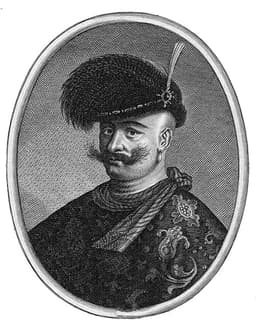
Abbas I
Emperor · Modern
81.4Total
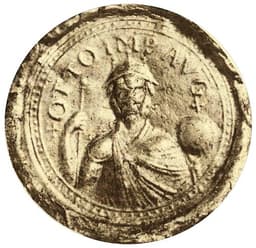
Otto I the Great
Emperor · Medieval
75.2Total
Basic Information
Born
1571
912
Died
1629
973
Era
Modern
Medieval
Nationality
Persia
Holy Roman Empire
Occupation
Emperor
Emperor
Civilization
Middle Eastern
Western
Score Comparison
Military (10%)
82.0
82.0
Political (20%)
90.0
70.0
Influence (20%)
75.0
88.0
Legacy (20%)
82.0
65.0
Leadership (15%)
81.7
78.0
Strategy (15%)
82.0
65.4
TOTAL
81.4
75.2
Abbas I — Complete Timeline
1590 AD
Reformed the Army with GhulamsReform
Abbas I created a standing army of ghulams (military slaves) recruited from Christian subjects in the Caucasus, particularly Georgians and Armenians. This reduced reliance on the Qizilbash tribal forces, increased royal control, and modernized the military with firearms and artillery.
Military ReformGhulam SystemCentralization
Impact: nationalconstructive
1598 AD
Relocated Capital to IsfahanPolitical Action
Abbas I moved the Safavid capital from Qazvin to Isfahan, transforming it into a magnificent city with grand architecture, including Naqsh-e Jahan Square, the Shah Mosque, and the Ali Qapu Palace. This relocation became a symbol of Safavid power and cultural flourishing.
Capital RelocationUrban PlanningArchitecture
Impact: globalconstructive
1599 AD
Established Diplomatic Relations with EuropePolitical Action◆ Major
Abbas I sent diplomatic missions to European courts, including those of Philip III of Spain, Rudolf II of the Holy Roman Empire, and Elizabeth I of England, seeking alliances against the Ottoman Empire. These missions opened sustained diplomatic and commercial exchanges between Safavid Persia and Europe.
DiplomacyEuropean RelationsAnti-Ottoman Alliance
Impact: globalconstructive
1605 AD
Battle of SufiyanWar◆ Major
Abbas I defeated an Ottoman army near Sufiyan, securing Safavid control over Azerbaijan and the Caucasus. This victory was part of the Ottoman-Safavid War of 1603-1618, which resulted in the recapture of Tabriz, Nakhchivan, and Yerevan from Ottoman occupation.
Ottoman-Safavid WarBattleTerritorial Recovery
Impact: regional
1622 AD
Expelled Portuguese from HormuzWar◆ Major
Abbas I, with support from the English East India Company, captured the island of Hormuz from Portuguese control. This ended Portuguese dominance in the Persian Gulf and opened direct trade routes for Safavid Persia with Europe, boosting the silk trade.
Persian GulfTradeEuropean Relations
Impact: globalconstructive
1623 AD
Recaptured BaghdadWar◆ Major
Abbas I captured Baghdad from the Ottoman Empire after a siege, restoring Safavid control over Iraq. This victory expanded Safavid territory and gave Abbas control over important Shi'a pilgrimage sites like Najaf and Karbala.
Ottoman-Safavid WarConquestShi'a Sites
Impact: regional
Otto I the Great — Complete Timeline
951 AD
Diplomatic Marriage to Adelaide of ItalyPolitical Action◆ Major
Otto married Adelaide, the widowed queen of Italy, after intervening in Italian politics. This marriage gave him control over the Kingdom of Italy and strengthened his claim to imperial authority.
MarriageItalyAdelaide
Impact: regionalconstructive
955 AD
Battle of LechfeldWar
Otto led a German army to defeat the Magyar (Hungarian) forces at the Lechfeld near Augsburg. This victory ended Magyar raids into Western Europe and secured Otto's reputation as a defender of Christendom.
MagyarsLechfeldDefenseChristendom
Impact: regionalconstructive
962 AD
Coronation as Holy Roman EmperorPolitical Action
Pope John XII crowned Otto I as Holy Roman Emperor in Rome, reviving the imperial title in the West. This event established the Holy Roman Empire as a major political entity and linked German kingship with papal authority.
CoronationHoly Roman EmpirePapacy
Impact: globalconstructive
Expert Analysis
Origins
Abbas I was born in 1571, the third son of Shah Mohammad Khodabanda. His early life was marred by chaos: the Safavid state was weak, threatened by Ottoman incursions and internal tribal strife. Abbas grew up in a court rife with intrigue, and his father was largely ineffective. In 1587, a coup by the Qizilbash tribal leaders placed the 16-year-old Abbas on the throne, but real power lay with the tribal chiefs. Otto I, born in 912, was the son of Henry the Fowler, Duke of Saxony and later King of East Francia. Henry had unified the German duchies and repelled Magyar raids. Otto inherited a stable kingdom in 936, but faced immediate challenges from rebellious dukes and external enemies. Both rulers emerged from turbulent backgrounds, but Abbas faced a more fragmented and threatened state.
Rise to Power
Abbas I's early reign was dominated by the Qizilbash, who expected him to be a figurehead. He cleverly played factions against each other while secretly building a loyal power base. In 1590, he signed a humiliating peace with the Ottomans to buy time. He then turned on the Qizilbash, eliminating their leaders and creating a new army of ghulams (slave soldiers) from the Caucasus. This move centralized power and allowed him to crush rebellions. By 1598, he was absolute master of Persia. Otto I's rise was more conventional: he was elected king at Aachen in 936 and immediately asserted royal authority. He crushed a revolt by Eberhard of Franconia and Thankmar in 938, and later defeated a rebellion by his own brother Henry in 941. Otto used a combination of military force and strategic marriages to secure his rule. Both men consolidated power effectively, but Abbas did so by transforming the state's military and administrative foundations.
Leadership & Governance
Abbas I was a visionary builder and reformer. He moved the capital to Isfahan, transforming it into a magnificent city with grand mosques, palaces, and gardens. He reformed the army, creating a standing force of ghulams that were loyal to him personally. He also promoted trade and industry, establishing diplomatic relations with European powers to counter the Ottomans. His governance was highly centralized and efficient, though autocratic. Otto I focused on strengthening the monarchy within a feudal framework. He used the Church as a counterweight to the nobility, appointing bishops and abbots as royal officials. He also expanded eastward, establishing the Archbishopric of Magdeburg to Christianize the Slavs. Otto's governance was more decentralized than Abbas's, relying on the cooperation of dukes and bishops. Both were effective rulers, but Abbas's reforms were more transformative and far-reaching.
Triumph & Tragedy
Abbas I's greatest triumph was the reconquest of Persian territories from the Ottomans and Uzbeks. He recaptured Baghdad in 1623 and expelled the Portuguese from Hormuz in 1622, restoring Persian control over the Persian Gulf. His capital, Isfahan, became one of the world's great cities. However, his later years were marred by tragedy: he became paranoid, blinded his own sons, and executed many advisors. The succession crisis after his death led to a decline in Safavid power. Otto I's greatest triumph was the Battle of Lechfeld in 955, where he decisively defeated the Magyars, ending their raids and securing Germany's eastern frontier. He was crowned Holy Roman Emperor in 962, reviving the imperial title. His tragedy was the ongoing struggle with the German nobility and the failure to establish a stable succession system. Otto's empire remained fragmented after his death. Both rulers achieved great victories but faced dynastic challenges.
Character & Destiny
Abbas I was ruthless, intelligent, and ambitious. He was a master of political manipulation and military strategy, but his paranoia led to cruelty. His destiny was to restore Persian greatness and create a golden age, but his harsh methods sowed the seeds of decline. Otto I was pious, determined, and politically astute. He saw himself as a Christian emperor defending Christendom. His destiny was to unify Germany and revive the Roman Empire, but his reliance on the Church created future conflicts. Abbas's character was more complex and darker, while Otto's was more straightforward and traditional.
Legacy
Abbas I is remembered as the greatest Safavid shah, who made Iran a center of culture, trade, and military power. Isfahan remains a testament to his vision. His military and administrative reforms influenced later Persian rulers. Otto I is celebrated as the founder of the Holy Roman Empire, which lasted for nearly a millennium. He is also credited with ending the Magyar threat and promoting the Christianization of Eastern Europe. Both legacies are immense, but Abbas's cultural impact is more visible today.
Conclusion
Comparing Abbas I and Otto I reveals two great empire-builders from different eras and regions. Abbas I scored higher overall (82 vs 75.8), driven by his superior political acumen, military reforms, and cultural achievements. Otto I was a skilled warrior and unifier, but his feudal system was less efficient than Abbas's centralized state. Abbas's transformation of Persia was more dramatic and enduring. Therefore, Abbas I stands as the more impressive ruler, though Otto I's role in shaping European history cannot be understated.
**Scores:** Abbas I: Military 82, Political 90, Influence 75, Leadership 82, Diplomacy 82, Strategy 82, Triumph 81. Otto I: Military 82, Political 70, Influence 88, Leadership 65, Diplomacy 78, Strategy 65, Triumph 75. Overall: Abbas I 82.0 vs Otto I 75.8.
Rankings
🥇
Abbas ILeader
Mil: 82.0Pol: 90.0Inf: 75.0
81.4
🥈
Otto I the Great
Mil: 82.0Pol: 70.0Inf: 88.0
75.2
+6.2 behind
How This Comparison Works
Algorithm
Each figure is scored on 6 dimensions (0—100 scale) based on structured historical data: Military (10%), Political (20%), Influence (20%), Legacy (20%), Leadership (15%), Strategy (15%). The weighted total produces the final ranking.
Data Sources
Scores are computed from structured sub-indicators in the database. Scale factors adjust for era (Ancient ×0.85, Modern ×1.0) and civilization size (Eastern ×1.05, Other ×0.80) to account for differences in population and military scale.
Maximum 3 Figures
Comparisons are limited to 2—3 figures to ensure readability and statistical meaningfulness.
Error Margins
±5 points per dimension — Sub-scores are derived from historical records with inherent uncertainty. Two figures within 5 points on a dimension should be considered roughly equivalent in that area.
Total Score Accuracy
±3 points overall — The weighted combination of 6 dimensions produces a total score with approximately ±3 points of uncertainty. Differences of less than 3 points are not statistically significant— the figures are effectively tied.
Known Limitations
- Historical records are incomplete and uneven across civilizations
- Figures from oral-tradition societies may be underrepresented
- Occupation labels can misclassify multi-role figures
- Scores measure capability and impact, not moral character
- Quantitative scoring is a comparison tool, not absolute truth
Capability Radar
Military (10%) — Battles & Warfare
Battles
85
75
Win Rate
90
80
Expansion
85
70
Political (20%) — Governance & Reform
Reform
95
80
Diplomacy
88
85
Economy
92
70
Influence (20%) — Cultural & Global Reach
Cultural
90
65
Global
80
70
Legacy (20%) — Historical Impact
Historical
88
80
Longevity
85
75
Leadership (15%) — Power & Stability
Tenure
90
85
Stability
85
75
Strategy (15%) — Tactics & Innovation
Strategy
92
75
Tactics
88
70
Reform
95
65
Similar Comparisons
Comments & Discussion
No comments yet. Be the first to share your thoughts!