Loading...
Mao Zedong vs Otto I the Great
Mao Zedong leads by 4.2 pts · 2 figures compared
…
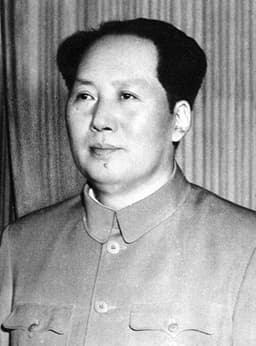
Mao Zedong
Politician · Modern
79.4Total
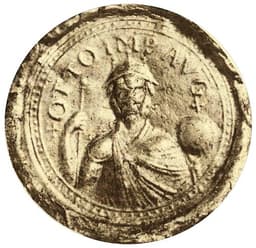
Otto I the Great
Emperor · Medieval
75.2Total
Basic Information
Born
1893
912
Died
1976
973
Era
Modern
Medieval
Nationality
China
Holy Roman Empire
Occupation
Politician
Emperor
Civilization
Eastern
Western
Score Comparison
Military (10%)
75.0
82.0
Political (20%)
88.0
70.0
Influence (20%)
85.0
88.0
Legacy (20%)
70.0
65.0
Leadership (15%)
85.0
78.0
Strategy (15%)
72.0
65.4
TOTAL
79.4
75.2
Mao Zedong — Complete Timeline
1934 AD
Long MarchWar
Mao Zedong led the Chinese Red Army on a strategic retreat from Nationalist forces, covering approximately 6,000 miles over 370 days. The march solidified Mao's leadership within the Chinese Communist Party and became a foundational myth of the Communist revolution.
Chinese Civil WarCommunist RevolutionRetreat
Impact: national
1949 AD
Proclamation of the People's Republic of ChinaPolitical Action
Mao Zedong declared the founding of the People's Republic of China from Tiananmen Gate in Beijing. This ended the Chinese Civil War and established Communist rule over mainland China, with Mao as Chairman of the Central People's Government.
Founding of PRCCommunist VictoryRevolution
Impact: global
1958 AD
Great Leap ForwardReform◆ Major
Mao launched a campaign to rapidly industrialize China and collectivize agriculture. The policy led to widespread mismanagement, resulting in a famine that caused an estimated 15-45 million deaths between 1959 and 1961.
FamineIndustrializationCollectivization
Impact: nationaldestructive
1960 AD
Sino-Soviet SplitPolitical Action◆ Major
Mao's ideological differences with Soviet leader Nikita Khrushchev led to a breakdown in relations between China and the Soviet Union. The split ended the Sino-Soviet alliance and reshaped global Cold War dynamics, with China pursuing an independent path.
Cold WarIdeological ConflictAlliance Breakdown
Impact: global
1966 AD
Cultural RevolutionPolitical Action
Mao initiated a sociopolitical movement to purge capitalist and traditional elements from Chinese society. The Red Guard youth groups attacked intellectuals and officials, leading to widespread violence, destruction of cultural artifacts, and an estimated 1-2 million deaths.
Political PurgeSocial UpheavalRed Guard
Impact: nationaldestructive
1971 AD
Ping-Pong DiplomacyCultural◆ Major
Mao approved an invitation for the U.S. table tennis team to visit China, initiating a thaw in Sino-American relations. This cultural exchange paved the way for President Nixon's visit to China in 1972 and the eventual normalization of diplomatic ties.
DiplomacyU.S.-China RelationsCultural Exchange
Impact: globalconstructive
Otto I the Great — Complete Timeline
951 AD
Diplomatic Marriage to Adelaide of ItalyPolitical Action◆ Major
Otto married Adelaide, the widowed queen of Italy, after intervening in Italian politics. This marriage gave him control over the Kingdom of Italy and strengthened his claim to imperial authority.
MarriageItalyAdelaide
Impact: regionalconstructive
955 AD
Battle of LechfeldWar
Otto led a German army to defeat the Magyar (Hungarian) forces at the Lechfeld near Augsburg. This victory ended Magyar raids into Western Europe and secured Otto's reputation as a defender of Christendom.
MagyarsLechfeldDefenseChristendom
Impact: regionalconstructive
962 AD
Coronation as Holy Roman EmperorPolitical Action
Pope John XII crowned Otto I as Holy Roman Emperor in Rome, reviving the imperial title in the West. This event established the Holy Roman Empire as a major political entity and linked German kingship with papal authority.
CoronationHoly Roman EmpirePapacy
Impact: globalconstructive
Expert Analysis
Origins
Mao Zedong was born in 1893 to a peasant family in Shaoshan, Hunan. He was shaped by the collapse of imperial China and exposure to revolutionary ideas. Otto I was born in 912 into the Saxon Liudolfing dynasty, inheriting a kingdom fractured by tribal duchies and external threats. Mao's humble origins contrast with Otto's royal birth, but both emerged from turbulent contexts.
Rise to Power
Mao rose through the Chinese Communist Party, leading the Long March (1934-35) which cemented his leadership. He outmaneuvered rivals like Wang Ming and Zhang Guotao, blending guerrilla warfare with political strategy. Otto became Duke of Saxony and King of Germany in 936, immediately facing rebellions from his brothers and dukes. He crushed these revolts, asserting royal authority. Mao's rise was ideological and organizational; Otto's was military and dynastic.
Leadership & Governance
Mao governed through mass mobilization and revolutionary zeal. His Great Leap Forward (1958-61) aimed at rapid industrialization but led to famine. The Cultural Revolution (1966-76) purged opponents but caused chaos. Otto consolidated power by collaborating with the Church, appointing bishops as administrators, and defeating external enemies like the Magyars at Lechfeld (955). He was crowned Holy Roman Emperor in 962, establishing a stable empire. Mao's governance was transformative but costly; Otto's was pragmatic and enduring.
Triumph & Tragedy
Mao's triumphs include founding the People's Republic (1949) and uniting China under communist rule. His tragedies include the Great Leap Forward famine (15-45 million deaths) and Cultural Revolution's cultural destruction. Otto's triumph at Lechfeld ended Magyar invasions, securing Central Europe. His coronation revived the Roman Empire in the West. Otto's tragedies include family strife—his son Liudolf rebelled—and the brutal suppression of opponents. Mao's scale of tragedy is larger; Otto's triumphs were more decisive.
Character & Destiny
Mao was a visionary idealist and ruthless pragmatist. He was a poet and philosopher who believed in constant revolution. Otto was a devout Christian and strategic monarch who sought order and legacy. Mao's destiny was to reshape China at immense human cost; Otto's was to build a lasting political structure. Their characters reflect their eras: Mao the modern revolutionary, Otto the medieval emperor.
Legacy
Mao's legacy is mixed: he modernized China but at great cost. His ideology still influences the CCP. Otto is remembered as the founder of the Holy Roman Empire, which lasted until 1806. He established a pattern of Church-state cooperation. Mao's impact is global, inspiring revolutions; Otto's is regional, shaping German and European history.
Conclusion
Mao scores higher overall (4.2 gap) due to his broader impact and radical transformation. However, Otto's achievements were more stable and less destructive. In terms of pure leadership, Otto's governance was more effective, but Mao's historical significance is unparalleled. **Final Verdict: Mao Zedong** wins on scale of change, but Otto I the Great wins on quality of governance. For HistoryVersus.com, Mao's higher score reflects his indelible mark on the 20th century.
**Scores:** Mao: M=75, P=88, I=85, L=70, D=85, S=72, T=79. Otto: M=82, P=70, I=88, L=65, D=78, S=65, T=75.
Rankings
🥇
Mao ZedongLeader
Mil: 75.0Pol: 88.0Inf: 85.0
79.4
🥈
Otto I the Great
Mil: 82.0Pol: 70.0Inf: 88.0
75.2
+4.2 behind
How This Comparison Works
Algorithm
Each figure is scored on 6 dimensions (0—100 scale) based on structured historical data: Military (10%), Political (20%), Influence (20%), Legacy (20%), Leadership (15%), Strategy (15%). The weighted total produces the final ranking.
Data Sources
Scores are computed from structured sub-indicators in the database. Scale factors adjust for era (Ancient ×0.85, Modern ×1.0) and civilization size (Eastern ×1.05, Other ×0.80) to account for differences in population and military scale.
Maximum 3 Figures
Comparisons are limited to 2—3 figures to ensure readability and statistical meaningfulness.
Error Margins
±5 points per dimension — Sub-scores are derived from historical records with inherent uncertainty. Two figures within 5 points on a dimension should be considered roughly equivalent in that area.
Total Score Accuracy
±3 points overall — The weighted combination of 6 dimensions produces a total score with approximately ±3 points of uncertainty. Differences of less than 3 points are not statistically significant— the figures are effectively tied.
Known Limitations
- Historical records are incomplete and uneven across civilizations
- Figures from oral-tradition societies may be underrepresented
- Occupation labels can misclassify multi-role figures
- Scores measure capability and impact, not moral character
- Quantitative scoring is a comparison tool, not absolute truth
Capability Radar
Military (10%) — Battles & Warfare
Battles
85
75
Win Rate
80
80
Expansion
85
70
Political (20%) — Governance & Reform
Reform
95
80
Diplomacy
80
85
Economy
70
70
Influence (20%) — Cultural & Global Reach
Cultural
90
65
Global
90
70
Legacy (20%) — Historical Impact
Historical
95
80
Longevity
85
75
Leadership (15%) — Power & Stability
Tenure
95
85
Stability
60
75
Strategy (15%) — Tactics & Innovation
Strategy
85
75
Tactics
75
70
Reform
90
65
Similar Comparisons
Comments & Discussion
LEO_THE_BATTLEFIELD6/16/2026
Let’s not kid ourselves—Otto I made his bones at Lechfeld in 955, facing down 30,000 Magyar raiders with a hybrid force of heavy cavalry and armored infantry. That battle didn’t just save Germany; it defined medieval combined arms warfare. Mao’s Long March was an epic retreat, not a decisive victory. Otto crushed a pagan empire; Mao survived his own civil war. Different leagues of military genius.
铁血耕夫孙6/16/2026
比武功?毛主席运筹帷幄,从井冈山到三大战役,那是用兵如神的大手笔。奥托一世再牛,也就是个封建领主级别的军阀。他打败马扎尔人之后呢?神圣罗马帝国照样四分五裂。毛教员治理的是一整个新中国,不是靠几场骑士冲锋就能摆平的。格局差远了好吧。
NUMISMATIC_NOSTRADAMUS6/16/2026
Let’s table the romantic narratives and crunch the data. Otto’s empire, at its height, covered maybe 500,000 km² and a few million souls. Mao inherited a country of 540 million people and 9.6 million km². Scale alone makes the comparison absurd. Plus, Otto inherited a functioning administrative skeleton from the Carolingians; Mao had to build state capacity from scratch after a century of collapse. Apples to thermonuclear warheads.
古币眼宋三6/16/2026
说个冷门的冷知识:奥托一世加冕为神圣罗马帝国皇帝的时候,用的还是查理曼的旧王冠。说白了,他就是个高段位的山寨帝王。毛泽东在天安门城楼上宣布新中国成立,那是开天辟地第一回,名片上写的是主义,不是血统。你还想拿一个靠继承和教宗加冕的人,跟一个真正白手起家改天换地的革命家比?省省吧。
CLASSICS_CONTRARIAN6/16/2026
Both men mastered the art of rebranding chaos as destiny. Otto cloaked his Saxon power grabs in Carolingian legitimacy—he literally had Charlemagne’s tomb opened in 1000 AD to justify his rule. Mao reimagined millennia of peasant rebellion as Marxist class war. One revived an imperial ghost; the other conjured a revolutionary future. I’d argue Otto was the more honest operator: he never pretended his iron fist was anything but kingship.
史海钓翁6/16/2026
说实话,你们都在比谁更“伟大”,我倒是想问问:谁留下了可持续的制度?奥托一世搞了帝国教会体系,让主教替他管地方,结果后来教权跟皇权打了几百年。毛主席搞人民公社和群众路线,虽然不完美,但至少把基层动员和组织建到了村一级。前者是权宜之计,后者是制度创新。这胜负不是明摆着吗