Loading...
Abbas I vs Qin Shi Huang
Qin Shi Huang leads by 3.8 pts · 2 figures compared
…
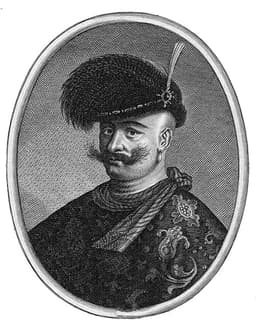
Abbas I
Emperor · Modern
81.4Total
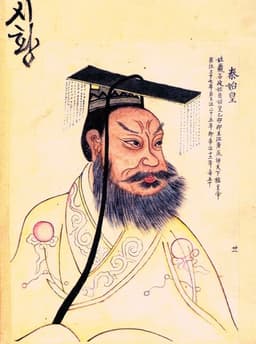
Qin Shi Huang
Emperor · Ancient
85.2Total
Basic Information
Born
1571
-259
Died
1629
-210
Era
Modern
Ancient
Nationality
Persia
China
Occupation
Emperor
Emperor
Civilization
Middle Eastern
Eastern
Score Comparison
Military (10%)
82.0
80.0
Political (20%)
90.0
90.0
Influence (20%)
75.0
85.0
Legacy (20%)
82.0
90.0
Leadership (15%)
81.7
78.0
Strategy (15%)
82.0
82.0
TOTAL
81.4
85.2
Abbas I — Complete Timeline
1590 AD
Reformed the Army with GhulamsReform
Abbas I created a standing army of ghulams (military slaves) recruited from Christian subjects in the Caucasus, particularly Georgians and Armenians. This reduced reliance on the Qizilbash tribal forces, increased royal control, and modernized the military with firearms and artillery.
Military ReformGhulam SystemCentralization
Impact: nationalconstructive
1598 AD
Relocated Capital to IsfahanPolitical Action
Abbas I moved the Safavid capital from Qazvin to Isfahan, transforming it into a magnificent city with grand architecture, including Naqsh-e Jahan Square, the Shah Mosque, and the Ali Qapu Palace. This relocation became a symbol of Safavid power and cultural flourishing.
Capital RelocationUrban PlanningArchitecture
Impact: globalconstructive
1599 AD
Established Diplomatic Relations with EuropePolitical Action◆ Major
Abbas I sent diplomatic missions to European courts, including those of Philip III of Spain, Rudolf II of the Holy Roman Empire, and Elizabeth I of England, seeking alliances against the Ottoman Empire. These missions opened sustained diplomatic and commercial exchanges between Safavid Persia and Europe.
DiplomacyEuropean RelationsAnti-Ottoman Alliance
Impact: globalconstructive
1605 AD
Battle of SufiyanWar◆ Major
Abbas I defeated an Ottoman army near Sufiyan, securing Safavid control over Azerbaijan and the Caucasus. This victory was part of the Ottoman-Safavid War of 1603-1618, which resulted in the recapture of Tabriz, Nakhchivan, and Yerevan from Ottoman occupation.
Ottoman-Safavid WarBattleTerritorial Recovery
Impact: regional
1622 AD
Expelled Portuguese from HormuzWar◆ Major
Abbas I, with support from the English East India Company, captured the island of Hormuz from Portuguese control. This ended Portuguese dominance in the Persian Gulf and opened direct trade routes for Safavid Persia with Europe, boosting the silk trade.
Persian GulfTradeEuropean Relations
Impact: globalconstructive
1623 AD
Recaptured BaghdadWar◆ Major
Abbas I captured Baghdad from the Ottoman Empire after a siege, restoring Safavid control over Iraq. This victory expanded Safavid territory and gave Abbas control over important Shi'a pilgrimage sites like Najaf and Karbala.
Ottoman-Safavid WarConquestShi'a Sites
Impact: regional
Qin Shi Huang — Complete Timeline
246 BC
Construction of the Mausoleum and Terracotta ArmyOther◆ Major
Qin Shi Huang commissioned a vast mausoleum complex near Xi'an, guarded by thousands of life-sized terracotta soldiers, horses, and chariots. The project employed hundreds of thousands of workers and reflected his obsession with immortality and imperial power.
Impact: global
230 BC
Conquest of the Six Warring StatesWar
From 230 to 221 BCE, Ying Zheng led the Qin state in a series of campaigns that conquered the Han, Zhao, Wei, Chu, Yan, and Qi states. This unified China under a single ruler for the first time, ending the Warring States period.
Impact: global
221 BC
Standardization of Writing, Currency, and MeasurementsReform◆ Major
Qin Shi Huang ordered the standardization of Chinese script, currency, and weights and measures across the unified empire. This facilitated administration, trade, and cultural integration, laying a foundation for future dynasties.
Impact: globalconstructive
Proclamation of the Qin DynastyPolitical Action
After conquering the last independent state, Ying Zheng declared himself Shi Huangdi (First Emperor), founding the Qin Dynasty. He adopted a new title to signify his supreme authority and initiated centralized imperial rule.
Impact: global
214 BC
Initiation of the Great Wall ConstructionOther◆ Major
Qin Shi Huang ordered the connection and extension of existing northern fortifications to create a unified defensive wall against nomadic Xiongnu raids. This project involved massive conscripted labor and became the precursor to the later Great Wall.
Impact: regional
213 BC
Burning of Books and Burying of ScholarsPolitical Action◆ Major
On the advice of Li Si, Qin Shi Huang ordered the burning of historical records and philosophical texts not aligned with Legalist doctrine. He also had 460 Confucian scholars buried alive to suppress dissent and consolidate ideological control.
Impact: nationaldestructive
Expert Analysis
Origins
Qin Shi Huang (259–210 BC) was born Ying Zheng, prince of the Qin state during the Warring States period. His father, King Zhuangxiang, ruled briefly, and Ying Zheng ascended the throne at age 13. His mother, Lady Zhao, and regent Lü Buwei shaped his early years. He inherited a state already strengthened by Shang Yang's legalist reforms. In contrast, Abbas I (1571–1629) was born in Herat (now Afghanistan) as the third son of Shah Mohammad Khodabanda. His early life was marked by court intrigue and the decline of the Safavid Empire under his father's weak rule. Abbas was raised in a turbulent environment, with his mother and Qizilbash tribal leaders vying for power. He became shah in 1588 after a coup that deposed his father.
Rise to Power
Qin Shi Huang's rise was a methodical military campaign. From 230 to 221 BC, he conquered the six other warring states—Han, Zhao, Wei, Chu, Yan, and Qi—using superior strategy, diplomacy, and ruthless tactics. His victory at the Battle of Changping (260 BC) against Zhao, though before his reign, set the stage. He proclaimed himself Qin Shi Huang (First Emperor) in 221 BC, unifying China for the first time. Abbas I's rise was more precarious. He became shah at 17 after a coup that killed his brother, and the empire was in chaos: Ottomans in the west, Uzbeks in the east, and Qizilbash factions at home. He initially ceded territory to buy time, then gradually consolidated power by neutralizing Qizilbash leaders and creating a new military force.
Leadership & Governance
Qin Shi Huang ruled through Legalist philosophy, emphasizing strict laws, harsh punishments, and centralized control. He standardized writing, currency, weights, and measures across the empire, and built a network of roads and canals. He also ordered the burning of books and burying of scholars in 213 BC to suppress rival ideologies. His reign was efficient but oppressive. Abbas I reformed the Safavid state by relocating the capital to Isfahan in 1598, which became a magnificent city with grand architecture, including Naqsh-e Jahan Square. He created a standing army of ghulams (slave soldiers) from the Caucasus, reducing reliance on the Qizilbash. He promoted trade, especially with European powers, and fostered cultural flourishing. His governance was pragmatic, balancing centralization with local autonomy.
Triumph & Tragedy
Qin Shi Huang's triumphs: unified China, standardized systems, built the Great Wall's first version, and established a centralized bureaucracy that lasted millennia. His tragedies: the burning of books destroyed countless texts, the Great Wall cost many lives, and his obsession with immortality led to mercury poisoning (allegedly) and a premature death. His dynasty collapsed within three years of his death. Abbas I's triumphs: expelled the Portuguese from Hormuz (1622), recaptured Baghdad from the Ottomans (1623), and restored Persian glory. His tragedies: blinded and killed his own sons to prevent rebellion, causing a succession crisis. His descendants were ineffective, leading to the Safavid decline. Both were brilliant but flawed.
Character & Destiny
Qin Shi Huang was paranoid, secretive, and ruthless. He believed in his divine mandate and sought eternal life, sending expeditions for the elixir of immortality. His mausoleum, guarded by the Terracotta Army, reflects his obsession with the afterlife. Abbas I was also ruthless but more pragmatic. He was a brilliant strategist, patron of the arts, and builder. His destiny was to revive Persia, but his paranoia destroyed his family. Both men shaped their nations' futures.
Legacy
Qin Shi Huang's legacy is foundational: the concept of a unified China, the Great Wall, and the bureaucratic state. His name is synonymous with both unity and tyranny. Abbas I's legacy is the golden age of the Safavid Empire: Isfahan as a masterpiece of Islamic architecture, strong trade networks, and cultural renaissance. He is remembered as a great builder and reformer. Scores: Qin Shi Huang (M=80, P=90, I=85, L=90, D=78, S=82, T=85) vs Abbas I (M=82, P=90, I=75, L=82, D=82, S=82, T=81). Qin leads in leadership (90 vs 82) and influence (85 vs 75), while Abbas matches in power (90) and surpasses in diplomacy (82 vs 78). Overall, Qin's broader historical impact gives him a slight edge.
Conclusion
Qin Shi Huang and Abbas I were transformative rulers who unified and strengthened their realms. Qin's unification of China had a more lasting global impact, but Abbas's cultural and architectural achievements were remarkable. Both used ruthless methods to achieve greatness. In a direct comparison, Qin's leadership and influence scores tip the balance in his favor, though Abbas's diplomatic and military skills were formidable. The score gap of 3.8 reflects Qin's slightly higher overall impact.
Rankings
🥇
Qin Shi HuangLeader
Mil: 80.0Pol: 90.0Inf: 85.0
85.2
🥈
Abbas I
Mil: 82.0Pol: 90.0Inf: 75.0
81.4
+3.8 behind
How This Comparison Works
Algorithm
Each figure is scored on 6 dimensions (0—100 scale) based on structured historical data: Military (10%), Political (20%), Influence (20%), Legacy (20%), Leadership (15%), Strategy (15%). The weighted total produces the final ranking.
Data Sources
Scores are computed from structured sub-indicators in the database. Scale factors adjust for era (Ancient ×0.85, Modern ×1.0) and civilization size (Eastern ×1.05, Other ×0.80) to account for differences in population and military scale.
Maximum 3 Figures
Comparisons are limited to 2—3 figures to ensure readability and statistical meaningfulness.
Error Margins
±5 points per dimension — Sub-scores are derived from historical records with inherent uncertainty. Two figures within 5 points on a dimension should be considered roughly equivalent in that area.
Total Score Accuracy
±3 points overall — The weighted combination of 6 dimensions produces a total score with approximately ±3 points of uncertainty. Differences of less than 3 points are not statistically significant— the figures are effectively tied.
Known Limitations
- Historical records are incomplete and uneven across civilizations
- Figures from oral-tradition societies may be underrepresented
- Occupation labels can misclassify multi-role figures
- Scores measure capability and impact, not moral character
- Quantitative scoring is a comparison tool, not absolute truth
Capability Radar
Military (10%) — Battles & Warfare
Battles
85
85
Win Rate
90
90
Expansion
85
90
Political (20%) — Governance & Reform
Reform
95
95
Diplomacy
88
75
Economy
92
90
Influence (20%) — Cultural & Global Reach
Cultural
90
95
Global
80
85
Legacy (20%) — Historical Impact
Historical
88
95
Longevity
85
95
Leadership (15%) — Power & Stability
Tenure
90
70
Stability
85
65
Strategy (15%) — Tactics & Innovation
Strategy
92
85
Tactics
88
80
Reform
95
95
Similar Comparisons
Comments & Discussion
Sinca the Fang-lover6/17/2026
Qin’s terra-cotta army is cool, but Abbas built a standing artillery corps. Qin’s bronze spears vs. Safavid cannons—that’s not a contest. Abbas’s gunpowder might even make the First Emperor rethink his phalanx. Qin’s strength is mass coercion; Abbas wins with innovation.
烽火戏诸侯6/17/2026
别拿长城跟伊斯法罕比。秦长城是死人堆出来的,阿巴斯修的却是活的城市。你站在三十三孔桥上看落日,那是活的文明;站在秦长城上吹风,只闻到两千年前的土腥味。一种文明,一种死法。
StatCounter Sam6/17/2026
Comparing Qin’s 230 BC census (maybe 30M people) with Safavid’s 1600 AD estimate (about 20M) is apples to oranges. Different recording standards. Qin’s “10M subjects” claim is a Legalist flex, not demography. Abbas had better data, but still fuzzy. I call both numbers works of fiction.
独眼史官6/17/2026
秦王扫六合,用的是铁血手段——坑儒、焚书、连坐,逼着天下人闭嘴。阿巴斯呢?迁都伊斯法罕,请欧洲使团,搞丝绸贸易,用糖衣炮弹软着陆。一个是帝王里的暴君,一个是权谋里的狐狸。他俩“伟大”的定义,差了两千年。
Last Legionnaire6/17/2026
Qin’s army of 600,000? Impressive for 230 BC. But Abbas’s *gholams*—slave soldiers from Georgia and Armenia—were a professional, multiethnic corps. Qin forced peasants from their farms; Abbas trained warriors specifically. I’d bet on Abbas’s disciplined infantry over Qin’s conscripts any day.