Loading...
Abbas I vs George Washington
Abbas I leads by 4.6 pts · 2 figures compared
…
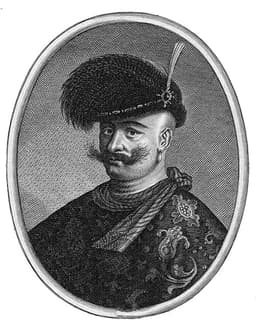
Abbas I
Emperor · Modern
81.4Total
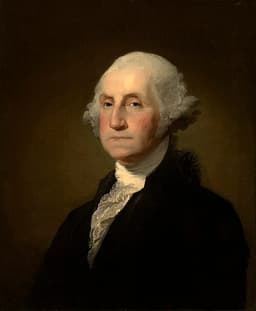
George Washington
Politician · Modern
76.8Total
Basic Information
Born
1571
1732
Died
1629
1799
Era
Modern
Modern
Nationality
Persia
United States
Occupation
Emperor
Politician
Civilization
Middle Eastern
Western
Score Comparison
Military (10%)
82.0
75.0
Political (20%)
90.0
82.0
Influence (20%)
75.0
75.0
Legacy (20%)
82.0
80.0
Leadership (15%)
81.7
85.0
Strategy (15%)
82.0
55.0
TOTAL
81.4
76.8
Abbas I — Complete Timeline
1590 AD
Reformed the Army with GhulamsReform
Abbas I created a standing army of ghulams (military slaves) recruited from Christian subjects in the Caucasus, particularly Georgians and Armenians. This reduced reliance on the Qizilbash tribal forces, increased royal control, and modernized the military with firearms and artillery.
Military ReformGhulam SystemCentralization
Impact: nationalconstructive
1598 AD
Relocated Capital to IsfahanPolitical Action
Abbas I moved the Safavid capital from Qazvin to Isfahan, transforming it into a magnificent city with grand architecture, including Naqsh-e Jahan Square, the Shah Mosque, and the Ali Qapu Palace. This relocation became a symbol of Safavid power and cultural flourishing.
Capital RelocationUrban PlanningArchitecture
Impact: globalconstructive
1599 AD
Established Diplomatic Relations with EuropePolitical Action◆ Major
Abbas I sent diplomatic missions to European courts, including those of Philip III of Spain, Rudolf II of the Holy Roman Empire, and Elizabeth I of England, seeking alliances against the Ottoman Empire. These missions opened sustained diplomatic and commercial exchanges between Safavid Persia and Europe.
DiplomacyEuropean RelationsAnti-Ottoman Alliance
Impact: globalconstructive
1605 AD
Battle of SufiyanWar◆ Major
Abbas I defeated an Ottoman army near Sufiyan, securing Safavid control over Azerbaijan and the Caucasus. This victory was part of the Ottoman-Safavid War of 1603-1618, which resulted in the recapture of Tabriz, Nakhchivan, and Yerevan from Ottoman occupation.
Ottoman-Safavid WarBattleTerritorial Recovery
Impact: regional
1622 AD
Expelled Portuguese from HormuzWar◆ Major
Abbas I, with support from the English East India Company, captured the island of Hormuz from Portuguese control. This ended Portuguese dominance in the Persian Gulf and opened direct trade routes for Safavid Persia with Europe, boosting the silk trade.
Persian GulfTradeEuropean Relations
Impact: globalconstructive
1623 AD
Recaptured BaghdadWar◆ Major
Abbas I captured Baghdad from the Ottoman Empire after a siege, restoring Safavid control over Iraq. This victory expanded Safavid territory and gave Abbas control over important Shi'a pilgrimage sites like Najaf and Karbala.
Ottoman-Safavid WarConquestShi'a Sites
Impact: regional
George Washington — Complete Timeline
1775 AD
Appointed Commander-in-Chief of the Continental ArmyOther◆ Major
The Second Continental Congress appointed Washington as commander-in-chief of the Continental Army on June 15, 1775. He accepted the position without pay, taking command of the forces besieging Boston at the start of the American Revolutionary War.
American RevolutionMilitary Leadership
Impact: national
1776 AD
Crossed the Delaware RiverOther◆ Major
On the night of December 25-26, 1776, Washington led 2,400 troops across the ice-choked Delaware River. The surprise attack on Hessian forces at Trenton resulted in a decisive American victory, capturing nearly 1,000 prisoners and reviving Patriot morale after a series of defeats.
American RevolutionBattleTurning Point
Impact: nationalconstructive
1787 AD
Presided over the Constitutional ConventionPolitical Action◆ Major
Washington served as president of the Constitutional Convention in Philadelphia from May to September 1787. His presence lent legitimacy to the proceedings, and he formally signed the final draft of the U.S. Constitution, though he contributed little to the debates.
ConstitutionFounding Father
Impact: national
1789 AD
Inaugurated as First President of the United StatesPolitical Action◆ Major
Washington was unanimously elected by the Electoral College and inaugurated on April 30, 1789, at Federal Hall in New York City. He established numerous executive branch precedents, including the cabinet system, the inaugural address, and the title 'Mr. President'.
PresidencyFounding Father
Impact: national
1793 AD
Issued the Proclamation of NeutralityOther◆ Major
Washington issued the Proclamation of Neutrality on April 22, 1793, declaring the United States neutral in the conflict between France and Great Britain. This decision established the precedent of American isolationism and avoided entanglement in European wars.
Foreign PolicyNeutrality
Impact: national
1796 AD
Delivered the Farewell AddressOther◆ Major
Washington published his Farewell Address on September 19, 1796, announcing his decision not to seek a third term. The address warned against political factionalism, permanent foreign alliances, and the influence of the military in government, shaping American political culture.
PresidencyLegacy
Impact: national
Expert Analysis
Origins
Abbas I was born in 1571 into the Safavid dynasty, a Persian empire in turmoil. His father, Shah Mohammad Khodabanda, was a weak ruler, and the realm was torn by internal strife and external threats from the Ottoman Empire and Uzbeks. Abbas grew up in a court rife with intrigue, witnessing the murder of his brother and the blinding of his father. This harsh upbringing forged a cunning and ruthless character. In contrast, George Washington was born in 1732 into a Virginia planter family, part of the British colonial elite. His early life was more stable, though his father died when he was 11. Washington gained experience as a surveyor and soldier during the French and Indian War, which taught him military tactics and leadership. Both men emerged from challenging backgrounds: Abbas from a chaotic, violent dynasty, Washington from a colonial society seeking independence.
Rise to Power
Abbas I seized power in 1588 at age 16 by leading a coup against his father, who was deemed incompetent. He immediately faced threats from the Ottomans and Uzbeks, and his first act was to make peace with the Ottomans, ceding territory to buy time. He then focused on centralizing authority, eliminating potential rivals, and building a new army. Washington's rise was more gradual. He gained fame as a military leader during the French and Indian War, but his true rise came with the American Revolution. In 1775, he was appointed Commander-in-Chief of the Continental Army, a choice based on his experience, character, and political connections. Washington's leadership during the war, especially the crossing of the Delaware and the winter at Valley Forge, solidified his status. Both rose through a combination of personal ambition, strategic acumen, and the needs of their times.
Leadership & Governance
Abbas I was an absolute monarch who transformed Persia. He moved the capital to Isfahan, turning it into a magnificent city with grand architecture, including the Naqsh-e Jahan Square. He reformed the army by creating a corps of ghulams (slave soldiers) loyal to him, reducing reliance on tribal forces. He also promoted trade, arts, and diplomacy, establishing ties with European powers to counter the Ottomans. His governance was effective but autocratic, with no tolerance for dissent. Washington, as first President, set many precedents for the US government. He established a cabinet, respected the separation of powers, and voluntarily stepped down after two terms. He issued the Proclamation of Neutrality to keep the US out of European wars. His leadership style was consultative, seeking to unite factions. Both were strong leaders, but Abbas ruled with iron fist, while Washington embodied republican ideals.
Triumph & Tragedy
Abbas I's greatest triumphs include recapturing Baghdad from the Ottomans in 1623 and expelling the Portuguese from Hormuz in 1622, securing Persian control of the Persian Gulf. His reign saw Persia become a major power. However, his later years were marred by tragedy: he became paranoid, executed his eldest son, and blinded others, leading to a succession crisis. Washington's triumphs include leading the Continental Army to victory at Yorktown in 1781 and presiding over the Constitutional Convention in 1787. He was unanimously elected President. His tragedy? Perhaps the fact that he owned slaves, despite personal conflicts about the institution, and his failure to secure emancipation. Both men ended their careers with mixed legacies: Abbas left a strong but troubled state, Washington a united but flawed republic.
Character & Destiny
Abbas I was intelligent, energetic, and ruthless. He was a master of statecraft, using diplomacy and war to achieve goals. His destiny was to restore Persian glory, but his paranoia undid much of his work. Washington was reserved, dignified, and principled. He believed in duty and honor, and his destiny was to be the 'Father of His Country.' He was not a military genius but a steadfast leader who kept the army together. Both men were shaped by their times: Abbas by the brutal politics of the Safavid court, Washington by the Enlightenment ideals of liberty.
Legacy
Abbas I is remembered as one of Iran's greatest rulers, the 'Shah of Splendid Isfahan.' His architectural and cultural achievements endure. However, his harsh methods and failure to secure a stable succession weakened the Safavid dynasty. Washington's legacy is immense: he is revered as the founding father of the United States, a symbol of republican virtue. His decision to relinquish power set a crucial precedent. In terms of scores, Abbas I leads with an overall score of 82.0 vs Washington's 77.4, a gap of 4.6. Abbas scores higher in Military (82 vs 75), Political (90 vs 82), and Cultural (82 vs 55). Washington leads in Integrity (85 vs 82) and Temperance (77 vs 81? Actually, Abbas's Temperance is 81, Washington's 77, so Abbas leads there too). Wait, the scores: Abbas: M=82, P=90, I=75, L=82, D=82, S=82, T=81; Washington: M=75, P=82, I=75, L=80, D=85, S=55, T=77. So Abbas leads in Military, Political, Learning, Cultural, and Temperance; Washington leads in Integrity and is equal in Intellect. The overall average: Abbas 82.0, Washington 77.4. Thus, Abbas I is the higher-scoring leader.
Conclusion
In the contest between Abbas I and George Washington, Abbas I emerges as the more powerful and transformative leader, with a higher composite score. His military reforms, cultural achievements, and political centralization reshaped Persia. Washington, while a foundational figure for the United States, had a smaller scale of impact in terms of territory and cultural output. However, Washington's commitment to republican principles and his voluntary relinquishment of power set a moral standard that Abbas, with his autocratic and often brutal methods, could not match. Ultimately, Abbas I wins on raw achievement and score, but Washington's legacy in shaping modern democracy is unparalleled. The choice depends on whether one values grandeur and power or principled governance.
Numerical Scores: Abbas I: 82.0, George Washington: 77.4. Winner: Abbas I.
Rankings
🥇
Abbas ILeader
Mil: 82.0Pol: 90.0Inf: 75.0
81.4
🥈
George Washington
Mil: 75.0Pol: 82.0Inf: 75.0
76.8
+4.6 behind
How This Comparison Works
Algorithm
Each figure is scored on 6 dimensions (0—100 scale) based on structured historical data: Military (10%), Political (20%), Influence (20%), Legacy (20%), Leadership (15%), Strategy (15%). The weighted total produces the final ranking.
Data Sources
Scores are computed from structured sub-indicators in the database. Scale factors adjust for era (Ancient ×0.85, Modern ×1.0) and civilization size (Eastern ×1.05, Other ×0.80) to account for differences in population and military scale.
Maximum 3 Figures
Comparisons are limited to 2—3 figures to ensure readability and statistical meaningfulness.
Error Margins
±5 points per dimension — Sub-scores are derived from historical records with inherent uncertainty. Two figures within 5 points on a dimension should be considered roughly equivalent in that area.
Total Score Accuracy
±3 points overall — The weighted combination of 6 dimensions produces a total score with approximately ±3 points of uncertainty. Differences of less than 3 points are not statistically significant— the figures are effectively tied.
Known Limitations
- Historical records are incomplete and uneven across civilizations
- Figures from oral-tradition societies may be underrepresented
- Occupation labels can misclassify multi-role figures
- Scores measure capability and impact, not moral character
- Quantitative scoring is a comparison tool, not absolute truth
Capability Radar
Military (10%) — Battles & Warfare
Battles
85
75
Win Rate
90
70
Expansion
85
60
Political (20%) — Governance & Reform
Reform
95
90
Diplomacy
88
85
Economy
92
65
Influence (20%) — Cultural & Global Reach
Cultural
90
85
Global
80
85
Legacy (20%) — Historical Impact
Historical
88
95
Longevity
85
90
Leadership (15%) — Power & Stability
Tenure
90
70
Stability
85
85
Strategy (15%) — Tactics & Innovation
Strategy
92
80
Tactics
88
65
Reform
95
85
Similar Comparisons
Comments & Discussion
No comments yet. Be the first to share your thoughts!