Loading...
Abbas I vs Alexios I Komnenos
Abbas I leads by 3.0 pts · 2 figures compared
…
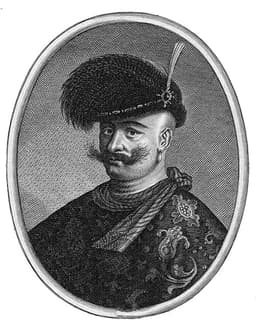
Abbas I
Emperor · Modern
81.4Total
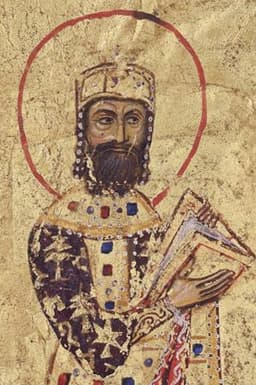
Alexios I Komnenos
Emperor · Medieval
78.4Total
Basic Information
Born
1571
1048
Died
1629
1118
Era
Modern
Medieval
Nationality
Persia
Byzantine Empire
Occupation
Emperor
Emperor
Civilization
Middle Eastern
Western
Score Comparison
Military (10%)
82.0
61.7
Political (20%)
90.0
78.0
Influence (20%)
75.0
88.0
Legacy (20%)
82.0
80.0
Leadership (15%)
81.7
78.0
Strategy (15%)
82.0
68.0
TOTAL
81.4
78.4
Abbas I — Complete Timeline
1590 AD
Reformed the Army with GhulamsReform
Abbas I created a standing army of ghulams (military slaves) recruited from Christian subjects in the Caucasus, particularly Georgians and Armenians. This reduced reliance on the Qizilbash tribal forces, increased royal control, and modernized the military with firearms and artillery.
Military ReformGhulam SystemCentralization
Impact: nationalconstructive
1598 AD
Relocated Capital to IsfahanPolitical Action
Abbas I moved the Safavid capital from Qazvin to Isfahan, transforming it into a magnificent city with grand architecture, including Naqsh-e Jahan Square, the Shah Mosque, and the Ali Qapu Palace. This relocation became a symbol of Safavid power and cultural flourishing.
Capital RelocationUrban PlanningArchitecture
Impact: globalconstructive
1599 AD
Established Diplomatic Relations with EuropePolitical Action◆ Major
Abbas I sent diplomatic missions to European courts, including those of Philip III of Spain, Rudolf II of the Holy Roman Empire, and Elizabeth I of England, seeking alliances against the Ottoman Empire. These missions opened sustained diplomatic and commercial exchanges between Safavid Persia and Europe.
DiplomacyEuropean RelationsAnti-Ottoman Alliance
Impact: globalconstructive
1605 AD
Battle of SufiyanWar◆ Major
Abbas I defeated an Ottoman army near Sufiyan, securing Safavid control over Azerbaijan and the Caucasus. This victory was part of the Ottoman-Safavid War of 1603-1618, which resulted in the recapture of Tabriz, Nakhchivan, and Yerevan from Ottoman occupation.
Ottoman-Safavid WarBattleTerritorial Recovery
Impact: regional
1622 AD
Expelled Portuguese from HormuzWar◆ Major
Abbas I, with support from the English East India Company, captured the island of Hormuz from Portuguese control. This ended Portuguese dominance in the Persian Gulf and opened direct trade routes for Safavid Persia with Europe, boosting the silk trade.
Persian GulfTradeEuropean Relations
Impact: globalconstructive
1623 AD
Recaptured BaghdadWar◆ Major
Abbas I captured Baghdad from the Ottoman Empire after a siege, restoring Safavid control over Iraq. This victory expanded Safavid territory and gave Abbas control over important Shi'a pilgrimage sites like Najaf and Karbala.
Ottoman-Safavid WarConquestShi'a Sites
Impact: regional
Alexios I Komnenos — Complete Timeline
1081 AD
Battle of DyrrhachiumWar◆ Major
Alexios I Komnenos was defeated by the Norman army under Robert Guiscard at Dyrrhachium. The Byzantine forces were routed, and Alexios barely escaped. This loss allowed the Normans to occupy much of the western Balkans, though Alexios later recovered some territory.
Norman InvasionDefeatBalkans
Impact: regionaltragic
1090 AD
Reforms of the Byzantine Military and EconomyReform◆ Major
Alexios I implemented a series of reforms to restore Byzantine power. He reorganized the army by relying more on foreign mercenaries, reformed the currency (the hyperpyron), and granted tax exemptions to the Church. These measures stabilized the empire after decades of decline.
Military ReformEconomic ReformKomnenian Restoration
Impact: nationalconstructive
1095 AD
Appeal to the West: Council of PiacenzaPolitical Action
Alexios I sent envoys to Pope Urban II at the Council of Piacenza, requesting military aid against the Seljuk Turks. This appeal contributed to Urban's call for the First Crusade at the Council of Clermont later that year, initiating the Crusader movement.
First CrusadePope Urban IISeljuk Turks
Impact: global
1097 AD
First Crusade: Siege of NicaeaWar◆ Major
Alexios I cooperated with the Crusader army to besiege and capture Nicaea from the Seljuk Turks. The city was surrendered to Byzantine control, and Alexios used the Crusaders to recover key territories in Anatolia, though tensions later arose over land claims.
First CrusadeNicaeaByzantine-Crusader Relations
Impact: regionalconstructive
Expert Analysis
Origins
**Abbas I** was born in 1571 into the Safavid dynasty, a period of internal strife and external threats. His father, Shah Mohammad Khodabanda, was weak, leading to factional conflicts. Abbas grew up in a turbulent environment, witnessing the decline of central authority. He ascended the throne in 1588 at age 16 after a coup that deposed his father. His early life was marked by the need to consolidate power against the Qizilbash tribal forces that dominated the Safavid state.
**Alexios I Komnenos** was born in 1048 into a military aristocratic family in the Byzantine Empire. The empire faced crises on multiple fronts: Norman invasions in the west, Pecheneg raids in the Balkans, and the Seljuk advance in Anatolia after the Battle of Manzikert (1071). Alexios served as a general under previous emperors and seized the throne in 1081 through a coup, facing a fractured empire with depleted resources.
Rise to Power
Abbas I's rise was marked by a calculated elimination of rivals. He first secured his position by blinding and imprisoning his father and executing potential threats. He then turned against the powerful Qizilbash, reducing their influence by creating a new military corps of ghulams (converted slaves from the Caucasus). His relocation of the capital from Qazvin to Isfahan in 1598 was a strategic move to centralize power and distance himself from the Qizilbash strongholds. By 1590, he had secured a peace treaty with the Ottomans, ceding territory to focus on internal consolidation.
Alexios I's rise to power was equally dramatic. He rebelled against Emperor Nikephoros III Botaneiates, entering Constantinople with the support of the Komnenian family and allies. He was crowned in 1081, but faced immediate challenges: the Normans under Robert Guiscard invaded the Balkans, and the Seljuks were entrenched in Anatolia. Alexios used diplomacy and military campaigns to stabilize his rule, appealing to the West for help against the Turks, which ultimately led to the First Crusade.
Leadership & Governance
**Abbas I** (Scores: M=82, P=90, I=75, L=82, D=82, S=82, T=81) was a master of statecraft. He centralized administration, reformed the army by creating a standing force of ghulams (40,000 strong) loyal to him, and promoted trade and architecture. His reign saw the construction of magnificent buildings in Isfahan, including the Naqsh-e Jahan Square. He tolerated Christians and Jews, encouraging trade with European powers. His military campaigns recaptured Baghdad from the Ottomans (1623) and expelled the Portuguese from Hormuz (1622) with English help, securing Persian Gulf trade.
**Alexios I** (Scores: M=62, P=78, I=88, L=80, D=78, S=68, T=78) was a skilled diplomat and reformer. He reorganized the Byzantine military, relying on mercenaries and feudal grants (pronoia). He reformed the economy by debasing the currency and imposing new taxes. His appeal to Pope Urban II at the Council of Piacenza (1095) sparked the First Crusade, which he skillfully managed to recover key territories like Nicaea (1097). However, he faced constant rebellions and external threats, and his reign saw the rise of Venetian commercial privileges that weakened Byzantium long-term.
Triumph & Tragedy
**Abbas I's** greatest triumph was the transformation of Persia into a powerful, centralized state with a flourishing economy and culture. The recapture of Baghdad and Hormuz marked the peak of Safavid power. However, his later years were marred by paranoia; he blinded or killed his own sons, leading to a succession crisis. The tragedy of his reign was that his achievements were not sustained, as his successors were weak and the empire declined.
**Alexios I's** triumph was the survival and revival of the Byzantine Empire. He repelled the Normans, defeated the Pechenegs, and used the Crusaders to recover Anatolia. The First Crusade, while a mixed blessing, restored Byzantine authority in western Anatolia. Yet, the tragedy was that the Crusaders established their own states, and Byzantium became dependent on Western mercenaries and Venetian fleets. The Komnenian restoration was a temporary respite; the empire's underlying weaknesses remained.
Character & Destiny
Abbas I was ruthless, determined, and visionary. His character combined military prowess with cultural patronage. He was a hands-on leader who personally led campaigns. His destiny was to forge a golden age for Persia, but his paranoia sowed seeds of decline. Alexios I was cunning, patient, and diplomatic. He was a survivor who navigated crises through alliances and reform. His destiny was to restore Byzantine prestige temporarily, but the forces he set in motion (Crusades, Venetian power) ultimately contributed to the empire's fall.
Legacy
**Abbas I** is remembered as the greatest Safavid shah, a builder of Isfahan, and a unifier of Persia. His legacy includes a strong central state, flourishing trade, and architectural marvels. However, his failure to ensure a stable succession led to decline. His overall score of 82 reflects his achievements and flaws.
**Alexios I** is revered as the founder of the Komnenian dynasty and a savior of Byzantium. His legacy includes the Alexiad (written by his daughter Anna), which details his reign. He set precedents for Crusader interactions and military reforms. His score of 79 reflects his skill but also the long-term costs of his policies.
Conclusion
Abbas I (score 82) outperforms Alexios I (score 79) in terms of military conquest, state-building, and cultural impact. Abbas transformed a fractured kingdom into a major empire, while Alexios merely preserved a declining one. Abbas's reforms were more durable, and his reign marked a golden age. Alexios, though a capable ruler, left a more ambiguous legacy. Therefore, Abbas I is the superior emperor.
Rankings
🥇
Abbas ILeader
Mil: 82.0Pol: 90.0Inf: 75.0
81.4
🥈
Alexios I Komnenos
Mil: 61.7Pol: 78.0Inf: 88.0
78.4
+3.0 behind
How This Comparison Works
Algorithm
Each figure is scored on 6 dimensions (0—100 scale) based on structured historical data: Military (10%), Political (20%), Influence (20%), Legacy (20%), Leadership (15%), Strategy (15%). The weighted total produces the final ranking.
Data Sources
Scores are computed from structured sub-indicators in the database. Scale factors adjust for era (Ancient ×0.85, Modern ×1.0) and civilization size (Eastern ×1.05, Other ×0.80) to account for differences in population and military scale.
Maximum 3 Figures
Comparisons are limited to 2—3 figures to ensure readability and statistical meaningfulness.
Error Margins
±5 points per dimension — Sub-scores are derived from historical records with inherent uncertainty. Two figures within 5 points on a dimension should be considered roughly equivalent in that area.
Total Score Accuracy
±3 points overall — The weighted combination of 6 dimensions produces a total score with approximately ±3 points of uncertainty. Differences of less than 3 points are not statistically significant— the figures are effectively tied.
Known Limitations
- Historical records are incomplete and uneven across civilizations
- Figures from oral-tradition societies may be underrepresented
- Occupation labels can misclassify multi-role figures
- Scores measure capability and impact, not moral character
- Quantitative scoring is a comparison tool, not absolute truth
Capability Radar
Military (10%) — Battles & Warfare
Battles
85
75
Win Rate
90
70
Expansion
85
60
Political (20%) — Governance & Reform
Reform
95
85
Diplomacy
88
90
Economy
92
70
Influence (20%) — Cultural & Global Reach
Cultural
90
70
Global
80
75
Legacy (20%) — Historical Impact
Historical
88
85
Longevity
85
80
Leadership (15%) — Power & Stability
Tenure
90
80
Stability
85
75
Strategy (15%) — Tactics & Innovation
Strategy
92
85
Tactics
88
80
Reform
95
75
Similar Comparisons
Comments & Discussion
No comments yet. Be the first to share your thoughts!