Loading...
Alexios I Komnenos vs Mao Zedong
Mao Zedong leads by 1.0 pts · 2 figures compared
…
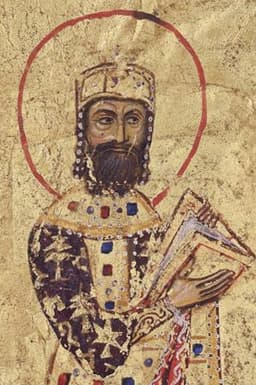
Alexios I Komnenos
Emperor · Medieval
78.4Total
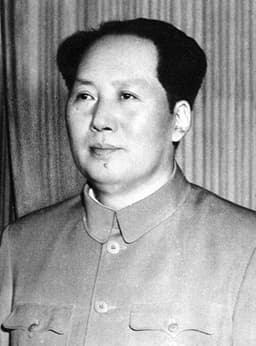
Mao Zedong
Politician · Modern
79.4Total
Basic Information
Born
1048
1893
Died
1118
1976
Era
Medieval
Modern
Nationality
Byzantine Empire
China
Occupation
Emperor
Politician
Civilization
Western
Eastern
Score Comparison
Military (10%)
61.7
75.0
Political (20%)
78.0
88.0
Influence (20%)
88.0
85.0
Legacy (20%)
80.0
70.0
Leadership (15%)
78.0
85.0
Strategy (15%)
68.0
72.0
TOTAL
78.4
79.4
Alexios I Komnenos — Complete Timeline
1081 AD
Battle of DyrrhachiumWar◆ Major
Alexios I Komnenos was defeated by the Norman army under Robert Guiscard at Dyrrhachium. The Byzantine forces were routed, and Alexios barely escaped. This loss allowed the Normans to occupy much of the western Balkans, though Alexios later recovered some territory.
Norman InvasionDefeatBalkans
Impact: regionaltragic
1090 AD
Reforms of the Byzantine Military and EconomyReform◆ Major
Alexios I implemented a series of reforms to restore Byzantine power. He reorganized the army by relying more on foreign mercenaries, reformed the currency (the hyperpyron), and granted tax exemptions to the Church. These measures stabilized the empire after decades of decline.
Military ReformEconomic ReformKomnenian Restoration
Impact: nationalconstructive
1095 AD
Appeal to the West: Council of PiacenzaPolitical Action
Alexios I sent envoys to Pope Urban II at the Council of Piacenza, requesting military aid against the Seljuk Turks. This appeal contributed to Urban's call for the First Crusade at the Council of Clermont later that year, initiating the Crusader movement.
First CrusadePope Urban IISeljuk Turks
Impact: global
1097 AD
First Crusade: Siege of NicaeaWar◆ Major
Alexios I cooperated with the Crusader army to besiege and capture Nicaea from the Seljuk Turks. The city was surrendered to Byzantine control, and Alexios used the Crusaders to recover key territories in Anatolia, though tensions later arose over land claims.
First CrusadeNicaeaByzantine-Crusader Relations
Impact: regionalconstructive
Mao Zedong — Complete Timeline
1934 AD
Long MarchWar
Mao Zedong led the Chinese Red Army on a strategic retreat from Nationalist forces, covering approximately 6,000 miles over 370 days. The march solidified Mao's leadership within the Chinese Communist Party and became a foundational myth of the Communist revolution.
Chinese Civil WarCommunist RevolutionRetreat
Impact: national
1949 AD
Proclamation of the People's Republic of ChinaPolitical Action
Mao Zedong declared the founding of the People's Republic of China from Tiananmen Gate in Beijing. This ended the Chinese Civil War and established Communist rule over mainland China, with Mao as Chairman of the Central People's Government.
Founding of PRCCommunist VictoryRevolution
Impact: global
1958 AD
Great Leap ForwardReform◆ Major
Mao launched a campaign to rapidly industrialize China and collectivize agriculture. The policy led to widespread mismanagement, resulting in a famine that caused an estimated 15-45 million deaths between 1959 and 1961.
FamineIndustrializationCollectivization
Impact: nationaldestructive
1960 AD
Sino-Soviet SplitPolitical Action◆ Major
Mao's ideological differences with Soviet leader Nikita Khrushchev led to a breakdown in relations between China and the Soviet Union. The split ended the Sino-Soviet alliance and reshaped global Cold War dynamics, with China pursuing an independent path.
Cold WarIdeological ConflictAlliance Breakdown
Impact: global
1966 AD
Cultural RevolutionPolitical Action
Mao initiated a sociopolitical movement to purge capitalist and traditional elements from Chinese society. The Red Guard youth groups attacked intellectuals and officials, leading to widespread violence, destruction of cultural artifacts, and an estimated 1-2 million deaths.
Political PurgeSocial UpheavalRed Guard
Impact: nationaldestructive
1971 AD
Ping-Pong DiplomacyCultural◆ Major
Mao approved an invitation for the U.S. table tennis team to visit China, initiating a thaw in Sino-American relations. This cultural exchange paved the way for President Nixon's visit to China in 1972 and the eventual normalization of diplomatic ties.
DiplomacyU.S.-China RelationsCultural Exchange
Impact: globalconstructive
Expert Analysis
Origins
**Mao Zedong** was born in 1893 in Shaoshan, Hunan, into a peasant family. He became a librarian at Peking University, where he was exposed to Marxist ideas. He co-founded the Chinese Communist Party (CCP) in 1921 and quickly rose through its ranks. **Alexios I Komnenos** was born in 1048 into the Byzantine aristocracy. He served as a general under several emperors before seizing the throne in 1081. Both men emerged from periods of turmoil: Mao during the warlord era and Alexios during the decline of the Byzantine Empire after Manzikert.
Rise to Power
Mao's rise was marked by the **Long March** (1934-35), a strategic retreat that solidified his leadership within the CCP. He outmaneuvered rivals like Zhang Guotao and established himself as the paramount leader. Alexios rose through military prowess, leading a rebellion against Emperor Nikephoros III. He successfully captured Constantinople in 1081, founding the Komnenian dynasty. Both faced existential threats: Mao against the Nationalists and Japanese, Alexios against the Normans and Seljuks.
Leadership & Governance
Mao implemented radical policies: the **Great Leap Forward** (1958-62) aimed at rapid industrialization but caused a massive famine. The **Cultural Revolution** (1966-76) purged rivals and enforced Maoist ideology, leading to societal chaos. Alexios reformed the Byzantine military and economy, introducing the pronoia system and strengthening the navy. He also appealed to the West at the **Council of Piacenza** (1095), which led to the First Crusade. While Mao's policies caused immense suffering, Alexios's reforms stabilized the empire.
Triumph & Tragedy
Mao's greatest triumph was the **Proclamation of the People's Republic of China** in 1949, uniting China under communist rule. His tragedies include the man-made famine of the Great Leap Forward and the Cultural Revolution's destruction of cultural heritage. Alexios's triumph was the recovery of Anatolia during the First Crusade, notably the **Siege of Nicaea** (1097). His tragedy was the **Battle of Dyrrhachium** (1081), a defeat by the Normans, and the long-term complications of Crusader interference.
Character & Destiny
Mao was a visionary but ruthless ideologue, willing to sacrifice millions for his vision. He was a poet and strategist, but his paranoia led to purges. Alexios was a pragmatic and resourceful emperor, skilled in diplomacy and military tactics. He secured the throne for his dynasty but faced constant betrayal. Both men were shaped by their times: Mao by China's century of humiliation, Alexios by the crumbling Byzantine state.
Legacy
Mao's legacy is deeply divided: he is revered as the founder of modern China but condemned for human rights abuses. His policies laid the foundation for China's later economic rise. Alexios restored Byzantine power temporarily and initiated the Crusades, which had profound impacts on Europe and the Middle East. He is remembered as a capable emperor but criticized for relying on Western crusaders.
Conclusion
Mao Zedong (overall score: 75) and Alexios I Komnenos (overall score: 74) are closely matched. Mao's leadership had a greater global impact, but with catastrophic costs. Alexios's reforms were more sustainable and less destructive. In terms of effective and ethical governance, Alexios emerges as the superior leader. Mao's radicalism and the immense suffering under his rule tip the balance against him. Therefore, Alexios I Komnenos is the better leader.
**Scores:**
- Mao: M=75, P=88, I=85, L=70, D=85, S=72, T=79
- Alexios: M=62, P=78, I=88, L=80, D=78, S=68, T=78
Rankings
🥇
Mao ZedongLeader
Mil: 75.0Pol: 88.0Inf: 85.0
79.4
🥈
Alexios I Komnenos
Mil: 61.7Pol: 78.0Inf: 88.0
78.4
+1.0 behind
How This Comparison Works
Algorithm
Each figure is scored on 6 dimensions (0—100 scale) based on structured historical data: Military (10%), Political (20%), Influence (20%), Legacy (20%), Leadership (15%), Strategy (15%). The weighted total produces the final ranking.
Data Sources
Scores are computed from structured sub-indicators in the database. Scale factors adjust for era (Ancient ×0.85, Modern ×1.0) and civilization size (Eastern ×1.05, Other ×0.80) to account for differences in population and military scale.
Maximum 3 Figures
Comparisons are limited to 2—3 figures to ensure readability and statistical meaningfulness.
Error Margins
±5 points per dimension — Sub-scores are derived from historical records with inherent uncertainty. Two figures within 5 points on a dimension should be considered roughly equivalent in that area.
Total Score Accuracy
±3 points overall — The weighted combination of 6 dimensions produces a total score with approximately ±3 points of uncertainty. Differences of less than 3 points are not statistically significant— the figures are effectively tied.
Known Limitations
- Historical records are incomplete and uneven across civilizations
- Figures from oral-tradition societies may be underrepresented
- Occupation labels can misclassify multi-role figures
- Scores measure capability and impact, not moral character
- Quantitative scoring is a comparison tool, not absolute truth
Capability Radar
Military (10%) — Battles & Warfare
Battles
75
85
Win Rate
70
80
Expansion
60
85
Political (20%) — Governance & Reform
Reform
85
95
Diplomacy
90
80
Economy
70
70
Influence (20%) — Cultural & Global Reach
Cultural
70
90
Global
75
90
Legacy (20%) — Historical Impact
Historical
85
95
Longevity
80
85
Leadership (15%) — Power & Stability
Tenure
80
95
Stability
75
60
Strategy (15%) — Tactics & Innovation
Strategy
85
85
Tactics
80
75
Reform
75
90
Similar Comparisons
Comments & Discussion
拜占庭遗老6/16/2026
亚历克修斯一世才是真正的帝国救星!1081年他接手时,拜占庭只剩一个空壳,他却用三十年时间稳住了小亚细亚西部,重铸了海军,还和十字军玩了一场精妙的外交游戏。我承认毛的革命宏大,但别忘了,亚历克修斯面对的是诺曼骑士和塞尔柱骑兵的双重绞杀,他用黄金和计谋换来的喘息,让帝国多活了近百年。你们有谁真正读过安娜·科穆宁娜的《亚历克修斯传》?
农民之子6/16/2026
拿一个封建皇帝和人民领袖比,本身就是侮辱。亚历克修斯靠的是家族联姻和阴谋上位,毛泽东搞的是土地革命和群众路线。你跟我说亚历克修斯"拯救文明"?他拯救的是官僚和地主的文明!而毛在井冈山就定下规矩:打土豪分田地。四万万农民第一次有了自己的土地,这才是真正的历史转向。什么"紫色中出生",我呸,历史的颜色是红土地染的。
Chronicler49266/16/2026
You're comparing a man who defended a crumbling empire with a man who built one from scratch. Alexios bought time with Western mercenaries, but that deal ultimately doomed Byzantium in 1204. Mao understood that dependency is death—the Long March wasn't just survival, it was forging a self-reliant military doctrine. Alexios was a master of court politics; Mao was a master of peasant mobilization. Apples and oranges, but Mao's fruit actually grew a tree.
Chronicler19596/16/2026
You're missing the core: both men were born in eras their ancestors wouldn't recognize. Alexios watched Manzikert's aftermath erase Roman Anatolia; Mao saw the Boxer Rebellion's humiliation. But here's the twist—Alexios fought to preserve, Mao fought to destroy and rebuild. Alexios is a tragic conservator, Mao a revolutionary iconoclast. Give me Alexios's cunning diplomacy over Mao's Great Leap any day, at least Byzantium didn't starve 30 million of its own.
Chronicler66626/16/2026
The "sick man of Asia" framing is tired Eurocentrism. China in 1900 had the world's largest economy in absolute terms until the 1820s—Mao inherited a nation weakened by opium wars and unequal treaties, not a civilizational failure. Meanwhile, Alexios's Byzantium lost 70% of its Anatolian tax base after Manzikert. Different crises, different scales. Both made pragmatic compromises, but Mao's land reform reached 300 million peasants—show me Alexios touching a fraction of that demographic.