Loading...
Alexios I Komnenos vs Charles de Gaulle
Alexios I Komnenos leads by 10.2 pts · 2 figures compared
…
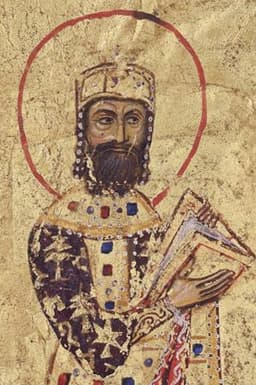
Alexios I Komnenos
Emperor · Medieval
78.4Total
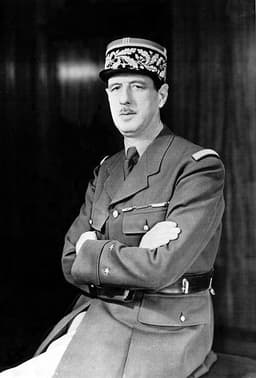
Charles de Gaulle
Politician · Modern
68.2Total
Basic Information
Born
1048
1890
Died
1118
1970
Era
Medieval
Modern
Nationality
Byzantine Empire
France
Occupation
Emperor
Politician
Civilization
Western
Western
Score Comparison
Military (10%)
61.7
55.0
Political (20%)
78.0
75.0
Influence (20%)
88.0
65.0
Legacy (20%)
80.0
68.0
Leadership (15%)
78.0
78.0
Strategy (15%)
68.0
65.0
TOTAL
78.4
68.2
Alexios I Komnenos — Complete Timeline
1081 AD
Battle of DyrrhachiumWar◆ Major
Alexios I Komnenos was defeated by the Norman army under Robert Guiscard at Dyrrhachium. The Byzantine forces were routed, and Alexios barely escaped. This loss allowed the Normans to occupy much of the western Balkans, though Alexios later recovered some territory.
Norman InvasionDefeatBalkans
Impact: regionaltragic
1090 AD
Reforms of the Byzantine Military and EconomyReform◆ Major
Alexios I implemented a series of reforms to restore Byzantine power. He reorganized the army by relying more on foreign mercenaries, reformed the currency (the hyperpyron), and granted tax exemptions to the Church. These measures stabilized the empire after decades of decline.
Military ReformEconomic ReformKomnenian Restoration
Impact: nationalconstructive
1095 AD
Appeal to the West: Council of PiacenzaPolitical Action
Alexios I sent envoys to Pope Urban II at the Council of Piacenza, requesting military aid against the Seljuk Turks. This appeal contributed to Urban's call for the First Crusade at the Council of Clermont later that year, initiating the Crusader movement.
First CrusadePope Urban IISeljuk Turks
Impact: global
1097 AD
First Crusade: Siege of NicaeaWar◆ Major
Alexios I cooperated with the Crusader army to besiege and capture Nicaea from the Seljuk Turks. The city was surrendered to Byzantine control, and Alexios used the Crusaders to recover key territories in Anatolia, though tensions later arose over land claims.
First CrusadeNicaeaByzantine-Crusader Relations
Impact: regionalconstructive
Charles de Gaulle — Complete Timeline
1940 AD
Appeal of 18 June 1940Political Action
From London, de Gaulle broadcast a radio appeal urging French resistance against Nazi occupation. He called on French soldiers and citizens to continue the fight, founding the Free French Forces and becoming the symbol of French defiance.
World War IIResistanceLeadership
Impact: nationalconstructive
1958 AD
Founding of the Fifth RepublicPolitical Action
De Gaulle returned to power during the Algerian crisis and oversaw the drafting of a new constitution. The Fifth Republic established a strong executive presidency, replacing the unstable parliamentary system of the Fourth Republic.
ConstitutionGovernment ReformPolitical System
Impact: nationalconstructive
1962 AD
End of the Algerian WarPolitical Action◆ Major
De Gaulle negotiated the
DecolonizationPeace TreatyAlgeria
Impact: regionalconstructive
1968 AD
May 1968 CrisisPolitical Action◆ Major
Mass student protests and general strikes paralyzed France, challenging de Gaulle's government. De Gaulle briefly fled to Germany, then returned to dissolve the National Assembly and call elections, which his party won, but his authority was weakened.
ProtestPolitical CrisisSocial Unrest
Impact: nationaldestructive
1969 AD
Resignation as PresidentPolitical Action
De Gaulle resigned after losing a referendum on regional reform and Senate restructuring. The defeat marked the end of his political career, as he withdrew from public life and died the following year.
ResignationPolitical DefeatReferendum
Impact: nationaltragic
Expert Analysis
Charles de Gaulle vs Alexios I Komnenos
# The Two Rescuers: De Gaulle and Alexios Komnenos, Architects of Last Chance
In the summer of 1940, a towering French general stood before a BBC microphone in London, his voice crackling across the English Channel to a stunned nation that had just surrendered to Hitler. Nearly nine centuries earlier, another desperate leader—a Byzantine emperor with tired eyes and a realm crumbling on every border—dispatched his envoys to the Pope in Piacenza, begging for mercenaries from the very West that had so often plundered his empire. Both men faced national extinction. Both chose the gambler's path. And both would reshape history in ways they never fully intended.
Origins
Charles de Gaulle was born into a devoutly Catholic, nationalist family in Lille, 1890, a time when France still smarted from its 1870 defeat by Prussia. He grew up believing France was destined for greatness, a conviction that never wavered even when his country lay prostrate. Alexios Komnenos, born in 1048 into the Byzantine military aristocracy, inherited a different kind of desperation. The empire he would rule had already lost Anatolia—its breadbasket and recruiting ground—to the Seljuk Turks at Manzikert in 1071. While de Gaulle's France was humiliated but intact, Alexios's Byzantium was hemorrhaging territory, treasure, and hope.
De Gaulle was shaped by the static, orderly world of pre-1914 Europe—a world that the Great War would obliterate. Alexios, by contrast, grew up in a world that had already shattered. The old certainties of Roman order were gone; survival meant constant improvisation.
Rise to Power
De Gaulle entered history through a radio broadcast. On June 18, 1940, with no army, no territory, and no international recognition, he declared himself the voice of France. It was an act of pure will—a man who had been a colonel just weeks earlier, now claiming to embody a nation. His legitimacy was not granted; it was asserted. And slowly, miraculously, it took hold.
Alexios came to power through a military coup in 1081, leading his Komnenian clan and their allies against the weak Emperor Nikephoros III. Unlike de Gaulle's lonely defiance, Alexios seized the throne with swords and gold, bribing the Varangian Guard and parading through the Golden Gate. Both men arrived at power through crisis, but de Gaulle had to build his authority from nothing, while Alexios inherited a crumbling but still-functioning imperial machine.
Leadership & Governance
Here the two men diverge most sharply. De Gaulle governed through grandeur and distance. His Fifth Republic constitution concentrated power in the presidency, and he used that power with theatrical reserve—referendums, televised addresses, the famous press conferences where he seemed to speak from Olympus. He ended the Algerian War (1962) by defying the very military that had brought him back to power, negotiating the Évian Accords and granting independence to a colony he once called inseparable from France. It was a masterstroke of political courage, but it required him to betray his most loyal supporters.
Alexios governed through relentless pragmatism. He reformed the Byzantine economy by debasing the currency and reorganizing tax collection, and rebuilt the army by hiring foreign mercenaries—Normans, Franks, Turks—because his native troops had been decimated. His military reforms (1090) were not about national glory but about plugging holes in a sinking ship. Where de Gaulle thought in terms of eternal France, Alexios thought in terms of next month's payroll.
The most striking contrast lies in their treatment of allies. De Gaulle expelled NATO headquarters from France and vetoed British entry into the European Community, insisting on French independence. Alexios, facing annihilation, invited the First Crusade—a decision that brought Western armies to his doorstep and ultimately helped doom his empire. De Gaulle pushed the West away; Alexios pulled it in. Both were necessary, both were dangerous, and both had unintended consequences.
Triumph & Tragedy
De Gaulle's greatest moment was the 1958 founding of the Fifth Republic, when he gave France stable institutions that endure today. His deepest failure came in May 1968, when student protests and general strikes paralyzed France, and he briefly fled to Baden-Baden to consult with French generals. The man of iron nerve had a moment of panic. He recovered, won a snap election, but the mystique was broken. He resigned a year later after losing a referendum on regional reform—a petty end for a giant.
Alexios's triumph was survival itself. He defeated the Normans, the Pechenegs, and the Seljuks, and by his death in 1118 had restored Byzantine authority in the Balkans and western Anatolia. But his tragedy was the First Crusade. He had asked for a few thousand mercenaries; he got a hundred thousand armed pilgrims. The Crusaders' conquest of Antioch and Jerusalem created Latin states that Byzantium could never fully control, and the mutual suspicion between East and West poisoned Christian relations for centuries.
Character & Destiny
De Gaulle was a man of granite—aloof, proud, convinced of his own historical role. "France cannot be France without greatness," he wrote. That conviction made him inflexible but also indomitable. He could bend only so far before he broke, as his 1969 resignation showed.
Alexios was a man of silk—flexible, cunning, always calculating. His daughter Anna Komnene described him as a master of persuasion, able to charm or deceive as needed. He needed that flexibility because his empire had no margin for error. De Gaulle could afford to be rigid because France, even defeated, had reserves of strength. Alexios could not.
Legacy
De Gaulle left France a stable republic, a nuclear deterrent, and an enduring sense of national pride. But he also left a certain loneliness—a France that stood apart from its allies, suspicious of supranational institutions. His legacy is the Fifth Republic, but also a Gaullist tradition of independence that still shapes French policy.
Alexios left the Komnenian restoration—a century of relative stability—but also the Crusader states, the Latin Empire, and the seeds of Byzantium's eventual fall. His legacy is ambiguous: he saved his empire for another generation, but the means he used contributed to its destruction. He is remembered as a great emperor who made terrible bargains.
Conclusion
Both men were rescuers of last resort. De Gaulle rescued French honor from the shame of 1940; Alexios rescued Byzantium from the abyss of 1081. But they worked with different materials. De Gaulle could appeal to a nation that remembered greatness; Alexios could only appeal to a civilization that remembered survival. In the end, de Gaulle's France still stands, while Alexios's Byzantium is dust. Yet perhaps the more remarkable achievement belongs to the Byzantine, who held together a dying empire with nothing but guile and will. De Gaulle built a monument; Alexios patched a wreck. Both, in their way, did the impossible.
Rankings
🥇
Alexios I KomnenosLeader
Mil: 61.7Pol: 78.0Inf: 88.0
78.4
🥈
Charles de Gaulle
Mil: 55.0Pol: 75.0Inf: 65.0
68.2
+10.2 behind
How This Comparison Works
Algorithm
Each figure is scored on 6 dimensions (0—100 scale) based on structured historical data: Military (10%), Political (20%), Influence (20%), Legacy (20%), Leadership (15%), Strategy (15%). The weighted total produces the final ranking.
Data Sources
Scores are computed from structured sub-indicators in the database. Scale factors adjust for era (Ancient ×0.85, Modern ×1.0) and civilization size (Eastern ×1.05, Other ×0.80) to account for differences in population and military scale.
Maximum 3 Figures
Comparisons are limited to 2—3 figures to ensure readability and statistical meaningfulness.
Error Margins
±5 points per dimension — Sub-scores are derived from historical records with inherent uncertainty. Two figures within 5 points on a dimension should be considered roughly equivalent in that area.
Total Score Accuracy
±3 points overall — The weighted combination of 6 dimensions produces a total score with approximately ±3 points of uncertainty. Differences of less than 3 points are not statistically significant— the figures are effectively tied.
Known Limitations
- Historical records are incomplete and uneven across civilizations
- Figures from oral-tradition societies may be underrepresented
- Occupation labels can misclassify multi-role figures
- Scores measure capability and impact, not moral character
- Quantitative scoring is a comparison tool, not absolute truth
Capability Radar
Military (10%) — Battles & Warfare
Battles
75
60
Win Rate
70
55
Expansion
60
20
Political (20%) — Governance & Reform
Reform
85
95
Diplomacy
90
90
Economy
70
70
Influence (20%) — Cultural & Global Reach
Cultural
70
70
Global
75
80
Legacy (20%) — Historical Impact
Historical
85
85
Longevity
80
75
Leadership (15%) — Power & Stability
Tenure
80
85
Stability
75
75
Strategy (15%) — Tactics & Innovation
Strategy
85
85
Tactics
80
70
Reform
75
80
Similar Comparisons
Comments & Discussion
Normandy's Ghost6/16/2026
De Gaulle faced a conquered nation and built a myth; Alexios faced a dying empire and built a strategy. The difference is that Alexios actually won battles—like at Dyrrhachium in 1081 against the Normans. De Gaulle's Free French never liberated a single city until the Allies did the heavy lifting. Alexios clawed back Anatolia inch by inch; de Gaulle just showed up for the victory parade.
史书篡位者6/16/2026
Alexios才是真正的救亡者——他接手的是一个每年丢一个省、国库空得能饿死老鼠的帝国。你猜怎么着?他靠自己的外交手腕和军事改革撑了37年,还重建了君士坦丁堡的城墙。De Gaulle呢?1940年6月18日讲话,说得漂亮,但英国人差点把他当成宠物外交官。现实点:没有戴高乐,法国照样等来了解放;没有Alexios,拜占庭早就在1081年画上句号了。
The Data Rat6/16/2026
Let's talk numbers: de Gaulle's Free French forces by 1944 had maybe 300,000 men, almost all armed by Lend-Lease. Alexios raised armies from scratch after Manzikert lost the best recruitment pool. The Komnenian army at its peak under him? Maybe 20,000 professional troops. Yet Alexios reconquered territory. De Gaulle's "army" was a PR project. Metrics say Alexios worked with scraps and win; de Gaulle had a whole empire-in-exile and still needed Patton.
长城铁鹫6/16/2026
拿一个二战的法国将军跟一个中世纪的拜占庭皇帝比?荒谬!De Gaulle玩的是广播电台和流亡政府,Alexios玩的是真刀真枪的边境防御和十字军外交。更关键的是,Alexios面对的敌人(Normans、Pechenegs、Seljuks)全是能瞬间灭国的狠角色,而de Gaulle的敌人只有一个——希特勒。换个角度:Alexios在1083年就击退了波希米亚的入侵,de Gaulle到1944年还在伦敦等天气。高下立判。
ContraFactual Max6/16/2026
The real scandal is how this comparison ignores de Gaulle's actual achievement: preserving French sovereignty in Allied councils. Alexios never had that luxury—he begged for Crusaders, then had to fight them off. De Gaulle outmaneuvered Churchill and Roosevelt; Alexios outlasted every crisis. So who's the better rescuer? Alexios, because he fought with his back to the Bosporus, no safety net. De Gaulle always had London as a fallback. That's not desperation; that's strategy with a backup plan.