Loading...
Alexios I Komnenos vs Kamehameha V
Alexios I Komnenos leads by 33.4 pts · 2 figures compared
…
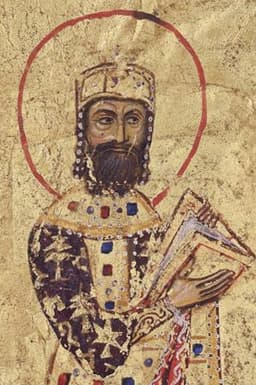
Alexios I Komnenos
Emperor · Medieval
78.4Total
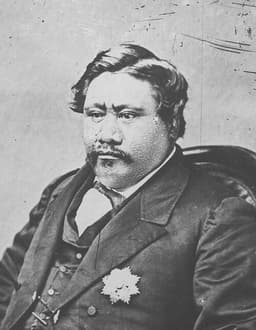
Kamehameha V
Emperor · Modern
45.0Total
Basic Information
Born
1048
1830
Died
1118
1872
Era
Medieval
Modern
Nationality
Byzantine Empire
Hawaii
Occupation
Emperor
Emperor
Civilization
Western
Other
Score Comparison
Military (10%)
61.7
11.3
Political (20%)
78.0
46.6
Influence (20%)
88.0
50.2
Legacy (20%)
80.0
42.5
Leadership (15%)
78.0
74.0
Strategy (15%)
68.0
26.5
TOTAL
78.4
45.0
Alexios I Komnenos — Complete Timeline
1081 AD
Battle of DyrrhachiumWar◆ Major
Alexios I Komnenos was defeated by the Norman army under Robert Guiscard at Dyrrhachium. The Byzantine forces were routed, and Alexios barely escaped. This loss allowed the Normans to occupy much of the western Balkans, though Alexios later recovered some territory.
Norman InvasionDefeatBalkans
Impact: regionaltragic
1090 AD
Reforms of the Byzantine Military and EconomyReform◆ Major
Alexios I implemented a series of reforms to restore Byzantine power. He reorganized the army by relying more on foreign mercenaries, reformed the currency (the hyperpyron), and granted tax exemptions to the Church. These measures stabilized the empire after decades of decline.
Military ReformEconomic ReformKomnenian Restoration
Impact: nationalconstructive
1095 AD
Appeal to the West: Council of PiacenzaPolitical Action
Alexios I sent envoys to Pope Urban II at the Council of Piacenza, requesting military aid against the Seljuk Turks. This appeal contributed to Urban's call for the First Crusade at the Council of Clermont later that year, initiating the Crusader movement.
First CrusadePope Urban IISeljuk Turks
Impact: global
1097 AD
First Crusade: Siege of NicaeaWar◆ Major
Alexios I cooperated with the Crusader army to besiege and capture Nicaea from the Seljuk Turks. The city was surrendered to Byzantine control, and Alexios used the Crusaders to recover key territories in Anatolia, though tensions later arose over land claims.
First CrusadeNicaeaByzantine-Crusader Relations
Impact: regionalconstructive
Kamehameha V — Complete Timeline
1863 AD
Ascended to the Throne as Kamehameha VPolitical Action◆ Major
Lot Kapuāiwa became King Kamehameha V after the death of his brother Kamehameha IV. He was the last monarch of the Kamehameha dynasty.
Impact: national
1864 AD
Promulgated the 1864 ConstitutionReform◆ Major
Kamehameha V abrogated the 1852 constitution and promulgated a new one that increased royal power. The 1864 constitution abolished the office of kuhina nui (premier), gave the king veto power, and restricted suffrage to property owners.
Impact: national
1865 AD
Oversaw Economic Growth and Public WorksReform
Kamehameha V promoted economic development, including the expansion of the sugar industry, construction of roads and harbors, and the establishment of the Hawaiian Board of Health. His reign saw increased foreign investment and trade.
Impact: nationalconstructive
1867 AD
Refused to Sign the Reciprocity TreatyPolitical Action◆ Major
Kamehameha V refused to sign a reciprocity treaty with the United States that would have reduced tariffs on Hawaiian sugar. He believed the treaty would compromise Hawaiian sovereignty and lead to American domination.
Impact: national
1872 AD
Died Without an HeirOther◆ Major
Kamehameha V died without naming an heir, ending the Kamehameha dynasty. His death triggered a succession crisis that led to the election of Lunalilo as the next king.
Impact: nationaltragic
Expert Analysis
Alexios I Komnenos vs Kamehameha V
# The Emperor and the King: Two Paths of Royal Power
The year 1095 found Alexios I Komnenos pacing the大理石 halls of Constantinople, a desperate emperor watching his empire crumble. Across the Mediterranean, nearly eight centuries later, a different monarch sat in his palace in Honolulu, Kamehameha V, refusing to sign a treaty that would tie his kingdom's fate to a rising power. Both men inherited thrones at moments of crisis. Both sought to strengthen royal authority. But their worlds could not have been more different: one fought to hold back the tide of history with crusaders and mercenaries, the other tried to preserve a Pacific kingdom against the slow encroachment of American influence. Their stories reveal how character, circumstance, and the sheer weight of tradition shape what a ruler can achieve.
Origins
Alexios was born in 1048 into the Komnenos family, a clan of Byzantine aristocrats who had produced generals and emperors. The Byzantine Empire, once the Roman Empire's eastern heir, was bleeding territory to Norman adventurers in the west and Seljuk Turks in the east. Alexios grew up in a world of court intrigue, where a man's survival depended on military skill and political cunning. He learned early that power had to be seized, not inherited.
Kamehameha V came into the world in 1830 as Lot Kapuāiwa, a prince of the Kamehameha dynasty that had unified the Hawaiian Islands under a single rule. His grandfather, Kamehameha the Great, had conquered the archipelago with Western cannons and traditional warfare. But by Lot's time, Hawaii was already entangled in a web of American missionaries, sugar planters, and naval officers. He was educated by missionaries, spoke English fluently, and understood Western ways—but he also revered the old Hawaiian traditions his grandfather had embodied.
Rise to Power
Alexios did not inherit the throne; he took it. In 1081, as a young general in his thirties, he led a rebellion against the incompetent Emperor Nikephoros III. The coup succeeded, but the prize was a disaster. On the very day of his coronation, news arrived that the Norman duke Robert Guiscard was invading Byzantine territory. Within months, Alexios marched out to meet him at Dyrrhachium—and suffered a crushing defeat. The Byzantine army was routed, and Alexios barely escaped with his life. It was an inauspicious start.
Kamehameha V ascended to the throne legally in 1863, upon the death of his brother Kamehameha IV. Unlike Alexios, he did not fight for power; he inherited a constitutional monarchy with a functioning government. But he chafed against the 1852 constitution, which had been imposed during his brother's reign and limited royal authority. Kamehameha V believed the king should rule, not merely reign. Within a year, he simply abrogated the old constitution and promulgated a new one that concentrated power in his hands.
Leadership & Governance
Alexios governed through survival. After Dyrrhachium, he spent the next decade fighting on multiple fronts: Normans in the west, Pecheneg nomads in the north, and Seljuk Turks in the east. He reformed the Byzantine military by relying increasingly on foreign mercenaries and granting land in exchange for military service—a system that would later evolve into the pronoia, a Byzantine version of feudalism. He also stabilized the economy by debasing the currency and reforming tax collection. These were not grand visions; they were desperate measures to keep the empire breathing.
Kamehameha V governed through assertion. He oversaw the expansion of Hawaii's sugar industry, built roads and harbors, and encouraged public works. But his most significant act was political: in 1867, he refused to sign a reciprocity treaty with the United States that would have reduced tariffs on Hawaiian sugar. He feared that economic dependence would lead to political domination. It was a prescient decision—within three decades, Hawaii would be annexed by the United States anyway. But Kamehameha V's refusal bought his kingdom a few more years of sovereignty.
The most dramatic contrast lies in how each ruler dealt with foreign powers. Alexios, facing the Seljuk Turks who had overrun Byzantine Anatolia, sent envoys to Pope Urban II at the Council of Piacenza in 1095, pleading for military aid. This appeal set in motion the First Crusade, a movement that Alexios could not control and that would ultimately reshape the entire Mediterranean world. When the Crusaders arrived in 1097, Alexios cooperated with them to recapture Nicaea from the Turks—a rare moment of success. But the Crusaders soon revealed their own ambitions, carving out kingdoms in the Holy Land that the Byzantine emperor could not command.
Kamehameha V faced a different kind of foreign pressure. The United States did not send armies; it sent merchants, missionaries, and diplomats. The reciprocity treaty was a velvet glove over an iron fist. By refusing it, Kamehameha V asserted Hawaiian independence—but at the cost of economic growth that might have strengthened his kingdom. He chose sovereignty over prosperity, a decision that reflected his stubborn pride.
Triumph & Tragedy
Alexios's greatest triumph was survival itself. He reigned for thirty-seven years, founded a dynasty that would rule for a century, and restored the Byzantine Empire to a semblance of its former power. The First Crusade, though unpredictable, did recover Nicaea and much of western Anatolia. But his tragedy was that he could not reverse the long decline. The Crusades introduced a new, uncontrollable force into the eastern Mediterranean. And his military reforms, while effective in the short term, made the empire dependent on foreign soldiers who had no loyalty to Byzantium.
Kamehameha V's triumph was the 1864 constitution, which restored royal authority and preserved Hawaiian traditions against Western-style democracy. He was the last strong king of Hawaii. His tragedy was that he died in 1872 without naming an heir. The Kamehameha dynasty ended with him, and the succession crisis that followed led to a series of weak monarchs who could not resist American annexation. His refusal to sign the reciprocity treaty, however principled, left Hawaii economically vulnerable.
Character & Destiny
Alexios was a survivor, a man who adapted to circumstances rather than imposing his will upon them. He was cunning, patient, and ruthless when necessary. "Better to be feared than loved," Machiavelli would later write, but Alexios understood that in Byzantium, one had to be both. His personality was shaped by the constant threat of invasion and betrayal. He trusted no one completely—not his generals, not his allies, not even the Crusaders who came to "help" him.
Kamehameha V was proud, stubborn, and traditionalist. He wore Hawaiian feather cloaks and spoke Hawaiian in court. He believed that his grandfather's legacy demanded strong rule. But his pride became a liability. By refusing the reciprocity treaty, he rejected a pragmatic compromise that might have strengthened his kingdom's economy. By dying without an heir, he left his nation adrift. His character was suited to a different era—a time when Hawaiian kings could command armies and dictate terms. That era was already passing.
Legacy
Alexios I Komnenos is remembered as the founder of the Komnenian restoration, the man who saved Byzantium from collapse and launched the Crusades. His legacy is ambiguous: he revived an empire, but he also opened a Pandora's box. The Crusades would eventually turn against Byzantium, culminating in the Fourth Crusade's sack of Constantinople in 1204—a disaster Alexios could not have foreseen. Yet in the long arc of history, he is seen as a capable emperor who did what he could with the tools available.
Kamehameha V is remembered in Hawaii as the last of the great Kamehameha monarchs, a king who tried to preserve Hawaiian sovereignty in the face of overwhelming foreign influence. His 1864 constitution remained in effect until the overthrow of the Hawaiian monarchy in 1893. He is a tragic figure: a ruler who saw the future clearly but could not change its course. His refusal to sign the reciprocity treaty is now viewed as a noble but futile gesture.
Conclusion
Two rulers, separated by eight centuries and half a world. Alexios fought with swords and crusaders; Kamehameha V fought with constitutions and tariffs. One saved an empire; the other could not save his kingdom. Yet both faced the same fundamental question: how does a ruler preserve power in a world that is changing faster than he can control?
Alexios succeeded because he was flexible, adaptive, and willing to make deals with dangerous allies. Kamehameha V failed—if failure is the right word—because he was rigid, proud, and unwilling to compromise. But perhaps the difference is not character alone. Alexios ruled a civilization that had endured for a thousand years; he could afford to bend without breaking. Kamehameha V ruled a small kingdom that had only recently entered the modern world; there was no margin for error. In the end, both men remind us that history judges rulers not by their intentions but by their consequences—and that the weight of the past often determines how far a leader can reach into the future.
Rankings
🥇
Alexios I KomnenosLeader
Mil: 61.7Pol: 78.0Inf: 88.0
78.4
🥈
Kamehameha V
Mil: 11.3Pol: 46.6Inf: 50.2
45.0
+33.4 behind
How This Comparison Works
Algorithm
Each figure is scored on 6 dimensions (0—100 scale) based on structured historical data: Military (10%), Political (20%), Influence (20%), Legacy (20%), Leadership (15%), Strategy (15%). The weighted total produces the final ranking.
Data Sources
Scores are computed from structured sub-indicators in the database. Scale factors adjust for era (Ancient ×0.85, Modern ×1.0) and civilization size (Eastern ×1.05, Other ×0.80) to account for differences in population and military scale.
Maximum 3 Figures
Comparisons are limited to 2—3 figures to ensure readability and statistical meaningfulness.
Error Margins
±5 points per dimension — Sub-scores are derived from historical records with inherent uncertainty. Two figures within 5 points on a dimension should be considered roughly equivalent in that area.
Total Score Accuracy
±3 points overall — The weighted combination of 6 dimensions produces a total score with approximately ±3 points of uncertainty. Differences of less than 3 points are not statistically significant— the figures are effectively tied.
Known Limitations
- Historical records are incomplete and uneven across civilizations
- Figures from oral-tradition societies may be underrepresented
- Occupation labels can misclassify multi-role figures
- Scores measure capability and impact, not moral character
- Quantitative scoring is a comparison tool, not absolute truth
Capability Radar
Military (10%) — Battles & Warfare
Battles
75
4
Win Rate
70
9
Expansion
60
11
Political (20%) — Governance & Reform
Reform
85
20
Diplomacy
90
30
Economy
70
35
Influence (20%) — Cultural & Global Reach
Cultural
70
30
Global
75
10
Legacy (20%) — Historical Impact
Historical
85
35
Longevity
80
20
Leadership (15%) — Power & Stability
Tenure
80
40
Stability
75
25
Strategy (15%) — Tactics & Innovation
Strategy
85
15
Tactics
80
15
Reform
75
21
Similar Comparisons
Comments & Discussion
AlexiosAtThermopylae6/16/2026
Let’s be real—Alexios I Komnenos was a brilliant crisis manager who gambled big and paid the price. Calling in the Crusades was a tactical masterstroke for short-term survival, but it opened a Pandora’s box of Latin aggression that eventually sacked his own capital. Kamehameha V? A naive royalist who clung to outdated isolation. Honolulu’s port was already crawling with American merchants; refusing the reciprocity treaty just delayed the inevitable annexation. Alexios fought history; Kamehameha
凯美哈战魂6/16/2026
要我说,亚历山大·科穆宁就是个玩火自焚的投机政客!1095年向教皇求援?你以为是妙计,实则是把东正教的命运塞进拉丁人的口袋里。百年后第四次十字军东征洗劫君士坦丁堡,这笔债他逃不掉。反观卡美哈美哈五世才是真硬汉——1864年顶着美国炮舰坚持本土宪法,拒绝土地租让,直到死都没让夏威夷变成美国殖民地。虽然最后输了,但他保住了王室的脊梁骨!
NumismaticNerd6/16/2026
Statistically, Alexios debased the Byzantine hyperpyron so badly that its silver content dropped from 90% to near zero by his death. That’s not just inflation—it’s economic surrender. Kamehameha V, by contrast, stabilized Hawaii’s currency by pegging it to the U.S. dollar in 1861, securing trade credit. One ruler destroyed his empire’s financial credibility; the other tried to build a modern treasury. Numbers don’t lie: Alexios was a desperado with a minting press.
ChesterTheMolester6/16/2026
You’re glorifying a feudal warlord and ignoring his body count. Alexios torched the Pechenegs, blinded prisoners, but then whined about crusader brutality? Classic Byzantine hypocrisy. Kamehameha V, at least, never marched an army to massacre civilians; his biggest sin was taxing sugar barons. Give me the Hawaiian king who preferred a pen to a sword any day.
镜鉴书生6/16/2026
比较这两位君王,像在对比两个时代的杠杆:亚历山大在帝国崩塌的边缘强行撬动神权与武力,但十字军这把刀刃最终穿膛而过;卡美哈美哈五世则试图用法律和条约杠杆挽回王朝命运,却被美国的商贸巨轮碾过。前者留下《阿历克塞传》,后者留下夏威夷宪法。成败不论,他们都在铜版纸上刻下了统治的极限:一个人对抗外敌,一个人对抗时代。