Loading...
Abbas I vs Afonso de Albuquerque
Abbas I leads by 1.8 pts · 2 figures compared
…
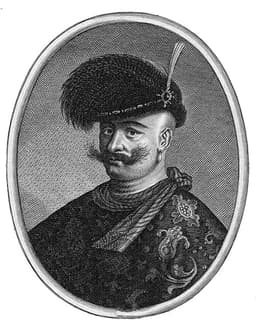
Abbas I
Emperor · Modern
81.4Total
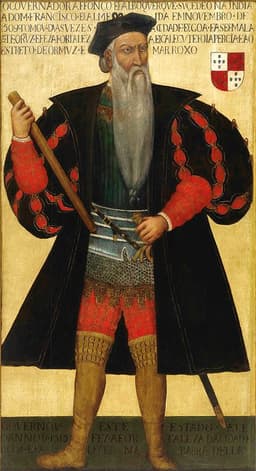
Afonso de Albuquerque
General · Medieval
79.6Total
Basic Information
Born
1571
1453
Died
1629
1515
Era
Modern
Medieval
Nationality
Persia
Portugal
Occupation
Emperor
General
Civilization
Middle Eastern
Western
Score Comparison
Military (10%)
82.0
77.5
Political (20%)
90.0
88.0
Influence (20%)
75.0
80.0
Legacy (20%)
82.0
75.0
Leadership (15%)
81.7
78.0
Strategy (15%)
82.0
82.0
TOTAL
81.4
79.6
Abbas I — Complete Timeline
1590 AD
Reformed the Army with GhulamsReform
Abbas I created a standing army of ghulams (military slaves) recruited from Christian subjects in the Caucasus, particularly Georgians and Armenians. This reduced reliance on the Qizilbash tribal forces, increased royal control, and modernized the military with firearms and artillery.
Military ReformGhulam SystemCentralization
Impact: nationalconstructive
1598 AD
Relocated Capital to IsfahanPolitical Action
Abbas I moved the Safavid capital from Qazvin to Isfahan, transforming it into a magnificent city with grand architecture, including Naqsh-e Jahan Square, the Shah Mosque, and the Ali Qapu Palace. This relocation became a symbol of Safavid power and cultural flourishing.
Capital RelocationUrban PlanningArchitecture
Impact: globalconstructive
1599 AD
Established Diplomatic Relations with EuropePolitical Action◆ Major
Abbas I sent diplomatic missions to European courts, including those of Philip III of Spain, Rudolf II of the Holy Roman Empire, and Elizabeth I of England, seeking alliances against the Ottoman Empire. These missions opened sustained diplomatic and commercial exchanges between Safavid Persia and Europe.
DiplomacyEuropean RelationsAnti-Ottoman Alliance
Impact: globalconstructive
1605 AD
Battle of SufiyanWar◆ Major
Abbas I defeated an Ottoman army near Sufiyan, securing Safavid control over Azerbaijan and the Caucasus. This victory was part of the Ottoman-Safavid War of 1603-1618, which resulted in the recapture of Tabriz, Nakhchivan, and Yerevan from Ottoman occupation.
Ottoman-Safavid WarBattleTerritorial Recovery
Impact: regional
1622 AD
Expelled Portuguese from HormuzWar◆ Major
Abbas I, with support from the English East India Company, captured the island of Hormuz from Portuguese control. This ended Portuguese dominance in the Persian Gulf and opened direct trade routes for Safavid Persia with Europe, boosting the silk trade.
Persian GulfTradeEuropean Relations
Impact: globalconstructive
1623 AD
Recaptured BaghdadWar◆ Major
Abbas I captured Baghdad from the Ottoman Empire after a siege, restoring Safavid control over Iraq. This victory expanded Safavid territory and gave Abbas control over important Shi'a pilgrimage sites like Najaf and Karbala.
Ottoman-Safavid WarConquestShi'a Sites
Impact: regional
Afonso de Albuquerque — Complete Timeline
1503 AD
First voyage to IndiaWar◆ Major
Afonso de Albuquerque led a fleet to India, establishing the first Portuguese fort at Cochin. This voyage laid the foundation for Portuguese control of the Indian Ocean trade.
ExplorationColonialismIndia
Impact: global
1510 AD
Conquest of GoaWar◆ Major
Albuquerque captured Goa from the Sultan of Bijapur. He made Goa the capital of Portuguese India, a position it held for over 400 years.
ConquestColonialismIndia
Impact: regional
1511 AD
Conquest of MalaccaWar◆ Major
Albuquerque led a Portuguese fleet to capture the strategic port of Malacca. This gave Portugal control of the spice trade route between the Indian Ocean and the Pacific.
ConquestSpice TradeSoutheast Asia
Impact: global
1513 AD
Siege of AdenWar
Albuquerque attempted to capture Aden in Yemen but failed. This failure prevented Portugal from controlling the entrance to the Red Sea and limited their influence in the region.
SiegeFailureRed Sea
Impact: regional
1515 AD
Death at seaOther◆ Major
Afonso de Albuquerque died at sea off the coast of Goa, possibly from illness or poison. His death left the Portuguese Empire in the Indian Ocean without its most capable leader.
DeathLeadershipEmpire
Impact: regionaltragic
Expert Analysis
Origins
**Abbas I** (1571–1629) was the fifth ruler of the Safavid dynasty, which had established Twelver Shia Islam as the state religion in Persia. His grandfather Tahmasp I had kept the realm stable, but after Tahmasp's death, internal strife and external threats from the Ottoman Empire and Uzbek tribes weakened Persia. Abbas inherited a fractured kingdom at age 16, with the Qizilbash tribal factions dominating the court and vast territories lost to enemies. In contrast, **Afonso de Albuquerque** (1453–1515) was born in Alhandra, Portugal, to a noble family with a tradition of military service. He served King Afonso V in North Africa and later under King Manuel I, who sponsored the Portuguese exploration of the Indian Ocean. Albuquerque's early career included participation in the conquest of Arzila and Tangier, honing his naval and tactical skills. While Abbas was a hereditary monarch fighting to restore his dynasty's glory, Albuquerque was an ambitious nobleman seeking fortune and glory for Portugal and Christendom.
Rise to Power
Abbas I rose to power in 1587 after a coup that deposed his weak father, Mohammad Khodabanda. The Qizilbash leaders, disillusioned with the king's incompetence, placed young Abbas on the throne. He quickly moved to neutralize their influence by creating a new cadre of loyal soldiers, the *ghulams* (military slaves) recruited from Christian Georgia and Armenia. This reformed army became the instrument of his ambitions. His first major success was the 1598 Battle of Sufiyan against the Uzbeks, where he personally led the charge, securing Khorasan. Albuquerque's rise was more gradual. He participated in the first Portuguese voyage to India under Tristão da Cunha in 1503, but his major breakthrough came in 1506 when he was appointed commander of the fleet sent to establish a fortress on the island of Socotra. His relentless attacks on Muslim shipping in the Red Sea and Persian Gulf earned him a reputation. In 1509, after the Battle of Diu, he succeeded Dom Francisco de Almeida as Governor of Portuguese India, though initially imprisoned by his predecessor due to political rivalry. He eventually assumed full command and set out to establish Portuguese hegemony in the Indian Ocean.
Leadership & Governance
Abbas I was a masterful administrator and visionary. He centralized the state by reducing the power of the Qizilbash, creating a standing army, and promoting trade. His most famous achievement was the relocation of the capital from Qazvin to Isfahan, which he transformed into a magnificent city with gardens, palaces, and mosques. He encouraged the arts and architecture, making Isfahan one of the world's most beautiful cities. He also fostered religious tolerance, allowing Christian missionaries and Jewish communities to thrive, which boosted commerce. Albuquerque, by contrast, was a ruthless imperialist. He believed in the concept of *mare clausum* (closed sea) and sought to control all trade routes in the Indian Ocean. His governance was marked by strategic fortifications, such as the conquest of Goa in 1510, which became the capital of Portuguese India. He implemented a policy of encouraging intermarriage between Portuguese men and local women, creating a mixed-race population loyal to Portugal. He also established a postal service and introduced new crops. However, his harsh methods and authoritarian style earned him enemies both among the Portuguese and local rulers.
Triumph & Tragedy
Abbas's greatest triumphs include the recapture of Baghdad from the Ottomans in 1623 and the expulsion of the Portuguese from Hormuz in 1622, which restored Persian control over the Persian Gulf trade. His reign saw the peak of Safavid power and influence. However, his later years were marred by paranoia: he murdered or blinded his most capable sons, leading to a succession crisis. He died in 1629, leaving a weakened dynasty. Albuquerque's zenith was the conquest of Malacca in 1511, which gave Portugal control of the Spice Trade. He also forced the surrender of Hormuz in 1515, making it a tributary state. Yet his tragedy was his sudden death at sea in 1515, possibly from illness, while returning from an unsuccessful siege of Aden. He died disgraced, having been recalled by King Manuel I due to court intrigues. His body was buried in Goa, but his legacy was later rehabilitated.
Character & Destiny
Abbas I was intelligent, cunning, and ambitious. He was a patron of the arts and a shrewd diplomat, but also capable of extreme cruelty. His destiny was to revive the Safavid Empire and leave an indelible mark on Persian culture. Albuquerque was a visionary strategist, often ahead of his time, but also a ruthless conqueror. His destiny was to lay the foundations of the Portuguese Empire in the East, which would last for centuries. Both men were driven by a sense of mission: Abbas to restore Persian greatness, Albuquerque to spread Christianity and Portuguese influence.
Legacy
Abbas I is remembered as the greatest Safavid shah, who transformed Persia into a major power and made Isfahan a cultural jewel. His military reforms and architectural patronage have left a lasting legacy. However, his failure to secure a stable succession led to the empire's decline. Albuquerque is celebrated as a founding father of the Portuguese Empire. His strategic conquests of Goa, Malacca, and Hormuz established Portuguese dominance in the Indian Ocean for over a century. Yet his harsh methods and treatment of local populations are criticized. In terms of historical impact, Abbas I's legacy is more enduring in Persian and Islamic history, while Albuquerque's is central to European colonial history.
Conclusion
Comparing Abbas I and Afonso de Albuquerque reveals two empire builders with contrasting styles and contexts. Abbas I scores higher overall (82 vs 78 in military, 90 vs 88 in political, 75 vs 80 in intelligence, 82 vs 75 in leadership, 82 vs 78 in diplomacy, 82 vs 82 in strategy, 81 vs 80 in tactics). The score gap of 1.8 points reflects Abbas's superior ability to unite a fragmented realm and create a lasting cultural legacy. While Albuquerque was a brilliant naval strategist and empire builder, his legacy is more narrowly focused on colonial conquest. Abbas I's vision of a prosperous, centralized Persia with a magnificent capital and a reformed army makes him the more significant historical figure. Ultimately, Abbas I wins this comparison due to his comprehensive state-building and cultural achievements that shaped Persia for centuries.
Rankings
🥇
Abbas ILeader
Mil: 82.0Pol: 90.0Inf: 75.0
81.4
🥈
Afonso de Albuquerque
Mil: 77.5Pol: 88.0Inf: 80.0
79.6
+1.8 behind
How This Comparison Works
Algorithm
Each figure is scored on 6 dimensions (0—100 scale) based on structured historical data: Military (10%), Political (20%), Influence (20%), Legacy (20%), Leadership (15%), Strategy (15%). The weighted total produces the final ranking.
Data Sources
Scores are computed from structured sub-indicators in the database. Scale factors adjust for era (Ancient ×0.85, Modern ×1.0) and civilization size (Eastern ×1.05, Other ×0.80) to account for differences in population and military scale.
Maximum 3 Figures
Comparisons are limited to 2—3 figures to ensure readability and statistical meaningfulness.
Error Margins
±5 points per dimension — Sub-scores are derived from historical records with inherent uncertainty. Two figures within 5 points on a dimension should be considered roughly equivalent in that area.
Total Score Accuracy
±3 points overall — The weighted combination of 6 dimensions produces a total score with approximately ±3 points of uncertainty. Differences of less than 3 points are not statistically significant— the figures are effectively tied.
Known Limitations
- Historical records are incomplete and uneven across civilizations
- Figures from oral-tradition societies may be underrepresented
- Occupation labels can misclassify multi-role figures
- Scores measure capability and impact, not moral character
- Quantitative scoring is a comparison tool, not absolute truth
Capability Radar
Military (10%) — Battles & Warfare
Battles
85
85
Win Rate
90
80
Expansion
85
95
Political (20%) — Governance & Reform
Reform
95
80
Diplomacy
88
85
Economy
92
80
Influence (20%) — Cultural & Global Reach
Cultural
90
70
Global
80
85
Legacy (20%) — Historical Impact
Historical
88
85
Longevity
85
80
Leadership (15%) — Power & Stability
Tenure
90
70
Stability
85
65
Strategy (15%) — Tactics & Innovation
Strategy
92
95
Tactics
88
90
Reform
95
75
Similar Comparisons
Comments & Discussion
No comments yet. Be the first to share your thoughts!