Loading...
Cleopatra VII vs Deng Xiaoping
Deng Xiaoping leads by 27.4 pts · 2 figures compared
…
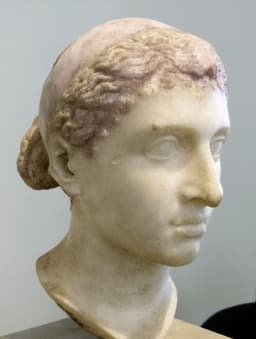
Cleopatra VII
Politician · Ancient
46.8Total
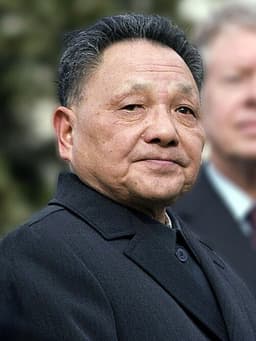
Deng Xiaoping
Politician · Modern
74.2Total
Basic Information
Born
-69
1904
Died
-30
1997
Era
Ancient
Modern
Nationality
Egypt
China
Occupation
Politician
Politician
Civilization
Middle Eastern
Eastern
Score Comparison
Military (10%)
25.0
45.0
Political (20%)
55.0
88.0
Influence (20%)
60.0
78.0
Legacy (20%)
50.0
75.0
Leadership (15%)
45.0
78.0
Strategy (15%)
30.0
65.0
TOTAL
46.8
74.2
Rankings
🥇
Deng XiaopingLeader
Mil: 45.0Pol: 88.0Inf: 78.0
74.2
🥈
Cleopatra VII
Mil: 25.0Pol: 55.0Inf: 60.0
46.8
+27.4 behind
How This Comparison Works
Algorithm
Each figure is scored on 6 dimensions (0—100 scale) based on structured historical data: Military (10%), Political (20%), Influence (20%), Legacy (20%), Leadership (15%), Strategy (15%). The weighted total produces the final ranking.
Data Sources
Scores are computed from structured sub-indicators in the database. Scale factors adjust for era (Ancient ×0.85, Modern ×1.0) and civilization size (Eastern ×1.05, Other ×0.80) to account for differences in population and military scale.
Maximum 3 Figures
Comparisons are limited to 2—3 figures to ensure readability and statistical meaningfulness.
Error Margins
±5 points per dimension — Sub-scores are derived from historical records with inherent uncertainty. Two figures within 5 points on a dimension should be considered roughly equivalent in that area.
Total Score Accuracy
±3 points overall — The weighted combination of 6 dimensions produces a total score with approximately ±3 points of uncertainty. Differences of less than 3 points are not statistically significant— the figures are effectively tied.
Known Limitations
- Historical records are incomplete and uneven across civilizations
- Figures from oral-tradition societies may be underrepresented
- Occupation labels can misclassify multi-role figures
- Scores measure capability and impact, not moral character
- Quantitative scoring is a comparison tool, not absolute truth
Capability Radar
Military (10%) — Battles & Warfare
Battles
20
36
Win Rate
15
37
Expansion
10
41
Political (20%) — Governance & Reform
Reform
40
95
Diplomacy
85
80
Economy
55
95
Influence (20%) — Cultural & Global Reach
Cultural
80
70
Global
85
90
Legacy (20%) — Historical Impact
Historical
85
90
Longevity
90
85
Leadership (15%) — Power & Stability
Tenure
60
85
Stability
35
75
Strategy (15%) — Tactics & Innovation
Strategy
30
47
Tactics
25
48
Reform
10
49
Expert Analysis
Cleopatra VII vs Deng Xiaoping
The Serpent and the Helmsman: Cleopatra and Deng Xiaoping in the Mirror of History
In the summer of 30 BCE, as Roman legions breached the gates of Alexandria, a woman in her thirties prepared for a death that would become legend. Across the centuries and half a world away, in the autumn of 1992, an eighty-eight-year-old man boarded a train in Beijing for a journey that would save his nation’s future. One chose suicide by asp; the other chose a victory lap through southern China. Both were politicians of extraordinary cunning, yet their fates could not have been more different. What separates a queen who lost everything from a helmsman who reshaped the world?
**Origins**
Cleopatra VII was born in 69 BCE into the House of Ptolemy, a Greek-Macedonian dynasty ruling Egypt since Alexander the Great’s conquest. Her family was a theater of murder and incest, where siblings married and killed one another for the throne. She was educated in rhetoric, astronomy, and diplomacy—and, crucially, she learned to speak Egyptian, the first Ptolemy to bother. Her world was one of ancient empires in collapse, where Rome’s shadow lengthened over the Mediterranean.
Deng Xiaoping was born in 1904 in Sichuan province, a son of a minor landowner, during the dying gasp of China’s last imperial dynasty. The Qing Empire fell when he was eight; by his twenties, China was a battlefield of warlords, foreign powers, and revolutionary factions. He studied in France and Moscow, absorbing both the machinery of modern industry and the doctrines of communism. Where Cleopatra inherited a throne built on sand, Deng inherited a civilization humiliated and fractured.
**Rise to Power**
Cleopatra’s path was a knife’s edge. At eighteen, she became co-ruler with her younger brother Ptolemy XIII, but courtiers soon drove her into exile. In 48 BCE, she saw her chance. Julius Caesar, Rome’s dictator, arrived in Alexandria after chasing his rival Pompey. Cleopatra had herself smuggled into his palace rolled in a carpet—a story that may be dramatized but captures her audacity. She seduced Caesar, secured his military backing, and crushed her brother. Her rise was a gamble on one man’s favor.
Deng’s rise was a marathon through revolution. He joined the Communist Party in 1924, fought in the Long March, and became a key administrator under Mao Zedong. But Mao’s paranoia turned on him: Deng was purged twice during the Cultural Revolution, sent to work in a tractor factory. He survived by keeping silent and waiting. His turning point came in 1978, at the Third Plenum of the 11th Central Committee, where he consolidated power after Mao’s death and announced “Reform and Opening-Up.” Unlike Cleopatra, who seized power through a single alliance, Deng accumulated authority through endurance and institutional maneuvering.
**Leadership & Governance**
Cleopatra governed as a Hellenistic monarch in a Roman world. She used her wealth to fund armies, her charm to bind Roman leaders, and her intelligence to administer Egypt’s grain and trade. Her alliance with Mark Antony in 41 BCE was her masterstroke: she provided him with ships and gold for his Parthian campaigns, in return for Roman recognition of her son Caesarion as heir. But her governance was always reactive, a tightrope walk between Roman patrons. She had no long-term plan to modernize Egypt or build institutions; survival was her policy.
Deng governed as a revolutionary who had seen utopia fail. His policy was pragmatic to the point of ruthlessness. He dismantled Mao’s communes, allowed peasants to farm for profit, and in 1980 created Special Economic Zones in Shenzhen, Zhuhai, Shantou, and Xiamen—laboratories for capitalism wrapped in communist rhetoric. He told his people, “It doesn’t matter if a cat is black or white, as long as it catches mice.” This was not ideology; it was engineering. Where Cleopatra manipulated individuals, Deng redesigned systems.
**Triumph & Tragedy**
Cleopatra’s greatest triumph was the alliance with Caesar, which restored her throne and gave her a son. Her tragedy was Actium. In 31 BCE, off the coast of western Greece, her fleet and Antony’s were crushed by Octavian’s admiral Agrippa. Cleopatra fled mid-battle, and Antony followed—a moment of panic that sealed their doom. The defeat was total. She died the next year, by poison or asp, at thirty-nine. Her tragedy was that she played the Roman game brilliantly, but Rome itself was no longer a game she could win.
Deng’s greatest triumph was the Southern Tour of 1992. After the Tiananmen Square crackdown in 1989, conservative leaders threatened to reverse his reforms. The eighty-eight-year-old Deng traveled to Shenzhen and Zhuhai, gave speeches insisting that “development is the absolute principle,” and reignited China’s economic engine. His tragedy was Tiananmen itself: in 1989, he authorized the military to suppress pro-democracy protests, a decision that killed hundreds and stained his legacy. Deng chose stability over freedom, and China got both—at a price.
**Character & Destiny**
Cleopatra was theatrical, brilliant, and desperate. She spoke nine languages, commanded loyalty from her subjects, and understood the psychology of powerful men. But her personality was shaped by a dynasty that viewed politics as personal drama. She could not conceive of a world where Rome was not a collection of great men to be seduced, but a bureaucratic empire that would absorb her kingdom regardless. Her destiny was to be the last pharaoh, a footnote to Octavian’s rise.
Deng was short, blunt, and chain-smoked. He had no charisma in the traditional sense; his power came from results. He had seen Mao’s cult of personality destroy millions, so he deliberately avoided building his own. He said, “I am just a citizen of the Communist Party of China.” His character was forged in the crucible of the Cultural Revolution, where he learned that survival required patience and that ideology could kill. His destiny was to lift hundreds of millions from poverty—and to be remembered as the man who made China rich, if not free.
**Legacy**
Cleopatra’s legacy is myth. She is remembered as a seductress, a tragic queen, a symbol of female ambition crushed by Rome. Her political achievements—stabilizing Egypt for two decades, forging alliances, ruling as a capable administrator—are often overshadowed by her death scene. Her son Caesarion was executed by Octavian; her dynasty ended. She left no institutions, no reforms, only a story.
Deng’s legacy is concrete. The Special Economic Zones became the model for China’s explosive growth. The Sino-British Joint Declaration of 1984 paved the way for Hong Kong’s return. China’s GDP multiplied by a factor of five during his tenure. He left behind a system—authoritarian capitalism—that his successors have maintained. His scores in political and strategic acumen dwarf Cleopatra’s, not because he was a better person, but because he operated in a world where power could be institutionalized rather than merely personified.
**Conclusion**
The difference between Cleopatra and Deng is not merely time or culture; it is the difference between a player in a game she could not change and a player who changed the game itself. Cleopatra gambled on men, because in the ancient world, that was the only currency. Deng gambled on systems, because in the modern world, that is the only lasting power. One died with an asp at her breast; the other died in his bed at ninety-two, having seen his country rise. Both were brilliant, both were ruthless, both shaped their eras. But Deng understood that the greatest legacy is not a story—it is a machine that keeps running after you are gone.
Frequently Asked Questions
Who ranks highest among Cleopatra VII, Deng Xiaoping?
Our six-dimension data-driven scoring system compares Military, Political, Influence, Legacy, Leadership, and Strategy to determine the ranking among Cleopatra VII, Deng Xiaoping. See the full score breakdown on this page.
How accurate is this historical comparison?
Scores are computed from structured historical sub-indicators with era and civilization scale factors. The system has approximately ±3 points of uncertainty per dimension. Differences under 3 points are not statistically significant.
Cleopatra VII — Complete Timeline
48 BC
Alliance with Julius CaesarPolitical Action◆ Major
Cleopatra allied with Julius Caesar during the Roman civil war. She had herself smuggled into his palace in Alexandria rolled in a carpet. Caesar supported her claim to the throne, defeating her brother Ptolemy XIII and restoring her as co-ruler of Egypt.
Impact: regional
47 BC
Birth of CaesarionPolitical Action◆ Major
Cleopatra gave birth to Ptolemy XV Caesar (Caesarion), claiming he was Julius Caesar's son. This birth strengthened her political position and provided a potential heir to both Egypt and Rome, though Caesar never officially acknowledged him as his heir.
Impact: regional
41 BC
Alliance with Mark AntonyPolitical Action◆ Major
Cleopatra formed a political and romantic alliance with Mark Antony, a Roman triumvir. She provided him with financial and military support for his campaigns in the East. Their relationship produced three children and solidified her control over Egypt.
Impact: regional
31 BC
Battle of ActiumWar
The combined naval forces of Cleopatra and Mark Antony were decisively defeated by Octavian's fleet under Agrippa at Actium in Greece. Cleopatra fled with her ships, and Antony followed, leading to their eventual downfall and Octavian's rise as Augustus.
Impact: globaltragic
30 BC
Death of CleopatraPolitical Action
After Octavian's forces captured Alexandria, Cleopatra died by suicide, traditionally said to be from the bite of an asp. Her death ended the Ptolemaic dynasty and Egypt became a Roman province, marking the end of Hellenistic Egypt's independence.
Impact: globaltragic
Deng Xiaoping — Complete Timeline
1978 AD
Third Plenum of the 11th Central CommitteePolitical Action
Deng Xiaoping consolidated power and announced the policy of Reform and Opening-Up. This meeting marked the end of Maoist class struggle as the national priority and shifted focus to economic modernization, initiating market-oriented reforms.
Economic ReformOpening-UpChina Modernization
Impact: globalconstructive
1980 AD
Establishment of Special Economic ZonesReform◆ Major
Deng Xiaoping approved the creation of Special Economic Zones in Shenzhen, Zhuhai, Shantou, and Xiamen. These zones offered tax incentives and market freedoms to attract foreign investment and technology, serving as experimental laboratories for capitalist practices within a socialist framework.
Economic ZonesForeign InvestmentMarket Reforms
Impact: nationalconstructive
1984 AD
Sino-British Joint Declaration on Hong KongPolitical Action◆ Major
Deng Xiaoping negotiated with British Prime Minister Margaret Thatcher to agree on the return of Hong Kong to Chinese sovereignty in 1997. The declaration established the 'One Country, Two Systems' principle, allowing Hong Kong to maintain its capitalist system for 50 years.
Hong KongDiplomacyOne Country Two Systems
Impact: globalconstructive
1989 AD
Tiananmen Square Protests CrackdownPolitical Action
Deng Xiaoping authorized the military to suppress pro-democracy protests in Tiananmen Square. The crackdown resulted in hundreds of civilian deaths and injuries, leading to international condemnation and a tightening of political control while economic reforms continued.
TiananmenSuppressionHuman Rights
Impact: globaldestructive
1992 AD
Southern Tour (Nanxun)Political Action◆ Major
Deng Xiaoping traveled to southern China to reaffirm the course of economic reform after conservative backlash. His speeches in Shenzhen and other cities revitalized market-oriented policies, accelerating foreign investment and pushing China toward a socialist market economy.
Economic ReformNanxunMarket Economy
Impact: nationalconstructive
Similar Comparisons
Comments & Discussion
Medusa's Gaze6/16/2026
Comparing Cleopatra to Deng is like comparing a sinking ship to a shipbuilder. Cleopatra staked everything on personal alliances with Roman warlords—Julius Caesar then Mark Antony—and lost her kingdom when those men died or failed. Deng Xiaoping built institutions, not personal bonds. He revived the Communist Party's legitimacy through economic reform, not seduction. Cleopatra's death by asp was a dramatic exit; Deng's 1992 Southern Tour was a strategic masterstroke that locked in market reforms
铁血史学6/16/2026
这种对比本质上是西方中心论的偏见。克利奥帕特拉不过是一个地中海小国的末代君主,靠美色和阴谋勉强维持统治,而邓小平领导了占世界人口五分之一的国家从贫困走向崛起。前者死后埃及沦为罗马行省,后者去世三十年后中国成为全球第二大经济体。拿一个亡国之君和一个民族复兴的设计师相提并论,本身就是对历史的矮化。
The Data Skeptic6/16/2026
The comparison overlooks scale and impact. Cleopatra ruled maybe 5 million Egyptians for 21 years; Deng shaped policies affecting 1.2 billion Chinese across two decades. Cleopatra's Egypt contributed zero lasting systemic changes—Rome absorbed it without missing a beat. Deng's reforms lifted over 800 million people from poverty, according to World Bank estimates. The "mirror" metaphor collapses under the weight of these numbers. One is a footnote in Roman history; the other is a tectonic shift i
汉学观察者6/16/2026
有趣的是两人都善于运用"次要语言"作为政治工具。克利奥帕特拉是托勒密王朝第一个学会埃及语的君主,以此拉拢本土祭司阶层。邓小平早年留学法国和苏联,精通法语和俄语,这使他能够跳出纯粹的党内意识形态框架,借鉴西方经济模式。但关键区别在于:前者用语言维系摇摇欲坠的王朝,后者用语言打开通往世界的大门。
Revisionist Lens6/16/2026
Let's not sugarcoat Deng's legacy with the "helmsman" mythos. His 1992 Southern Tour didn't just "save China's future"—it accelerated state-led capitalism that created staggering inequality and environmental destruction. Cleopatra at least tried to preserve her kingdom's sovereignty against Roman imperialism. Deng willingly integrated China into the very global capitalist system that the revolution he fought for was supposed to overthrow. The asp might be less poisonous than some of the deals ma