Loading...
Alexander the Great vs Cleopatra VII
Alexander the Great leads by 38.0 pts · 2 figures compared
…
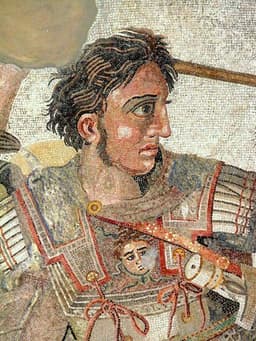
Alexander the Great
General · Ancient
85.2Total
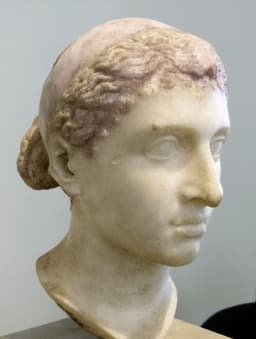
Cleopatra VII
Politician · Ancient
47.2Total
Basic Information
Born
-356
-69
Died
-323
-30
Era
Ancient
Ancient
Nationality
Macedon
Egypt
Occupation
General
Politician
Civilization
Western
Middle Eastern
Score Comparison
Military (10%)
95.0
20.0
Political (20%)
60.0
45.0
Influence (20%)
92.0
40.0
Legacy (20%)
90.0
80.0
Leadership (15%)
80.0
40.0
Strategy (15%)
92.0
25.0
TOTAL
85.2
47.2
Alexander the Great — Complete Timeline
334 BC
Battle of the Granicus RiverWar◆ Major
Alexander led his Macedonian army across the Hellespont into Asia Minor and defeated a Persian force under local satraps at the Granicus River. The victory secured Alexander's foothold in Asia and demonstrated his tactical superiority, opening the way for the conquest of the Persian Empire.
Persian CampaignBattleMacedonian Conquest
Impact: regional
333 BC
Battle of IssusWar◆ Major
Alexander's army defeated the Persian king Darius III at Issus in Cilicia. Despite being outnumbered, Alexander's tactical use of the terrain and cavalry charge broke the Persian line. Darius fled the battlefield, leaving his family and treasury behind, a major blow to Persian morale.
Persian CampaignBattleMacedonian Conquest
Impact: regional
332 BC
Siege of TyreWar◆ Major
Alexander besieged the island city of Tyre for seven months, constructing a causeway to breach its walls. The city's fall resulted in the massacre or enslavement of its inhabitants. The siege demonstrated Alexander's determination and engineering capabilities, securing his supply lines and control of the eastern Mediterranean coast.
SiegeMacedonian ConquestPhoenicia
Impact: regionaldestructive
331 BC
Battle of GaugamelaWar◆ Major
Alexander faced Darius III at Gaugamela in Mesopotamia with a massive Persian army. Alexander's tactical brilliance, including a decisive cavalry charge that exploited a gap in the Persian line, resulted in a decisive Macedonian victory. Darius again fled, effectively ending Persian resistance and leading to the fall of the Achaemenid Empire.
Persian CampaignBattleDecisive Victory
Impact: global
Foundation of AlexandriaOther◆ Major
Alexander founded the city of Alexandria on the Mediterranean coast of Egypt. He personally selected the site and oversaw the initial planning. Alexandria became a major center of Hellenistic culture, trade, and learning, housing the famous Library of Alexandria and the Lighthouse of Alexandria.
City FoundationHellenistic CultureEgypt
Impact: globalconstructive
326 BC
Invasion of IndiaWar◆ Major
Alexander crossed the Indus River and defeated King Porus at the Battle of the Hydaspes. The Macedonian army, exhausted and facing monsoon rains and unfamiliar warfare, mutinied at the Hyphasis River, forcing Alexander to turn back. This campaign marked the easternmost extent of his conquests.
Indian CampaignBattleMutiny
Impact: regional
Cleopatra VII — Complete Timeline
48 BC
Alliance with Julius CaesarPolitical Action◆ Major
Cleopatra allied with Julius Caesar during the Roman civil war. She had herself smuggled into his palace in Alexandria rolled in a carpet. Caesar supported her claim to the throne, defeating her brother Ptolemy XIII and restoring her as co-ruler of Egypt.
Impact: regional
47 BC
Birth of CaesarionPolitical Action◆ Major
Cleopatra gave birth to Ptolemy XV Caesar (Caesarion), claiming he was Julius Caesar's son. This birth strengthened her political position and provided a potential heir to both Egypt and Rome, though Caesar never officially acknowledged him as his heir.
Impact: regional
41 BC
Alliance with Mark AntonyPolitical Action◆ Major
Cleopatra formed a political and romantic alliance with Mark Antony, a Roman triumvir. She provided him with financial and military support for his campaigns in the East. Their relationship produced three children and solidified her control over Egypt.
Impact: regional
31 BC
Battle of ActiumWar
The combined naval forces of Cleopatra and Mark Antony were decisively defeated by Octavian's fleet under Agrippa at Actium in Greece. Cleopatra fled with her ships, and Antony followed, leading to their eventual downfall and Octavian's rise as Augustus.
Impact: globaltragic
30 BC
Death of CleopatraPolitical Action
After Octavian's forces captured Alexandria, Cleopatra died by suicide, traditionally said to be from the bite of an asp. Her death ended the Ptolemaic dynasty and Egypt became a Roman province, marking the end of Hellenistic Egypt's independence.
Impact: globaltragic
Expert Analysis
Alexander the Great vs Cleopatra VII
# The Conqueror and the Queen: Why Alexander Built an Empire While Cleopatra Lost One
On a summer morning in 323 BCE, Alexander the Great lay dying in Babylon at thirty-two, having never lost a battle and having carved an empire from the Adriatic Sea to the Indus River. Less than three centuries later, another ruler faced her end in Alexandria: Cleopatra VII, also thirty-nine, who chose suicide by asp rather than parade as a captive in Rome. Both were young monarchs of extraordinary ambition. One died at the apex of power; the other at its absolute nadir. What explains the chasm between these two fates?
Origins
Alexander was born into a kingdom already forged. His father, Philip II of Macedon, had transformed a backwater of squabbling tribes into the dominant power of Greece, creating a professional army and a unified state. Alexander inherited not merely a crown but a machine of war. He was tutored by Aristotle, steeped in Homer’s *Iliad*, and taught that glory was the highest pursuit. From childhood, he believed he was descended from Achilles and destined for something beyond mortal reach.
Cleopatra was born into a dying dynasty. The Ptolemies had ruled Egypt for nearly three centuries, but by 69 BCE, the family was a wreck of assassinations, incest, and incompetence. Her father, Ptolemy XII, was a weak king who bought Roman favor with borrowed gold. Cleopatra was the first of her line to actually speak Egyptian, to understand the culture she governed. She inherited not a kingdom but a crisis: a bankrupt treasury, a hostile sibling, and the shadow of Rome stretching over the Mediterranean.
Rise to Power
Alexander became king at twenty, after Philip’s assassination. The moment was precarious—rebels rose in Greece, barbarians threatened the north, and Persian agents whispered of invasion. Alexander crushed Thebes into dust, slaughtering six thousand and enslaving the rest, to send a message: he would not be challenged. Within two years, he crossed the Hellespont into Asia with forty thousand men, never to return.
Cleopatra’s path was far more desperate. She became co-ruler at eighteen with her younger brother Ptolemy XIII, who was backed by eunuchs and generals who soon exiled her. In 48 BCE, she smuggled herself into the palace of Julius Caesar rolled in a carpet—a dramatic gamble that worked. She seduced Caesar, secured his military backing, and regained her throne. Where Alexander inherited a ready army, Cleopatra had to create power from charm and necessity.
Leadership & Governance
Alexander’s military genius was absolute. At Issus in 333 BCE, he faced Darius III’s army of perhaps one hundred thousand with forty-seven thousand men and shattered it through a devastating cavalry charge at the enemy’s center. At Gaugamela two years later, he executed an even bolder plan: he drew the Persian line sideways until a gap appeared, then drove his Companion Cavalry straight through. His men worshipped him because he fought alongside them, took the same wounds, shared their rations.
Politically, however, Alexander was reckless. He adopted Persian court ceremonies that alienated his Macedonian officers, married foreign wives, and executed close friends like Parmenion and Cleitus the Black on suspicion or in drunken rage. He built an empire but never built an administration to hold it.
Cleopatra governed with cunning rather than force. Her military score of 25 reflects that she never commanded armies; instead, she commanded alliances. She provided Mark Antony with ships and gold for his Parthian campaigns, stabilized Egypt’s grain supply to Rome, and maintained her kingdom’s independence through diplomacy when other client states were swallowed whole. She was a master of political theater: dressing as the goddess Isis, minting coins that showed her as a Hellenistic queen, and presenting Caesarion as both a pharaoh and a Roman heir.
Triumph & Tragedy
Alexander’s greatest moment came after Gaugamela, when he entered Babylon, Susa, and Persepolis as master of Asia. He wept, the story goes, when there were no more worlds to conquer. His tragedy was that he never stopped. He drove his men through the Hindu Kush, across the Indus, and into the monsoon-soaked Punjab, where his army finally mutinied on the banks of the Hyphasis River. He turned back, but the damage was done—his men were exhausted, his officers alienated, his empire too vast to govern. He died of fever in Babylon, possibly from malaria or poison, leaving no clear heir.
Cleopatra’s triumph was surviving as long as she did. For two decades, she outmaneuvered Roman power, kept Egypt free, and gave birth to children who might have ruled the eastern Mediterranean. Her tragedy was Actium. In 31 BCE, her fleet and Antony’s were defeated by Octavian’s admiral Agrippa. Cleopatra fled the battle, Antony followed, and the war was lost. When Octavian’s forces entered Alexandria, she tried one last negotiation—offering her throne, her treasure, even her children. Octavian wanted only her as a trophy. She chose death.
Character & Destiny
Alexander believed in his own divinity. He visited the oracle at Siwa, where priests called him son of Zeus, and he never doubted it. This confidence made him invincible on the battlefield but blind to human limits. He could not delegate, could not compromise, could not stop.
Cleopatra believed in her own intelligence. She spoke nine languages, studied philosophy, and navigated the brutal politics of Rome with a subtlety that Alexander never needed. Her flaw was that she gambled everything on personal relationships. When Caesar died, she gambled on Antony. When Antony lost, she had no other card to play. Her political score of 55 reflects a woman who was shrewd but ultimately dependent on Roman men who could not save her.
Legacy
Alexander’s legacy is the Hellenistic world: Greek cities from Alexandria to Ai Khanoum, the *Koine* Greek language that spread the New Testament, the fusion of cultures that shaped the Silk Road. His military tactics are still taught at Sandhurst and West Point. But his empire fragmented within a generation, torn apart by his generals.
Cleopatra’s legacy is the myth of the seductive queen, the last pharaoh, the woman who almost changed history. Her political influence is harder to measure, but it is real: she proved that a woman could rule alone in a world of men, and her death marked the end of three thousand years of Egyptian pharaonic civilization. Egypt became a Roman province, and the East was never independent again.
Conclusion
Walking through the streets of Alexandria today, one can still feel the ghost of both rulers. The city Alexander founded became the greatest intellectual center of the ancient world. The city where Cleopatra died became a Roman backwater. Alexander conquered the world but could not govern it. Cleopatra governed a kingdom but could not save it. One was a force of nature, the other a force of will. Both remind us that empire is built not by armies or alliances alone, but by the terrible, fragile marriage of ambition and judgment—and that when that marriage fails, even the greatest fall.
Rankings
🥇
Alexander the GreatLeader
Mil: 95.0Pol: 60.0Inf: 92.0
85.2
🥈
Cleopatra VII
Mil: 20.0Pol: 45.0Inf: 40.0
47.2
+38.0 behind
How This Comparison Works
Algorithm
Each figure is scored on 6 dimensions (0—100 scale) based on structured historical data: Military (10%), Political (20%), Influence (20%), Legacy (20%), Leadership (15%), Strategy (15%). The weighted total produces the final ranking.
Data Sources
Scores are computed from structured sub-indicators in the database. Scale factors adjust for era (Ancient ×0.85, Modern ×1.0) and civilization size (Eastern ×1.05, Other ×0.80) to account for differences in population and military scale.
Maximum 3 Figures
Comparisons are limited to 2—3 figures to ensure readability and statistical meaningfulness.
Error Margins
±5 points per dimension — Sub-scores are derived from historical records with inherent uncertainty. Two figures within 5 points on a dimension should be considered roughly equivalent in that area.
Total Score Accuracy
±3 points overall — The weighted combination of 6 dimensions produces a total score with approximately ±3 points of uncertainty. Differences of less than 3 points are not statistically significant— the figures are effectively tied.
Known Limitations
- Historical records are incomplete and uneven across civilizations
- Figures from oral-tradition societies may be underrepresented
- Occupation labels can misclassify multi-role figures
- Scores measure capability and impact, not moral character
- Quantitative scoring is a comparison tool, not absolute truth
Capability Radar
Military (10%) — Battles & Warfare
Battles
98
20
Win Rate
99
15
Expansion
99
10
Political (20%) — Governance & Reform
Reform
75
40
Diplomacy
80
85
Economy
70
55
Influence (20%) — Cultural & Global Reach
Cultural
95
80
Global
95
85
Legacy (20%) — Historical Impact
Historical
98
85
Longevity
95
90
Leadership (15%) — Power & Stability
Tenure
60
60
Stability
55
35
Strategy (15%) — Tactics & Innovation
Strategy
98
30
Tactics
99
25
Reform
85
10
Similar Comparisons
Comments & Discussion
The Sword and the Serpent6/16/2026
Classics Scholar here. Alexander conquered with phalanx and cavalry; Cleopatra ruled through seduction and alliance. But let’s be real—she lost because she faced Rome at its peak, not fragmented Persia. Her navy was Roman-built, her treasury Roman-looted. She chose the wrong side in a civil war and paid for it. Alexander never had to outmaneuver Caesar or Octavian. Different game, same ambition—one luckier in enemies.
铁骑女王6/16/2026
军事历史迷觉得这比较蠢。亚历山大靠老爹留下的霸业开挂,三十岁死前连个接班人都没安排好,帝国立马碎成渣。克利奥帕特拉至少守了埃及二十年,在罗马虎口下玩外交,还差点用情色拿下安东尼。胜负是死法决定的?那她自杀前还控制了罗马大将呢。谁输得更惨,要看时间尺度。别用死的瞬间否定活的智慧。
DataDrill6/16/2026
Let’s crunch numbers. Alexander led about 40,000 troops at Gaugamela against maybe 100,000 Persians; Cleopatra commanded no major land battles—her army at Actium was perhaps 60,000 but mostly untrained conscripts. Outcome: Alexander expanded territory by 2 million sq miles; Cleopatra lost 0. She was a puppet ruler, not a conqueror. Empire-building requires crisis and will; her reign was crisis without the will to change. Facts don’t lie: one built, one fell.
丝路判官6/16/2026
别扯什么背景不同。亚历山大在印度被大象打得要撤兵,军队哗变,他也没能真正统治那些土地,死后全靠部将分赃。克利奥帕特拉则是输在性别和权力规则——她试图用文化融合和外交妥协,结果被罗马认为“太聪明太危险”。历史写英雄看刀剑不看头脑。她若生在希腊化时代,可能才是真霸主。
HellenisticHeir6/16/2026
Here’s the dirty secret: both died childless or with heirs who failed. Alexander’s son was murdered; Cleopatra’s son was executed. Empire isn’t about military success—it’s about succession stability. Alexander’s conquests lasted twenty years; Cleopatra’s legacy? Egypt became a Roman province for centuries. She preserved her culture through her suicide and myth. He’s a footnote to Persian history. She’s still a symbol of defiance. Who really won?