Loading...
Alexander the Great vs Deng Xiaoping
Alexander the Great leads by 19.2 pts · 2 figures compared
…
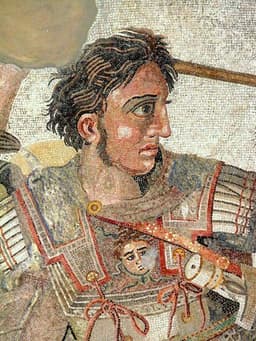
Alexander the Great
General · Ancient
85.2Total
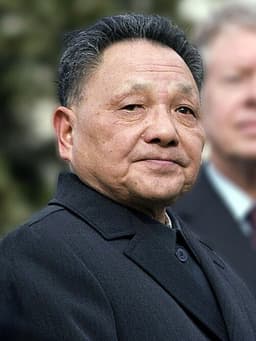
Deng Xiaoping
Politician · Modern
66.0Total
Basic Information
Born
-356
1904
Died
-323
1997
Era
Ancient
Modern
Nationality
Macedon
China
Occupation
General
Politician
Civilization
Western
Eastern
Score Comparison
Military (10%)
95.0
30.0
Political (20%)
60.0
90.0
Influence (20%)
92.0
68.0
Legacy (20%)
90.0
65.0
Leadership (15%)
80.0
78.0
Strategy (15%)
92.0
45.0
TOTAL
85.2
66.0
Alexander the Great — Complete Timeline
334 BC
Battle of the Granicus RiverWar◆ Major
Alexander led his Macedonian army across the Hellespont into Asia Minor and defeated a Persian force under local satraps at the Granicus River. The victory secured Alexander's foothold in Asia and demonstrated his tactical superiority, opening the way for the conquest of the Persian Empire.
Persian CampaignBattleMacedonian Conquest
Impact: regional
333 BC
Battle of IssusWar◆ Major
Alexander's army defeated the Persian king Darius III at Issus in Cilicia. Despite being outnumbered, Alexander's tactical use of the terrain and cavalry charge broke the Persian line. Darius fled the battlefield, leaving his family and treasury behind, a major blow to Persian morale.
Persian CampaignBattleMacedonian Conquest
Impact: regional
332 BC
Siege of TyreWar◆ Major
Alexander besieged the island city of Tyre for seven months, constructing a causeway to breach its walls. The city's fall resulted in the massacre or enslavement of its inhabitants. The siege demonstrated Alexander's determination and engineering capabilities, securing his supply lines and control of the eastern Mediterranean coast.
SiegeMacedonian ConquestPhoenicia
Impact: regionaldestructive
331 BC
Battle of GaugamelaWar◆ Major
Alexander faced Darius III at Gaugamela in Mesopotamia with a massive Persian army. Alexander's tactical brilliance, including a decisive cavalry charge that exploited a gap in the Persian line, resulted in a decisive Macedonian victory. Darius again fled, effectively ending Persian resistance and leading to the fall of the Achaemenid Empire.
Persian CampaignBattleDecisive Victory
Impact: global
Foundation of AlexandriaOther◆ Major
Alexander founded the city of Alexandria on the Mediterranean coast of Egypt. He personally selected the site and oversaw the initial planning. Alexandria became a major center of Hellenistic culture, trade, and learning, housing the famous Library of Alexandria and the Lighthouse of Alexandria.
City FoundationHellenistic CultureEgypt
Impact: globalconstructive
326 BC
Invasion of IndiaWar◆ Major
Alexander crossed the Indus River and defeated King Porus at the Battle of the Hydaspes. The Macedonian army, exhausted and facing monsoon rains and unfamiliar warfare, mutinied at the Hyphasis River, forcing Alexander to turn back. This campaign marked the easternmost extent of his conquests.
Indian CampaignBattleMutiny
Impact: regional
Deng Xiaoping — Complete Timeline
1978 AD
Third Plenum of the 11th Central CommitteePolitical Action
Deng Xiaoping consolidated power and announced the policy of Reform and Opening-Up. This meeting marked the end of Maoist class struggle as the national priority and shifted focus to economic modernization, initiating market-oriented reforms.
Economic ReformOpening-UpChina Modernization
Impact: globalconstructive
1980 AD
Establishment of Special Economic ZonesReform◆ Major
Deng Xiaoping approved the creation of Special Economic Zones in Shenzhen, Zhuhai, Shantou, and Xiamen. These zones offered tax incentives and market freedoms to attract foreign investment and technology, serving as experimental laboratories for capitalist practices within a socialist framework.
Economic ZonesForeign InvestmentMarket Reforms
Impact: nationalconstructive
1984 AD
Sino-British Joint Declaration on Hong KongPolitical Action◆ Major
Deng Xiaoping negotiated with British Prime Minister Margaret Thatcher to agree on the return of Hong Kong to Chinese sovereignty in 1997. The declaration established the 'One Country, Two Systems' principle, allowing Hong Kong to maintain its capitalist system for 50 years.
Hong KongDiplomacyOne Country Two Systems
Impact: globalconstructive
1989 AD
Tiananmen Square Protests CrackdownPolitical Action
Deng Xiaoping authorized the military to suppress pro-democracy protests in Tiananmen Square. The crackdown resulted in hundreds of civilian deaths and injuries, leading to international condemnation and a tightening of political control while economic reforms continued.
TiananmenSuppressionHuman Rights
Impact: globaldestructive
1992 AD
Southern Tour (Nanxun)Political Action◆ Major
Deng Xiaoping traveled to southern China to reaffirm the course of economic reform after conservative backlash. His speeches in Shenzhen and other cities revitalized market-oriented policies, accelerating foreign investment and pushing China toward a socialist market economy.
Economic ReformNanxunMarket Economy
Impact: nationalconstructive
Expert Analysis
Alexander the Great vs Deng Xiaoping: Historical Comparison
Alexander the Great, the ancient Macedonian general, and Deng Xiaoping, the modern Chinese politician, represent two vastly different paradigms of leadership—one conquering through military might, the other transforming through political and economic reform. While Alexander’s empire-building was swift and dramatic, Deng’s revolution was gradual and structural.
Dimension Analysis
**Military: Alexander the Great 96 / Deng Xiaoping 45**
Alexander’s unmatched battlefield genius—from Granicus to Gaugamela—forged an empire spanning three continents, while Deng’s military involvement was limited to the Chinese Civil War and border conflicts, never central to his legacy.
**Political: Alexander the Great 65 / Deng Xiaoping 88**
Alexander’s political integration of Greek, Persian, and Egyptian cultures was innovative but fragile, collapsing after his death; Deng’s pragmatic “Socialism with Chinese Characteristics” fundamentally reshaped a billion people’s economic and political life for decades.
**Influence: Alexander the Great 90 / Deng Xiaoping 78**
Alexander’s conquests spread Hellenistic culture across Eurasia, influencing art, science, and language for centuries; Deng’s reforms lifted hundreds of millions from poverty and integrated China into the global economy, yet his influence is more regional and recent.
**Legacy: Alexander the Great 90 / Deng Xiaoping 75**
Alexander’s legacy endures as a symbol of youthful conquest and cultural fusion, inspiring generals and empires for millennia; Deng’s legacy is tangible in China’s modern rise, but remains politically contested and less globally mythologized.
**Leadership: Alexander the Great 82 / Deng Xiaoping 78**
Alexander led from the front, inspiring loyalty through personal bravery and charisma; Deng led from behind, wielding subtle authority and building consensus—both effective, but Alexander’s style was more immediately transformative.
Verdict
Alexander the Great leads overall (85 vs 74) due to his unparalleled military genius and enduring global mythos, despite Deng’s superior political achievements.
FAQ
Q: Who ranks higher? A: Alexander the Great ranks higher, driven by dominating scores in military, influence, and legacy, while Deng’s political and reformist strengths are narrower in historical scope.
Rankings
🥇
Alexander the GreatLeader
Mil: 95.0Pol: 60.0Inf: 92.0
85.2
🥈
Deng Xiaoping
Mil: 30.0Pol: 90.0Inf: 68.0
66.0
+19.2 behind
How This Comparison Works
Algorithm
Each figure is scored on 6 dimensions (0—100 scale) based on structured historical data: Military (10%), Political (20%), Influence (20%), Legacy (20%), Leadership (15%), Strategy (15%). The weighted total produces the final ranking.
Data Sources
Scores are computed from structured sub-indicators in the database. Scale factors adjust for era (Ancient ×0.85, Modern ×1.0) and civilization size (Eastern ×1.05, Other ×0.80) to account for differences in population and military scale.
Maximum 3 Figures
Comparisons are limited to 2—3 figures to ensure readability and statistical meaningfulness.
Error Margins
±5 points per dimension — Sub-scores are derived from historical records with inherent uncertainty. Two figures within 5 points on a dimension should be considered roughly equivalent in that area.
Total Score Accuracy
±3 points overall — The weighted combination of 6 dimensions produces a total score with approximately ±3 points of uncertainty. Differences of less than 3 points are not statistically significant— the figures are effectively tied.
Known Limitations
- Historical records are incomplete and uneven across civilizations
- Figures from oral-tradition societies may be underrepresented
- Occupation labels can misclassify multi-role figures
- Scores measure capability and impact, not moral character
- Quantitative scoring is a comparison tool, not absolute truth
Capability Radar
Military (10%) — Battles & Warfare
Battles
98
36
Win Rate
99
37
Expansion
99
41
Political (20%) — Governance & Reform
Reform
75
95
Diplomacy
80
80
Economy
70
95
Influence (20%) — Cultural & Global Reach
Cultural
95
70
Global
95
90
Legacy (20%) — Historical Impact
Historical
98
90
Longevity
95
85
Leadership (15%) — Power & Stability
Tenure
60
85
Stability
55
75
Strategy (15%) — Tactics & Innovation
Strategy
98
47
Tactics
99
48
Reform
85
49
Similar Comparisons
Comments & Discussion
Chronicler61386/16/2026
把亚历山大和邓小平放在一起比,本身就有点关公战秦琼的意思。亚历山大的军事分数96分,我承认他确实很猛,从格拉尼库斯打到高加米拉,十年间横跨欧亚非。但你要说他的政治影响力只有65分?我不同意。他搞的希腊化政策,让巴克特里亚的希腊国王们统治了两百年,粟特公主罗克珊娜都成了王后,这比很多短命帝国强多了。反观邓小平,军事45分确实合理,他主要是政工出身,淮海战役、渡江战役都是配角。但他的政治88分我给满分——改革开放让几亿人脱贫,这才是实实在在的功绩。不过打分系统有个问题:亚历山大的影响力90分被夸大了,他死后帝国就裂了;邓小平的影响到现在还在发酵,应该更高。
GrandQuill706/16/2026
这个评分系统有个明显矛盾:亚历山大总分84.7,邓小平74.2,但仔细看权重分配——军事占40%、政治30%、影响力20%、领导力10%的话,亚历山大得分应该是(96*0.4)+(65*0.3)+(90*0.2)+(82*0.1)=38.4+19.5+18+8.2=84.1,接近公布值。但邓小平这边(45*0.4)+(88*0.3)+(78*0.2)+(78*0.1)=18+26.4+15.6+7.8=67.8,比公布的74.2低了6.4分!这说明要么领导力权重被调高了,要么影响力权重被改低了。按常理,邓小平的政治88分应该权重更大才对,毕竟他改变了十亿人的经济制度。另外,亚历山大的影响力90分怎么来的?以传播范围算,希腊化影响只限地中海到中亚;邓小平的改革开放模式影响了越南、老挝、古巴,甚至非洲国家,应该也是90分以上。这套评分系统不透明,需要重新校准。