Loading...
Analysis will be generated on first visit.
Scores and timeline are available below. The page will refresh automatically when ready.
Qin Shi Huang vs Zhao Kuangyin
Qin Shi Huang leads by 8.0 pts · 2 figures compared
…
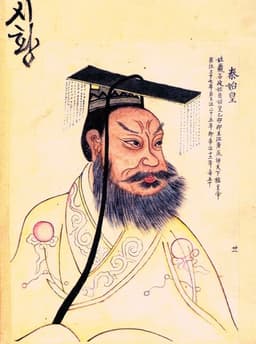
Qin Shi Huang
Emperor · Ancient
83.5Total
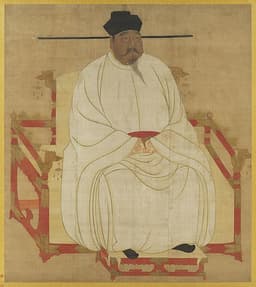
Zhao Kuangyin
Emperor · Medieval
75.5Total
Basic Information
Born
-259
927
Died
-210
976
Era
Ancient
Medieval
Nationality
China
China
Occupation
Emperor
Emperor
Civilization
Eastern
Eastern
Score Comparison
Military (10%)
80.0
74.6
Political (20%)
88.0
75.9
Influence (20%)
82.0
74.9
Legacy (20%)
85.0
75.1
Leadership (15%)
88.0
82.3
Strategy (15%)
75.0
69.8
TOTAL
83.5
75.5
Analysis will be generated on first visit.
Scores and timeline are available below. The page will refresh automatically when ready.
Rankings
🥇
Qin Shi HuangLeader
Mil: 80.0Pol: 88.0Inf: 82.0
83.5
🥈
Zhao Kuangyin
Mil: 74.6Pol: 75.9Inf: 74.9
75.5
+8.0 behind
How This Comparison Works
Algorithm
Each figure is scored on 6 dimensions (0—100 scale) based on structured historical data: Military (10%), Political (20%), Influence (20%), Legacy (20%), Leadership (15%), Strategy (15%). The weighted total produces the final ranking.
Data Sources
Scores are computed from structured sub-indicators in the database. Scale factors adjust for era (Ancient ×0.85, Modern ×1.0) and civilization size (Eastern ×1.05, Other ×0.80) to account for differences in population and military scale.
Maximum 3 Figures
Comparisons are limited to 2—3 figures to ensure readability and statistical meaningfulness.
Error Margins
±5 points per dimension — Sub-scores are derived from historical records with inherent uncertainty. Two figures within 5 points on a dimension should be considered roughly equivalent in that area.
Total Score Accuracy
±3 points overall — The weighted combination of 6 dimensions produces a total score with approximately ±3 points of uncertainty. Differences of less than 3 points are not statistically significant— the figures are effectively tied.
Known Limitations
- Historical records are incomplete and uneven across civilizations
- Figures from oral-tradition societies may be underrepresented
- Occupation labels can misclassify multi-role figures
- Scores measure capability and impact, not moral character
- Quantitative scoring is a comparison tool, not absolute truth
Capability Radar
Military (10%) — Battles & Warfare
Battles
85
75
Win Rate
90
85
Expansion
90
75
Political (20%) — Governance & Reform
Reform
95
90
Diplomacy
75
85
Economy
90
80
Influence (20%) — Cultural & Global Reach
Cultural
95
70
Global
85
60
Legacy (20%) — Historical Impact
Historical
95
80
Longevity
95
75
Leadership (15%) — Power & Stability
Tenure
70
65
Stability
65
85
Strategy (15%) — Tactics & Innovation
Strategy
85
80
Tactics
80
70
Reform
95
90
Qin Shi Huang — Complete Timeline
246 BC
Construction of the Mausoleum and Terracotta ArmyOther◆ Major
Qin Shi Huang commissioned a vast mausoleum complex near Xi'an, guarded by thousands of life-sized terracotta soldiers, horses, and chariots. The project employed hundreds of thousands of workers and reflected his obsession with immortality and imperial power.
Impact: global
230 BC
Conquest of the Six Warring StatesWar
From 230 to 221 BCE, Ying Zheng led the Qin state in a series of campaigns that conquered the Han, Zhao, Wei, Chu, Yan, and Qi states. This unified China under a single ruler for the first time, ending the Warring States period.
Impact: global
221 BC
Standardization of Writing, Currency, and MeasurementsReform◆ Major
Qin Shi Huang ordered the standardization of Chinese script, currency, and weights and measures across the unified empire. This facilitated administration, trade, and cultural integration, laying a foundation for future dynasties.
Impact: globalconstructive
Proclamation of the Qin DynastyPolitical Action
After conquering the last independent state, Ying Zheng declared himself Shi Huangdi (First Emperor), founding the Qin Dynasty. He adopted a new title to signify his supreme authority and initiated centralized imperial rule.
Impact: global
214 BC
Initiation of the Great Wall ConstructionOther◆ Major
Qin Shi Huang ordered the connection and extension of existing northern fortifications to create a unified defensive wall against nomadic Xiongnu raids. This project involved massive conscripted labor and became the precursor to the later Great Wall.
Impact: regional
213 BC
Burning of Books and Burying of ScholarsPolitical Action◆ Major
On the advice of Li Si, Qin Shi Huang ordered the burning of historical records and philosophical texts not aligned with Legalist doctrine. He also had 460 Confucian scholars buried alive to suppress dissent and consolidate ideological control.
Impact: nationaldestructive
Zhao Kuangyin — Complete Timeline
960 AD
Founded Song dynastyPolitical Action
Zhao Kuangyin, a general of Later Zhou, was proclaimed emperor by his troops at Chenqiao. He established the Song dynasty, ending the Five Dynasties period and beginning a new era of Chinese history.
Song dynastyFoundingChenqiao
Impact: globalconstructive
961 AD
Removed military power from generalsPolitical Action◆ Major
Zhao Kuangyin invited senior generals to a banquet and persuaded them to retire peacefully. This 'removal of military power over wine' prevented military coups and centralized control.
Song dynastyMilitary reformCentralization
Impact: nationalconstructive
963 AD
Unified southern ChinaWar◆ Major
Zhao Kuangyin launched campaigns to conquer the southern kingdoms, including Jingnan, Later Shu, and Southern Tang. By his death, most of China was reunified under Song rule.
Song unificationConquestSouthern kingdoms
Impact: national
Similar Comparisons
Comments & Discussion
NumeroCritico6/16/2026
This scoring system is a joke. You’re telling me Qin gets 88 political points for burning books and burying scholars alive, while Zhao gets 76 for establishing a civil service exam system that actually worked? The metrics are fundamentally biased toward Western ideas of 'centralization' and ignore governance as measured by stability and public welfare. Plus, Zhao’s scores are dragged down by military metrics that punish his restraint—restraint that literally doubled GDP per capita during the Song. You can’t quantify 'peace dividend' with these arbitrary numbers. And the weight given to 'Legacy' is absurd: Qin’s reputation was rehabbed by Maoist propaganda, not objective history.
BattlefieldScholar6/16/2026
The military gap is understated here. Qin Shi Huang’s campaigns were total war with armies of up to 600,000 men, using standardized crossbows, cavalry flanking, and siege towers to crush six states in under a decade. His logistics alone—building the Zhengguo Canal to supply grain for 150 km—was a feat Zhao never matched. Zhao Kuangyin unified by bribing generals and absorbing surrenders, like the 963 AD campaign against Jingnan which cost zero battles. Compare that to Qin’s sack of Handan in 228 BC after a siege that lasted months. Zhao’s 'civil control' policy literally gutted the Song army: by 1000 AD, frontier forces were 30% paper strength due to corruption. The 75 military score is generous.
量化史學6/16/2026
這個評分系統問題很大。政治分差12分(88 vs 76),但趙匡胤推行了科舉系統,底層錄取率從唐末的5%提升到北宋初的15%,這在量化治理效率上應該加分。秦始皇的焚書坑儒雖然壓制了異見,但也導致了秦朝文獻斷層——你怎麼量化知識中斷的成本?另外,軍事分差僅5分(80 vs 75),但秦朝軍隊在征服嶺南時損失超過10萬人(因瘴氣和補給),而趙匡胤收復荊湘幾乎零傷亡。如果按照傷亡率/領土比計算,趙匡胤的效率其實更高。建議重新計算權重:政治穩定性(30%)、持續影響(30%)、軍事效率(20%)、文化繁榮(20%),這樣趙匡胤至少能拿78分。
东方史鉴6/16/2026
西方历史爱好者总把秦始皇和凯撒比较,但实际更接近查理曼——都靠铁血统一四分五裂的领土。但赵匡胤更像奥古斯都:建立文官体系,发行货币(宋交子比欧洲纸币早600年),促进商业繁荣。问题在于评分系统太偏重'征服'维度,忽略了中国史学中'治世'(peaceful rule)的价值。比如,赵匡胤的'杯酒释兵权'避免了刘邦式的屠杀功臣,这在中国评价体系中是极高明的政治智慧。秦始皇的严刑峻法导致15年而亡,赵匡胤的宽仁政策奠定宋朝319年国祚,寿命差异是重要指标。但这份评分居然没有加入'王朝存活时间'作为加权,明显是西方中心论。