Loading...
Analysis will be generated on first visit.
Scores and timeline are available below. The page will refresh automatically when ready.
Cleisthenes vs Zhao Kuangyin
Cleisthenes leads by 2.9 pts · 2 figures compared
…
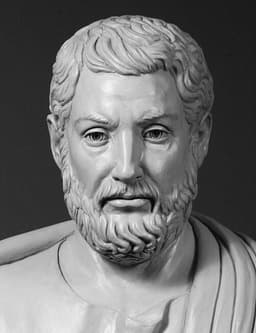
Cleisthenes
Politician · Ancient
78.4Total
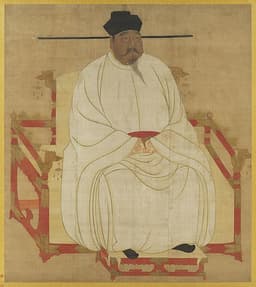
Zhao Kuangyin
Emperor · Medieval
75.5Total
Basic Information
Born
-570
927
Died
-508
976
Era
Ancient
Medieval
Nationality
Greece
China
Occupation
Politician
Emperor
Civilization
Western
Eastern
Score Comparison
Military (10%)
64.5
74.6
Political (20%)
66.6
75.9
Influence (20%)
90.0
74.9
Legacy (20%)
87.6
75.1
Leadership (15%)
89.6
82.3
Strategy (15%)
64.3
69.8
TOTAL
78.4
75.5
Cleisthenes — Complete Timeline
510 BC
Expulsion of the PeisistratidsPolitical Action◆ Major
Cleisthenes, with the support of the Alcmaeonid family and Spartan assistance, led the overthrow of the tyrant Hippias, son of Peisistratus. This ended the Peisistratid tyranny in Athens and opened the way for democratic reforms.
Tyranny OverthrownAthensSparta
Impact: nationalconstructive
508 BC
Reforms of CleisthenesReform
Cleisthenes reorganized the Athenian citizen body into ten new tribes based on demes, replacing the old four Ionian tribes. He established the Council of 500 (Boule) and introduced ostracism, creating a system of isonomia (equal rights) that is considered the foundation of Athenian democracy.
Athenian DemocracyConstitutional ReformAncient Greece
Impact: globalprogressive
507 BC
Introduction of OstracismReform◆ Major
Cleisthenes instituted ostracism, a procedure allowing Athenian citizens to vote annually to exile a prominent citizen deemed a threat to democracy for ten years. This mechanism aimed to prevent the rise of a new tyrant and stabilize the democratic system.
Athenian DemocracyPolitical MechanismExile
Impact: national
Zhao Kuangyin — Complete Timeline
960 AD
Founded Song dynastyPolitical Action
Zhao Kuangyin, a general of Later Zhou, was proclaimed emperor by his troops at Chenqiao. He established the Song dynasty, ending the Five Dynasties period and beginning a new era of Chinese history.
Song dynastyFoundingChenqiao
Impact: globalconstructive
961 AD
Removed military power from generalsPolitical Action◆ Major
Zhao Kuangyin invited senior generals to a banquet and persuaded them to retire peacefully. This 'removal of military power over wine' prevented military coups and centralized control.
Song dynastyMilitary reformCentralization
Impact: nationalconstructive
963 AD
Unified southern ChinaWar◆ Major
Zhao Kuangyin launched campaigns to conquer the southern kingdoms, including Jingnan, Later Shu, and Southern Tang. By his death, most of China was reunified under Song rule.
Song unificationConquestSouthern kingdoms
Impact: national
Analysis will be generated on first visit.
Scores and timeline are available below. The page will refresh automatically when ready.
Rankings
🥇
CleisthenesLeader
Mil: 64.5Pol: 66.6Inf: 90.0
78.4
🥈
Zhao Kuangyin
Mil: 74.6Pol: 75.9Inf: 74.9
75.5
+2.9 behind
How This Comparison Works
Algorithm
Each figure is scored on 6 dimensions (0—100 scale) based on structured historical data: Military (10%), Political (20%), Influence (20%), Legacy (20%), Leadership (15%), Strategy (15%). The weighted total produces the final ranking.
Data Sources
Scores are computed from structured sub-indicators in the database. Scale factors adjust for era (Ancient ×0.85, Modern ×1.0) and civilization size (Eastern ×1.05, Other ×0.80) to account for differences in population and military scale.
Maximum 3 Figures
Comparisons are limited to 2—3 figures to ensure readability and statistical meaningfulness.
Error Margins
±5 points per dimension — Sub-scores are derived from historical records with inherent uncertainty. Two figures within 5 points on a dimension should be considered roughly equivalent in that area.
Total Score Accuracy
±3 points overall — The weighted combination of 6 dimensions produces a total score with approximately ±3 points of uncertainty. Differences of less than 3 points are not statistically significant— the figures are effectively tied.
Known Limitations
- Historical records are incomplete and uneven across civilizations
- Figures from oral-tradition societies may be underrepresented
- Occupation labels can misclassify multi-role figures
- Scores measure capability and impact, not moral character
- Quantitative scoring is a comparison tool, not absolute truth
Capability Radar
Military (10%) — Battles & Warfare
Battles
58
75
Win Rate
62
85
Expansion
59
75
Political (20%) — Governance & Reform
Reform
95
90
Diplomacy
70
85
Economy
40
80
Influence (20%) — Cultural & Global Reach
Cultural
85
70
Global
85
60
Legacy (20%) — Historical Impact
Historical
90
80
Longevity
95
75
Leadership (15%) — Power & Stability
Tenure
30
65
Stability
60
85
Strategy (15%) — Tactics & Innovation
Strategy
62
80
Tactics
67
70
Reform
72
90
Similar Comparisons
Comments & Discussion
史海钩沉6/16/2026
把克利斯提尼和赵匡胤放在一起比,本身就是西方中心史的典型陷阱。克利斯提尼的“民主”不过是雅典城邦贵族争斗的产物,所谓的“陶片放逐法”本质上是一种政治清洗工具,跟现代民主差着十万八千里。反观赵匡胤,他通过“杯酒释兵权”和平解决了五代以来的军阀割据问题,又推行“重文抑武”政策,奠定了宋朝三百年的文化繁荣。西方评分给克利斯提尼影响力90分,赵匡胤才75分,这完全忽视了宋朝的科举制度、活字印刷、火药应用对全人类的贡献。真要论制度创新,赵匡胤的文官体系比雅典的直接民主更接近现代治理模式。
数据求真者6/16/2026
这个评分体系有问题。克利斯提尼总分78.4,赵匡胤75.5,差距不到4分,但影响力一项就差了15分(90 vs 75),这明显权重偏颇。赵匡胤军事分75、政治分76都高于克利斯提尼的64和67,说明他在治国和军事整合上更全面。我重新算一下:如果按历史学的“制度扩散半径”来算,赵匡胤的科举制度影响了朝鲜、越南、日本,持续超过千年,而克利斯提尼的民主在雅典只延续了不到两百年就被马其顿终结,后来被罗马吸收,再被启蒙思想家重新发掘。论实际治理效能和辐射范围,赵匡胤至少应该得到85分的影响力。建议评分体系增加“制度持续性与跨文化影响”这个子维度。