Loading...
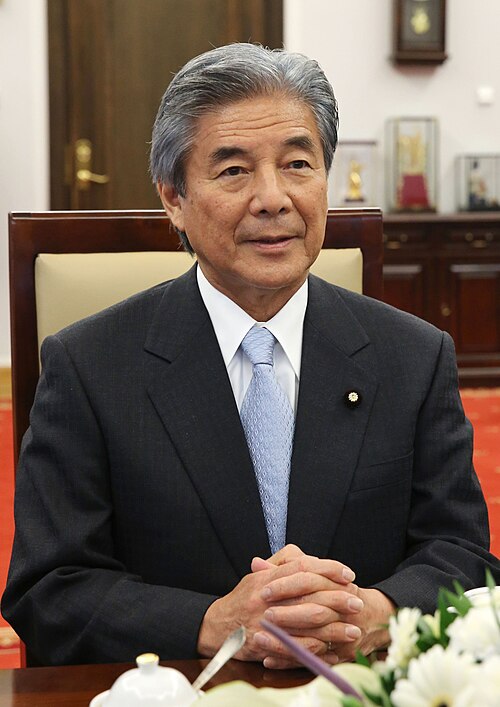
Yasuhiro Nakasone
ModernPoliticianJapan1918 — 2019
Japanese prime minister who strengthened the US-Japan alliance.
Compare Yasuhiro Nakasone with another historical figure:
Quick Facts
Born
1918
Died
2019
Country
Japan
Era
Modern
Occupation
Politician
Score Overview
Military (10%)11
Political (20%)72
Influence (20%)62
Legacy (20%)52
Leadership (15%)80
Strategy (15%)38
Total Score56.2
Yasuhiro Nakasone — Complete Timeline
1981 AD
Administrative Reform and Fiscal ReconstructionReform
Nakasone launched a major administrative reform aimed at reducing government spending and streamlining bureaucracy. He established the Second Provisional Commission for Administrative Reform, which recommended cuts to public works, subsidies, and the number of civil servants, contributing to fiscal consolidation.
Administrative ReformFiscal PolicyJapan
Impact: nationalconstructive
1983 AD
Strengthening of the US-Japan AlliancePolitical Action◆ Major
Nakasone deepened the US-Japan security alliance, notably by declaring Japan an 'unsinkable aircraft carrier' and increasing defense spending. He also agreed to share military technology with the US and supported the deployment of US forces in Japan, solidifying the bilateral partnership during the Cold War.
AllianceDefenseCold War
Impact: regionalconstructive
1986 AD
Hosting the 1986 Tokyo SummitPolitical Action
Nakasone hosted the 12th G7 summit in Tokyo in May 1986, where leaders discussed economic coordination, terrorism, and the Chernobyl disaster. The summit enhanced Japan's international profile and showcased Nakasone's leadership on the global stage.
DiplomacyG7International Summit
Impact: global
1987 AD
Privatization of Japanese National RailwaysReform◆ Major
As prime minister, Yasuhiro Nakasone oversaw the privatization of the debt-ridden Japanese National Railways (JNR), splitting it into regional passenger companies and a freight company. The reform, implemented in April 1987, aimed to improve efficiency and service quality, and is credited with revitalizing Japan's railway system.
PrivatizationInfrastructureEconomic Reform
Impact: nationalconstructive
Detailed Scores
▶View all detailed scores
Military
Strategy
6
Tactics
5
Battles
6
Army Scale
5
War Impact
6
Political
Governance
7
Reform
7
Stability
7
Policy
8
Power
8
Influence
History
9
Global
8
Culture
9
Ideology
9
Legacy
9
People often compare with
See how Yasuhiro Nakasone stacks up against other historical figures
Popular Comparisons
Yasuhiro Nakasone vs Urho Kekkonen
vs Urho Kekkonen62
Yasuhiro Nakasone vs Count von Taaffe
vs Count von Taaffe52
Yasuhiro Nakasone vs Justin Trudeau
vs Justin Trudeau51
Yasuhiro Nakasone vs Andrew Fisher
vs Andrew Fisher51
Yasuhiro Nakasone vs David Dacko
vs David Dacko47
Yasuhiro Nakasone vs Fred Timakata
vs Fred Timakata44