Loading...
Fred Timakata vs Yasuhiro Nakasone
Yasuhiro Nakasone leads by 12.5 pts · 2 figures compared
…

Fred Timakata
Politician · Modern
43.7Total
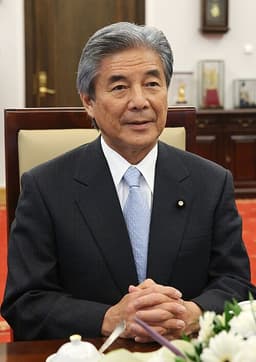
Yasuhiro Nakasone
Politician · Modern
56.2Total
Basic Information
Born
1936
1918
Died
—
2019
Era
Modern
Modern
Nationality
Vanuatu
Japan
Occupation
Politician
Politician
Civilization
Other
Eastern
Score Comparison
Military (10%)
43.3
11.4
Political (20%)
32.2
72.0
Influence (20%)
47.9
62.0
Legacy (20%)
37.5
52.0
Leadership (15%)
58.8
79.8
Strategy (15%)
44.1
38.2
TOTAL
43.7
56.2
Fred Timakata — Complete Timeline
1989 AD
Election as President of VanuatuPolitical Action◆ Major
Fred Timakata was elected as the President of Vanuatu, serving from 1989 to 1994. He was a Presbyterian pastor before entering politics, and his presidency focused on national unity and development.
PresidencyVanuatuPolitical Leadership
Impact: national
1994 AD
End of PresidencyPolitical Action
Timakata's term ended in 1994 after serving one term. He was succeeded by Jean-Marie Leye Lenelgau. His presidency was noted for its stability and pastoral approach.
PresidencyTransitionVanuatu
Impact: national
Yasuhiro Nakasone — Complete Timeline
1981 AD
Administrative Reform and Fiscal ReconstructionReform
Nakasone launched a major administrative reform aimed at reducing government spending and streamlining bureaucracy. He established the Second Provisional Commission for Administrative Reform, which recommended cuts to public works, subsidies, and the number of civil servants, contributing to fiscal consolidation.
Administrative ReformFiscal PolicyJapan
Impact: nationalconstructive
1983 AD
Strengthening of the US-Japan AlliancePolitical Action◆ Major
Nakasone deepened the US-Japan security alliance, notably by declaring Japan an 'unsinkable aircraft carrier' and increasing defense spending. He also agreed to share military technology with the US and supported the deployment of US forces in Japan, solidifying the bilateral partnership during the Cold War.
AllianceDefenseCold War
Impact: regionalconstructive
1986 AD
Hosting the 1986 Tokyo SummitPolitical Action
Nakasone hosted the 12th G7 summit in Tokyo in May 1986, where leaders discussed economic coordination, terrorism, and the Chernobyl disaster. The summit enhanced Japan's international profile and showcased Nakasone's leadership on the global stage.
DiplomacyG7International Summit
Impact: global
1987 AD
Privatization of Japanese National RailwaysReform◆ Major
As prime minister, Yasuhiro Nakasone oversaw the privatization of the debt-ridden Japanese National Railways (JNR), splitting it into regional passenger companies and a freight company. The reform, implemented in April 1987, aimed to improve efficiency and service quality, and is credited with revitalizing Japan's railway system.
PrivatizationInfrastructureEconomic Reform
Impact: nationalconstructive
Expert Analysis
Origins
Fred Timakata was born in 1936 on the island of Epi in the New Hebrides (now Vanuatu). He trained as a Presbyterian pastor and served in the church before entering politics. His background as a religious leader shaped his approach to governance, emphasizing moral leadership and community service. Yasuhiro Nakasone was born in 1918 in Takasaki, Japan, into a wealthy merchant family. He studied law at Tokyo Imperial University and entered the Ministry of Home Affairs before being elected to the Diet in 1947. Nakasone's early career was marked by his nationalist views and involvement in conservative politics, later becoming a key figure in the Liberal Democratic Party (LDP).
Rise to Power
Timakata entered politics after Vanuatu's independence in 1980. He served as Minister of Health and later as Minister of Education before being elected President by the Electoral College in 1989. His presidency, from 1989 to 1994, was largely ceremonial, as the President of Vanuatu is a figurehead. Nakasone rose through the ranks of the LDP, holding ministerial posts including Minister of Transport and Minister of International Trade and Industry. He became Prime Minister in 1982, serving until 1987. His rise was aided by his alliance with Kakuei Tanaka and his reputation as a reformer.
Leadership & Governance
Timakata's leadership style was pastoral and consensus-oriented. As president, he focused on national unity and stability, avoiding controversy. He scored 58.8 in leadership, reflecting his steady but low-key approach. In contrast, Nakasone scored 79.8 in leadership, demonstrating assertive, transformative governance. He pursued major reforms, including the privatization of Japanese National Railways (JNR) in 1987, splitting it into regional companies. He also strengthened the US-Japan alliance, declaring Japan an 'unsinkable aircraft carrier' and increasing defense spending. His administrative reforms aimed at reducing government debt and streamlining bureaucracy.
Triumph & Tragedy
Timakata's greatest success was maintaining stability during his term, with no major scandals or crises. However, his influence was limited by the ceremonial nature of his office, and his legacy score of 37.5 reflects his minor impact. Nakasone's triumphs include the successful privatization of JNR, which reduced government losses, and his role in deepening Japan's security ties with the US. However, his tenure also saw the bubble economy inflate, and his nationalist rhetoric drew criticism from Asian neighbors. His political score of 72.0 indicates his effectiveness, but his strategy score of 38.2 suggests some missteps.
Character & Destiny
Timakata was known for his humility and piety, which suited his role as a unifying figure. His character led to a quiet presidency without major initiatives. Nakasone was ambitious and confrontational, willing to challenge vested interests. His strong personality helped him push through reforms but also created enemies. Historical assessments note his pragmatism, but also his tendency to overreach, as seen in his push for constitutional revision that ultimately failed.
Legacy
Timakata's legacy is modest: he is remembered as a pastor-president who served with dignity, but his impact on Vanuatu's political system is minimal. Nakasone's legacy is substantial: his reforms reshaped Japan's economy and its defense posture. The privatization of JNR became a model for other countries, and his strengthening of the US-Japan alliance influenced regional security. His overall score of 56.2 is higher than Timakata's 43.7, reflecting greater impact.
Conclusion
While both leaders served their nations, Yasuhiro Nakasone had a significantly greater impact. His reforms transformed Japan's economy and security policy, earning him a lasting legacy. Fred Timakata, despite his integrity, operated within a limited role and left little mark on history. The score gap of 12.5 points underscores this disparity. Nakasone's influence extends beyond his term, while Timakata's is largely forgotten. Therefore, Nakasone is the more consequential figure.
Rankings
🥇
Yasuhiro NakasoneLeader
Mil: 11.4Pol: 72.0Inf: 62.0
56.2
🥈
Fred Timakata
Mil: 43.3Pol: 32.2Inf: 47.9
43.7
+12.5 behind
How This Comparison Works
Algorithm
Each figure is scored on 6 dimensions (0—100 scale) based on structured historical data: Military (10%), Political (20%), Influence (20%), Legacy (20%), Leadership (15%), Strategy (15%). The weighted total produces the final ranking.
Data Sources
Scores are computed from structured sub-indicators in the database. Scale factors adjust for era (Ancient ×0.85, Modern ×1.0) and civilization size (Eastern ×1.05, Other ×0.80) to account for differences in population and military scale.
Maximum 3 Figures
Comparisons are limited to 2—3 figures to ensure readability and statistical meaningfulness.
Error Margins
±5 points per dimension — Sub-scores are derived from historical records with inherent uncertainty. Two figures within 5 points on a dimension should be considered roughly equivalent in that area.
Total Score Accuracy
±3 points overall — The weighted combination of 6 dimensions produces a total score with approximately ±3 points of uncertainty. Differences of less than 3 points are not statistically significant— the figures are effectively tied.
Known Limitations
- Historical records are incomplete and uneven across civilizations
- Figures from oral-tradition societies may be underrepresented
- Occupation labels can misclassify multi-role figures
- Scores measure capability and impact, not moral character
- Quantitative scoring is a comparison tool, not absolute truth
Capability Radar
Military (10%) — Battles & Warfare
Battles
21
15
Win Rate
25
18
Expansion
28
21
Political (20%) — Governance & Reform
Reform
20
70
Diplomacy
30
80
Economy
15
60
Influence (20%) — Cultural & Global Reach
Cultural
15
40
Global
10
60
Legacy (20%) — Historical Impact
Historical
15
55
Longevity
10
45
Leadership (15%) — Power & Stability
Tenure
30
65
Stability
25
65
Strategy (15%) — Tactics & Innovation
Strategy
28
23
Tactics
31
24
Reform
39
26
Similar Comparisons
Comments & Discussion
No comments yet. Be the first to share your thoughts!