Loading...
Urho Kekkonen vs Yasuhiro Nakasone
Urho Kekkonen leads by 5.5 pts · 2 figures compared
…

Urho Kekkonen
Politician · Modern
61.7Total
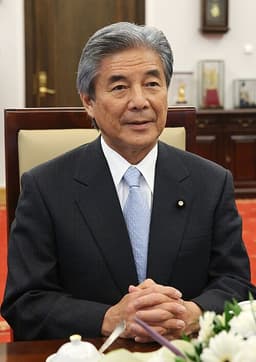
Yasuhiro Nakasone
Politician · Modern
56.2Total
Basic Information
Born
1900
1918
Died
1986
2019
Era
Modern
Modern
Nationality
Finland
Japan
Occupation
Politician
Politician
Civilization
Western
Eastern
Score Comparison
Military (10%)
49.0
11.4
Political (20%)
62.7
72.0
Influence (20%)
72.0
62.0
Legacy (20%)
52.0
52.0
Leadership (15%)
80.7
79.8
Strategy (15%)
42.7
38.2
TOTAL
61.7
56.2
Urho Kekkonen — Complete Timeline
1956 AD
Presidency of Finland (1956-1982)Political Action
Urho Kekkonen was elected President of Finland in 1956 and served for 26 years until 1982, the longest tenure in Finnish history. His presidency was marked by a policy of active neutrality, maintaining friendly relations with the Soviet Union while preserving Finland's independence and democratic system.
PresidencyFinlandLongevity
Impact: national
The 'Kekkonen Doctrine' of NeutralityPolitical Action◆ Major
Kekkonen developed a foreign policy doctrine that emphasized Finland's neutrality in the Cold War, balancing relations with the Soviet Union and the West. He maintained close ties with Moscow through the 1948 Treaty of Friendship, Cooperation, and Mutual Assistance, while also pursuing economic integration with Western Europe.
Foreign PolicyNeutralityCold War
Impact: regionalconstructive
1960 AD
Domestic Political Dominance and the 'Kekkonen System'Political Action◆ Major
Kekkonen consolidated his power through a system of personal influence and coalition-building, often dissolving parliament and calling new elections to achieve his goals. His dominance led to a period of political stability but also criticism of authoritarian tendencies, as he marginalized opponents and controlled foreign policy.
Political SystemFinlandPower
Impact: national
1975 AD
Hosting the Conference on Security and Co-operation in Europe (CSCE)Political Action
Kekkonen hosted the final summit of the Conference on Security and Co-operation in Europe (CSCE) in Helsinki in 1975, which produced the Helsinki Accords. The accords recognized post-war borders in Europe and committed signatories to human rights principles, a landmark achievement in Cold War diplomacy.
DiplomacyCold WarHuman Rights
Impact: globalconstructive
Yasuhiro Nakasone — Complete Timeline
1981 AD
Administrative Reform and Fiscal ReconstructionReform
Nakasone launched a major administrative reform aimed at reducing government spending and streamlining bureaucracy. He established the Second Provisional Commission for Administrative Reform, which recommended cuts to public works, subsidies, and the number of civil servants, contributing to fiscal consolidation.
Administrative ReformFiscal PolicyJapan
Impact: nationalconstructive
1983 AD
Strengthening of the US-Japan AlliancePolitical Action◆ Major
Nakasone deepened the US-Japan security alliance, notably by declaring Japan an 'unsinkable aircraft carrier' and increasing defense spending. He also agreed to share military technology with the US and supported the deployment of US forces in Japan, solidifying the bilateral partnership during the Cold War.
AllianceDefenseCold War
Impact: regionalconstructive
1986 AD
Hosting the 1986 Tokyo SummitPolitical Action
Nakasone hosted the 12th G7 summit in Tokyo in May 1986, where leaders discussed economic coordination, terrorism, and the Chernobyl disaster. The summit enhanced Japan's international profile and showcased Nakasone's leadership on the global stage.
DiplomacyG7International Summit
Impact: global
1987 AD
Privatization of Japanese National RailwaysReform◆ Major
As prime minister, Yasuhiro Nakasone oversaw the privatization of the debt-ridden Japanese National Railways (JNR), splitting it into regional passenger companies and a freight company. The reform, implemented in April 1987, aimed to improve efficiency and service quality, and is credited with revitalizing Japan's railway system.
PrivatizationInfrastructureEconomic Reform
Impact: nationalconstructive
Expert Analysis
Origins
Urho Kekkonen was born in 1900 in Pielavesi, Finland, into a farming family. He studied law at the University of Helsinki, graduating in 1926, and worked as a journalist and lawyer. His early political involvement began with the Agrarian League (later Centre Party), and he served as Minister of Justice in 1936–1937. Kekkonen's formative experiences included Finland's struggle for independence and the Winter War against the Soviet Union in 1939–1940, which shaped his pragmatic view of Finland's eastern neighbor.
Yasuhiro Nakasone was born in 1918 in Takasaki, Japan, into a wealthy merchant family. He studied political science at Tokyo Imperial University, graduating in 1941, and served in the Imperial Japanese Navy during World War II as a supply officer. After the war, he entered politics in 1947 as a member of the Diet, initially affiliated with the conservative Liberal Party. His early career was marked by a focus on constitutional reform and anti-communist sentiment, influenced by Japan's defeat and occupation.
Rise to Power
Kekkonen rose to prominence as a skilled negotiator and politician. He served as Prime Minister of Finland five times between 1950 and 1956, navigating Finland's delicate position between the Soviet Union and the West. His key turning point came in 1956 when he was elected President of Finland, succeeding Juho Kusti Paasikivi. Kekkonen's ability to maintain working relations with Soviet leaders like Nikita Khrushchev secured his position. He used his influence to dissolve parliament and call new elections when needed, consolidating power through the "Kekkonen System" of personal patronage and coalition politics.
Nakasone rose through the ranks of Japan's Liberal Democratic Party (LDP). He held various cabinet posts, including Minister of Transport (1967–1968) and Minister of International Trade and Industry (1972–1974). His rise was accelerated by his association with powerful LDP factions, particularly under Prime Minister Kakuei Tanaka. Nakasone became Prime Minister in November 1982, succeeding Zenko Suzuki. His strong nationalist views and close relationship with US President Ronald Reagan boosted his profile internationally.
Leadership & Governance
Kekkonen's leadership style was autocratic and paternalistic. He centralized decision-making in foreign policy, personally managing Finland's relations with the Soviet Union. Domestically, he maintained power by balancing leftist and rightist factions, often dissolving parliament to achieve his goals. He oversaw economic growth and social welfare expansion, but his governance was criticized for undermining democratic institutions. For example, he used the threat of Soviet intervention to suppress opposition, earning the label "Kekkonen's Finlandization."
Nakasone was a reformist leader with a strong executive style. He pushed for administrative reform, reducing government spending and privatizing state-owned enterprises. His most notable achievement was the privatization of Japanese National Railways (JNR) in 1987, splitting it into regional companies. He also strengthened the US-Japan security alliance, increasing defense spending and allowing US bases. However, his nationalist rhetoric stirred controversy in Asia, particularly regarding Japan's wartime history.
Triumph & Tragedy
Kekkonen's greatest triumph was hosting the Conference on Security and Co-operation in Europe (CSCE) in Helsinki in 1975, which produced the Helsinki Accords. This cemented Finland's role as a neutral mediator between East and West. His tragedy was the erosion of Finnish democracy; his long rule created a system dependent on his personal authority, leading to political stagnation after his resignation due to health in 1982. His total score of 61.7 reflects high leadership (80.7) but lower strategy (42.7) and military (49.0).
Nakasone's triumph was revitalizing Japan's economy through privatization and fiscal reform. JNR privatization reduced deficits and improved efficiency. He also elevated Japan's international status, particularly through his close alliance with Reagan. His tragedy was his failure to address Japan's wartime legacy; his visits to Yasukuni Shrine in 1985–1986 sparked protests from China and Korea, damaging regional relations. His total score of 56.2 shows strong political skill (72.0) but weak military (11.4) and strategy (38.2).
Character & Destiny
Kekkonen was pragmatic, calculating, and secretive. He possessed a deep understanding of power dynamics, using his charm and intelligence to manipulate allies and adversaries. His character shaped Finland's fate: his cautious neutrality kept Finland independent but at the cost of democratic transparency. Historians note that his system was effective during the Cold War but left a legacy of political dependency.
Nakasone was ambitious, confident, and confrontational. He was known for his bold statements and willingness to challenge bureaucratic inertia. His character drove Japan towards a more assertive foreign policy, but his nationalist tendencies limited his long-term impact. He is often seen as a transitional figure who modernized Japan's economy but failed to fully reconcile with the past.
Legacy
Kekkonen's legacy is the Kekkonen Doctrine of neutrality, which allowed Finland to maintain sovereignty and prosper during the Cold War. His impact on Finnish political culture is profound: he is both revered as a statesman and criticized for autocratic tendencies. The Helsinki Accords remain a landmark in human rights and international cooperation. His influence score of 72.0 underscores his lasting effect on Finnish and European history.
Nakasone's legacy includes the privatization of JNR and administrative reforms that streamlined Japan's government. He strengthened the US-Japan alliance, which continues to underpin Japan's security. However, his nationalist symbolism remains contentious. His legacy score is 52.0, reflecting a mixed assessment: he is seen as a reformer but also as a figure who exacerbated regional tensions.
Conclusion
Urho Kekkonen had greater impact than Yasuhiro Nakasone, as reflected in his higher total score of 61.7 versus 56.2. Kekkonen's 26-year presidency shaped Finland's unique Cold War position, ensuring its survival as a neutral, democratic state. His Helsinki Accords contributed to global human rights advancements. Nakasone's reforms were significant but less transformative on a global scale. While both leaders demonstrated strong leadership (80.7 and 79.8 respectively), Kekkonen's influence (72.0) and political acumen (62.7) outpaced Nakasone's. The data supports Kekkonen as the more consequential figure.
Rankings
🥇
Urho KekkonenLeader
Mil: 49.0Pol: 62.7Inf: 72.0
61.7
🥈
Yasuhiro Nakasone
Mil: 11.4Pol: 72.0Inf: 62.0
56.2
+5.5 behind
How This Comparison Works
Algorithm
Each figure is scored on 6 dimensions (0—100 scale) based on structured historical data: Military (10%), Political (20%), Influence (20%), Legacy (20%), Leadership (15%), Strategy (15%). The weighted total produces the final ranking.
Data Sources
Scores are computed from structured sub-indicators in the database. Scale factors adjust for era (Ancient ×0.85, Modern ×1.0) and civilization size (Eastern ×1.05, Other ×0.80) to account for differences in population and military scale.
Maximum 3 Figures
Comparisons are limited to 2—3 figures to ensure readability and statistical meaningfulness.
Error Margins
±5 points per dimension — Sub-scores are derived from historical records with inherent uncertainty. Two figures within 5 points on a dimension should be considered roughly equivalent in that area.
Total Score Accuracy
±3 points overall — The weighted combination of 6 dimensions produces a total score with approximately ±3 points of uncertainty. Differences of less than 3 points are not statistically significant— the figures are effectively tied.
Known Limitations
- Historical records are incomplete and uneven across civilizations
- Figures from oral-tradition societies may be underrepresented
- Occupation labels can misclassify multi-role figures
- Scores measure capability and impact, not moral character
- Quantitative scoring is a comparison tool, not absolute truth
Capability Radar
Military (10%) — Battles & Warfare
Battles
29
15
Win Rate
33
18
Expansion
35
21
Political (20%) — Governance & Reform
Reform
75
70
Diplomacy
90
80
Economy
70
60
Influence (20%) — Cultural & Global Reach
Cultural
60
40
Global
65
60
Legacy (20%) — Historical Impact
Historical
70
55
Longevity
65
45
Leadership (15%) — Power & Stability
Tenure
85
65
Stability
85
65
Strategy (15%) — Tactics & Innovation
Strategy
40
23
Tactics
42
24
Reform
42
26
Similar Comparisons
Comments & Discussion
No comments yet. Be the first to share your thoughts!