Loading...
Andrew Fisher vs Yasuhiro Nakasone
Yasuhiro Nakasone leads by 5.5 pts · 2 figures compared
…

Andrew Fisher
Politician · Modern
50.7Total
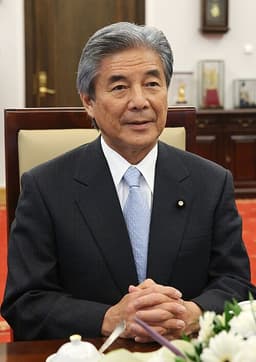
Yasuhiro Nakasone
Politician · Modern
56.2Total
Basic Information
Born
1862
1918
Died
1928
2019
Era
Modern
Modern
Nationality
Australia
Japan
Occupation
Politician
Politician
Civilization
Western
Eastern
Score Comparison
Military (10%)
50.0
11.4
Political (20%)
45.0
72.0
Influence (20%)
53.3
62.0
Legacy (20%)
45.0
52.0
Leadership (15%)
68.0
79.8
Strategy (15%)
42.0
38.2
TOTAL
50.7
56.2
Andrew Fisher — Complete Timeline
1908 AD
First Term as Prime Minister (1908-1909)Political Action◆ Major
Andrew Fisher became Prime Minister of Australia for the first time on November 13, 1908, leading a minority Labor government. His government lasted only seven months before losing a vote of confidence, but it laid the groundwork for future Labor reforms.
Prime MinistershipLabor GovernmentFirst Term
Impact: national
1910 AD
Second Term as Prime Minister (1910-1913)Political Action◆ Major
Fisher led the Labor Party to victory in the 1910 federal election, winning a majority in both houses of parliament. His government enacted significant reforms, including the establishment of the Commonwealth Bank, old-age pensions, and a progressive land tax.
Election VictoryLabor GovernmentSocial Reforms
Impact: nationalconstructive
1911 AD
Introduction of the Commonwealth Bank ActReform◆ Major
Fisher's government passed the Commonwealth Bank Act in 1911, establishing the Commonwealth Bank of Australia as a government-owned bank. The bank was designed to provide banking services to the public and to manage the nation's finances, a key Labor reform.
Banking ReformCommonwealth BankLabor Policy
Impact: nationalconstructive
1914 AD
Third Term as Prime Minister and World War I LeadershipWar◆ Major
Fisher became Prime Minister for the third time in September 1914, shortly after the outbreak of World War I. He led Australia into the war, pledging support to Britain and overseeing the initial mobilization of Australian forces, including the Australian Imperial Force.
World War IWar LeadershipMobilization
Impact: global
1915 AD
Resignation as Prime MinisterPolitical Action◆ Major
Fisher resigned as Prime Minister on October 27, 1915, to become the Australian High Commissioner to the United Kingdom. His resignation was partly due to the strains of war leadership and internal party divisions over conscription.
ResignationHigh CommissionerWorld War I
Impact: national
Yasuhiro Nakasone — Complete Timeline
1981 AD
Administrative Reform and Fiscal ReconstructionReform
Nakasone launched a major administrative reform aimed at reducing government spending and streamlining bureaucracy. He established the Second Provisional Commission for Administrative Reform, which recommended cuts to public works, subsidies, and the number of civil servants, contributing to fiscal consolidation.
Administrative ReformFiscal PolicyJapan
Impact: nationalconstructive
1983 AD
Strengthening of the US-Japan AlliancePolitical Action◆ Major
Nakasone deepened the US-Japan security alliance, notably by declaring Japan an 'unsinkable aircraft carrier' and increasing defense spending. He also agreed to share military technology with the US and supported the deployment of US forces in Japan, solidifying the bilateral partnership during the Cold War.
AllianceDefenseCold War
Impact: regionalconstructive
1986 AD
Hosting the 1986 Tokyo SummitPolitical Action
Nakasone hosted the 12th G7 summit in Tokyo in May 1986, where leaders discussed economic coordination, terrorism, and the Chernobyl disaster. The summit enhanced Japan's international profile and showcased Nakasone's leadership on the global stage.
DiplomacyG7International Summit
Impact: global
1987 AD
Privatization of Japanese National RailwaysReform◆ Major
As prime minister, Yasuhiro Nakasone oversaw the privatization of the debt-ridden Japanese National Railways (JNR), splitting it into regional passenger companies and a freight company. The reform, implemented in April 1987, aimed to improve efficiency and service quality, and is credited with revitalizing Japan's railway system.
PrivatizationInfrastructureEconomic Reform
Impact: nationalconstructive
Expert Analysis
Origins
Andrew Fisher was born on August 29, 1862, in Crosshouse, Scotland, into a coal mining family. He began working in the mines at age 10 and emigrated to Australia in 1885, settling in Queensland. Fisher became a union leader and entered politics as a Labor member of the Queensland Parliament in 1893. His humble origins shaped his commitment to workers' rights and social reform.
Yasuhiro Nakasone was born on May 27, 1918, in Takasaki, Japan, to a wealthy sake-brewing family. He studied political science at Tokyo Imperial University and entered the Home Ministry in 1941. After World War II, he was elected to the Diet in 1947 as a member of the Liberal Party. His background in bureaucracy and conservative politics influenced his pragmatic, reformist approach.
Rise to Power
Fisher rose through the ranks of the Australian Labor Party, becoming a minister in the short-lived 1904 Watson government. He became Prime Minister for the first time in 1908, leading a minority government. His decisive moment came in 1910 when he led Labor to a historic majority in both houses, enabling his reform agenda. He returned to power in 1914 as World War I began, pledging Australia's full support to Britain.
Nakasone's rise was gradual. He held various ministerial posts including Transport, Defense, and International Trade. He became Prime Minister in November 1982 after winning the Liberal Democratic Party leadership. His tenure was marked by close ties with U.S. President Ronald Reagan, and he leveraged Japan's economic strength to assert a greater international role.
Leadership & Governance
Fisher's leadership focused on social welfare and national development. His government established the Commonwealth Bank in 1911, created a progressive land tax, introduced old-age pensions, and expanded the navy. During WWI, he mobilized the economy for war and implemented conscription for overseas service, a deeply divisive issue that split the Labor Party.
Nakasone was a reformist leader who pushed for privatization and deregulation. He privatized Japanese National Railways in 1987, splitting it into regional companies. He also reformed the healthcare system and reduced government spending. On foreign policy, he strengthened the US-Japan alliance, increasing defense spending and allowing technology transfers to the US. His leadership score of 79.8 reflects his decisive style.
Triumph & Tragedy
Fisher's greatest triumph was the establishment of the Commonwealth Bank, which provided stable currency and credit. His government also introduced the first federal old-age pension. However, his push for conscription in WWI failed in two referendums and deeply divided the nation, leading to his resignation in 1915. His political score of 45.0 reflects these mixed outcomes.
Nakasone's triumphs include successful privatization and improving Japan's global standing. The 1986 Tokyo Summit showcased Japan's economic leadership. However, his legacy is marred by the Plaza Accord in 1985, which led to a soaring yen and contributed to Japan's asset bubble. His strategy score of 38.2 indicates shortcomings in economic management.
Character & Destiny
Fisher was principled and idealistic, dedicated to social justice. His Scottish Presbyterian upbringing instilled a sense of duty. He was a skilled orator but struggled with the compromises of wartime leadership. His character led him to prioritize national unity over political survival, ultimately resigning rather than compromise his beliefs.
Nakasone was pragmatic and ambitious, with a flair for international diplomacy. He was known as a 'weathercock' for his ability to adapt to changing political winds. His close relationship with Reagan boosted Japan's security role but also drew criticism for excessive deference. His leadership score of 79.8 reflects his effectiveness, but his strategic decisions had long-term costs.
Legacy
Fisher's legacy is the foundation of Australia's social welfare system and the Commonwealth Bank, which later became a central bank. He is remembered as a key figure in early Australian nation-building. His influence score of 53.3 reflects his domestic impact.
Nakasone's legacy includes the privatization of state-owned enterprises and a more assertive Japanese foreign policy. He set a precedent for prime ministerial leadership in economic reform. His legacy score of 52.0 indicates lasting influence, particularly in US-Japan relations.
Conclusion
Andrew Fisher scored 50.7 total, while Yasuhiro Nakasone scored 56.2. Nakasone had higher political and leadership scores, reflecting his longer tenure and successful reforms. Fisher's impact was more foundational but limited by early 20th-century constraints. Nakasone's modernization of Japan's economy and alliance with the US had global repercussions. Therefore, Yasuhiro Nakasone had greater overall impact.
Rankings
🥇
Yasuhiro NakasoneLeader
Mil: 11.4Pol: 72.0Inf: 62.0
56.2
🥈
Andrew Fisher
Mil: 50.0Pol: 45.0Inf: 53.3
50.7
+5.5 behind
How This Comparison Works
Algorithm
Each figure is scored on 6 dimensions (0—100 scale) based on structured historical data: Military (10%), Political (20%), Influence (20%), Legacy (20%), Leadership (15%), Strategy (15%). The weighted total produces the final ranking.
Data Sources
Scores are computed from structured sub-indicators in the database. Scale factors adjust for era (Ancient ×0.85, Modern ×1.0) and civilization size (Eastern ×1.05, Other ×0.80) to account for differences in population and military scale.
Maximum 3 Figures
Comparisons are limited to 2—3 figures to ensure readability and statistical meaningfulness.
Error Margins
±5 points per dimension — Sub-scores are derived from historical records with inherent uncertainty. Two figures within 5 points on a dimension should be considered roughly equivalent in that area.
Total Score Accuracy
±3 points overall — The weighted combination of 6 dimensions produces a total score with approximately ±3 points of uncertainty. Differences of less than 3 points are not statistically significant— the figures are effectively tied.
Known Limitations
- Historical records are incomplete and uneven across civilizations
- Figures from oral-tradition societies may be underrepresented
- Occupation labels can misclassify multi-role figures
- Scores measure capability and impact, not moral character
- Quantitative scoring is a comparison tool, not absolute truth
Capability Radar
Military (10%) — Battles & Warfare
Battles
32
15
Win Rate
29
18
Expansion
32
21
Political (20%) — Governance & Reform
Reform
65
70
Diplomacy
60
80
Economy
55
60
Influence (20%) — Cultural & Global Reach
Cultural
30
40
Global
30
60
Legacy (20%) — Historical Impact
Historical
40
55
Longevity
30
45
Leadership (15%) — Power & Stability
Tenure
55
65
Stability
50
65
Strategy (15%) — Tactics & Innovation
Strategy
36
23
Tactics
43
24
Reform
42
26
Similar Comparisons
Comments & Discussion
No comments yet. Be the first to share your thoughts!