Loading...
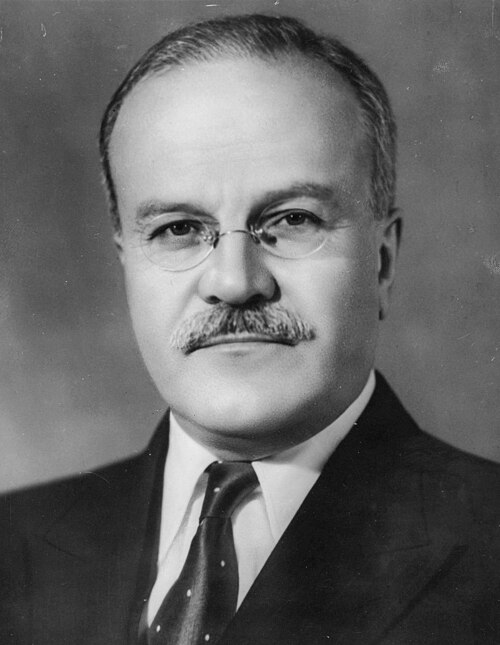
Vyacheslav Molotov
ModernPoliticianRussia1890 — 1986
Stalin foreign minister and architect of the Molotov-Ribbentrop Pact.
Compare Vyacheslav Molotov with another historical figure:
Quick Facts
Born
1890
Died
1986
Country
Russia
Era
Modern
Occupation
Politician
Score Overview
Military (10%)50
Political (20%)70
Influence (20%)62
Legacy (20%)55
Leadership (15%)72
Strategy (15%)43
Total Score59.9
Vyacheslav Molotov — Complete Timeline
1939 AD
Signing of the Molotov-Ribbentrop PactPolitical Action
As Soviet Foreign Minister, Molotov signed the Molotov-Ribbentrop Pact with Nazi Germany on August 23, 1939. The non-aggression treaty included secret protocols dividing Eastern Europe into spheres of influence, enabling the Soviet invasion of Poland and Baltic states.
World War IIDiplomacyNazi-Soviet Pact
Impact: global
Appointment as Foreign MinisterPolitical Action◆ Major
Molotov was appointed People's Commissar for Foreign Affairs in May 1939, replacing Maxim Litvinov. He served as Stalin's chief diplomat during World War II and the early Cold War, representing the Soviet Union at major conferences including Tehran, Yalta, and Potsdam.
Soviet DiplomacyWorld War IIAppointment
Impact: global
1945 AD
Role in the Potsdam ConferencePolitical Action◆ Major
Molotov attended the Potsdam Conference in July-August 1945 as part of the Soviet delegation. He participated in negotiations on post-war Europe, including the division of Germany, reparations, and the establishment of communist governments in Eastern Europe.
World War IIPost-WarDiplomacy
Impact: global
1962 AD
Expulsion from the Communist PartyPolitical Action◆ Major
After Stalin's death, Molotov opposed Khrushchev's de-Stalinization policies. He was expelled from the Communist Party in 1962 for factional activity, ending his political career. He was later readmitted in 1984 but never regained influence.
De-StalinizationKhrushchevExpulsion
Impact: nationaldestructive
Detailed Scores
▶View all detailed scores
Military
Strategy
6
Tactics
5
Battles
6
Army Scale
5
War Impact
6
Political
Governance
7
Reform
7
Stability
7
Policy
8
Power
8
Influence
History
9
Global
8
Culture
9
Ideology
9
Legacy
8
People often compare with
See how Vyacheslav Molotov stacks up against other historical figures
Popular Comparisons
Vyacheslav Molotov vs Oliver Tambo
vs Oliver Tambo61
Vyacheslav Molotov vs Guillermo Endara
vs Guillermo Endara52
Vyacheslav Molotov vs Irfaan Ali
vs Irfaan Ali50
Vyacheslav Molotov vs Daniel Salamanca
vs Daniel Salamanca44
Vyacheslav Molotov vs Hua Guofeng
vs Hua Guofeng41
Vyacheslav Molotov vs U Ottama
vs U Ottama40