Loading...
This comparison has not been analyzed yet.
One-time AI generation (~1 minute). Scores and timeline are already available below.
Oliver Tambo vs Vyacheslav Molotov
Oliver Tambo leads by 1.0 pts · 2 figures compared
…
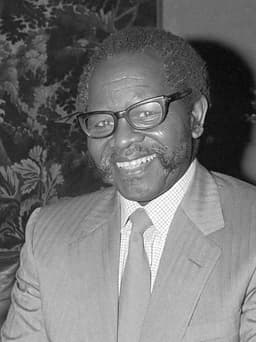
Oliver Tambo
Politician · Modern
60.9Total
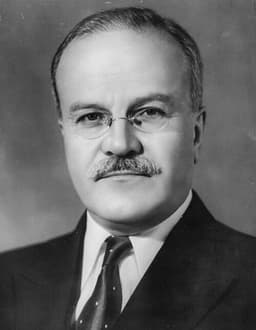
Vyacheslav Molotov
Politician · Modern
59.9Total
Basic Information
Born
1917
1890
Died
1993
1986
Era
Modern
Modern
Nationality
South Africa
Russia
Occupation
Politician
Politician
Civilization
Other
Western
Score Comparison
Military (10%)
37.0
50.0
Political (20%)
70.0
70.0
Influence (20%)
82.0
62.0
Legacy (20%)
40.0
55.0
Leadership (15%)
79.8
72.0
Strategy (15%)
42.2
43.1
TOTAL
60.9
59.9
Oliver Tambo — Complete Timeline
1960 AD
Co-founded the Anti-Apartheid MovementPolitical Action◆ Major
Tambo helped establish the international Anti-Apartheid Movement, which lobbied governments and organizations to impose sanctions on South Africa. This campaign was crucial in isolating the apartheid regime.
SanctionsInternationalAnti-Apartheid
Impact: globalconstructive
1967 AD
Elected ANC President in ExilePolitical Action◆ Major
Tambo was elected President of the ANC after the death of Chief Albert Luthuli. He led the organization from exile in Zambia and London, building international support and coordinating the anti-apartheid struggle.
ANCExileLeadership
Impact: globalconstructive
1990 AD
Returned to South AfricaPolitical Action◆ Major
Tambo returned to South Africa after 30 years in exile, following the unbanning of the ANC. He was greeted as a hero and continued to lead the ANC until his health declined, handing over to Nelson Mandela.
ReturnTransitionANC
Impact: nationalconstructive
Vyacheslav Molotov — Complete Timeline
1939 AD
Signing of the Molotov-Ribbentrop PactPolitical Action
As Soviet Foreign Minister, Molotov signed the Molotov-Ribbentrop Pact with Nazi Germany on August 23, 1939. The non-aggression treaty included secret protocols dividing Eastern Europe into spheres of influence, enabling the Soviet invasion of Poland and Baltic states.
World War IIDiplomacyNazi-Soviet Pact
Impact: global
Appointment as Foreign MinisterPolitical Action◆ Major
Molotov was appointed People's Commissar for Foreign Affairs in May 1939, replacing Maxim Litvinov. He served as Stalin's chief diplomat during World War II and the early Cold War, representing the Soviet Union at major conferences including Tehran, Yalta, and Potsdam.
Soviet DiplomacyWorld War IIAppointment
Impact: global
1945 AD
Role in the Potsdam ConferencePolitical Action◆ Major
Molotov attended the Potsdam Conference in July-August 1945 as part of the Soviet delegation. He participated in negotiations on post-war Europe, including the division of Germany, reparations, and the establishment of communist governments in Eastern Europe.
World War IIPost-WarDiplomacy
Impact: global
1962 AD
Expulsion from the Communist PartyPolitical Action◆ Major
After Stalin's death, Molotov opposed Khrushchev's de-Stalinization policies. He was expelled from the Communist Party in 1962 for factional activity, ending his political career. He was later readmitted in 1984 but never regained influence.
De-StalinizationKhrushchevExpulsion
Impact: nationaldestructive
This comparison has not been analyzed yet.
One-time AI generation (~1 minute). Scores and timeline are already available below.
Rankings
🥇
Oliver TamboLeader
Mil: 37.0Pol: 70.0Inf: 82.0
60.9
🥈
Vyacheslav Molotov
Mil: 50.0Pol: 70.0Inf: 62.0
59.9
+1.0 behind
How This Comparison Works
Algorithm
Each figure is scored on 6 dimensions (0—100 scale) based on structured historical data: Military (10%), Political (20%), Influence (20%), Legacy (20%), Leadership (15%), Strategy (15%). The weighted total produces the final ranking.
Data Sources
Scores are computed from structured sub-indicators in the database. Scale factors adjust for era (Ancient ×0.85, Modern ×1.0) and civilization size (Eastern ×1.05, Other ×0.80) to account for differences in population and military scale.
Maximum 3 Figures
Comparisons are limited to 2—3 figures to ensure readability and statistical meaningfulness.
Error Margins
±5 points per dimension — Sub-scores are derived from historical records with inherent uncertainty. Two figures within 5 points on a dimension should be considered roughly equivalent in that area.
Total Score Accuracy
±3 points overall — The weighted combination of 6 dimensions produces a total score with approximately ±3 points of uncertainty. Differences of less than 3 points are not statistically significant— the figures are effectively tied.
Known Limitations
- Historical records are incomplete and uneven across civilizations
- Figures from oral-tradition societies may be underrepresented
- Occupation labels can misclassify multi-role figures
- Scores measure capability and impact, not moral character
- Quantitative scoring is a comparison tool, not absolute truth
Capability Radar
Military (10%) — Battles & Warfare
Battles
22
31
Win Rate
23
31
Expansion
27
32
Political (20%) — Governance & Reform
Reform
85
60
Diplomacy
90
90
Economy
40
55
Influence (20%) — Cultural & Global Reach
Cultural
65
30
Global
75
70
Legacy (20%) — Historical Impact
Historical
80
75
Longevity
75
65
Leadership (15%) — Power & Stability
Tenure
60
85
Stability
70
40
Strategy (15%) — Tactics & Innovation
Strategy
30
39
Tactics
34
43
Reform
37
43
Similar Comparisons
Comments & Discussion
No comments yet. Be the first to share your thoughts!