Loading...
Hua Guofeng vs Vyacheslav Molotov
Vyacheslav Molotov leads by 19.2 pts · 2 figures compared
…

Hua Guofeng
Politician · Modern
40.7Total
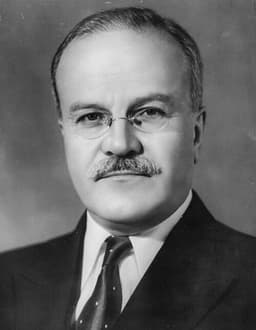
Vyacheslav Molotov
Politician · Modern
59.9Total
Basic Information
Born
1921
1890
Died
—
1986
Era
Modern
Modern
Nationality
China
Russia
Occupation
Politician
Politician
Civilization
Eastern
Western
Score Comparison
Military (10%)
10.9
50.0
Political (20%)
32.2
70.0
Influence (20%)
50.2
62.0
Legacy (20%)
40.0
55.0
Leadership (15%)
62.2
72.0
Strategy (15%)
28.7
43.1
TOTAL
40.7
59.9
Hua Guofeng — Complete Timeline
1976 AD
Appointed Premier of the People's Republic of ChinaPolitical Action◆ Major
Hua Guofeng succeeded Zhou Enlai as Premier. He was Mao's chosen successor and became the paramount leader after Mao's death, overseeing the arrest of the Gang of Four.
PremiershipSuccession
Impact: national
Arrest of the Gang of FourPolitical Action
Hua Guofeng, with support from Ye Jianying and others, ordered the arrest of the Gang of Four. This ended the Cultural Revolution and led to the rehabilitation of Deng Xiaoping.
Cultural RevolutionPower Struggle
Impact: nationalconstructive
1977 AD
Promoted the 'Two Whatevers' PolicyPolitical Action◆ Major
Hua Guofeng advocated the 'Two Whatevers' policy, which stated that whatever Mao had decided must be upheld. This policy was later criticized by Deng Xiaoping as hindering reform.
IdeologyMaoism
Impact: national
1981 AD
Ousted from Power by Deng XiaopingPolitical Action◆ Major
Hua Guofeng was gradually sidelined by Deng Xiaoping and his allies. He resigned as party chairman and premier, losing all effective power, though he retained a seat on the Central Committee.
Power StruggleReform Era
Impact: national
Vyacheslav Molotov — Complete Timeline
1939 AD
Signing of the Molotov-Ribbentrop PactPolitical Action
As Soviet Foreign Minister, Molotov signed the Molotov-Ribbentrop Pact with Nazi Germany on August 23, 1939. The non-aggression treaty included secret protocols dividing Eastern Europe into spheres of influence, enabling the Soviet invasion of Poland and Baltic states.
World War IIDiplomacyNazi-Soviet Pact
Impact: global
Appointment as Foreign MinisterPolitical Action◆ Major
Molotov was appointed People's Commissar for Foreign Affairs in May 1939, replacing Maxim Litvinov. He served as Stalin's chief diplomat during World War II and the early Cold War, representing the Soviet Union at major conferences including Tehran, Yalta, and Potsdam.
Soviet DiplomacyWorld War IIAppointment
Impact: global
1945 AD
Role in the Potsdam ConferencePolitical Action◆ Major
Molotov attended the Potsdam Conference in July-August 1945 as part of the Soviet delegation. He participated in negotiations on post-war Europe, including the division of Germany, reparations, and the establishment of communist governments in Eastern Europe.
World War IIPost-WarDiplomacy
Impact: global
1962 AD
Expulsion from the Communist PartyPolitical Action◆ Major
After Stalin's death, Molotov opposed Khrushchev's de-Stalinization policies. He was expelled from the Communist Party in 1962 for factional activity, ending his political career. He was later readmitted in 1984 but never regained influence.
De-StalinizationKhrushchevExpulsion
Impact: nationaldestructive
Expert Analysis
Origins
Hua Guofeng was born in 1921 in Shanxi province, China, into a peasant family. He joined the Chinese Communist Party (CCP) in 1938 and worked in local party organizations, gaining experience in rural administration. His early career was marked by loyalty to Mao Zedong's policies, particularly during the Cultural Revolution. In contrast, Vyacheslav Molotov was born in 1890 in Kukarka, Russia, to a middle-class family. He joined the Bolsheviks in 1906 and became a key figure in the party apparatus, serving as a close associate of Stalin. Molotov's early career included work as a journalist and party organizer, and he rose through the ranks due to his administrative skills and unwavering loyalty to Stalin.
Rise to Power
Hua Guofeng's rise was meteoric during the Cultural Revolution. He became governor of Hunan province in 1970 and was appointed Premier of the People's Republic of China in 1976 after Zhou Enlai's death. Mao personally selected Hua as his successor, stating, "With you in charge, I am at ease." Hua's key turning point was ordering the arrest of the Gang of Four in October 1976, which ended the Cultural Revolution. Molotov's rise was more gradual. He became a member of the Politburo in 1926 and was appointed Chairman of the Council of People's Commissars (Premier) in 1930, a role he held until 1941. However, his most significant rise came when he became Foreign Minister in 1939, replacing Maxim Litvinov. Molotov's key turning point was signing the Molotov-Ribbentrop Pact with Nazi Germany in August 1939, which included secret protocols dividing Eastern Europe.
Leadership & Governance
Hua Guofeng's leadership style was cautious and conservative. He promoted the 'Two Whatevers' policy, which stated that whatever Mao had decided must be upheld. This approach aimed to maintain continuity but stifled reform. Hua's governance focused on economic recovery after the Cultural Revolution, but he lacked the vision to address deep-seated problems. His score in leadership is 62.2, reflecting his transitional role. Molotov, with a leadership score of 72.0, was a more decisive and experienced administrator. As Foreign Minister, he implemented Stalin's foreign policy, including the Nazi-Soviet Pact and post-war negotiations. Molotov's governance was characterized by rigid adherence to party line, but he also demonstrated skill in diplomacy, attending conferences like Potsdam. However, his support for Stalin's purges and opposition to de-Stalinization after Stalin's death showed his inflexibility.
Triumph & Tragedy
Hua Guofeng's greatest triumph was the arrest of the Gang of Four, which ended the Cultural Revolution and paved the way for reforms. This action earned him initial popularity. However, his greatest tragedy was his adherence to the 'Two Whatevers', which led to his political downfall. Deng Xiaoping and his allies criticized this policy, and Hua was gradually sidelined, resigning as party chairman in 1981. Molotov's triumph was his role in Soviet diplomacy during World War II, particularly the alliance with the Western powers and participation in the Yalta and Potsdam conferences. His tragedy was his expulsion from the Communist Party in 1962 for opposing Khrushchev's de-Stalinization. Molotov's loyalty to Stalin's legacy made him a relic in the post-Stalin era.
Character & Destiny
Hua Guofeng was a loyal but uncharismatic leader. His character was shaped by his peasant background and bureaucratic experience, leading him to avoid risks. This caution, while ensuring stability, also prevented him from adapting to changing circumstances. His destiny was to be a transitional figure, overshadowed by Deng Xiaoping. Molotov, in contrast, was a hardline ideologue known as "Comrade Iron Ass" for his stubbornness. His character of unwavering loyalty to Stalin defined his career. Molotov's destiny was to be a key implementer of Stalinist policies but also a victim of the system when it changed. Historical assessments often view Molotov as a capable but morally compromised functionary.
Legacy
Hua Guofeng's legacy is mixed. He is credited with ending the Cultural Revolution but criticized for the 'Two Whatevers'. His influence score of 50.2 reflects his brief impact. The arrest of the Gang of Four allowed Deng Xiaoping's reforms, but Hua himself had little lasting influence. Molotov's legacy is more substantial. His scores: influence 62.0, legacy 55.0. The Molotov-Ribbentrop Pact shaped the early stages of WWII, and his diplomatic work defined Soviet foreign policy for decades. The term "Molotov cocktail" originates from his name, though he did not invent it. Molotov's legacy is also tainted by his association with Stalin's purges.
Conclusion
Vyacheslav Molotov had a greater impact on history than Hua Guofeng. Molotov's total score of 59.9 exceeds Hua's 40.7 by 19.2 points. While Hua's arrest of the Gang of Four was a pivotal moment for China, his influence was brief and transitional. Molotov, however, shaped Soviet foreign policy during critical periods: the Nazi-Soviet Pact, WWII alliances, and post-war order. His decisions affected millions directly and had long-term geopolitical consequences. Hua's leadership score (62.2) is lower than Molotov's (72.0), and his political score (32.2) is far below Molotov's (70.0). Thus, Molotov's role as a key architect of Soviet policy gives him greater historical significance.
Rankings
🥇
Vyacheslav MolotovLeader
Mil: 50.0Pol: 70.0Inf: 62.0
59.9
🥈
Hua Guofeng
Mil: 10.9Pol: 32.2Inf: 50.2
40.7
+19.2 behind
How This Comparison Works
Algorithm
Each figure is scored on 6 dimensions (0—100 scale) based on structured historical data: Military (10%), Political (20%), Influence (20%), Legacy (20%), Leadership (15%), Strategy (15%). The weighted total produces the final ranking.
Data Sources
Scores are computed from structured sub-indicators in the database. Scale factors adjust for era (Ancient ×0.85, Modern ×1.0) and civilization size (Eastern ×1.05, Other ×0.80) to account for differences in population and military scale.
Maximum 3 Figures
Comparisons are limited to 2—3 figures to ensure readability and statistical meaningfulness.
Error Margins
±5 points per dimension — Sub-scores are derived from historical records with inherent uncertainty. Two figures within 5 points on a dimension should be considered roughly equivalent in that area.
Total Score Accuracy
±3 points overall — The weighted combination of 6 dimensions produces a total score with approximately ±3 points of uncertainty. Differences of less than 3 points are not statistically significant— the figures are effectively tied.
Known Limitations
- Historical records are incomplete and uneven across civilizations
- Figures from oral-tradition societies may be underrepresented
- Occupation labels can misclassify multi-role figures
- Scores measure capability and impact, not moral character
- Quantitative scoring is a comparison tool, not absolute truth
Capability Radar
Military (10%) — Battles & Warfare
Battles
15
31
Win Rate
18
31
Expansion
22
32
Political (20%) — Governance & Reform
Reform
20
60
Diplomacy
25
90
Economy
20
55
Influence (20%) — Cultural & Global Reach
Cultural
15
30
Global
15
70
Legacy (20%) — Historical Impact
Historical
20
75
Longevity
10
65
Leadership (15%) — Power & Stability
Tenure
30
85
Stability
30
40
Strategy (15%) — Tactics & Innovation
Strategy
25
39
Tactics
25
43
Reform
29
43
Similar Comparisons
Comments & Discussion
No comments yet. Be the first to share your thoughts!