Loading...
Irfaan Ali vs Vyacheslav Molotov
Vyacheslav Molotov leads by 9.5 pts · 2 figures compared
…

Irfaan Ali
Politician · Modern
50.4Total
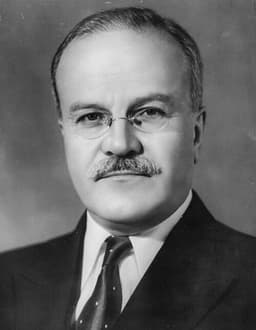
Vyacheslav Molotov
Politician · Modern
59.9Total
Basic Information
Born
1980
1890
Died
—
1986
Era
Modern
Modern
Nationality
Guyana
Russia
Occupation
Politician
Politician
Civilization
Other
Western
Score Comparison
Military (10%)
29.3
50.0
Political (20%)
68.0
70.0
Influence (20%)
52.5
62.0
Legacy (20%)
40.8
55.0
Leadership (15%)
64.0
72.0
Strategy (15%)
43.7
43.1
TOTAL
50.4
59.9
Irfaan Ali — Complete Timeline
2020 AD
President of GuyanaPolitical Action◆ Major
Irfaan Ali became President of Guyana after a contentious election process that involved a five-month delay and international scrutiny. His victory ended the long tenure of the APNU+AFC coalition and marked a return to PPP/C rule.
PresidencyElectionPolitical Change
Impact: nationalconstructive
Management of the Oil BoomPolitical Action◆ Major
Ali oversaw the management of Guyana's oil boom following the discovery of massive offshore oil reserves by ExxonMobil. His government negotiated production sharing agreements and established a sovereign wealth fund to manage revenues.
OilEconomyResource Management
Impact: nationalconstructive
Venezuelan Border DisputePolitical Action◆ Major
Ali faced an escalation of the long-standing border dispute with Venezuela over the Essequibo region. He sought international arbitration and support from the International Court of Justice, while Venezuela claimed the territory.
Border DisputeVenezuelaInternational Law
Impact: regional
COVID-19 Pandemic ResponsePolitical Action◆ Major
Ali implemented measures to combat the COVID-19 pandemic, including lockdowns, vaccination drives, and economic support. The response was praised for its effectiveness, though the opposition criticized some restrictions.
PandemicPublic HealthEconomic Policy
Impact: nationalconstructive
2021 AD
Infrastructure Development ProjectsReform◆ Major
Ali launched major infrastructure projects, including road construction, bridge building, and energy expansion, funded by oil revenues. The projects aimed to improve connectivity and boost economic growth, but faced delays and cost overruns.
InfrastructureDevelopmentInvestment
Impact: nationalconstructive
Vyacheslav Molotov — Complete Timeline
1939 AD
Signing of the Molotov-Ribbentrop PactPolitical Action
As Soviet Foreign Minister, Molotov signed the Molotov-Ribbentrop Pact with Nazi Germany on August 23, 1939. The non-aggression treaty included secret protocols dividing Eastern Europe into spheres of influence, enabling the Soviet invasion of Poland and Baltic states.
World War IIDiplomacyNazi-Soviet Pact
Impact: global
Appointment as Foreign MinisterPolitical Action◆ Major
Molotov was appointed People's Commissar for Foreign Affairs in May 1939, replacing Maxim Litvinov. He served as Stalin's chief diplomat during World War II and the early Cold War, representing the Soviet Union at major conferences including Tehran, Yalta, and Potsdam.
Soviet DiplomacyWorld War IIAppointment
Impact: global
1945 AD
Role in the Potsdam ConferencePolitical Action◆ Major
Molotov attended the Potsdam Conference in July-August 1945 as part of the Soviet delegation. He participated in negotiations on post-war Europe, including the division of Germany, reparations, and the establishment of communist governments in Eastern Europe.
World War IIPost-WarDiplomacy
Impact: global
1962 AD
Expulsion from the Communist PartyPolitical Action◆ Major
After Stalin's death, Molotov opposed Khrushchev's de-Stalinization policies. He was expelled from the Communist Party in 1962 for factional activity, ending his political career. He was later readmitted in 1984 but never regained influence.
De-StalinizationKhrushchevExpulsion
Impact: nationaldestructive
Expert Analysis
Origins
Irfaan Ali was born in 1980 in Guyana, a small South American nation. He grew up in a politically active family and earned a PhD in urban planning from the University of the West Indies. His early career included roles in the private sector and local government, shaping his focus on development and management. In contrast, Vyacheslav Molotov was born in 1890 in the Russian Empire. He joined the Bolsheviks in 1906 and became a close associate of Stalin, rising through party ranks. His early experiences in revolutionary politics and organization laid the groundwork for his later diplomatic career.
Rise to Power
Ali rose to prominence through the People's Progressive Party (PPP), winning a parliamentary seat in 2006. After a contentious 2020 general election marked by a five-month delay and international scrutiny, he became President. His victory hinged on the PPP's strong base and the promise of managing newfound oil wealth. Molotov's rise was more dramatic: he became a member of the Politburo in 1926 and was appointed Foreign Minister in 1939, replacing Litvinov. His loyalty to Stalin was key, and he orchestrated the Molotov-Ribbentrop Pact with Nazi Germany, a turning point that expanded Soviet influence.
Leadership & Governance
As president, Ali focused on managing Guyana's oil boom. His government negotiated production-sharing agreements with ExxonMobil, aiming to maximize revenue. He launched infrastructure projects like road construction and bridge building, funded by oil revenues. However, critics pointed to a lack of transparency in contract awards. Molotov, as Stalin's foreign minister, was a rigid executor of policy. He represented the USSR at the Potsdam Conference and helped shape post-war Europe. His leadership style was bureaucratic and loyal, but he lacked independent initiative, often simply implementing Stalin's directives. Molotov's political score of 70.0 reflects his effectiveness within the Soviet system, while Ali's 68.0 shows his adept handling of domestic politics.
Triumph & Tragedy
Ali's greatest triumph is managing the initial phase of Guyana's oil boom. The country's GDP soared, and he secured international support in the border dispute with Venezuela. His COVID-19 response was praised for its effectiveness. However, his failure to ensure equitable distribution of oil wealth led to rising inequality and allegations of corruption. The opposition criticized his authoritarian tendencies. Molotov's triumph was the Molotov-Ribbentrop Pact, which bought time for the USSR and allowed it to reclaim territories. His tragedy came after Stalin's death: he opposed Khrushchev's de-Stalinization and was expelled from the party in 1962, ending his career in disgrace. His legacy score of 55.0 reflects his mixed impact.
Character & Destiny
Ali is pragmatic and detail-oriented, traits that helped him navigate a contentious election and manage complex oil negotiations. However, his cautious approach sometimes led to indecisiveness. His destiny is tied to Guyana's oil wealth: if managed well, he could be remembered as a transformative leader; if mismanaged, as a cautionary tale. Molotov was stubborn and ideologically rigid, earning the nickname "Stone Ass" for his tenacity. His loyalty to Stalin ensured his rise but also his fall when he failed to adapt. His character was shaped by the Soviet system, and his destiny was to be a loyal servant who outlived his usefulness.
Legacy
Ali's legacy is still in the making. His policies will determine whether Guyana escapes the resource curse. He has set precedents for oil governance and international arbitration. Molotov's legacy is more defined: the Molotov-Ribbentrop Pact remains a symbol of cynical diplomacy. His name is also attached to the Molotov cocktail, a crude incendiary weapon. He is remembered as a key architect of Soviet foreign policy during its most expansionist phase. In terms of historical impact, Molotov scored 62.0 in influence and 55.0 in legacy, while Ali scored 52.5 and 40.8 respectively.
Conclusion
While Irfaan Ali has skillfully managed Guyana's oil boom and navigated a border crisis, his impact is limited to a small nation and a short time frame. Vyacheslav Molotov, despite his fall from grace, played a central role in shaping the 20th century through the Nazi-Soviet pact and post-war negotiations. His influence on global geopolitics is far greater. Therefore, Molotov had a greater historical impact, as reflected in his higher total score of 59.9 versus Ali's 50.4.
Rankings
🥇
Vyacheslav MolotovLeader
Mil: 50.0Pol: 70.0Inf: 62.0
59.9
🥈
Irfaan Ali
Mil: 29.3Pol: 68.0Inf: 52.5
50.4
+9.5 behind
How This Comparison Works
Algorithm
Each figure is scored on 6 dimensions (0—100 scale) based on structured historical data: Military (10%), Political (20%), Influence (20%), Legacy (20%), Leadership (15%), Strategy (15%). The weighted total produces the final ranking.
Data Sources
Scores are computed from structured sub-indicators in the database. Scale factors adjust for era (Ancient ×0.85, Modern ×1.0) and civilization size (Eastern ×1.05, Other ×0.80) to account for differences in population and military scale.
Maximum 3 Figures
Comparisons are limited to 2—3 figures to ensure readability and statistical meaningfulness.
Error Margins
±5 points per dimension — Sub-scores are derived from historical records with inherent uncertainty. Two figures within 5 points on a dimension should be considered roughly equivalent in that area.
Total Score Accuracy
±3 points overall — The weighted combination of 6 dimensions produces a total score with approximately ±3 points of uncertainty. Differences of less than 3 points are not statistically significant— the figures are effectively tied.
Known Limitations
- Historical records are incomplete and uneven across civilizations
- Figures from oral-tradition societies may be underrepresented
- Occupation labels can misclassify multi-role figures
- Scores measure capability and impact, not moral character
- Quantitative scoring is a comparison tool, not absolute truth
Capability Radar
Military (10%) — Battles & Warfare
Battles
20
31
Win Rate
24
31
Expansion
27
32
Political (20%) — Governance & Reform
Reform
40
60
Diplomacy
55
90
Economy
60
55
Influence (20%) — Cultural & Global Reach
Cultural
20
30
Global
35
70
Legacy (20%) — Historical Impact
Historical
25
75
Longevity
20
65
Leadership (15%) — Power & Stability
Tenure
30
85
Stability
45
40
Strategy (15%) — Tactics & Innovation
Strategy
32
39
Tactics
33
43
Reform
35
43
Similar Comparisons
Comments & Discussion
No comments yet. Be the first to share your thoughts!