Loading...
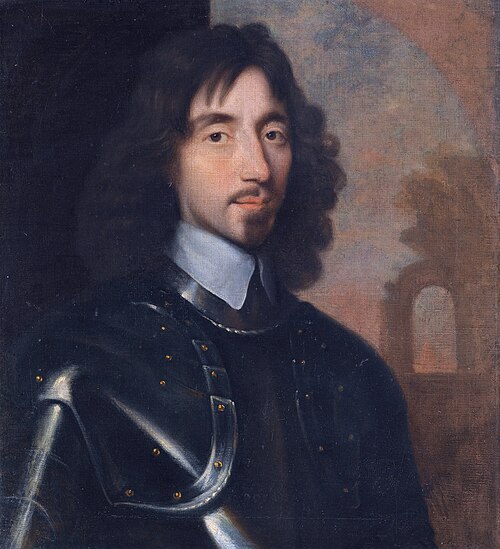
Thomas Fairfax
ModernGeneralEngland1612 — 1671
Commander-in-chief of the New Model Army.
Compare Thomas Fairfax with another historical figure:
Quick Facts
Born
1612
Died
1671
Country
England
Era
Modern
Occupation
General
Score Overview
Military (10%)62
Political (20%)68
Influence (20%)58
Legacy (20%)55
Leadership (15%)72
Strategy (15%)75
Total Score63.0
Thomas Fairfax — Complete Timeline
1645 AD
Battle of NasebyWar
Fairfax led the New Model Army to a decisive victory over King Charles I's forces at Naseby. The battle destroyed the main Royalist army and effectively decided the First English Civil War in favor of Parliament.
English Civil WarBattleDecisive Victory
Impact: national
Appointed Commander-in-Chief of the New Model ArmyPolitical Action◆ Major
Fairfax was appointed commander-in-chief of the New Model Army, a professional army created by Parliament to fight the Royalists. This appointment placed him at the head of the most effective military force in England during the First English Civil War.
English Civil WarMilitary CommandParliament
Impact: national
1646 AD
Siege of OxfordWar◆ Major
Fairfax commanded the siege of Oxford, the Royalist capital. The city surrendered, and King Charles I fled, effectively ending the First English Civil War. Fairfax treated the defeated Royalists with moderation.
English Civil WarSiegeRoyalist Defeat
Impact: national
1647 AD
Refused to Arrest the Five MembersPolitical Action
Fairfax refused orders from the Army Council to arrest five Presbyterian members of Parliament who were critical of the army. This action demonstrated his independence from radical army factions and his commitment to parliamentary authority.
English Civil WarPolitical CrisisArmy-Parliament Relations
Impact: national
1650 AD
Resigned as Commander-in-ChiefPolitical Action◆ Major
Fairfax resigned his commission as commander-in-chief of the New Model Army rather than lead an invasion of Scotland to suppress the Scottish Covenanters who had proclaimed Charles II as king. He cited his conscience and opposition to preemptive war.
English Civil WarResignationConscience
Impact: national
1660 AD
Led the Restoration Delegation to Charles IIPolitical Action◆ Major
Fairfax led a parliamentary delegation to The Hague to invite Charles II to return as king, restoring the monarchy. He played a key role in the peaceful Restoration, helping to avoid further civil war.
RestorationMonarchyPolitical Transition
Impact: nationalconstructive
Detailed Scores
▶View all detailed scores
Military
Strategy
7
Tactics
7
Battles
7
Army Scale
7
War Impact
7
Political
Governance
7
Reform
7
Stability
7
Policy
8
Power
7
Influence
History
9
Global
8
Culture
9
Ideology
9
Legacy
9
People often compare with
See how Thomas Fairfax stacks up against other historical figures
Popular Comparisons
Thomas Fairfax vs Louis-Alexandre Berthier
vs Louis-Alexandre Berthier61
Thomas Fairfax vs Maeda Toshiie
vs Maeda Toshiie60
Thomas Fairfax vs Shang Kexi
vs Shang Kexi55
Thomas Fairfax vs William Halsey
vs William Halsey54
Thomas Fairfax vs Agustin Pedro Justo
vs Agustin Pedro Justo48