Loading...
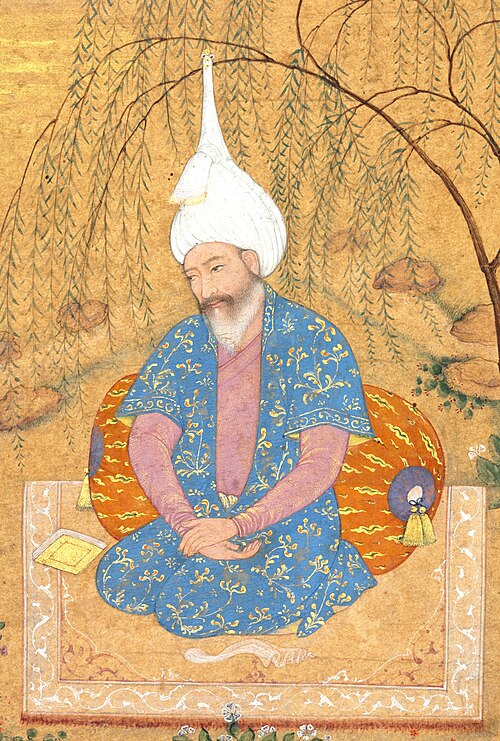
Tahmasp I
ModernEmperorPersia1514 — 1576
Safavid shah who hosted the exiled Mughal Humayun.
Compare Tahmasp I with another historical figure:
Quick Facts
Born
1514
Died
1576
Country
Persia
Era
Modern
Occupation
Emperor
Score Overview
Military (10%)70
Political (20%)70
Influence (20%)62
Legacy (20%)52
Leadership (15%)72
Strategy (15%)50
Total Score61.8
Tahmasp I — Complete Timeline
1526 AD
Suppressed the Qizilbash RevoltsWar◆ Major
Tahmasp I faced multiple revolts by the Qizilbash tribal forces who had supported the Safavid rise. He suppressed these rebellions, executing several Qizilbash leaders and reducing their political influence, thereby consolidating royal authority and centralizing power.
Internal ConflictQizilbashCentralization
Impact: nationaldestructive
1544 AD
Hosted Humayun in ExilePolitical Action◆ Major
Tahmasp I provided refuge to the Mughal emperor Humayun after his defeat by Sher Shah Suri. Humayun stayed at the Safavid court for over a year, and Tahmasp provided military support for Humayun's reconquest of India, strengthening Safavid-Mughal relations.
DiplomacyMughal-Safavid RelationsExile
Impact: regionalconstructive
1548 AD
Relocated Capital to QazvinPolitical Action
Tahmasp I moved the Safavid capital from Tabriz to Qazvin to distance the court from Ottoman threats and to better control the northern provinces. This relocation shifted the political center of the empire and influenced subsequent Safavid administrative policies.
Capital RelocationAdministration
Impact: national
1555 AD
Treaty of AmasyaWar◆ Major
Tahmasp I signed the Treaty of Amasya with the Ottoman Empire, ending decades of war. The treaty established a border dividing Georgia and Armenia between the two empires, with the Ottomans gaining Iraq and the Safavids retaining Azerbaijan and the Caucasus. This peace lasted for over 20 years.
Ottoman-Safavid WarsTreatyPeace
Impact: regional
Detailed Scores
▶View all detailed scores
Military
Strategy
7
Tactics
6
Battles
7
Army Scale
6
War Impact
7
Political
Governance
7
Reform
7
Stability
7
Policy
8
Power
8
Influence
History
8
Global
8
Culture
8
Ideology
9
Legacy
8
People often compare with
See how Tahmasp I stacks up against other historical figures
Popular Comparisons
Tahmasp I vs Osei Kofi Tutu I
vs Osei Kofi Tutu I63
Tahmasp I vs Sigismund II Augustus
vs Sigismund II Augustus60
Tahmasp I vs Marthanda Varma
vs Marthanda Varma59
Tahmasp I vs Chithira Thirunal
vs Chithira Thirunal58
Tahmasp I vs Charles Augustus of Saxe-Weimar
vs Charles Augustus of Saxe-Weimar56
Tahmasp I vs Sunjong of Korea
vs Sunjong of Korea49