Loading...
Sunjong of Korea vs Tahmasp I
Tahmasp I leads by 13.0 pts · 2 figures compared
…

Sunjong of Korea
Emperor · Modern
48.8Total
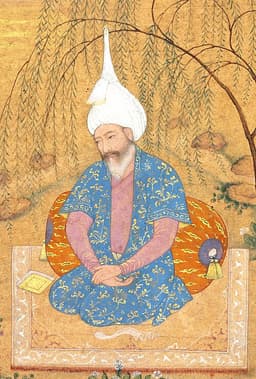
Tahmasp I
Emperor · Modern
61.8Total
Basic Information
Born
1874
1514
Died
1926
1576
Era
Modern
Modern
Nationality
Korea
Persia
Occupation
Emperor
Emperor
Civilization
Eastern
Middle Eastern
Score Comparison
Military (10%)
53.5
70.0
Political (20%)
48.0
70.0
Influence (20%)
47.1
62.0
Legacy (20%)
35.8
52.0
Leadership (15%)
58.8
72.0
Strategy (15%)
66.8
50.0
TOTAL
48.8
61.8
Sunjong of Korea — Complete Timeline
1907 AD
Accession as Emperor of KoreaPolitical Action◆ Major
Sunjong became the last emperor of Korea after his father Gojong was forced to abdicate by Japan. His reign was largely ceremonial, with real power held by the Japanese Resident-General. He was a symbolic figurehead during the final years of Korean sovereignty.
AccessionKorean EmpireJapanese Control
Impact: national
1910 AD
Signing of the Japan-Korea Annexation TreatyPolitical Action
Sunjong was forced to sign the treaty that formally annexed Korea into the Japanese Empire. The treaty ended the Korean Empire and Joseon dynasty, beginning 35 years of Japanese colonial rule. Sunjong was stripped of all political power and reduced to a figurehead.
AnnexationJapanese Colonial RuleEnd of Dynasty
Impact: nationaltragic
1926 AD
Death of SunjongOther◆ Major
Sunjong died at Changdeokgung Palace, marking the end of the Joseon royal line. His funeral was a major event that sparked renewed Korean nationalist sentiment, though it was heavily monitored by Japanese authorities. He was the last Korean monarch.
DeathEnd of MonarchyKorean Nationalism
Impact: nationaltragic
Tahmasp I — Complete Timeline
1526 AD
Suppressed the Qizilbash RevoltsWar◆ Major
Tahmasp I faced multiple revolts by the Qizilbash tribal forces who had supported the Safavid rise. He suppressed these rebellions, executing several Qizilbash leaders and reducing their political influence, thereby consolidating royal authority and centralizing power.
Internal ConflictQizilbashCentralization
Impact: nationaldestructive
1544 AD
Hosted Humayun in ExilePolitical Action◆ Major
Tahmasp I provided refuge to the Mughal emperor Humayun after his defeat by Sher Shah Suri. Humayun stayed at the Safavid court for over a year, and Tahmasp provided military support for Humayun's reconquest of India, strengthening Safavid-Mughal relations.
DiplomacyMughal-Safavid RelationsExile
Impact: regionalconstructive
1548 AD
Relocated Capital to QazvinPolitical Action
Tahmasp I moved the Safavid capital from Tabriz to Qazvin to distance the court from Ottoman threats and to better control the northern provinces. This relocation shifted the political center of the empire and influenced subsequent Safavid administrative policies.
Capital RelocationAdministration
Impact: national
1555 AD
Treaty of AmasyaWar◆ Major
Tahmasp I signed the Treaty of Amasya with the Ottoman Empire, ending decades of war. The treaty established a border dividing Georgia and Armenia between the two empires, with the Ottomans gaining Iraq and the Safavids retaining Azerbaijan and the Caucasus. This peace lasted for over 20 years.
Ottoman-Safavid WarsTreatyPeace
Impact: regional
Expert Analysis
Origins
Sunjong of Korea (1874–1926) was the last emperor of the Korean Empire, born as the fourth son of Emperor Gojong and Empress Myeongseong. He received a traditional Confucian education but was overshadowed by his father's assertive rule and the growing influence of Japan. Sunjong's early life was marked by the political turmoil of late Joseon, including the assassination of his mother in 1895 by Japanese agents. He ascended the throne in 1907 after Gojong was forced to abdicate, but his reign was largely ceremonial, with real power held by Japanese residents.
Tahmasp I (1514–1576) was the second shah of the Safavid Empire, born to Shah Ismail I and a Circassian mother. He grew up in a warrior court, learning military tactics and statecraft from a young age. After his father's death in 1524, Tahmasp faced a regency dominated by Qizilbash tribal leaders, which shaped his later distrust of the military elite. His early years were fraught with internal rebellions and external threats from the Ottoman Empire and the Uzbeks.
Rise to Power
Sunjong became emperor under duress in July 1907, after Japan forced Gojong to abdicate following the Hague Secret Emissary Affair. Sunjong's accession was part of Japan's plan to control Korea through a pliable figurehead. He had no real authority; his government was overseen by the Japanese Resident-General, first Itō Hirobumi and later others. Sunjong's reign was dominated by the signing of unequal treaties, culminating in the Japan-Korea Annexation Treaty of 1910, which he was compelled to endorse.
Tahmasp I ascended the throne at age 10 after his father's death in 1524. His early reign was controlled by Qizilbash regents, but he gradually asserted his authority. By the late 1520s, he had suppressed key Qizilbash leaders, including the powerful governor of Khorasan. His rise culminated in the defeat of the Uzbeks at the Battle of Jam in 1528, where he personally led forces. Tahmasp's consolidation of power involved executing rivals and centralizing authority, setting the stage for his long reign.
Leadership & Governance
Sunjong's leadership was passive and symbolic. He had no control over policy, as Japan dictated all major decisions. His governance score of 48.0 reflects his inability to enact reforms or resist annexation. Sunjong focused on cultural patronage, such as supporting traditional Confucian rituals, but his reign saw the dismantling of Korean sovereignty. He was a figurehead who could not prevent the dissolution of his army (military score 53.5, largely inherited) or the colonization of his country.
Tahmasp I, with a leadership score of 72.0, governed actively despite early regency. He moved the capital from Tabriz to Qazvin in 1548 to distance the court from Ottoman threats and better control the north. He reformed the bureaucracy, reducing Qizilbash influence by promoting Persian administrators. He also oversaw the construction of palaces, mosques, and roads, fostering trade and culture. However, his reign was marked by religious intolerance, forcing Sunnis to convert to Shia Islam, which caused unrest.
Triumph & Tragedy
Sunjong's greatest success was maintaining the Korean imperial lineage until his death in 1926, but this was largely passive. His failure was total: the loss of Korean independence under his watch. The Japan-Korea Annexation Treaty of 1910 ended the Korean Empire, and Sunjong's subsequent life was spent in confinement at Changdeokgung Palace. His death sparked nationalist protests, but he left no political legacy. His total score of 48.8 reflects his lack of agency.
Tahmasp I's triumphs include the Treaty of Amasya (1555) with the Ottoman Empire, which secured peace for over 20 years and established a border that lasted centuries. He also hosted the exiled Mughal emperor Humayun in 1544, providing military support that helped Humayun reclaim his throne, strengthening Safavid-Mughal ties. His tragedy was the suppression of the Qizilbash revolts, which weakened the tribal base of the Safavid military. Additionally, his son and successor, Ismail II, was a cruel ruler, partly due to Tahmasp's harsh upbringing. Tahmasp's military score of 70.0 and political score of 70.0 demonstrate his effectiveness.
Character & Destiny
Sunjong was described as gentle and scholarly, but indecisive and weak-willed. His character made him ill-suited to resist Japanese aggression. He suffered from health issues, including blindness in later years, and his destiny was to be the last emperor of a dynasty that had ruled for 500 years. His fate was sealed by the geopolitical forces of imperialism, but his passivity contributed to his failure.
Tahmasp I was cautious, suspicious, and pragmatic. He learned from his father's mistakes—Ismail I's aggressive policies led to Ottoman retaliation—so Tahmasp pursued diplomacy when possible. However, his paranoia led to the execution of many officials and family members. His character shaped a reign that was stable but repressive. He died in 1576, possibly poisoned, leaving a strong but brittle empire.
Legacy
Sunjong's legacy is as a symbol of Korea's colonial tragedy. He is remembered in Korea as the last Joseon monarch, but his reign is seen as a period of national humiliation. His influence score of 47.1 and legacy score of 35.8 are low; he had little lasting impact beyond being a cautionary figure. The Korean independence movement drew strength from his funeral, but his direct contributions were minimal.
Tahmasp I's legacy is more substantial. The Treaty of Amasya defined Ottoman-Safavid borders for decades. His patronage of the arts, including the development of Persian miniature painting, left a cultural mark. He strengthened the Safavid state by centralizing power and reducing tribal influence. His legacy score of 52.0 reflects his mixed but notable impact. The Safavid Empire under his rule became a more stable entity, though religious repression sowed seeds of future conflict.
Conclusion
Tahmasp I had a significantly greater impact than Sunjong, as reflected in his total score of 61.8 versus Sunjong's 48.8. Tahmasp actively shaped his empire through military victories (70.0), political consolidation (70.0), and diplomatic achievements. Sunjong was a passive figure whose reign was a footnote in Korea's colonization. While both faced overwhelming external pressures, Tahmasp navigated them with agency, whereas Sunjong was a victim of circumstances. The data supports the conclusion that Tahmasp I was the more consequential ruler.
Rankings
🥇
Tahmasp ILeader
Mil: 70.0Pol: 70.0Inf: 62.0
61.8
🥈
Sunjong of Korea
Mil: 53.5Pol: 48.0Inf: 47.1
48.8
+13.0 behind
How This Comparison Works
Algorithm
Each figure is scored on 6 dimensions (0—100 scale) based on structured historical data: Military (10%), Political (20%), Influence (20%), Legacy (20%), Leadership (15%), Strategy (15%). The weighted total produces the final ranking.
Data Sources
Scores are computed from structured sub-indicators in the database. Scale factors adjust for era (Ancient ×0.85, Modern ×1.0) and civilization size (Eastern ×1.05, Other ×0.80) to account for differences in population and military scale.
Maximum 3 Figures
Comparisons are limited to 2—3 figures to ensure readability and statistical meaningfulness.
Error Margins
±5 points per dimension — Sub-scores are derived from historical records with inherent uncertainty. Two figures within 5 points on a dimension should be considered roughly equivalent in that area.
Total Score Accuracy
±3 points overall — The weighted combination of 6 dimensions produces a total score with approximately ±3 points of uncertainty. Differences of less than 3 points are not statistically significant— the figures are effectively tied.
Known Limitations
- Historical records are incomplete and uneven across civilizations
- Figures from oral-tradition societies may be underrepresented
- Occupation labels can misclassify multi-role figures
- Scores measure capability and impact, not moral character
- Quantitative scoring is a comparison tool, not absolute truth
Capability Radar
Military (10%) — Battles & Warfare
Battles
51
65
Win Rate
58
70
Expansion
58
50
Political (20%) — Governance & Reform
Reform
0
70
Diplomacy
5
75
Economy
0
60
Influence (20%) — Cultural & Global Reach
Cultural
5
60
Global
5
50
Legacy (20%) — Historical Impact
Historical
10
65
Longevity
5
55
Leadership (15%) — Power & Stability
Tenure
5
85
Stability
0
65
Strategy (15%) — Tactics & Innovation
Strategy
61
65
Tactics
65
60
Reform
65
55
Similar Comparisons
Comments & Discussion
No comments yet. Be the first to share your thoughts!