Loading...
This comparison has not been analyzed yet.
One-time AI generation (~1 minute). Scores and timeline are already available below.
Osei Kofi Tutu I vs Tahmasp I
Osei Kofi Tutu I leads by 0.8 pts · 2 figures compared
…

Osei Kofi Tutu I
Emperor · Modern
62.6Total
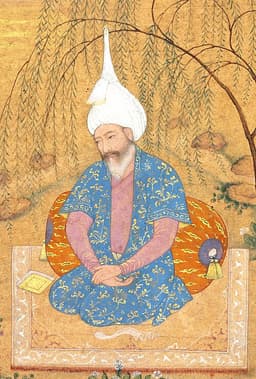
Tahmasp I
Emperor · Modern
61.8Total
Basic Information
Born
1660
1514
Died
1717
1576
Era
Modern
Modern
Nationality
Ashanti Empire
Persia
Occupation
Emperor
Emperor
Civilization
Other
Middle Eastern
Score Comparison
Military (10%)
74.7
70.0
Political (20%)
62.7
70.0
Influence (20%)
72.0
62.0
Legacy (20%)
40.0
52.0
Leadership (15%)
78.0
72.0
Strategy (15%)
60.7
50.0
TOTAL
62.6
61.8
Osei Kofi Tutu I — Complete Timeline
1701 AD
Battle of FeyiaseWar◆ Major
Osei Tutu I led Ashanti forces to victory against the Denkyira kingdom at the Battle of Feyiase. This defeat of Denkyira, the dominant regional power, established Ashanti as the leading state in the region and marked the beginning of Ashanti expansion.
BattleAshanti ExpansionDenkyira
Impact: regionalconstructive
Formation of the Ashanti UnionPolitical Action◆ Major
Osei Tutu I, with the help of his priest Okomfo Anokye, united several Akan states into the Ashanti Union. This political consolidation created a powerful centralized kingdom under the Golden Stool as a symbol of unity and authority.
UnificationAshanti EmpireGolden Stool
Impact: regionalconstructive
Introduction of the Golden StoolCultural◆ Major
Okomfo Anokye, under Osei Tutu's direction, presented the Golden Stool as the divine symbol of the Ashanti nation. The stool was said to have descended from the sky, representing the soul of the Ashanti people and legitimizing Osei Tutu's rule.
Golden StoolSymbolismAshanti Nation
Impact: nationalconstructive
1717 AD
Death at the Battle of AkyemWar◆ Major
Osei Tutu I was killed in battle while fighting against the Akyem people. His death was a significant loss for the Ashanti, but his legacy as the founder of the empire endured.
Death in BattleAkyemAshanti
Impact: nationaltragic
Tahmasp I — Complete Timeline
1526 AD
Suppressed the Qizilbash RevoltsWar◆ Major
Tahmasp I faced multiple revolts by the Qizilbash tribal forces who had supported the Safavid rise. He suppressed these rebellions, executing several Qizilbash leaders and reducing their political influence, thereby consolidating royal authority and centralizing power.
Internal ConflictQizilbashCentralization
Impact: nationaldestructive
1544 AD
Hosted Humayun in ExilePolitical Action◆ Major
Tahmasp I provided refuge to the Mughal emperor Humayun after his defeat by Sher Shah Suri. Humayun stayed at the Safavid court for over a year, and Tahmasp provided military support for Humayun's reconquest of India, strengthening Safavid-Mughal relations.
DiplomacyMughal-Safavid RelationsExile
Impact: regionalconstructive
1548 AD
Relocated Capital to QazvinPolitical Action
Tahmasp I moved the Safavid capital from Tabriz to Qazvin to distance the court from Ottoman threats and to better control the northern provinces. This relocation shifted the political center of the empire and influenced subsequent Safavid administrative policies.
Capital RelocationAdministration
Impact: national
1555 AD
Treaty of AmasyaWar◆ Major
Tahmasp I signed the Treaty of Amasya with the Ottoman Empire, ending decades of war. The treaty established a border dividing Georgia and Armenia between the two empires, with the Ottomans gaining Iraq and the Safavids retaining Azerbaijan and the Caucasus. This peace lasted for over 20 years.
Ottoman-Safavid WarsTreatyPeace
Impact: regional
This comparison has not been analyzed yet.
One-time AI generation (~1 minute). Scores and timeline are already available below.
Rankings
🥇
Osei Kofi Tutu ILeader
Mil: 74.7Pol: 62.7Inf: 72.0
62.6
🥈
Tahmasp I
Mil: 70.0Pol: 70.0Inf: 62.0
61.8
+0.8 behind
How This Comparison Works
Algorithm
Each figure is scored on 6 dimensions (0—100 scale) based on structured historical data: Military (10%), Political (20%), Influence (20%), Legacy (20%), Leadership (15%), Strategy (15%). The weighted total produces the final ranking.
Data Sources
Scores are computed from structured sub-indicators in the database. Scale factors adjust for era (Ancient ×0.85, Modern ×1.0) and civilization size (Eastern ×1.05, Other ×0.80) to account for differences in population and military scale.
Maximum 3 Figures
Comparisons are limited to 2—3 figures to ensure readability and statistical meaningfulness.
Error Margins
±5 points per dimension — Sub-scores are derived from historical records with inherent uncertainty. Two figures within 5 points on a dimension should be considered roughly equivalent in that area.
Total Score Accuracy
±3 points overall — The weighted combination of 6 dimensions produces a total score with approximately ±3 points of uncertainty. Differences of less than 3 points are not statistically significant— the figures are effectively tied.
Known Limitations
- Historical records are incomplete and uneven across civilizations
- Figures from oral-tradition societies may be underrepresented
- Occupation labels can misclassify multi-role figures
- Scores measure capability and impact, not moral character
- Quantitative scoring is a comparison tool, not absolute truth
Capability Radar
Military (10%) — Battles & Warfare
Battles
70
65
Win Rate
75
70
Expansion
75
50
Political (20%) — Governance & Reform
Reform
80
70
Diplomacy
75
75
Economy
65
60
Influence (20%) — Cultural & Global Reach
Cultural
75
60
Global
60
50
Legacy (20%) — Historical Impact
Historical
80
65
Longevity
75
55
Leadership (15%) — Power & Stability
Tenure
70
85
Stability
70
65
Strategy (15%) — Tactics & Innovation
Strategy
70
65
Tactics
65
60
Reform
60
55
Similar Comparisons
Comments & Discussion
No comments yet. Be the first to share your thoughts!