Loading...
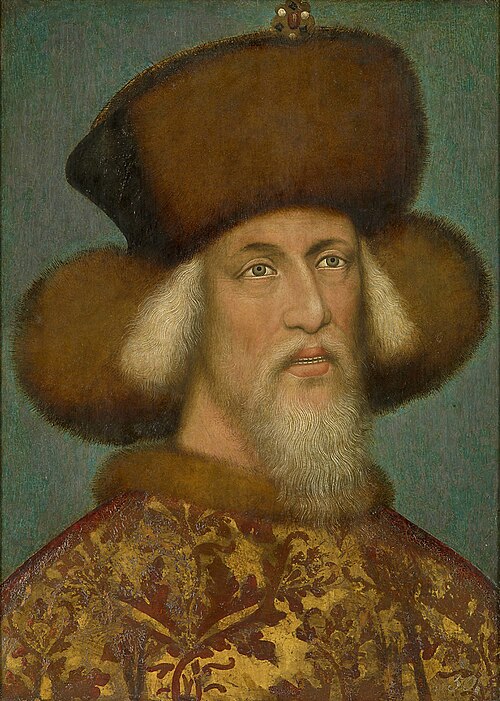
Sigismund
MedievalEmperorHoly Roman Empire1368 — 1437
Emperor who ended the Western Schism and fought Hussites.
Compare Sigismund with another historical figure:
Quick Facts
Born
1368
Died
1437
Country
Holy Roman Empire
Era
Medieval
Occupation
Emperor
Score Overview
Military (10%)40
Political (20%)63
Influence (20%)60
Legacy (20%)56
Leadership (15%)74
Strategy (15%)43
Total Score57.8
Sigismund — Complete Timeline
1414 AD
Council of ConstancePolitical Action
Sigismund convened the Council of Constance to end the Western Schism, which had three rival popes. The council deposed all three and elected Pope Martin V, ending the schism. Sigismund played a key role in securing the council's success, though he failed to prevent the execution of Jan Hus.
Council of ConstanceWestern SchismChurch Reform
Impact: globalconstructive
1415 AD
Execution of Jan HusPolitical Action◆ Major
Despite Sigismund's promise of safe conduct to Jan Hus to attend the Council of Constance, Hus was arrested, tried for heresy, and burned at the stake. Sigismund's failure to protect Hus damaged his reputation and sparked the Hussite Wars in Bohemia, which would plague his reign.
Jan HusHeresyHussite Wars
Impact: regionaltragic
1419 AD
Hussite WarsWar◆ Major
Following the death of Wenceslaus IV, Sigismund claimed the throne of Bohemia, but the Hussites refused to accept him as king. This led to a series of military campaigns known as the Hussite Wars. Sigismund led several crusades against the Hussites but was repeatedly defeated by their innovative tactics under Jan
Hussite WarsCrusadeMilitary Conflict
Impact: regionaldestructive
1433 AD
Coronation as Holy Roman EmperorPolitical Action◆ Major
Sigismund was crowned Holy Roman Emperor by Pope Eugene IV in Rome, becoming the last emperor to be crowned in the city. This coronation marked the formal end of the Western Schism and solidified Sigismund's position as the leading secular ruler in Europe.
CoronationImperial AuthorityPapacy
Impact: globalconstructive
1436 AD
Compact of BaselPolitical Action◆ Major
Sigismund negotiated the Compact of Basel with the moderate Hussites (Utraquists), granting them the right to receive communion under both kinds. This agreement temporarily ended the Hussite Wars and allowed Sigismund to finally be recognized as King of Bohemia, though the peace was fragile.
Compact of BaselHussite WarsReligious Tolerance
Impact: regionalconstructive
Detailed Scores
▶View all detailed scores
Military
Strategy
7
Tactics
7
Battles
7
Army Scale
6
War Impact
7
Political
Governance
6
Reform
7
Stability
6
Policy
7
Power
7
Influence
History
9
Global
8
Culture
8
Ideology
9
Legacy
8
People often compare with
See how Sigismund stacks up against other historical figures
Popular Comparisons
Sigismund vs Timur
vs Timur66
Sigismund vs Govinda III
vs Govinda III64
Sigismund vs Al-Nasir
vs Al-Nasir60
Sigismund vs Chungnyeol of Goryeo
vs Chungnyeol of Goryeo52
Sigismund vs Tervel of Bulgaria
vs Tervel of Bulgaria47
Sigismund vs Sarki Kanta Kotal
vs Sarki Kanta Kotal45