Loading...
Al-Nasir vs Sigismund
Al-Nasir leads by 2.5 pts · 2 figures compared
…
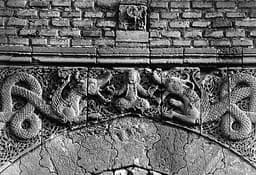
Al-Nasir
Emperor · Medieval
60.3Total
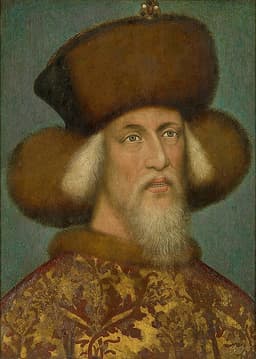
Sigismund
Emperor · Medieval
57.8Total
Basic Information
Born
1158
1368
Died
1225
1437
Era
Medieval
Medieval
Nationality
Abbasid Caliphate
Holy Roman Empire
Occupation
Emperor
Emperor
Civilization
Middle Eastern
Western
Score Comparison
Military (10%)
70.0
40.0
Political (20%)
60.0
62.7
Influence (20%)
60.0
60.0
Legacy (20%)
52.0
56.0
Leadership (15%)
72.0
74.0
Strategy (15%)
55.0
43.3
TOTAL
60.3
57.8
Al-Nasir — Complete Timeline
1180 AD
Restoration of Caliphal PowerPolitical Action
Al-Nasir began his reign by consolidating caliphal power in Baghdad and reducing the influence of the Seljuk sultan. He reorganized the administration and built a strong military, laying the foundation for a revived caliphate.
Caliphal RevivalConsolidationBaghdad
Impact: regionalconstructive
1194 AD
Conflict with the Khwarezmian EmpireWar◆ Major
Al-Nasir allied with the Ghurids against the Khwarezmian Empire, which had become a major power. The conflict weakened the Khwarezmians but also drained caliphal resources, leading to a stalemate.
Khwarezmian WarGhurid AlliancePower Struggle
Impact: regional
1207 AD
Reform of the Futuwwa OrdersReform◆ Major
Al-Nasir reformed the futuwwa (chivalric) orders, incorporating them into the caliphal administration. He made himself the supreme head of the futuwwa, using it to spread caliphal influence across the Islamic world.
FutuwwaReformCaliphal Influence
Impact: regionalconstructive
1210 AD
Suppression of the IsmailisPolitical Action◆ Major
Al-Nasir launched a campaign against the Ismaili sect in the mountains of Iran, destroying their fortresses. This action aimed to eliminate a rival religious and political force and assert Sunni orthodoxy.
Ismaili SuppressionReligious CampaignSunni Orthodoxy
Impact: regionaldestructive
1217 AD
Diplomatic Overtures to the MongolsPolitical Action◆ Major
Al-Nasir sent an embassy to the Mongol ruler Genghis Khan, seeking an alliance against the Khwarezmian Empire. This diplomatic move failed to prevent the Mongol invasion of the Islamic world.
Mongol DiplomacyGenghis KhanAlliance Attempt
Impact: global
1225 AD
Death and LegacyOther◆ Major
Al-Nasir died after a 45-year reign, leaving the caliphate stronger than it had been for centuries. His policies restored caliphal authority in Iraq and expanded its influence, but the Mongol threat loomed.
DeathLegacyCaliphal Revival
Impact: regionalconstructive
Sigismund — Complete Timeline
1414 AD
Council of ConstancePolitical Action
Sigismund convened the Council of Constance to end the Western Schism, which had three rival popes. The council deposed all three and elected Pope Martin V, ending the schism. Sigismund played a key role in securing the council's success, though he failed to prevent the execution of Jan Hus.
Council of ConstanceWestern SchismChurch Reform
Impact: globalconstructive
1415 AD
Execution of Jan HusPolitical Action◆ Major
Despite Sigismund's promise of safe conduct to Jan Hus to attend the Council of Constance, Hus was arrested, tried for heresy, and burned at the stake. Sigismund's failure to protect Hus damaged his reputation and sparked the Hussite Wars in Bohemia, which would plague his reign.
Jan HusHeresyHussite Wars
Impact: regionaltragic
1419 AD
Hussite WarsWar◆ Major
Following the death of Wenceslaus IV, Sigismund claimed the throne of Bohemia, but the Hussites refused to accept him as king. This led to a series of military campaigns known as the Hussite Wars. Sigismund led several crusades against the Hussites but was repeatedly defeated by their innovative tactics under Jan
Hussite WarsCrusadeMilitary Conflict
Impact: regionaldestructive
1433 AD
Coronation as Holy Roman EmperorPolitical Action◆ Major
Sigismund was crowned Holy Roman Emperor by Pope Eugene IV in Rome, becoming the last emperor to be crowned in the city. This coronation marked the formal end of the Western Schism and solidified Sigismund's position as the leading secular ruler in Europe.
CoronationImperial AuthorityPapacy
Impact: globalconstructive
1436 AD
Compact of BaselPolitical Action◆ Major
Sigismund negotiated the Compact of Basel with the moderate Hussites (Utraquists), granting them the right to receive communion under both kinds. This agreement temporarily ended the Hussite Wars and allowed Sigismund to finally be recognized as King of Bohemia, though the peace was fragile.
Compact of BaselHussite WarsReligious Tolerance
Impact: regionalconstructive
Expert Analysis
Origins
Al-Nasir, born in 1158 in Baghdad, was the 34th Abbasid caliph, ascending to the throne in 1180 at age 22. He inherited a caliphate that had been politically dominated by Seljuk sultans for decades. His family background was steeped in Abbasid tradition, but the caliphate's temporal power had eroded. He received a traditional Islamic education, focusing on theology, law, and administration, which shaped his approach to governance.
Sigismund, born in 1368 in Nuremberg, was the son of Holy Roman Emperor Charles IV and Elizabeth of Pomerania. As a member of the House of Luxembourg, he was destined for high office. He was educated in courtly and political matters, learning multiple languages and gaining experience in diplomacy. His early life was marked by the complexities of imperial politics and the ongoing Western Schism.
Rise to Power
Al-Nasir rose to power by gradually reasserting caliphal authority. Upon his accession, he faced the powerful Seljuk sultan Toghril III. Through a combination of military action and political maneuvering, Al-Nasir defeated Toghril in 1194, ending Seljuk dominance in Iraq. He then reorganized the administration, appointing loyalists and reducing the influence of Turkish emirs. His reforms of the futuwwa orders in 1180s turned these chivalric societies into a tool of state, binding them to the caliphate.
Sigismund's rise was more circuitous. He became King of Hungary in 1387 through marriage to Mary of Hungary, but faced immediate opposition. He solidified his rule by defeating a rebellion and securing the support of the nobility. His election as King of the Romans in 1410 and later as Holy Roman Emperor in 1433 marked the peak of his power. The turning point was the Council of Constance (1414-1418), which he convened and dominated, ending the Western Schism and enhancing his prestige.
Leadership & Governance
Al-Nasir governed with a focus on centralization and ideological control. He revived the caliphate's authority by creating a network of futuwwa orders that he personally led, integrating them into the state bureaucracy. He also engaged in diplomacy, sending embassies to Genghis Khan in 1217, though this failed to prevent Mongol attacks. His governance was pragmatic, balancing military force with administrative reform. His political score of 60.0 reflects moderate success in institutionalizing power.
Sigismund's leadership was characterized by diplomatic and conciliar approaches. He used the Council of Constance to resolve the schism, but his promise of safe conduct to Jan Hus was broken, leading to Hus's execution in 1415. This decision sparked the Hussite Wars (1419-1434), which drained his resources. He later negotiated the Compact of Basel in 1436 with moderate Hussites, showing his willingness to compromise. His leadership score of 74.0 indicates strong personal initiative, but his strategic score of 43.3 reveals poor long-term planning.
Triumph & Tragedy
Al-Nasir's greatest triumph was restoring the Abbasid caliphate's temporal power. He defeated the Seljuks, suppressed the Ismailis (destroying their fortresses in the 1190s), and made Baghdad a center of culture and administration. His reform of the futuwwa orders created a lasting institution. However, his greatest failure was his diplomatic overture to the Mongols; the embassy to Genghis Khan in 1217 not only failed but also may have provoked Mongol interest in the region. The Mongol sack of Baghdad in 1258, after his death, ended the caliphate he had revived.
Sigismund's triumph was ending the Western Schism, a feat that restored unity to the Catholic Church. His coronation as emperor in Rome in 1433 was symbolic of his success. However, his tragedy was the Hussite Wars, which resulted from his betrayal of Jan Hus. The wars caused widespread devastation in Bohemia and undermined his authority. His military score of 40.0 reflects his inability to defeat the Hussite armies. The compact of Basel was a partial resolution, but it came after years of conflict.
Character & Destiny
Al-Nasir was a shrewd and calculating ruler, adept at using ideology to consolidate power. His decision to embrace the futuwwa orders showed his understanding of soft power. However, his overconfidence in diplomacy with the Mongols proved fatal. Historians note that he underestimated the Mongol threat, focusing instead on regional rivals. His character was marked by patience and strategic thinking, but ultimately, his legacy was overshadowed by the Mongol invasion.
Sigismund was a visionary but flawed leader. He had grand ambitions for church unity and crusading, but his actions often contradicted his ideals. His broken promise to Hus revealed a pragmatic ruthlessness. He was persistent, traveling extensively to build coalitions, but his military and strategic shortcomings (scoring 40.0 and 43.3 respectively) hindered his goals. His destiny was to be remembered as the emperor who ended one schism but ignited another.
Legacy
Al-Nasir's legacy is mixed. He revived the Abbasid caliphate temporarily, but his failure to secure it against the Mongols meant that his achievements were short-lived. The futuwwa orders continued in various forms, influencing later Islamic chivalric traditions. His political score of 60.0 and influence of 60.0 reflect a moderate but lasting impact. He is remembered as a restorer, but not a founder.
Sigismund's legacy is more enduring. The Council of Constance established the principle of conciliarism, though it was later rejected. His role in the Hussite Wars led to the first major religious conflict in Europe before the Reformation. The Compact of Basel set a precedent for religious toleration. His total score of 57.8 is slightly lower than Al-Nasir's 60.3, but his impact on European history is arguably greater, as the Hussite movement influenced later Protestant reformers.
Conclusion
While Al-Nasir scored higher overall (60.3 vs 57.8), Sigismund had a greater and more lasting impact on history. Al-Nasir's restoration of the Abbasid caliphate was impressive but fragile, undone by the Mongol invasion soon after his death. In contrast, Sigismund's actions—the Council of Constance and the Hussite Wars—shaped the course of European religious and political development. His leadership score of 74.0 highlights his ability to drive events, despite military failures. Therefore, Sigismund is the more significant historical figure, as his legacy directly contributed to the end of the medieval papacy and the rise of religious dissent that would culminate in the Reformation.
Rankings
🥇
Al-NasirLeader
Mil: 70.0Pol: 60.0Inf: 60.0
60.3
🥈
Sigismund
Mil: 40.0Pol: 62.7Inf: 60.0
57.8
+2.5 behind
How This Comparison Works
Algorithm
Each figure is scored on 6 dimensions (0—100 scale) based on structured historical data: Military (10%), Political (20%), Influence (20%), Legacy (20%), Leadership (15%), Strategy (15%). The weighted total produces the final ranking.
Data Sources
Scores are computed from structured sub-indicators in the database. Scale factors adjust for era (Ancient ×0.85, Modern ×1.0) and civilization size (Eastern ×1.05, Other ×0.80) to account for differences in population and military scale.
Maximum 3 Figures
Comparisons are limited to 2—3 figures to ensure readability and statistical meaningfulness.
Error Margins
±5 points per dimension — Sub-scores are derived from historical records with inherent uncertainty. Two figures within 5 points on a dimension should be considered roughly equivalent in that area.
Total Score Accuracy
±3 points overall — The weighted combination of 6 dimensions produces a total score with approximately ±3 points of uncertainty. Differences of less than 3 points are not statistically significant— the figures are effectively tied.
Known Limitations
- Historical records are incomplete and uneven across civilizations
- Figures from oral-tradition societies may be underrepresented
- Occupation labels can misclassify multi-role figures
- Scores measure capability and impact, not moral character
- Quantitative scoring is a comparison tool, not absolute truth
Capability Radar
Military (10%) — Battles & Warfare
Battles
55
45
Win Rate
60
40
Expansion
60
25
Political (20%) — Governance & Reform
Reform
75
60
Diplomacy
70
75
Economy
65
50
Influence (20%) — Cultural & Global Reach
Cultural
55
50
Global
45
50
Legacy (20%) — Historical Impact
Historical
60
65
Longevity
50
55
Leadership (15%) — Power & Stability
Tenure
85
70
Stability
60
40
Strategy (15%) — Tactics & Innovation
Strategy
65
40
Tactics
50
35
Reform
70
30
Similar Comparisons
Comments & Discussion
No comments yet. Be the first to share your thoughts!