Loading...
Govinda III vs Sigismund
Govinda III leads by 5.7 pts · 2 figures compared
…
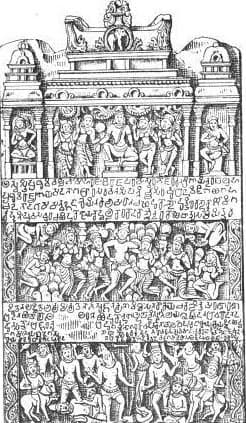
Govinda III
Emperor · Medieval
63.5Total
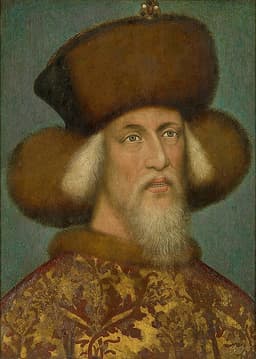
Sigismund
Emperor · Medieval
57.8Total
Basic Information
Born
778
1368
Died
814
1437
Era
Medieval
Medieval
Nationality
India
Holy Roman Empire
Occupation
Emperor
Emperor
Civilization
Indian
Western
Score Comparison
Military (10%)
78.0
40.0
Political (20%)
72.0
62.7
Influence (20%)
60.0
60.0
Legacy (20%)
52.0
56.0
Leadership (15%)
72.0
74.0
Strategy (15%)
61.2
43.3
TOTAL
63.5
57.8
Govinda III — Complete Timeline
800 AD
Expedition to the VindhyasWar
Govinda III launched a military expedition into the Vindhya region, subduing the Kalachuri king Shankaragana. He annexed parts of the Kalachuri kingdom, extending Rashtrakuta control into central India. This campaign secured the northern frontier.
Central IndiaKalachuri WarTerritorial Expansion
Impact: regionaldestructive
803 AD
Conquest of KanchipuramWar◆ Major
Govinda III led a campaign against the Pallava king Dantivarman and captured Kanchipuram. He then marched south, receiving tribute from the Chola, Pandya, and Chera kings. This established Rashtrakuta hegemony over the entire Tamil country.
Southern CampaignPallava WarTamil Nadu
Impact: regionaldestructive
805 AD
Defeat of the Gurjara-PratiharasWar◆ Major
Govinda III defeated the Gurjara-Pratihara king Nagabhata II in a battle near the Ganges. He captured the Pratihara capital of Kannauj and forced Nagabhata to flee. This victory made the Rashtrakutas the dominant power in northern India.
North Indian CampaignPratihara WarKannauj
Impact: regionaldestructive
Sigismund — Complete Timeline
1414 AD
Council of ConstancePolitical Action
Sigismund convened the Council of Constance to end the Western Schism, which had three rival popes. The council deposed all three and elected Pope Martin V, ending the schism. Sigismund played a key role in securing the council's success, though he failed to prevent the execution of Jan Hus.
Council of ConstanceWestern SchismChurch Reform
Impact: globalconstructive
1415 AD
Execution of Jan HusPolitical Action◆ Major
Despite Sigismund's promise of safe conduct to Jan Hus to attend the Council of Constance, Hus was arrested, tried for heresy, and burned at the stake. Sigismund's failure to protect Hus damaged his reputation and sparked the Hussite Wars in Bohemia, which would plague his reign.
Jan HusHeresyHussite Wars
Impact: regionaltragic
1419 AD
Hussite WarsWar◆ Major
Following the death of Wenceslaus IV, Sigismund claimed the throne of Bohemia, but the Hussites refused to accept him as king. This led to a series of military campaigns known as the Hussite Wars. Sigismund led several crusades against the Hussites but was repeatedly defeated by their innovative tactics under Jan
Hussite WarsCrusadeMilitary Conflict
Impact: regionaldestructive
1433 AD
Coronation as Holy Roman EmperorPolitical Action◆ Major
Sigismund was crowned Holy Roman Emperor by Pope Eugene IV in Rome, becoming the last emperor to be crowned in the city. This coronation marked the formal end of the Western Schism and solidified Sigismund's position as the leading secular ruler in Europe.
CoronationImperial AuthorityPapacy
Impact: globalconstructive
1436 AD
Compact of BaselPolitical Action◆ Major
Sigismund negotiated the Compact of Basel with the moderate Hussites (Utraquists), granting them the right to receive communion under both kinds. This agreement temporarily ended the Hussite Wars and allowed Sigismund to finally be recognized as King of Bohemia, though the peace was fragile.
Compact of BaselHussite WarsReligious Tolerance
Impact: regionalconstructive
Expert Analysis
Origins
Govinda III was born around 793 AD into the Rashtrakuta dynasty, a powerful Deccan empire. His father, Dhruva Dharavarsha, had expanded the kingdom through military campaigns. Govinda III received a typical Kshatriya education in statecraft and warfare, preparing him for imperial rule. He ascended the throne in 793 AD after Dhruva's death.
Sigismund was born on February 15, 1368, in Nuremberg, the son of Holy Roman Emperor Charles IV and Elizabeth of Pomerania. He was educated in the courts of Luxembourg and Hungary, learning multiple languages and diplomacy. His early exposure to imperial politics shaped his ambitions for central European dominance.
Rise to Power
Govinda III became Rashtrakuta emperor in 793 AD following his father's death. He immediately faced challenges from neighboring kingdoms. His first major campaign targeted the Pallava king Dantivarman, capturing Kanchipuram around 795 AD and forcing tribute from Chola and Pandya rulers. This established his dominance in the south.
Sigismund's rise was more complex. He became King of Hungary in 1387 through marriage to Mary of Hungary. His claim to the Holy Roman Empire came through his father, but he faced opposition from rival princes. He was elected King of Germany in 1410, but his coronation as Holy Roman Emperor occurred only in 1433 after years of political maneuvering.
Leadership & Governance
Govinda III ruled through military expansion and strategic alliances. He defeated the Gurjara-Pratihara king Nagabhata II around 800 AD, capturing Kannauj and forcing Nagabhata to submit. He also subdued the Kalachuri king Shankaragana in the Vindhyas, annexing territories. His governance focused on consolidating conquered lands through tribute systems, but he lacked long-term administrative reforms. His military score of 78.0 reflects his effectiveness in conquest, but his political score of 72.0 shows limited institutional building.
Sigismund's leadership was defined by diplomacy and church councils. He convened the Council of Constance (1414-1418) to end the Western Schism, successfully deposing three popes and electing Martin V. However, his broken promise of safe conduct to Jan Hus, leading to Hus's execution in 1415, sparked the Hussite Wars. Sigismund's military score of 40.0 is low due to his failures in these wars, but his political score of 62.7 acknowledges his diplomatic achievements.
Triumph & Tragedy
Govinda III's greatest triumph was his conquest of Kanchipuram and the defeat of the Pallavas, which extended Rashtrakuta influence deep into the south. His victory over Nagabhata II at Kannauj marked the peak of Rashtrakuta power. However, his empire faced fragmentation after his death due to over-reliance on personal authority. He scored 60.0 in influence and 52.0 in legacy, indicating limited lasting impact.
Sigismund's triumph was ending the Western Schism, a major ecclesiastical achievement. He also negotiated the Compact of Basel (1436) with moderate Hussites, granting communion under both kinds, which temporarily stabilized Bohemia. His tragedy was the Hussite Wars themselves, which devastated Bohemia and tarnished his reputation. His legacy score of 56.0 reflects mixed results.
Character & Destiny
Govinda III was a capable military leader, driven by ambition to expand his realm. He showed strategic acumen in choosing targets but lacked interest in administrative consolidation. His personality was that of a conqueror, not a builder. This led to quick territorial gains but fragile control.
Sigismund was a skilled diplomat and negotiator, but his indecisiveness and inability to enforce promises damaged his credibility. His decision to allow Hus's execution, despite a safe conduct, revealed a pragmatic ruthlessness that backfired. His leadership score of 74.0 reflects his ability to convene councils, but his strategy score of 43.3 shows poor execution in military matters.
Legacy
Govinda III is remembered as a great Rashtrakuta conqueror who dominated the Deccan and northern India temporarily. His campaigns weakened the Pallavas and Pratiharas, but his empire declined soon after his death. His influence score of 60.0 is moderate; he is not as renowned as later Indian emperors like Ashoka or Akbar.
Sigismund's legacy is tied to the Council of Constance and the Hussite Wars. He ended the Schism but failed to reunite Christianity peacefully. The Compact of Basel was a temporary compromise. He is remembered as a transitional figure in the Holy Roman Empire. His total score of 57.8 is lower than Govinda III's 63.5.
Conclusion
Govinda III had greater immediate impact through military conquests, achieving a total score of 63.5 compared to Sigismund's 57.8. His campaigns reshaped the political map of India for a generation. Sigismund's achievements in ending the Schism were significant but marred by the Hussite disaster. While both faced limitations, Govinda III's military effectiveness and territorial expansion give him an edge in historical impact.
Rankings
🥇
Govinda IIILeader
Mil: 78.0Pol: 72.0Inf: 60.0
63.5
🥈
Sigismund
Mil: 40.0Pol: 62.7Inf: 60.0
57.8
+5.7 behind
How This Comparison Works
Algorithm
Each figure is scored on 6 dimensions (0—100 scale) based on structured historical data: Military (10%), Political (20%), Influence (20%), Legacy (20%), Leadership (15%), Strategy (15%). The weighted total produces the final ranking.
Data Sources
Scores are computed from structured sub-indicators in the database. Scale factors adjust for era (Ancient ×0.85, Modern ×1.0) and civilization size (Eastern ×1.05, Other ×0.80) to account for differences in population and military scale.
Maximum 3 Figures
Comparisons are limited to 2—3 figures to ensure readability and statistical meaningfulness.
Error Margins
±5 points per dimension — Sub-scores are derived from historical records with inherent uncertainty. Two figures within 5 points on a dimension should be considered roughly equivalent in that area.
Total Score Accuracy
±3 points overall — The weighted combination of 6 dimensions produces a total score with approximately ±3 points of uncertainty. Differences of less than 3 points are not statistically significant— the figures are effectively tied.
Known Limitations
- Historical records are incomplete and uneven across civilizations
- Figures from oral-tradition societies may be underrepresented
- Occupation labels can misclassify multi-role figures
- Scores measure capability and impact, not moral character
- Quantitative scoring is a comparison tool, not absolute truth
Capability Radar
Military (10%) — Battles & Warfare
Battles
75
45
Win Rate
80
40
Expansion
80
25
Political (20%) — Governance & Reform
Reform
65
60
Diplomacy
70
75
Economy
70
50
Influence (20%) — Cultural & Global Reach
Cultural
55
50
Global
45
50
Legacy (20%) — Historical Impact
Historical
60
65
Longevity
50
55
Leadership (15%) — Power & Stability
Tenure
75
70
Stability
70
40
Strategy (15%) — Tactics & Innovation
Strategy
75
40
Tactics
70
35
Reform
60
30
Similar Comparisons
Comments & Discussion
No comments yet. Be the first to share your thoughts!