Loading...
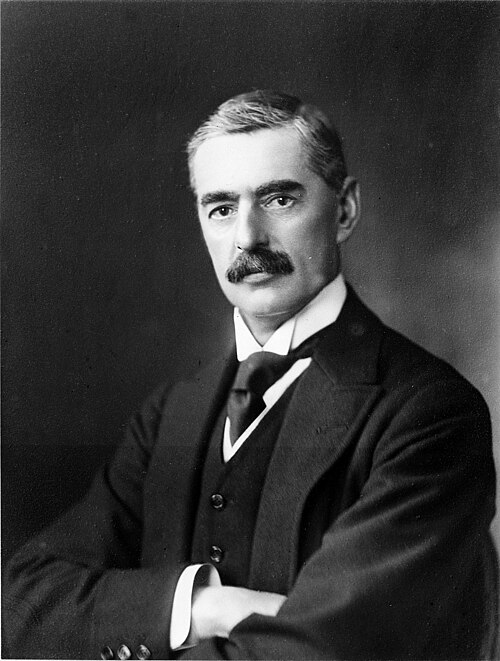
Neville Chamberlain
ModernPoliticianUnited Kingdom1869 — 1940
Prime minister known for appeasing Hitler at Munich.
Compare Neville Chamberlain with another historical figure:
Quick Facts
Born
1869
Died
1940
Country
United Kingdom
Era
Modern
Occupation
Politician
Score Overview
Military (10%)50
Political (20%)68
Influence (20%)60
Legacy (20%)52
Leadership (15%)65
Strategy (15%)42
Total Score57.2
Neville Chamberlain — Complete Timeline
1938 AD
Munich AgreementPolitical Action
Chamberlain met Hitler in Munich and agreed to the cession of the Sudetenland from Czechoslovakia to Germany. Chamberlain returned to Britain claiming 'peace for our time'. The agreement was widely praised at first but later condemned as appeasement that encouraged Nazi aggression.
AppeasementNazi GermanyCzechoslovakia
Impact: global
1939 AD
Declaration of War on GermanyWar
Following the German invasion of Poland on 1 September 1939, Chamberlain issued an ultimatum to Germany. When no response came, Britain declared war on Germany on 3 September 1939, beginning the Second World War. Chamberlain announced the declaration in a radio broadcast.
World War IIDeclaration of WarPoland
Impact: global
British Guarantee to PolandPolitical Action◆ Major
After Germany occupied the rest of Czechoslovakia, Chamberlain's government issued a guarantee of Polish independence in March 1939. This marked a shift from appeasement to a policy of deterrence, committing Britain to defend Poland against German aggression.
PolandDeterrenceWorld War II
Impact: global
1940 AD
Resignation as Prime MinisterPolitical Action◆ Major
After the failure of the Norwegian campaign and a vote of confidence that saw his majority fall, Chamberlain resigned as Prime Minister in May 1940. He was succeeded by Winston Churchill, who formed a coalition government to lead Britain through the war.
ResignationWorld War IIChurchill
Impact: national
Detailed Scores
▶View all detailed scores
Military
Strategy
6
Tactics
5
Battles
6
Army Scale
5
War Impact
6
Political
Governance
7
Reform
7
Stability
7
Policy
8
Power
8
Influence
History
9
Global
8
Culture
9
Ideology
9
Legacy
8
People often compare with
See how Neville Chamberlain stacks up against other historical figures
Popular Comparisons
Neville Chamberlain vs John A. Macdonald
vs John A. Macdonald64
Neville Chamberlain vs Poul Nyrup Rasmussen
vs Poul Nyrup Rasmussen57
Neville Chamberlain vs John Key
vs John Key56
Neville Chamberlain vs Soong Ching-ling
vs Soong Ching-ling54
Neville Chamberlain vs Mingju
vs Mingju53
Neville Chamberlain vs Nguyen Xuan Phuc
vs Nguyen Xuan Phuc52