Loading...
Mingju vs Neville Chamberlain
Neville Chamberlain leads by 4.6 pts · 2 figures compared
…
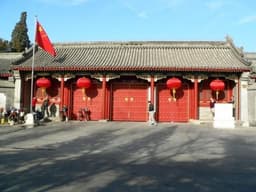
Mingju
Politician · Modern
52.6Total
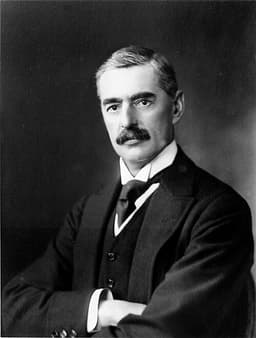
Neville Chamberlain
Politician · Modern
57.2Total
Basic Information
Born
1635
1869
Died
1708
1940
Era
Modern
Modern
Nationality
China
United Kingdom
Occupation
Politician
Politician
Civilization
Eastern
Western
Score Comparison
Military (10%)
14.5
50.0
Political (20%)
68.0
68.0
Influence (20%)
51.8
60.0
Legacy (20%)
45.0
52.0
Leadership (15%)
72.0
65.0
Strategy (15%)
59.5
42.1
TOTAL
52.6
57.2
Mingju — Complete Timeline
1677 AD
Appointed Grand SecretaryPolitical Action◆ Major
Mingju was appointed Grand Secretary of the Qing Empire, serving under the Kangxi Emperor. He became a key figure in the central government, overseeing administrative reforms and military logistics during the early Qing period.
AppointmentGovernmentKangxi Era
Impact: national
1681 AD
Led Suppression of the Revolt of the Three FeudatoriesWar◆ Major
Mingju played a key role in planning and coordinating the Qing military campaign to suppress the Revolt of the Three Feudatories, a rebellion by southern warlords. The campaign succeeded in 1681, consolidating Qing control over southern China.
RebellionMilitary CampaignQing Consolidation
Impact: national
1688 AD
Dismissed from OfficePolitical Action◆ Major
Mingju was dismissed from his position as Grand Secretary following accusations of corruption and factionalism. His removal was part of the Kangxi Emperor's efforts to curb the power of influential officials and reduce bureaucratic corruption.
PurgeCorruptionDownfall
Impact: nationaldestructive
Neville Chamberlain — Complete Timeline
1938 AD
Munich AgreementPolitical Action
Chamberlain met Hitler in Munich and agreed to the cession of the Sudetenland from Czechoslovakia to Germany. Chamberlain returned to Britain claiming 'peace for our time'. The agreement was widely praised at first but later condemned as appeasement that encouraged Nazi aggression.
AppeasementNazi GermanyCzechoslovakia
Impact: global
1939 AD
Declaration of War on GermanyWar
Following the German invasion of Poland on 1 September 1939, Chamberlain issued an ultimatum to Germany. When no response came, Britain declared war on Germany on 3 September 1939, beginning the Second World War. Chamberlain announced the declaration in a radio broadcast.
World War IIDeclaration of WarPoland
Impact: global
British Guarantee to PolandPolitical Action◆ Major
After Germany occupied the rest of Czechoslovakia, Chamberlain's government issued a guarantee of Polish independence in March 1939. This marked a shift from appeasement to a policy of deterrence, committing Britain to defend Poland against German aggression.
PolandDeterrenceWorld War II
Impact: global
1940 AD
Resignation as Prime MinisterPolitical Action◆ Major
After the failure of the Norwegian campaign and a vote of confidence that saw his majority fall, Chamberlain resigned as Prime Minister in May 1940. He was succeeded by Winston Churchill, who formed a coalition government to lead Britain through the war.
ResignationWorld War IIChurchill
Impact: national
Expert Analysis
Origins
Mingju (1635–1708) was born into the Manchu Niohuru clan, a prominent family in the Qing dynasty. His father, Ebilun, was one of four regents during the Kangxi Emperor's minority. Mingju received a traditional Confucian education and entered the civil service through the imperial examination system, quickly rising through the ranks due to his family connections and administrative skills.
Neville Chamberlain (1869–1940) was born into a political family in Birmingham, England. His father, Joseph Chamberlain, was a prominent statesman, and his half-brother, Austen Chamberlain, served as Foreign Secretary. Chamberlain initially pursued a business career, managing a sisal plantation in the Bahamas before returning to Britain to enter politics. He was elected as a Conservative MP in 1918 and held various ministerial posts before becoming Prime Minister in 1937.
Rise to Power
Mingju's rise was accelerated by his loyalty to the Kangxi Emperor. He was appointed Grand Secretary in 1677, a position that made him the highest-ranking civil official. His key ally was the emperor himself, who relied on Mingju to implement centralizing policies. Mingju's political acumen scored 68.0, reflecting his ability to navigate court factions.
Chamberlain rose through the Conservative Party ranks, serving as Chancellor of the Exchequer from 1931 to 1937. His reputation for fiscal conservatism and social reform (e.g., the 1934 Unemployment Act) positioned him as a safe successor to Stanley Baldwin. He became Prime Minister on 28 May 1937, promising peace and prosperity.
Leadership & Governance
Mingju's governance focused on consolidating Qing control. He oversaw the compilation of legal codes and promoted Confucian orthodoxy. His leadership score of 72.0 indicates effective management of the bureaucracy. However, his tolerance of corruption among his allies led to instability.
Chamberlain's leadership was defined by his commitment to appeasement. He believed that satisfying Hitler's demands could prevent another world war. His political score of 68.0 matches Mingju's, but his strategy score of 42.1 reveals flawed decision-making. The Munich Agreement on 30 September 1938, while popular initially, proved disastrous as Hitler's aggression continued.
Triumph & Tragedy
Mingju's greatest triumph was his role in suppressing the Revolt of the Three Feudatories (1673–1681). He coordinated logistics and recruitment, contributing to the Qing victory. His tragedy was his dismissal in 1688 after being implicated in a corruption scandal. The Kangxi Emperor, fearing factionalism, removed him from power.
Chamberlain's greatest triumph was the British guarantee to Poland in March 1939, which signaled a shift from appeasement. However, his tragedy was the Munich Agreement, which allowed Hitler to strengthen Germany and led to World War II. His resignation in May 1940 after the Norwegian campaign failure was a personal and political downfall.
Character & Destiny
Mingju was pragmatic and loyal to the emperor but also ambitious and corrupt. His character led him to build a faction that eventually threatened the emperor's authority, resulting in his downfall. Historical assessments note his administrative competence but criticize his moral failings.
Chamberlain was earnest and determined, with a strong belief in diplomacy. His stubbornness in pursuing appeasement even after Hitler's violations showed a failure to adapt. Historians like John Charmley argue he bought time for rearmament, but others see his policies as naive. His character shaped his destiny as a symbol of failed appeasement.
Legacy
Mingju's legacy is mixed. He is remembered as a capable administrator who helped stabilize the Qing state, but his corruption and factionalism are cautionary tales. His influence score of 51.8 reflects his moderate long-term impact.
Chamberlain's legacy is dominated by the Munich Agreement, which became synonymous with appeasement. His political score of 68.0 is overshadowed by his strategic failures. However, his domestic reforms and the rearmament program that began under him are often overlooked.
Conclusion
Mingju and Chamberlain both scored in the mid-50s overall, with Chamberlain holding a slight edge (57.2 vs 52.6). However, their impacts differ in kind. Mingju's contributions to the Qing dynasty were significant but internal, while Chamberlain's decisions shaped global history. Despite his flaws, Chamberlain's actions directly influenced the course of World War II and the post-war order. Therefore, Neville Chamberlain had greater impact, even if his legacy is more controversial.
Rankings
🥇
Neville ChamberlainLeader
Mil: 50.0Pol: 68.0Inf: 60.0
57.2
🥈
Mingju
Mil: 14.5Pol: 68.0Inf: 51.8
52.6
+4.6 behind
How This Comparison Works
Algorithm
Each figure is scored on 6 dimensions (0—100 scale) based on structured historical data: Military (10%), Political (20%), Influence (20%), Legacy (20%), Leadership (15%), Strategy (15%). The weighted total produces the final ranking.
Data Sources
Scores are computed from structured sub-indicators in the database. Scale factors adjust for era (Ancient ×0.85, Modern ×1.0) and civilization size (Eastern ×1.05, Other ×0.80) to account for differences in population and military scale.
Maximum 3 Figures
Comparisons are limited to 2—3 figures to ensure readability and statistical meaningfulness.
Error Margins
±5 points per dimension — Sub-scores are derived from historical records with inherent uncertainty. Two figures within 5 points on a dimension should be considered roughly equivalent in that area.
Total Score Accuracy
±3 points overall — The weighted combination of 6 dimensions produces a total score with approximately ±3 points of uncertainty. Differences of less than 3 points are not statistically significant— the figures are effectively tied.
Known Limitations
- Historical records are incomplete and uneven across civilizations
- Figures from oral-tradition societies may be underrepresented
- Occupation labels can misclassify multi-role figures
- Scores measure capability and impact, not moral character
- Quantitative scoring is a comparison tool, not absolute truth
Capability Radar
Military (10%) — Battles & Warfare
Battles
54
27
Win Rate
56
30
Expansion
59
35
Political (20%) — Governance & Reform
Reform
55
40
Diplomacy
60
30
Economy
50
50
Influence (20%) — Cultural & Global Reach
Cultural
30
30
Global
20
60
Legacy (20%) — Historical Impact
Historical
40
70
Longevity
30
60
Leadership (15%) — Power & Stability
Tenure
65
60
Stability
55
20
Strategy (15%) — Tactics & Innovation
Strategy
60
39
Tactics
62
39
Reform
64
43
Similar Comparisons
Comments & Discussion
No comments yet. Be the first to share your thoughts!