Loading...
John A. Macdonald vs Neville Chamberlain
John A. Macdonald leads by 6.5 pts · 2 figures compared
…

John A. Macdonald
Politician · Modern
63.7Total
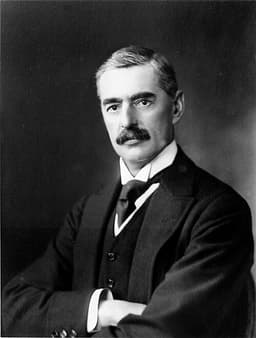
Neville Chamberlain
Politician · Modern
57.2Total
Basic Information
Born
1815
1869
Died
1891
1940
Era
Modern
Modern
Nationality
Canada
United Kingdom
Occupation
Politician
Politician
Civilization
Western
Western
Score Comparison
Military (10%)
45.0
50.0
Political (20%)
62.7
68.0
Influence (20%)
82.0
60.0
Legacy (20%)
55.0
52.0
Leadership (15%)
78.0
65.0
Strategy (15%)
38.6
42.1
TOTAL
63.7
57.2
John A. Macdonald — Complete Timeline
1864 AD
Attended Charlottetown ConferencePolitical Action◆ Major
Macdonald attended the Charlottetown Conference as a leading figure from the Province of Canada. He helped persuade Maritime delegates to support a federal union of British North American colonies, laying the groundwork for Confederation.
ConfederationNegotiationFederalism
Impact: nationalconstructive
1867 AD
Became first Prime Minister of CanadaPolitical Action
Macdonald was appointed the first Prime Minister of the Dominion of Canada following Confederation on July 1, 1867. He led a Conservative government and oversaw the expansion of the new nation from four provinces to a transcontinental dominion.
Government FormationConfederationLeadership
Impact: nationalconstructive
1879 AD
Implemented the National PolicyReform◆ Major
Macdonald introduced the National Policy, a system of protective tariffs on manufactured goods to shield Canadian industry from American competition. The policy also promoted western settlement through the railway and immigration.
Economic PolicyTariffsProtectionism
Impact: nationalconstructive
1880 AD
Approved construction of the Canadian Pacific RailwayPolitical Action◆ Major
Macdonald's government approved the contract to build the Canadian Pacific Railway, a transcontinental railway linking Eastern Canada to British Columbia. The project was completed in 1885, fulfilling a key condition for British Columbia's entry into Confederation.
InfrastructureExpansionRailway
Impact: nationalconstructive
1885 AD
Suppressed the North-West RebellionWar◆ Major
Macdonald's government sent troops to suppress the North-West Rebellion led by Louis Riel in present-day Saskatchewan. The rebellion was crushed, and Riel was executed for treason, a decision that deepened French-English tensions in Canada.
RebellionMilitaryRiel
Impact: nationaldestructive
Neville Chamberlain — Complete Timeline
1938 AD
Munich AgreementPolitical Action
Chamberlain met Hitler in Munich and agreed to the cession of the Sudetenland from Czechoslovakia to Germany. Chamberlain returned to Britain claiming 'peace for our time'. The agreement was widely praised at first but later condemned as appeasement that encouraged Nazi aggression.
AppeasementNazi GermanyCzechoslovakia
Impact: global
1939 AD
Declaration of War on GermanyWar
Following the German invasion of Poland on 1 September 1939, Chamberlain issued an ultimatum to Germany. When no response came, Britain declared war on Germany on 3 September 1939, beginning the Second World War. Chamberlain announced the declaration in a radio broadcast.
World War IIDeclaration of WarPoland
Impact: global
British Guarantee to PolandPolitical Action◆ Major
After Germany occupied the rest of Czechoslovakia, Chamberlain's government issued a guarantee of Polish independence in March 1939. This marked a shift from appeasement to a policy of deterrence, committing Britain to defend Poland against German aggression.
PolandDeterrenceWorld War II
Impact: global
1940 AD
Resignation as Prime MinisterPolitical Action◆ Major
After the failure of the Norwegian campaign and a vote of confidence that saw his majority fall, Chamberlain resigned as Prime Minister in May 1940. He was succeeded by Winston Churchill, who formed a coalition government to lead Britain through the war.
ResignationWorld War IIChurchill
Impact: national
Expert Analysis
Origins
John A. Macdonald was born on January 11, 1815, in Glasgow, Scotland, and emigrated to Upper Canada with his family in 1820. He studied law, was called to the bar in 1836, and built a successful practice in Kingston. His early experiences in colonial politics shaped his pragmatic conservatism.
Neville Chamberlain was born on March 18, 1869, in Birmingham, England, into a prominent political family. His father and half-brother were politicians. He initially pursued business, managing a sisal plantation in the Bahamas, then entered politics as a Liberal Unionist MP in 1918. His background in business and local government influenced his administrative approach.
Rise to Power
Macdonald entered politics in 1843 as a Kingston alderman and became a Conservative MP in 1844. He served as Attorney General and co-premier of the Province of Canada. His key turning point was the Charlottetown Conference in 1864, where he helped persuade Maritime colonies to join a federal union. He became the first Prime Minister of the Dominion of Canada on July 1, 1867, with a total score of 62.7 in political skill.
Chamberlain rose through ministerial ranks, serving as Minister of Health (1923-1929) and Chancellor of the Exchequer (1931-1937). He became Prime Minister in May 1937. His turning point was the Munich Agreement in September 1938, where he conceded the Sudetenland to Hitler, believing it would prevent war. This decision defined his premiership.
Leadership & Governance
Macdonald's leadership was characterized by coalition-building and pragmatism. He implemented the National Policy in 1879, a system of protective tariffs to shield Canadian industry from American competition, scoring 78.0 in leadership. He pushed for the Canadian Pacific Railway, completed in 1885, linking the country from coast to coast. His government suppressed the North-West Rebellion in 1885, led by Louis Riel, which Macdonald's forces crushed after Riel's capture.
Chamberlain's governance was focused on domestic reform and appeasement. He introduced the Factory Act (1937) and the Holidays with Pay Act (1938). His foreign policy, however, dominated his term. He pursued appeasement to avoid war, culminating in the Munich Agreement. After Hitler's occupation of Prague in March 1939, Chamberlain issued a guarantee to Poland, but his strategy proved insufficient. Britain declared war on Germany on September 3, 1939, after the invasion of Poland.
Triumph & Tragedy
Macdonald's greatest success was Confederation, uniting four provinces into a self-governing dominion that expanded to include Manitoba, British Columbia, and Prince Edward Island. He secured the railway and a transcontinental nation. However, his legacy is marred by the Pacific Scandal (1873) involving railway bribes, and his role in the execution of Louis Riel, which alienated French Canadians. He also imposed the Indian Act and residential schools, causing lasting harm to Indigenous peoples.
Chamberlain's triumph was his domestic reforms and his initial success in delaying war, which allowed Britain to rearm. His tragedy was the failure of appeasement: the Munich Agreement did not prevent war, and his guarantee to Poland could not stop Hitler. The Norwegian campaign in 1940 exposed military weakness, leading to his resignation in May 1940. He died in November 1940, his reputation tarnished.
Character & Destiny
Macdonald was a pragmatic, charismatic leader known for his wit and political acumen. He was a heavy drinker, which sometimes affected his judgment. His character shaped his destiny: his ability to forge compromises built Canada, but his authoritarian tendencies and neglect of Indigenous rights created enduring problems. His total score of 63.7 reflects his mixed legacy.
Chamberlain was a diligent, principled but stubborn leader. He believed deeply in peace and underestimated Hitler's ambition. His character led him to pursue appeasement despite mounting evidence, and his reluctance to rearm earlier left Britain vulnerable. His total score of 57.2 shows a leader whose intentions were good but whose strategy failed.
Legacy
Macdonald is remembered as a Father of Confederation and a nation-builder. His policies shaped Canada's political and economic structures, including the federal system and the transcontinental railway. His influence score of 82.0 reflects his lasting impact. However, his treatment of Indigenous peoples and the Chinese head tax tarnish his legacy, leading to a legacy score of 55.0.
Chamberlain's legacy is dominated by appeasement. He is often criticized as a naive leader who failed to stop Hitler. However, some historians argue he bought time for rearmament. His political score of 68.0 reflects his domestic achievements, but his overall impact is overshadowed by the war. His legacy score of 52.0 is lower than Macdonald's.
Conclusion
John A. Macdonald had a greater impact than Neville Chamberlain, as reflected in his higher total score of 63.7 vs. 57.2. Macdonald built a nation that endured and expanded, while Chamberlain's central policy failed to prevent the most destructive war in history. Despite their respective flaws, Macdonald's positive achievements in state-building outweigh Chamberlain's short-lived peace efforts. Macdonald's legacy, though contested, fundamentally shaped Canada, whereas Chamberlain's legacy is primarily a cautionary tale.
Rankings
🥇
John A. MacdonaldLeader
Mil: 45.0Pol: 62.7Inf: 82.0
63.7
🥈
Neville Chamberlain
Mil: 50.0Pol: 68.0Inf: 60.0
57.2
+6.5 behind
How This Comparison Works
Algorithm
Each figure is scored on 6 dimensions (0—100 scale) based on structured historical data: Military (10%), Political (20%), Influence (20%), Legacy (20%), Leadership (15%), Strategy (15%). The weighted total produces the final ranking.
Data Sources
Scores are computed from structured sub-indicators in the database. Scale factors adjust for era (Ancient ×0.85, Modern ×1.0) and civilization size (Eastern ×1.05, Other ×0.80) to account for differences in population and military scale.
Maximum 3 Figures
Comparisons are limited to 2—3 figures to ensure readability and statistical meaningfulness.
Error Margins
±5 points per dimension — Sub-scores are derived from historical records with inherent uncertainty. Two figures within 5 points on a dimension should be considered roughly equivalent in that area.
Total Score Accuracy
±3 points overall — The weighted combination of 6 dimensions produces a total score with approximately ±3 points of uncertainty. Differences of less than 3 points are not statistically significant— the figures are effectively tied.
Known Limitations
- Historical records are incomplete and uneven across civilizations
- Figures from oral-tradition societies may be underrepresented
- Occupation labels can misclassify multi-role figures
- Scores measure capability and impact, not moral character
- Quantitative scoring is a comparison tool, not absolute truth
Capability Radar
Military (10%) — Battles & Warfare
Battles
0
27
Win Rate
0
30
Expansion
15
35
Political (20%) — Governance & Reform
Reform
75
40
Diplomacy
80
30
Economy
65
50
Influence (20%) — Cultural & Global Reach
Cultural
55
30
Global
55
60
Legacy (20%) — Historical Impact
Historical
65
70
Longevity
60
60
Leadership (15%) — Power & Stability
Tenure
70
60
Stability
70
20
Strategy (15%) — Tactics & Innovation
Strategy
0
39
Tactics
0
39
Reform
5
43
Similar Comparisons
Comments & Discussion
No comments yet. Be the first to share your thoughts!