Loading...
Neville Chamberlain vs Nguyen Xuan Phuc
Neville Chamberlain leads by 5.5 pts · 2 figures compared
…
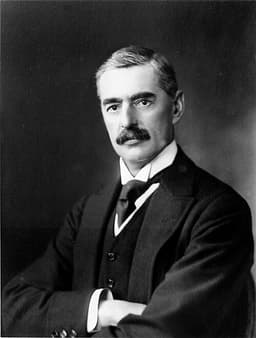
Neville Chamberlain
Politician · Modern
57.2Total

Nguyen Xuan Phuc
Politician · Modern
51.7Total
Basic Information
Born
1869
1954
Died
1940
—
Era
Modern
Modern
Nationality
United Kingdom
Vietnam
Occupation
Politician
Politician
Civilization
Western
Eastern
Score Comparison
Military (10%)
50.0
14.4
Political (20%)
68.0
72.0
Influence (20%)
60.0
54.9
Legacy (20%)
52.0
45.0
Leadership (15%)
65.0
72.0
Strategy (15%)
42.1
37.1
TOTAL
57.2
51.7
Neville Chamberlain — Complete Timeline
1938 AD
Munich AgreementPolitical Action
Chamberlain met Hitler in Munich and agreed to the cession of the Sudetenland from Czechoslovakia to Germany. Chamberlain returned to Britain claiming 'peace for our time'. The agreement was widely praised at first but later condemned as appeasement that encouraged Nazi aggression.
AppeasementNazi GermanyCzechoslovakia
Impact: global
1939 AD
Declaration of War on GermanyWar
Following the German invasion of Poland on 1 September 1939, Chamberlain issued an ultimatum to Germany. When no response came, Britain declared war on Germany on 3 September 1939, beginning the Second World War. Chamberlain announced the declaration in a radio broadcast.
World War IIDeclaration of WarPoland
Impact: global
British Guarantee to PolandPolitical Action◆ Major
After Germany occupied the rest of Czechoslovakia, Chamberlain's government issued a guarantee of Polish independence in March 1939. This marked a shift from appeasement to a policy of deterrence, committing Britain to defend Poland against German aggression.
PolandDeterrenceWorld War II
Impact: global
1940 AD
Resignation as Prime MinisterPolitical Action◆ Major
After the failure of the Norwegian campaign and a vote of confidence that saw his majority fall, Chamberlain resigned as Prime Minister in May 1940. He was succeeded by Winston Churchill, who formed a coalition government to lead Britain through the war.
ResignationWorld War IIChurchill
Impact: national
Nguyen Xuan Phuc — Complete Timeline
2016 AD
Appointed as Prime Minister of VietnamPolitical Action◆ Major
Nguyen Xuan Phuc was appointed as Prime Minister of Vietnam by the National Assembly. He succeeded Nguyen Tan Dung and took office during a period of economic growth and international integration.
Prime MinisterLeadershipVietnam
Impact: national
2019 AD
Signed the EU-Vietnam Free Trade Agreement (EVFTA)Political Action◆ Major
Nguyen Xuan Phuc signed the EU-Vietnam Free Trade Agreement, which eliminated nearly all tariffs between Vietnam and the European Union. The agreement boosted Vietnam's exports and deepened economic integration with Europe.
TradeEUEconomic Integration
Impact: globalconstructive
2021 AD
Elected as President of VietnamPolitical Action◆ Major
Nguyen Xuan Phuc was elected as President of Vietnam by the National Assembly, succeeding Nguyen Phu Trong. He became the second-highest-ranking leader in the country, holding the largely ceremonial role.
PresidentLeadershipVietnam
Impact: national
2023 AD
Resigned as President amid Corruption ScandalPolitical Action◆ Major
Nguyen Xuan Phuc resigned as President of Vietnam, taking responsibility for corruption scandals involving his subordinates during the COVID-19 pandemic. His resignation was part of the broader anti-corruption campaign.
ResignationCorruptionPolitical Scandal
Impact: nationaltragic
Expert Analysis
Origins
Neville Chamberlain (born 1869, Birmingham, UK) was the son of the prominent politician Joseph Chamberlain. He studied at Rugby and Mason Science College but did not attend university, instead managing a sisal plantation in the Bahamas for six years. Upon returning, he entered local politics and later served as Lord Mayor of Birmingham. His background was in business and municipal administration, not military or foreign affairs.
Nguyen Xuan Phuc (born 1954, Quang Nam province, Vietnam) grew up during the Vietnam War. He studied law at Hanoi University and later earned a PhD in economics. His early career was in the Ministry of Justice, then in Quang Nam's provincial government. He rose through the Communist Party ranks, focusing on economic management and anti-corruption efforts.
Rise to Power
Chamberlain entered national politics in 1918 as a Conservative MP. He held ministerial posts in health and finance, becoming Chancellor of the Exchequer in 1923. He became Prime Minister in 1937, succeeding Stanley Baldwin. His rise was marked by his reputation as a competent administrator, not a visionary leader. His key turning point was the Munich Agreement in September 1938, where he met Hitler and agreed to the cession of the Sudetenland. This elevated his popularity temporarily, as he returned to Britain claiming 'peace for our time'.
Phuc was appointed Prime Minister in April 2016 by the National Assembly, succeeding Nguyen Tan Dung. His rise was gradual within the Party, serving as Deputy Prime Minister from 2011. He was known for overseeing economic reforms and trade negotiations. His key turning point was signing the EU-Vietnam Free Trade Agreement (EVFTA) in 2019, which boosted his profile. He was elected President in 2021, becoming the second-highest leader after Party General Secretary Nguyen Phu Trong.
Leadership & Governance
Chamberlain's leadership style was methodical and cautious, focused on avoiding war through diplomacy. He believed in appeasement as a strategy to prevent conflict, but his approach was criticized as naive. Domestically, he continued rearmament programs, but his foreign policy dominated his tenure. He faced opposition from Winston Churchill who advocated a tougher stance. Chamberlain's governance was marked by his reliance on cabinet consensus and his ability to manage the Conservative Party.
Phuc's leadership emphasized economic growth and international integration. As Prime Minister, he pushed for trade liberalization, signing the Comprehensive and Progressive Agreement for Trans-Pacific Partnership (CPTPP) and EVFTA. He maintained the Party's authoritarian control but allowed some economic freedoms. His governance was pragmatic, focusing on stability and development. He faced challenges from corruption scandals, which eventually led to his resignation.
Triumph & Tragedy
Chamberlain's greatest success was his early pursuit of rearmament, which strengthened Britain's military. However, his major failure was the Munich Agreement, which emboldened Hitler and allowed Germany to annex Czechoslovakia. His policy of appeasement is widely condemned for failing to prevent World War II. His declaration of war on Germany after the invasion of Poland was a necessary but belated step. His resignation in 1940 after the Norway campaign failure marked his political end.
Phuc's success was the signing of the EVFTA, which eliminated nearly all tariffs between Vietnam and the EU, boosting Vietnam's exports. He also oversaw strong GDP growth during his tenure. His tragedy came in 2023 when he resigned as President, taking responsibility for corruption scandals involving his subordinates during the COVID-19 pandemic. This tarnished his legacy and led to his removal from office.
Character & Destiny
Chamberlain was a determined but overly optimistic leader, believing that reasoned negotiation could resolve conflicts. His character was shaped by a sense of moral duty but also a lack of understanding of totalitarian regimes. Historians assess him as well-intentioned but disastrously wrong in his assessment of Hitler. His fate was to be remembered as a symbol of appeasement's failure.
Phuc was a pragmatic technocrat, focused on economic results. He was seen as a loyal Party member but not a reformer. His destiny was tied to the Party's internal politics; his resignation showed the limits of power when corruption scandals erupted. He scored 72.0 in political and 72.0 in leadership, but his legacy is mixed due to the scandals.
Legacy
Chamberlain's legacy is overwhelmingly negative internationally, but some revisionist historians argue that appeasement bought time for rearmament. The Munich Agreement became a cautionary tale. His domestic policies, such as the Housing Act, are less remembered. His total score is 57.2, with military 50.0, political 68.0, influence 60.0, legacy 52.0, leadership 65.0, strategy 42.1.
Phuc's legacy is still forming. His economic agreements have lasting impact on Vietnam's trade, but his resignation due to corruption may overshadow his achievements. He scored 51.7 overall: military 14.4, political 72.0, influence 54.9, legacy 45.0, leadership 72.0, strategy 37.1.
Conclusion
While Chamberlain had a higher total score (57.2 vs 51.7), his impact on world history is greater due to the scale of his decisions. Chamberlain's appeasement directly contributed to the outbreak of World War II, affecting millions. Phuc's policies affected Vietnam's economy but on a smaller scale. Chamberlain's failure is more consequential globally. Thus, Chamberlain had greater impact, albeit negative. Phuc's legacy remains limited to regional economic integration.
Rankings
🥇
Neville ChamberlainLeader
Mil: 50.0Pol: 68.0Inf: 60.0
57.2
🥈
Nguyen Xuan Phuc
Mil: 14.4Pol: 72.0Inf: 54.9
51.7
+5.5 behind
How This Comparison Works
Algorithm
Each figure is scored on 6 dimensions (0—100 scale) based on structured historical data: Military (10%), Political (20%), Influence (20%), Legacy (20%), Leadership (15%), Strategy (15%). The weighted total produces the final ranking.
Data Sources
Scores are computed from structured sub-indicators in the database. Scale factors adjust for era (Ancient ×0.85, Modern ×1.0) and civilization size (Eastern ×1.05, Other ×0.80) to account for differences in population and military scale.
Maximum 3 Figures
Comparisons are limited to 2—3 figures to ensure readability and statistical meaningfulness.
Error Margins
±5 points per dimension — Sub-scores are derived from historical records with inherent uncertainty. Two figures within 5 points on a dimension should be considered roughly equivalent in that area.
Total Score Accuracy
±3 points overall — The weighted combination of 6 dimensions produces a total score with approximately ±3 points of uncertainty. Differences of less than 3 points are not statistically significant— the figures are effectively tied.
Known Limitations
- Historical records are incomplete and uneven across civilizations
- Figures from oral-tradition societies may be underrepresented
- Occupation labels can misclassify multi-role figures
- Scores measure capability and impact, not moral character
- Quantitative scoring is a comparison tool, not absolute truth
Capability Radar
Military (10%) — Battles & Warfare
Battles
27
11
Win Rate
30
20
Expansion
35
19
Political (20%) — Governance & Reform
Reform
40
55
Diplomacy
30
60
Economy
50
60
Influence (20%) — Cultural & Global Reach
Cultural
30
30
Global
60
40
Legacy (20%) — Historical Impact
Historical
70
40
Longevity
60
30
Leadership (15%) — Power & Stability
Tenure
60
65
Stability
20
55
Strategy (15%) — Tactics & Innovation
Strategy
39
22
Tactics
39
25
Reform
43
28
Similar Comparisons
Comments & Discussion
No comments yet. Be the first to share your thoughts!