Loading...
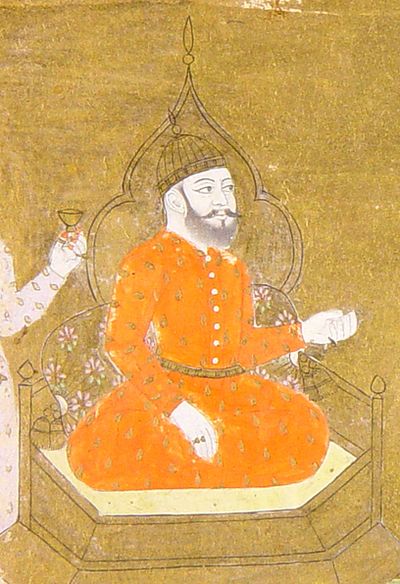
Muhammad bin Tughluq
MedievalEmperorIndia1290 — 1351
Delhi sultan known for ambitious but failed reforms.
Compare Muhammad bin Tughluq with another historical figure:
Quick Facts
Born
1290
Died
1351
Country
India
Era
Medieval
Occupation
Emperor
Score Overview
Military (10%)20
Political (20%)41
Influence (20%)57
Legacy (20%)48
Leadership (15%)65
Strategy (15%)43
Total Score48.4
Muhammad bin Tughluq — Complete Timeline
1325 AD
Accession to the Delhi SultanatePolitical Action
Muhammad bin Tughluq succeeded his father Ghiyas-ud-din Tughluq as sultan of Delhi. He inherited a vast empire but soon embarked on ambitious and often controversial policies that would define his reign.
Delhi SultanateTughluqSuccession
Impact: regional
1327 AD
Transfer of Capital to DaulatabadPolitical Action◆ Major
Muhammad bin Tughluq ordered the transfer of the capital from Delhi to Daulatabad in the Deccan, forcing the entire population and administration to move. The plan failed due to water scarcity and logistical issues, and the capital was later moved back to Delhi.
Capital TransferDaulatabadFailed Reform
Impact: regionaldestructive
1329 AD
Introduction of Token CurrencyReform◆ Major
Muhammad bin Tughluq introduced a token currency made of copper and brass, intended to replace silver coins. The government failed to prevent counterfeiting, leading to economic chaos and the eventual withdrawal of the currency at great loss.
Token CurrencyEconomic ReformFailure
Impact: regionaldestructive
1330 AD
Campaign in the Deccan and South IndiaWar◆ Major
Muhammad bin Tughluq led military campaigns into the Deccan and southern India, attempting to consolidate control over the region. He faced rebellions from local rulers, including the Hoysala and Kakatiya, and the campaigns drained the treasury.
DeccanSouthern IndiaRebellion
Impact: regional
1335 AD
Revolt of the Nobility and Provincial GovernorsPolitical Action◆ Major
Muhammad bin Tughluq faced multiple revolts from nobles and provincial governors, including in Bengal, Gujarat, and the Deccan. These rebellions weakened the central authority and led to the fragmentation of the Delhi Sultanate, with the rise of independent states like the Bahmani Sultanate.
RevoltNobilityFragmentation
Impact: regionaldestructive
1340 AD
Famine in Northern IndiaOther◆ Major
A severe famine struck northern India during Muhammad bin Tughluq's reign, exacerbated by his failed economic policies and military campaigns. The famine caused widespread suffering and depopulation, further destabilizing the empire.
FamineEconomic CrisisDepopulation
Impact: regionaltragic
Detailed Scores
▶View all detailed scores
Military
Strategy
6
Tactics
6
Battles
6
Army Scale
6
War Impact
6
Political
Governance
7
Reform
7
Stability
7
Policy
7
Power
8
Influence
History
9
Global
9
Culture
9
Ideology
10
Legacy
9
People often compare with
See how Muhammad bin Tughluq stacks up against other historical figures
Popular Comparisons
Muhammad bin Tughluq vs Charles V
vs Charles V74
Muhammad bin Tughluq vs Henry IV of HRE
vs Henry IV of HRE65
Muhammad bin Tughluq vs Empress Dowager Xiao
vs Empress Dowager Xiao64
Muhammad bin Tughluq vs Lothair I
vs Lothair I48
Muhammad bin Tughluq vs Peter I of Cyprus
vs Peter I of Cyprus46
Muhammad bin Tughluq vs Wanyan Shouxu
vs Wanyan Shouxu41